

NDO - Within the framework of the 6th Indochina Dermatology Conference, the annual National Dermatology Conference, and the 2nd Dermatology Research Conference held from November 21 to 23 in Hue City, many reports discussed the increasing trend of skin cancer.
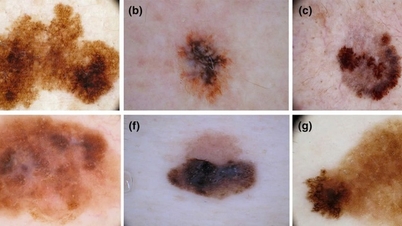
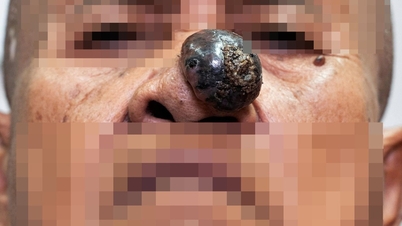
Professor Nguyen Huu Sau, Deputy Director of the Central Dermatology Hospital, said there are two types of skin cancer: non-melanoma (basal cell carcinoma and squamous cell carcinoma) and melanoma.
A study by doctors at the National Dermatology Hospital over six years (2017-2022) showed that 1,133 skin cancer patients received inpatient treatment at this medical facility. Nearly 70% of them were patients with basal cell carcinoma (407 cases in the three years from 2020-2022 alone).
However, in 2023-2024, the number of skin cancer patients recorded a significant increase. Each week, the hospital sees approximately 10 to 20 patients for examination and treatment. Overall, the hospital receives about 300-500 skin cancer patients annually. For melanoma, the most aggressive type with a high metastatic rate, doctors rarely encountered it five years ago (only about 25 cases/year), but in recent months, the hospital has recorded 1-2 cases per week. Notably, there are cases of skin cancer in patients as young as 20-30 years old.
Explaining the increase in the number of skin cancer patients, doctors said that it is partly due to improved public awareness and understanding of the disease, as well as the availability of more diagnostic methods and equipment for early detection. Notably, there have been cases where patients were able to seek timely medical attention and detect skin cancer early thanks to watching doctors' live streams on social media platforms.
Therefore, doctors recommend that even the slightest changes in the body should be examined at a medical facility for early detection of the disease. Early detection of skin cancer, including melanoma, makes treatment easier, reduces the financial burden, and increases the 5-year survival rate. In later stages, this rate is only about 10-20%. Dermatoscopy is a modern device that has been used at the Central Dermatology Hospital in recent years to assist doctors in diagnosing melanoma with high sensitivity and specificity. This device allows differentiation between benign and malignant lesions, giving patients more peace of mind during treatment.
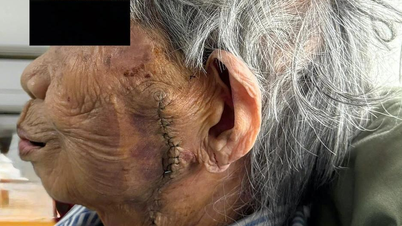
Skin cancer is common among people who frequently work in sunlight; it primarily develops on sun-exposed areas, including the scalp, face, lips, ears, neck, chest, arms, hands, and legs. Lesions can also form on the palms, soles, pressure points, under fingernails/toenails, and genitals.
Doctors advise that if you notice a mole that changes color, grows larger, or is rapidly developing in any location; or if you work in the sun and have skin lesions that do not respond to medication treatment for 2-4 weeks, you should see a specialist in skin cancer.
Skin cancer affects both sexes, with the three most common types being basal cell carcinoma, squamous cell carcinoma, and melanoma. This type of cancer is more common in people who work in the sun; it primarily develops on sun-exposed areas, including the scalp, face, lips, ears, neck, chest, arms, hands, and feet. Lesions can also form on the palms, soles, pressure points, and under fingernails/toenails.
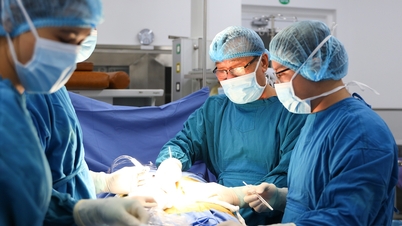
Dr. Nguyen Huu Quang, Deputy Head of the Department of Plastic and Reconstructive Surgery, added that increased life expectancy and exposure to UV rays are leading causes of skin cancer. In recent years, some changes in the use of immunosuppressant drugs have also led to many people experiencing this condition.
As several studies worldwide have shown, among organ transplant recipients, approximately 60% of those taking immunosuppressant drugs are at risk of developing skin cancer after 3-5 years of treatment. This risk is significantly reduced with proper medication and disease management.
Doctors say that early detection of skin cancer, even melanoma, leads to more favorable and effective treatment, increasing the 5-year survival rate and reducing the financial burden. Many cases detected early have a 5-year survival rate of over 90%, but if detected at a later stage, this rate drops to only about 10-20%.
If you notice a mole that changes color, grows larger, or is rapidly developing in any location; or if you work in the sun and have skin lesions that don't respond to medication treatment for 2-4 weeks, you should see a specialist in skin cancer…
Source: https://nhandan.vn/bac-si-canh-bao-benh-ung-thu-da-co-xu-huong-gia-tang-post846461.html



















![[Video] 24-hour News on December 13, 2025: Prime Minister: Eliminate the situation of "managing without knowing" and "banning if you can't manage"](https://vphoto.vietnam.vn/thumb/402x226/vietnam/resource/IMAGE/2025/12/13/1765631092985_z7323081777994-c31a9753c13724017adafe243bd77001-jpg.webp)




![[Photo] Prime Minister Pham Minh Chinh attends the Conference summarizing and implementing tasks of the judicial sector.](/_next/image?url=https%3A%2F%2Fvphoto.vietnam.vn%2Fthumb%2F1200x675%2Fvietnam%2Fresource%2FIMAGE%2F2025%2F12%2F13%2F1765616082148_dsc-5565-jpg.webp&w=3840&q=75)




































































Comment (0)