

China has been successful in narrowing the digital divide and laying some of the groundwork for the digital economy .
According to Chinese government data, the country's three major mobile carriers had a combined 622 million fixed broadband subscribers by the end of August, an increase of 32.1 million from the beginning of the year. Of those, 139 million – approximately 22% – used networks with download speeds of 1Gb/second or higher, an increase of 47 million. Overall, 94% of broadband subscribers achieved speeds above 100Mb/second.

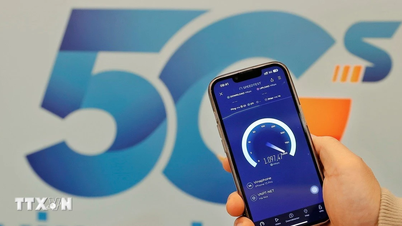
Besides its massive broadband user base, China also leads the world in 5G user penetration with 676 million as of June 30th. Its success in deploying modern infrastructure and adding new subscribers is due to several factors, including the supplier-side approach, the ability of policymakers to enforce price reductions, and the large e-commerce marketplaces of companies like Tencent and ByteDance.
According to the report, China Telecom's average revenue per user (ARPU) for broadband was 48.2 RMB (over 163,000 VND), and for mobile was 46.2 RMB (156,000 VND) in the first half of 2023.
Meanwhile, the ITU's State of Broadband report indicates that the number of people without internet access has decreased by 100 million, to 2.6 billion, over the past 12 months. "There has been a fundamental shift from a supply-driven approach to a demand-driven approach," the report states.
Growth in network connectivity has a ripple effect on digital transformation and a post-pandemic pivot, leading to stronger demand for digital products and services. “We need to focus on bridging the gap to connect the nearly 3 billion people who are currently unconnected,” the report states. The ITU also urged policymakers to consider lessons learned from the pandemic regarding the positive economic impact of infrastructure.
China deploys 5.5G technology at ASIAD 19.
Advanced technologies such as 5G (5G Advanced) were deployed at the opening ceremony and other events within the framework of the 19th Asian Games (ASIAD 19) held in Hangzhou. An estimated 80,000 spectators and 20,000 staff gathered at the Hangzhou Olympic Sports Center Stadium, where the opening ceremony took place. Mobile connectivity remained uninterrupted throughout the night.
5G and 5.5G are crucial technologies for the smooth running of the event, with 5.5G being 10 times faster than 5G, according to Chinese media. At the MWC 2023 Shanghai conference, Huawei's rotating chairwoman, Meng Wanzhou, called 5.5G the next step in the 5G revolution.
According to China Mobile, other technologies were also deployed at ASIAD 19 to meet the high demand for mobile connectivity throughout the tournament. China Mobile covered 168 areas in the stadiums through 134 antennas with multiple frequency bands to handle telecommunication services everywhere.
China Telecom is combining artificial intelligence and big data analytics to deploy the internet more efficiently, making 5G "smarter" and adapting to the diverse needs of users.
(According to Lightreading, Global Times)

Source

![[Photo] Closing Ceremony of the 10th Session of the 15th National Assembly](/_next/image?url=https%3A%2F%2Fvphoto.vietnam.vn%2Fthumb%2F1200x675%2Fvietnam%2Fresource%2FIMAGE%2F2025%2F12%2F11%2F1765448959967_image-1437-jpg.webp&w=3840&q=75)


![[Photo] Prime Minister Pham Minh Chinh holds a phone call with the CEO of Russia's Rosatom Corporation.](/_next/image?url=https%3A%2F%2Fvphoto.vietnam.vn%2Fthumb%2F1200x675%2Fvietnam%2Fresource%2FIMAGE%2F2025%2F12%2F11%2F1765464552365_dsc-5295-jpg.webp&w=3840&q=75)






































![[OFFICIAL] MISA GROUP ANNOUNCES ITS PIONEERING BRAND POSITIONING IN BUILDING AGENTIC AI FOR BUSINESSES, HOUSEHOLDS, AND THE GOVERNMENT](https://vphoto.vietnam.vn/thumb/402x226/vietnam/resource/IMAGE/2025/12/11/1765444754256_agentic-ai_postfb-scaled.png)






































Comment (0)