

Ministry of Industry and Trade creates legal corridor and market connection
In the context of Vietnam's agriculture moving towards modernization, enhancing competitiveness, and expanding markets, the role of the Ministry of Industry and Trade is becoming increasingly prominent. Beyond simply managing and regulating the market, the Ministry has proactively partnered with farmers, cooperatives, and rural enterprises through numerous practical programs and policies, ranging from building legal frameworks to trade promotion, from developing the domestic market to boosting e-commerce.
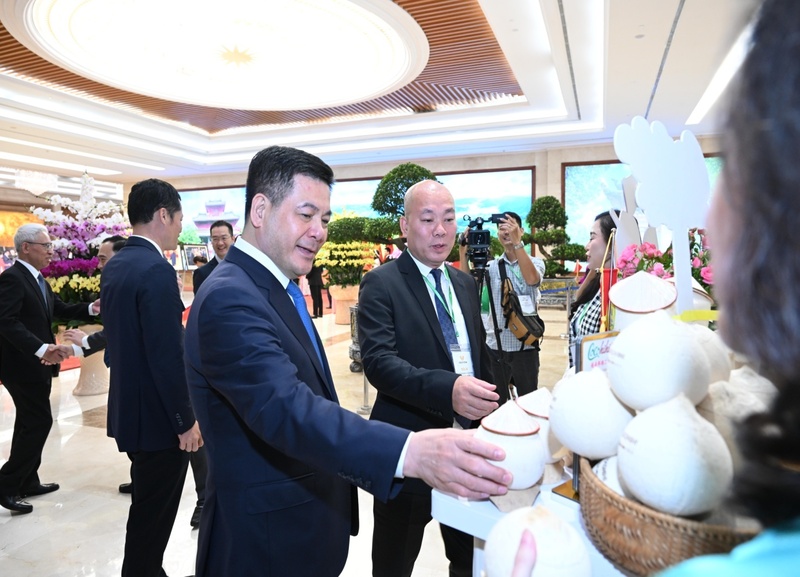
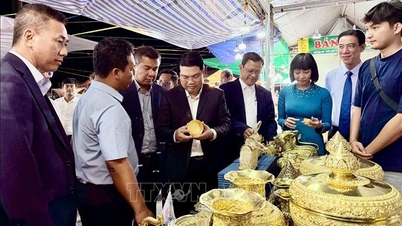
Minister Nguyen Hong Dien visited the exhibition area of Vietnam's special agricultural products exported to China. Photo: MOIT
Decree No. 60/2024/ND-CP dated June 5, 2024, on the development and management of markets; the draft Decree replacing Decree No. 158/2006/ND-CP and Decree No. 51/2018/ND-CP of the Government on the trading of goods through Commodity Exchanges; the draft Decree regulating the establishment and operation of Commodity Exchanges and the trading of goods and services in the International Financial Center in Vietnam… not only create a legal framework but also promote the consumption of domestic products, including agricultural products of farmers. This not only creates opportunities to expand markets but also helps farmers feel more confident when bringing their products to the official market.
Besides the legal framework, the Ministry of Industry and Trade also focuses on developing the domestic market with a long-term strategy. Decision No. 326/QD-TTg dated October 21, 2025 , approving the Strategy for the Development of Vietnam's Retail Market to 2030, with a vision to 2050, along with the Domestic Market Development Program and the "Vietnamese People Prioritize Using Vietnamese Goods" campaign for the period 2025-2027, has contributed to transforming the domestic market towards a modern, transparent, and sustainable direction. In particular, farmers are one of the groups that directly benefit, as their goods are prioritized for connection with the distribution network, minimizing intermediaries and increasing product value.
Key programs such as the National Target Program for Socio-Economic Development in Ethnic Minority and Mountainous Regions, the New Rural Development Program, and the One Commune One Product (OCOP) Program have created an important foundation for promoting the development of commercial infrastructure, expanding the domestic market, and enhancing the competitiveness of Vietnamese goods. Providing market forecast information, training in business knowledge, connecting supply and demand, building models for trading specialty goods, and investing in markets in ethnic minority areas are all concrete and practical steps that help agricultural products be consumed effectively, while simultaneously increasing income and improving the lives of rural people.
A notable factor is the Ministry of Industry and Trade's continuous efforts to promote linkages between production and consumption, between farmers, cooperatives, and businesses. Thanks to the synchronized implementation of supply-demand connection programs, the development of OCOP products, regional specialties, and branded Vietnamese goods, a modern distribution network has gradually been formed, helping Vietnamese agricultural products reach consumers both domestically and internationally. This is a vivid example of a deep-seated market approach: linking trade development with sustainable socio-economic goals.
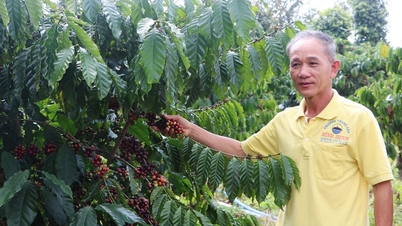
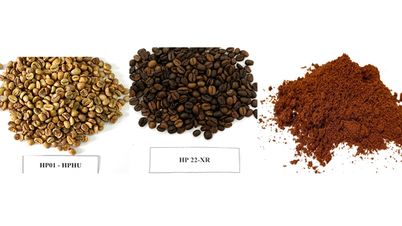
Not only focusing on the domestic market, the Ministry of Industry and Trade is also actively expanding export markets. Through free trade agreements (FTAs) such as CPTPP, EVFTA, and UKVFTA, key agricultural products like rice, coffee, pepper, and cashew nuts enjoy 0% tariffs in many countries, opening up great opportunities for exports. Specifically for rice, Vietnam enjoys large export quotas to the EU and the UK. Non-tariff measures are also being promoted to ensure transparency, compliance with international commitments, reduce costs, and enhance the competitiveness and added value of Vietnamese agricultural products.
Within the ASEAN framework, the Ministry of Industry and Trade utilizes trade defense tools to protect the interests of domestic industries, such as the sugarcane industry, ensuring fair competition, maintaining production stability, and safeguarding farmers' incomes. In addition, closely monitoring market conditions, updating domestic and international information, and organizing conferences, seminars, and trade promotion meetings help localities and businesses promptly grasp trends, adjust production structures, and respond to market signals.
Trade promotion is a boost to increase the value of Vietnamese agricultural products.
A clear example of the Ministry of Industry and Trade's support for farmers is its trade promotion activities. Through trade promotion, the Ministry has built strong links between producers, cooperatives, businesses, and markets, helping farmers increase their income, stabilize output, and enhance product value. A series of programs connecting markets, providing skills training, standardizing production, and promoting products have formed sustainable supply chains, aiming for safe, traceable production and clear branding.
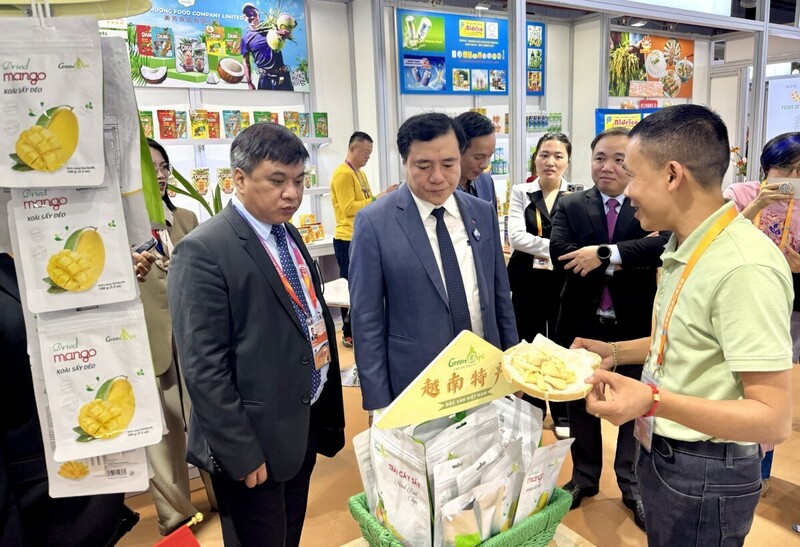
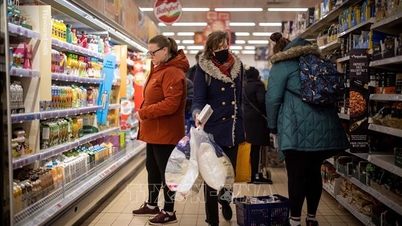
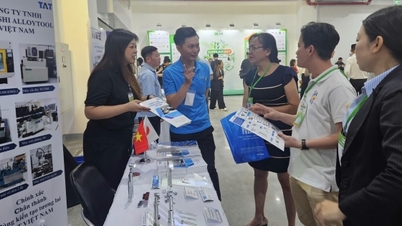
The Ministry of Industry and Trade actively supports the agricultural sector, farmers, and rural areas to participate in trade promotion activities to expand the market. Illustrative photo
Besides traditional trade promotion methods, the Ministry of Industry and Trade is also promoting e-commerce, opening up new opportunities for farmers and cooperatives. The overall plan for e-commerce development in the periods 2021-2025 and 2026-2030 focuses on developing e-commerce for agricultural products, narrowing the digital divide between urban and rural areas, and popularizing digital skills for farmers and business households. Training courses, both in-person and online, and the "digital farmer, digital cooperative" model have helped farmers adapt to the digital economy, shifting from a production-oriented mindset to a market-oriented one, proactively connecting, promoting, and selling their products.
The practical results are evident, with over 2,000 businesses, cooperatives, and household businesses bringing their products to e-commerce platforms, featuring nearly 10,000 regional specialty products on major platforms such as Shopee, TikTok Shop, Amazon, Sendo, Postmart, and Voso. The Mega Livestream series attracted hundreds of content creators, garnered over 80 million views, generated more than 10,500 online orders, and produced 500 promotional videos and product branding materials. This not only increased domestic consumption but also opened up export opportunities, enhancing the value of Vietnamese products in the international market.
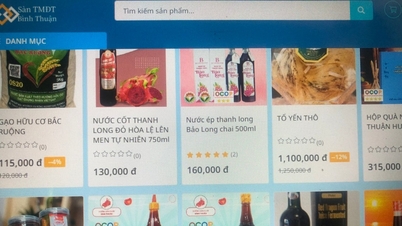
The digital ecosystem that the Ministry of Industry and Trade is perfecting, including SanViet.vn, ECVN.com, and Vietnamexport.com.vn, plays a crucial role in connecting markets. SanViet.vn links 10 local e-commerce platforms, attracting more than 300 new businesses and cooperatives; ECVN.com and Vietnamexport.com.vn support more than 1,600 businesses and cooperatives in accessing 200 trade opportunities each month, providing thousands of news and market documents through a network of nearly 70 Vietnamese trade offices abroad. As a result, Vietnamese agricultural products are effectively promoted and exported, thereby increasing farmers' incomes and stabilizing their livelihoods.
Looking back, it's clear that the Ministry of Industry and Trade has taken a proactive step in connecting the market with agricultural production, from legal frameworks and infrastructure to domestic markets, exports, and digital trade. This is not just a policy, but also a practical initiative to support farmers, cooperatives, and rural businesses, helping them enhance their competitiveness, embrace digital transformation, and access modern markets.
In the coming period, these solutions promise to further boost agricultural consumption, increase farmers' incomes, develop sustainable domestic trade, and expand Vietnam's agricultural exports to the world. Together with the efforts of localities, businesses, and people, the Ministry of Industry and Trade is contributing to realizing the vision of a comprehensively developed, dynamic, and globally connected rural Vietnam, transforming each agricultural product into an economic opportunity, a brand, and a cultural asset.
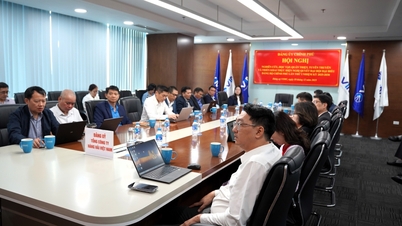
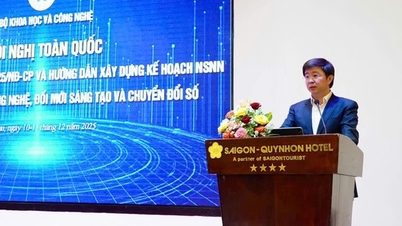
On the morning of December 10th, the 2025 Conference of the Prime Minister's Office for Dialogue with Vietnamese Farmers will take place with the theme "Applying Science, Technology, Innovation and Digital Transformation in Agriculture". This annual event, chaired by the Central Committee of the Vietnam Farmers' Association, aims to create a direct forum to listen to, resolve difficulties, and promote agricultural development.
The conference focused on key issues: the application of science, technology, and digital transformation in agricultural production; the role of farmers in international integration and improving product quality to meet export standards; administrative procedure reform and efficient management of land and natural resources; the development of rural private sector economy through support for households, cooperatives, and agricultural enterprises; and disaster prevention and adaptation to climate change.
This is an opportunity for farmers to present their opinions and propose solutions, while also helping state management agencies to accompany and support farmers in improving their production and business capabilities, connecting with markets, adapting to the digital economy, and integrating internationally.
Source: https://congthuong.vn/bo-cong-thuong-dong-hanh-cung-nong-nghiep-nong-dan-nong-thon-434112.html



















![[Video] The craft of making Dong Ho folk paintings has been inscribed by UNESCO on the List of Crafts in Need of Urgent Safeguarding.](https://vphoto.vietnam.vn/thumb/402x226/vietnam/resource/IMAGE/2025/12/10/1765350246533_tranh-dong-ho-734-jpg.webp)



















































Comment (0)