

Accordingly, the new plan recently issued by the People's Committee of Ca Mau province adopts a completely new approach, "diagnosing" the specific circumstances of each household and providing the right "tools" to awaken the aspirations of those involved to rise out of poverty and become wealthy. Accordingly, Ca Mau province divides families in need of support into five distinct groups to ensure the most appropriate support is provided.

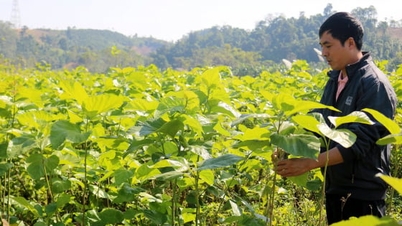
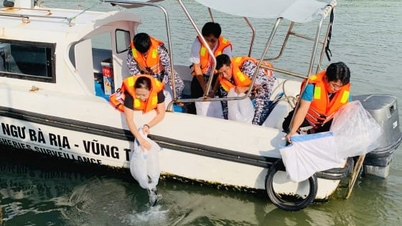
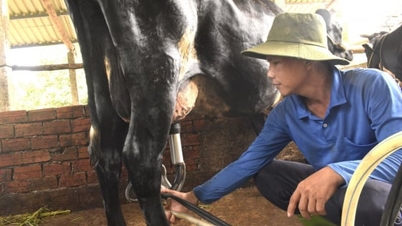
Firstly, for households in need of support with seeds, animal feed, and technical assistance (production models), officials, Party members, and mass organizations at the grassroots level directly participate in guiding and encouraging them to apply knowledge and improve their awareness of caring for and protecting products and models.
For households in need of vocational training and job placement support, Ca Mau organizes basic-level vocational training courses lasting less than 3 months, with flexible schedules and locations (prioritizing on-site training in communes and hamlets...), and on-site practical training for laborers from poor, near-poor, and disadvantaged policy-beneficiary households.
Specifically, Ca Mau province fully implements policies on tuition fee exemption and reduction, and vocational training cost support; considers providing additional support for living and travel expenses during vocational training; and links vocational training with local labor recruitment needs or labor export. It establishes partnerships with businesses, cooperatives, and production facilities to recruit immediately after training; and organizes a "training tailored to specific employment needs" model.
For those who truly need "fishing rods," these are households lacking the means of production. The Fatherland Front Committee and political and social organizations in the commune/ward assign the Fatherland Front Working Committee, Party branches, Youth Union branches, Party members, Youth Union members, and association members to provide support to these households (each unit assists 1-2 households, depending on the number of households needing support in the area), and call for social mobilization to provide suitable means of production according to the specific needs and conditions of each household.
For households in need of capital support for production and business, Ca Mau province will allocate local budget funds and provide support through sponsoring socio-political organizations, with a limit of 20 million VND per household.
Finally, for households without a labor force, the province will issue a separate support policy, without including the support needs in the plan.
According to the People's Committee of Ca Mau province, the period from 2021 to 2024 saw very positive results in reducing the number of poor and near-poor households throughout the province, and particularly among ethnic minority households. However, according to the review results of localities as of July 15, 2025, the province still has 13,968 households in difficult circumstances; including 4,402 poor households, 7,816 near-poor households, and 1,750 households receiving social welfare benefits.
The majority of these households have received housing and livelihood support from national target programs and other assistance. However, the province still has 12,147 households classified as poor, near-poor, and policy-beneficiary households with difficult circumstances that need livelihood support to stabilize their lives.
Ca Mau province aims to ensure that by the end of 2026, 100% of disadvantaged policy-beneficiary households under the program will receive childbirth support; and by the end of 2027, at least 80% of poor and near-poor households, including ethnic minority households under this program, will achieve sustainable poverty alleviation.
Source: https://tienphong.vn/ca-mau-trao-can-cau-cho-nguoi-ngheo-post1803837.tpo




















































































Comment (0)