

In the digital age, where knowledge and innovation are central resources, technology cities have emerged as the "growth engines" of the global economy . These cities not only concentrate leading businesses, research institutions, and talent, but also create comprehensive ecosystems to foster innovation and sustainable development.
From America's Silicon Valley to Israel's Silicon Wadi, each city possesses its own unique identity but shares a common trait: the ability to foster innovation and create influence that transcends national borders.
Silicon Valley (USA)
For a long time, this place has been considered the classic model of a technology city. It is the birthplace of leading global technology corporations such as Apple, Google, Meta, and thousands of other startups.
Silicon Valley's strength stems from its dense venture capital ecosystem, risk-taking culture, and relentless spirit of innovation.
Universities like Stanford and UC Berkeley serve as a source of high-quality knowledge and talent, continuously injecting new life into this ecosystem. Beyond leading in information technology, the valley is also a hub for artificial intelligence, self-driving cars, and many other future technologies.
Shenzhen (China)
When discussing China's technology cities, one cannot overlook Shenzhen, once a small fishing village but now a symbol of a rapidly developing industrial and technological metropolis.
Shenzhen is the birthplace of Huawei, Tencent, DJI, and BYD – world leaders in various fields such as telecommunications, social media, drones, and electric vehicles. The city is not only strong in research but also a leading high-tech manufacturing hub, perfectly integrating design, manufacturing, and commerce.
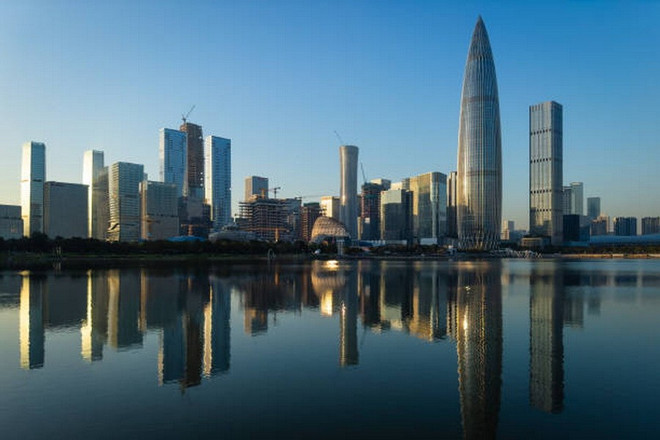
Zhongguancun (China)
In Asia, Zhongguancun is considered the "Electronics City," developing into a national high-tech hub.
Home to top universities such as Peking University and Tsinghua University, Zhongguancun has become a hub for research and technology commerce.
Large corporations like Baidu and Lenovo, as well as emerging technology startups, have chosen this area as their headquarters. Strong support policies from the Chinese government have also contributed to making Zhongguancun one of the most dynamic innovation hubs in the world.
Hsinchu Science Park (Taiwan, China)
Also in Asia, Hsinchu Science Park is considered the "Silicon Valley of Asia," notable for its focus on semiconductor technology development. It is home to TSMC, the world's leading chip manufacturer and an indispensable link in the global technology supply chain.
Thanks to its closely integrated ecosystem of businesses, universities, and research institutes, Hsinchu has helped Taiwan (China) become a key semiconductor hub, profoundly influencing the global digital economy.
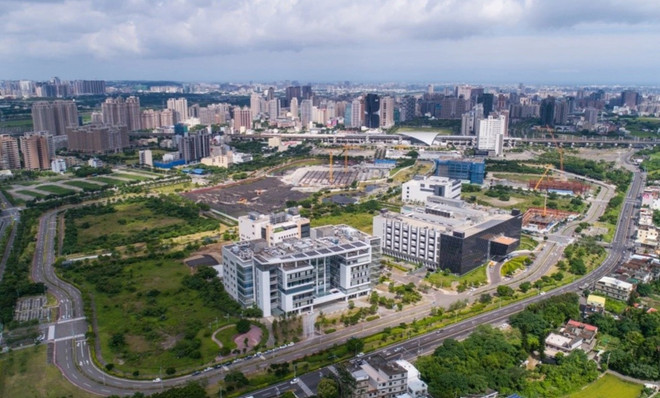
One-North (Singapore)
One-North is a prime example of an urban planning model that integrates innovation, research, and living. Unlike technology parks that are primarily focused on manufacturing, One-North strongly integrates modern urban elements: living, working, learning, and recreational spaces are all within an interconnected structure.
This creates an ideal environment to attract multinational companies in the fields of biotechnology, digital media, and cutting-edge research. More than just a technology park, One-North is also a symbol of Singapore's knowledge-based national development strategy.
Daedeok Innopolis (South Korea)
Considered the country's largest science and technology hub, Daedeok Innopolis houses over 200 research institutes, universities, and technology companies. It is the cradle of many national technological achievements, from telecommunications and new materials to biotechnology.
Large corporations like Samsung and LG maintain close ties with this region to promote research and product innovation. Daedeok therefore serves as a bridge between academic research and industrial application.
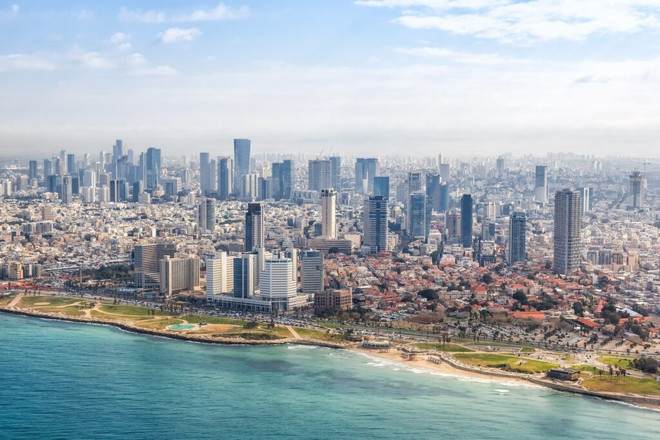
Silicon Wadi (Israel)
In the Middle East, Wadi Silicon Valley is considered the "Silicon Valley of the Middle East," excelling in high-tech fields, particularly cybersecurity, biotechnology, and artificial intelligence.
With its streamlined yet high-quality education system, coupled with a strong entrepreneurial spirit, Israel has the highest density of startups per capita in the world. Silicon Wadi is the center of that power, where many technology companies have achieved international success.
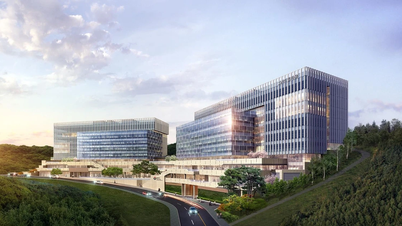
High Tech Campus Eindhoven (Netherlands)
In Europe, the Eindhoven High Tech Campus is known as "Europe's most innovative hub." Home to hundreds of technology companies, research institutes, and startups, this tech park is particularly strong in physics, new materials, medical devices, and electronics. It was once Philips' R&D center and continues to develop into an open ecosystem, attracting talent from around the world.
These leading technology cities share commonalities not only in their research and production capabilities but also in their ability to attract talent, foster a culture of innovation, and generate significant economic value. They play a crucial role in shaping global technology trends, from AI and semiconductor chips to cybersecurity, biotechnology, and new energy. Each city, despite its unique context, demonstrates that investing in knowledge, innovation, and an open ecosystem is key to sustainable development.
Source: https://www.vietnamplus.vn/cac-do-thi-cong-nghe-hang-dau-the-gioi-co-anh-huong-toan-cau-post1082372.vnp


![[Photo] Prime Minister Pham Minh Chinh holds a phone call with the CEO of Russia's Rosatom Corporation.](/_next/image?url=https%3A%2F%2Fvphoto.vietnam.vn%2Fthumb%2F1200x675%2Fvietnam%2Fresource%2FIMAGE%2F2025%2F12%2F11%2F1765464552365_dsc-5295-jpg.webp&w=3840&q=75)





























































Comment (0)