

Legalizing the online content channels of news organizations.
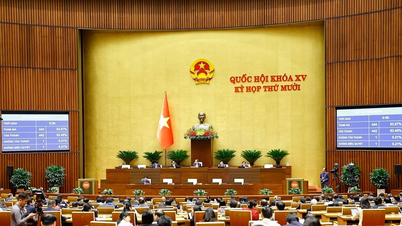
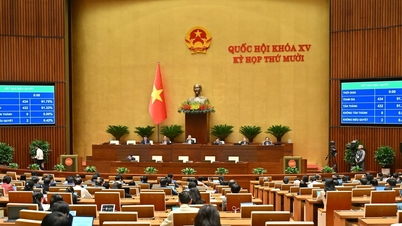
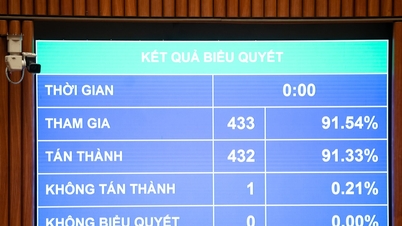
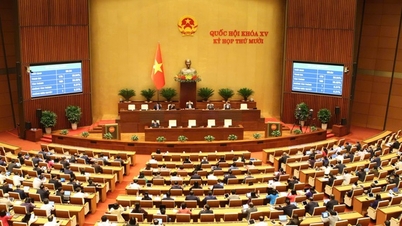
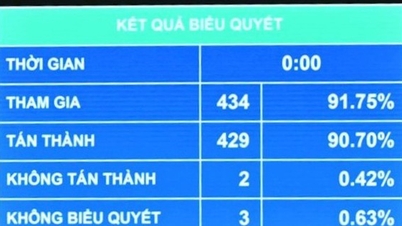
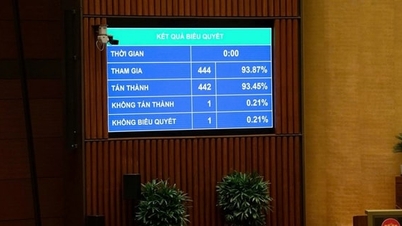
On the morning of December 10th, the National Assembly passed the amended Press Law, which for the first time legalized the concept of "content channels of press agencies on the internet" and specified the responsibilities of press agencies operating on digital platforms.
The law will take effect on July 1, 2026, with some provisions applying as early as January 1, 2026.
According to the new law, "a media organization's content channel on the internet" is defined as an information channel established by a media organization on a social network to provide, transmit, collect, exchange, share information, and connect the community of social network users. This channel must have a consistent identifying mark when established on different social networks.
The legalization of this concept aims to regulate the publication of journalistic information on social media – an area not yet regulated in the current Press Law.
Along with print newspapers, online newspapers, radio, and television, content channels on social media have become a form of official journalistic product and must fully comply with legal regulations.

Social media content channels have become a form of official journalistic product (Illustrative image: Hai Long).
Clarifying responsibilities, archiving, and managing digital journalism activities.
The law clearly defines the responsibilities of media organizations when opening and operating content channels on the internet. Media organizations are responsible for the content and copyright when publishing and broadcasting information; however, they are not responsible for changes arising from technical errors of the social media platform.
Press agencies must publish information on their content channels before or after editing and updating it in official publications, and must retain all published content in accordance with regulations on electronic press archiving.
When launching a content channel, media organizations are responsible for notifying the state management agency for the press and connecting online to the archiving system to facilitate the measurement of information trends in cyberspace as stipulated by the Government .
In addition, the law supplements regulations related to journalistic activities in cyberspace. Accordingly, in addition to publishing and broadcasting journalistic content, media organizations are also allowed to integrate online services into their publications as prescribed by the Government. The agency operating the national digital media platform is responsible for ensuring the integrity of the information published and broadcast on this platform.
The content prohibited under Article 8 also applies to activities on social media content channels, including information that is anti-state, divisive, distorts history, insults the nation, spreads false information, slanders, incites violence, depicts obscene behavior, discriminates against gender or religion, or information that negatively impacts the normal development of children.
The law also strictly prohibits the posting or dissemination of information that reveals state secrets, personal and family secrets, and other secrets as stipulated by law.
Legalizing content channels on social media platforms is a step to expand the scope of the Press Law, aligning with the current practices of digital journalism. The addition of this concept is linked to the need to tighten content accountability and ensure unified management between mainstream newspapers and media channels on social media platforms operated by press agencies.
Regulations on electronic archiving and data connectivity have also been specified to serve the state management of journalistic activities in the digital environment.
The amended Press Law also stipulates that press agencies must fully comply with regulations on their mission and objectives, refrain from publishing or broadcasting content that falls under the category of prohibited acts, and store data as required. The Government is tasked with providing detailed regulations on the national digital press platform and digital tools for monitoring press activities in cyberspace.
The amended Press Law was passed after a review and supplementation process to better suit the digital media environment. One of the major changes is the establishment of content channels for press agencies on social media, creating a legal framework for journalistic activities in the future.
Source: https://dantri.com.vn/thoi-su/cac-kenh-mang-xa-hoi-cua-co-quan-bao-duoc-luat-hoa-la-san-pham-bao-chi-20251210123642136.htm




![[Photo] Explore the US Navy's USS Robert Smalls warship](/_next/image?url=https%3A%2F%2Fvphoto.vietnam.vn%2Fthumb%2F1200x675%2Fvietnam%2Fresource%2FIMAGE%2F2025%2F12%2F10%2F1765341533272_11212121-8303-jpg.webp&w=3840&q=75)



























![[Video] The craft of making Dong Ho folk paintings has been inscribed by UNESCO on the List of Crafts in Need of Urgent Safeguarding.](https://vphoto.vietnam.vn/thumb/402x226/vietnam/resource/IMAGE/2025/12/10/1765350246533_tranh-dong-ho-734-jpg.webp)






























































Comment (0)