

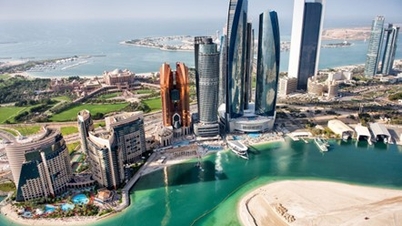
Boasting Africa's tallest tower and the Middle Eastern's largest mosque, this city is one of a series of mega-projects undertaken by Egyptian President Abdel Fattah el-Sisi to develop the country's economy .
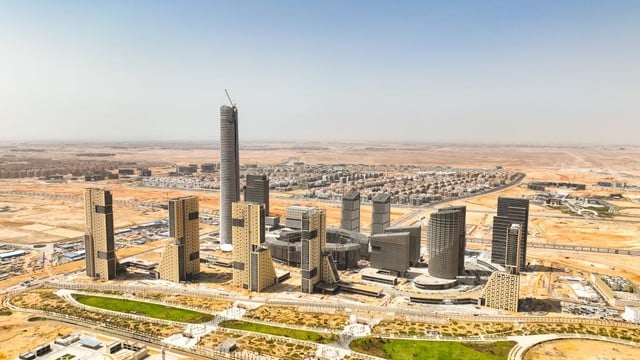
Egypt is building a new city. Photo: CNN
Construction of the "New Administrative Capital" began in 2016 and is being completed in phases. According to Khaled Abbas, Chairman of the Capital Urban Development Management Authority (ACUD) and the company overseeing the project, phase 1 is almost complete and phase 2 is expected to begin in the last quarter of this year.
Slowly but surely, life is beginning to take shape in the new city. According to Abbas, more than 1,500 families have already moved in, and by the end of 2024, he expects that number to rise to 10,000.
Abbas also stated that with government ministries relocating to the new city, approximately 48,000 government employees are now working there. In March, when Parliament began directing meetings from the city and some banks and businesses moved their headquarters there, it was expected that many more residents would want to relocate.
Ultimately, "the country will be governed from within the new capital," Abbas added.
He said phase 1 would cost around 500 billion Egyptian pounds ($10.6 billion). However, some have expressed concerns about the cost as the country is experiencing an economic downturn and facing increasing pressure from tensions in Gaza. The Egyptian economy is being boosted by international funding, including from the World Bank, which announced on Monday that it will provide Egypt with more than $6 billion over three years.
Earlier this month, the International Monetary Fund announced it would also increase its existing lending program to Egypt from $3 billion to $8 billion, subject to economic reforms, including a "new framework to slow the pace of infrastructure spending" to help reduce inflation and maintain debt sustainability.
ACUD maintains that the city's development will not be affected by the IMF announcement. In February, ACUD announced that a global architecture and engineering firm, Dar, involved in the first phase of the city, had been awarded the contract to develop the detailed master plan for phases two, three, and four of the capital. The second phase of the new city is expected to cost around 300 billion Egyptian pounds (US$6.4 billion).
Continental center
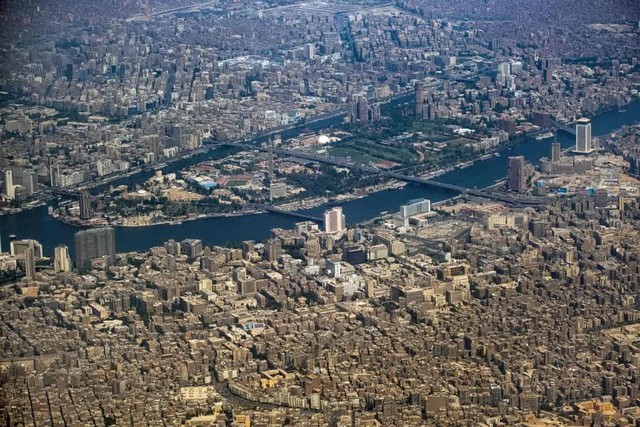
Cairo is a densely populated capital city. Photo: Amir Makar/AFP/Getty
The new administrative capital is centered around the financial district, where several international banks and businesses will establish their global headquarters. Last year, Afreximbank announced it would purchase land in the city to build the African Trade Centre as its global headquarters. The consortium, which includes a convention center, hotel, and innovation center, is described as a "one-stop business complex" for intra-African trade. The consortium also includes unnamed companies from the United Arab Emirates and South Africa that have announced plans to establish a financial center in the capital.
Abbas believes the city's modern infrastructure will attract businesses. Artificial intelligence systems will optimize the use of electricity, gas, and water, as well as waste management. Fiber optic infrastructure and 5G deployment will also facilitate connectivity, while high-tech security services will be integrated, with thousands of surveillance cameras installed throughout the city to monitor traffic, warn of congestion, and detect accidents.
"All major international companies are looking for smart and sustainable cities. We are trying to facilitate all kinds of services to make doing business here easier," he emphasized.
Abbas also hopes that Egypt's smart city design will become "a model for other countries in Africa," contributing to economic development in the wider region.
Meanwhile, Nicholas Simcik Arese, Head of History and Theory at the Architectural Association in London, who has conducted extensive field research in Cairo, says the new city could attract businesses, particularly "high-level bilateral partnerships" and foreign capital to boost economic development.
He pointed to the history of Egyptian leaders building satellite cities near Cairo as transformational projects. Today, these cities are almost entirely self-contained communities, serving the upper-middle class and often offering numerous job opportunities.
Simcik Arese acknowledged that Cairo is overcrowded, but he questioned whether building a new city would actually be efficient.
"The problem of a crowded Cairo is not just about uncontrollable population growth, but also about people's ability to access decent livelihoods in the place where they were born. There is plenty of existing housing in Cairo that is perfectly usable, and if the government spent even a small fraction of that investment to help people's existing cities actually function, I think the overcrowding problem would disappear very quickly," Simcik added.
On this matter, Abbas stated that Cairo's outdated infrastructure needed upgrading, and although he did not give a direct figure on the number of affordable housing units that would be available, he emphasized that the new city would cater to all segments of society.
"The cost of living here is the same as in the old city, but the difference is that you are living in a new city, a smarter city," Abbas emphasized.
Source













































































Comment (0)