

Many contractors withdrew.
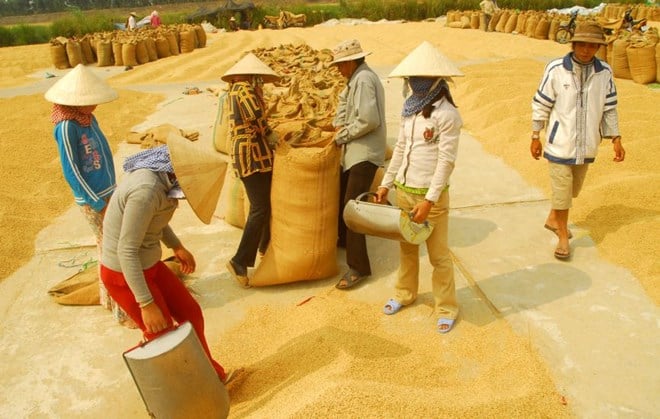
According to Ms. Nguyen Thi Pho Giang, Deputy Director General of the General Department of State Reserves, in 2023, the General Department was assigned a plan to stockpile 220,000 tons of rice, but by the end of the year, only 62% of the plan had been achieved; more than 83,197 tons of rice remained unpurchased.
According to Lao Dong newspaper's investigation, the rice that has not yet been delivered to the reserve's warehouses is mainly due to contractors withdrawing their contracts. A typical example is the situation at the State Reserve Bureau in Thai Binh province.
In 2023, the Thai Binh Regional State Reserve Department launched a project to purchase 7,500 tons of rice, divided into 6 bidding packages. However, in 2023, Thai Binh only managed to import just over 50% of the target.
The reason is that 3 out of 6 bidding packages of the Thai Binh Regional State Reserve Department were abandoned by the winning bidders. This includes bidding package No. 1 for the supply of 900 tons of rice. The winning bidder was Khai Minh International Trading Co., Ltd., located at HH4 - Nam An Khanh Urban Area, An Khanh Commune, Hoai Duc District.
Package No. 2 involves the supply of 1,000 tons of rice. The winning bidder is Dong Phuong General Trading Company Limited, located at the house of Ms. Bui Thi Quy, Kim Village, Vu Lac Commune, Thai Binh City, Thai Binh Province.
Package No. 4 involves the supply of 1,800 tons of rice. The winning bidder is Van Loi Co., Ltd., located in Bao Cuu village, Thanh Chau ward, Phu Ly city, Ha Nam province.
Why was the bid rejected?
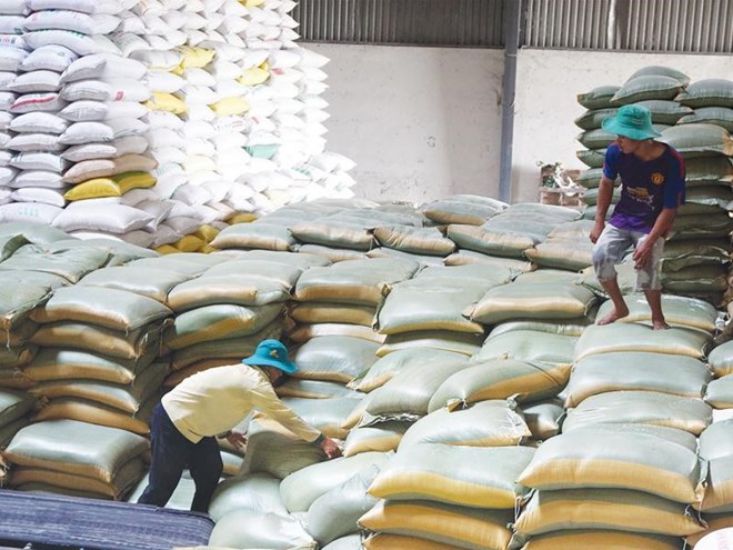
Speaking to a reporter from Lao Dong newspaper about the issue of bidders withdrawing from the contract, Mr. Bui Dinh Toan, Deputy Director in charge of the State Reserve Department in Thai Binh province, said: "This is a common situation in the reserve sector in 2023, due to the high and volatile price of rice. At times, the price of rice increased by several thousand dong per kilogram in about two weeks. Bidders determined that if they continued, they would inevitably incur losses, so they accepted losing their security deposits, violating the Bidding Law to refuse to fulfill the contract."
From a business perspective, Ms. Ngo Thi Bich Tho - representative of the contractor Dong Phuong General Trading Company Limited (the unit that "abandoned" the bid after winning the contract) - stated that due to the high market price of rice and the difference compared to the price of rice in reserve, the company could not afford to fulfill the contract.
“For example, if a company buys rice at 15,000 VND/kg but the price offered for rice reserves is only 12,500 VND/kg, or buys at 16,000 VND/kg but the bid price is only 13,100 VND/kg, if they proceed, the company will face a loss of 2.5 billion to nearly 3 billion VND for over 1,000 tons of rice. We have also submitted requests to the General Department of State Reserves and the Ministry of Finance to resolve and adjust rice prices, but we haven't seen any results," Ms. Tho said.
Is simply imposing a fine without banning bids too lenient?
The fact that businesses have defaulted on bids for national rice reserves raises questions about the penalties for such actions.
Reportedly, in 2023, many businesses defaulted on bids for national rice reserves. However, these businesses were only fined, and none were banned from bidding.
Take the example of the three contractors who abandoned their contracts in Thai Binh; they were also penalized by several reserve agencies. However, the penalties only extended to contract termination or fines; no company was banned from bidding on any projects.
From an economic perspective, the fines imposed on businesses are insignificant compared to the losses they would incur if they fulfilled the contract. For example, Dong Phuong General Trading Company Limited was fined 655 million VND by the Thai Binh Regional Reserve Bureau after defaulting on a contract. Meanwhile, according to the company owner, supplying rice as per the contract could result in losses ranging from 2.5 billion VND to nearly 3 billion VND.
It is known that, in addition to fines, since 2020, the Ministry of Finance has proposed banning participation in bidding for the supply of national reserve goods for those who fail to fulfill or only partially fulfill the contract to supply national reserve goods.
However, in an interview with Lao Dong newspaper, a representative from the Department of Reserve Management stated that contractors who default on bids are not banned from bidding but only have points deducted.
Accordingly, reputation scores are divided into three levels: Contractors with no reputational violations are rated at 50 points. Contractors who have signed contracts to supply rice with regional State Reserve agencies but fail to meet deadlines (delayed delivery) or deliver substandard goods, leading to rejection by the agencies, are rated at 20 points. Contractors who have been approved by regional State Reserve agencies as winning bidders for national reserve rice supply contracts but fail to proceed with or refuse to finalize the contract, or have completed the contract but refuse to sign it, are rated at 0 points but are not disqualified.
So, with the current monetary penalties instead of bidding bans, will this put an end to the situation where businesses supplying rice for national reserves default on bids? This phenomenon has occurred in many places and at various times.
Source

![[Photo] Prime Minister Pham Minh Chinh holds a phone call with the CEO of Russia's Rosatom Corporation.](/_next/image?url=https%3A%2F%2Fvphoto.vietnam.vn%2Fthumb%2F1200x675%2Fvietnam%2Fresource%2FIMAGE%2F2025%2F12%2F11%2F1765464552365_dsc-5295-jpg.webp&w=3840&q=75)


![[Photo] Closing Ceremony of the 10th Session of the 15th National Assembly](/_next/image?url=https%3A%2F%2Fvphoto.vietnam.vn%2Fthumb%2F1200x675%2Fvietnam%2Fresource%2FIMAGE%2F2025%2F12%2F11%2F1765448959967_image-1437-jpg.webp&w=3840&q=75)







































![[OFFICIAL] MISA GROUP ANNOUNCES ITS PIONEERING BRAND POSITIONING IN BUILDING AGENTIC AI FOR BUSINESSES, HOUSEHOLDS, AND THE GOVERNMENT](https://vphoto.vietnam.vn/thumb/402x226/vietnam/resource/IMAGE/2025/12/11/1765444754256_agentic-ai_postfb-scaled.png)











































Comment (0)