

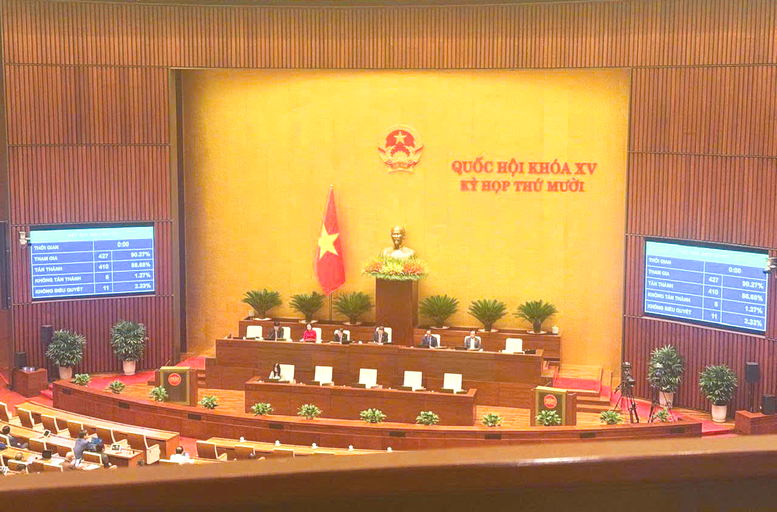
On the morning of December 11, 2025, during the final working day of the 10th Session of the 15th National Assembly , with 86.68% of delegates voting in favor, the National Assembly officially passed the Resolution on the investment policy for the Gia Binh International Airport construction project.
Aviation infrastructure enters a new phase of implementation.
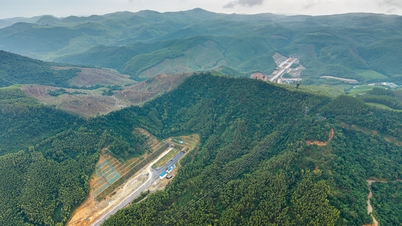
The years 2025-2026 are identified as the period when many important aviation infrastructure projects in Vietnam will begin implementation. Among them, Gia Binh International Airport in Bac Ninh is a prominent project after its investment plan was approved by the National Assembly. This is the first airport in the Bac Ninh region planned for construction to meet the rapidly increasing demand for air transport in the area.
According to the socio -economic development plan for 2026, the transportation and infrastructure sector will continue to receive attention with large-scale projects in various fields such as railways, seaports, and aviation. The need for new investment stems from the rapid growth of air transport over the past decade, putting increasing pressure on existing infrastructure capacity.
Over the past 10 years, Vietnam's aviation industry has recorded an average growth rate of approximately 18% per year. Vietnam is also among the fastest-growing aviation markets in the region. Passenger traffic through airports is constantly increasing, leading to the need to expand or add new airports to meet transportation and safety and security standards.
Based on that, the National Assembly passed a Resolution on the investment policy for Gia Binh International Airport in Bac Ninh. The project was included in the planning to supplement the capacity of the airport system in the Capital region according to a model of rational allocation among airports. The investor is committed to implementing the project's related infrastructure, including transportation connections and functional areas serving air transport, in accordance with the approved plan.
During the National Assembly discussion, Representative Tran Van Khai (Ninh Binh delegation) stated that Bac Ninh is home to many large-scale electronics industrial parks. According to Mr. Khai, the construction of Gia Binh International Airport will shorten cargo transportation time and create more direct connection options from the locality to international markets. The representative also expressed his views on mechanisms for mobilizing private resources to reduce pressure on the state budget in implementing infrastructure projects.
The Gia Binh project is situated within the overall economic development plan of the Capital Region, encompassing Bac Ninh, Bac Giang, Hai Duong, and Hung Yen provinces. The airport's location near high-tech industrial zones facilitates the integration of production and cargo transportation. Furthermore, the project is oriented towards investing in modern technological components such as automation and biometric systems in its operational processes.
Gia Binh International Airport is also planned to meet the environmental, social, and governance (ESG) criteria in line with the general trend of the aviation industry. Several supporting service facilities such as commercial areas, passenger service areas, and logistics functional areas will be arranged according to current standards. This airport will be invested in according to international standards, becoming a smart, green, sustainable, next-generation airport of international standards, meeting the needs of socio-economic development and serving important diplomatic events, including the APEC Summit in 2027.
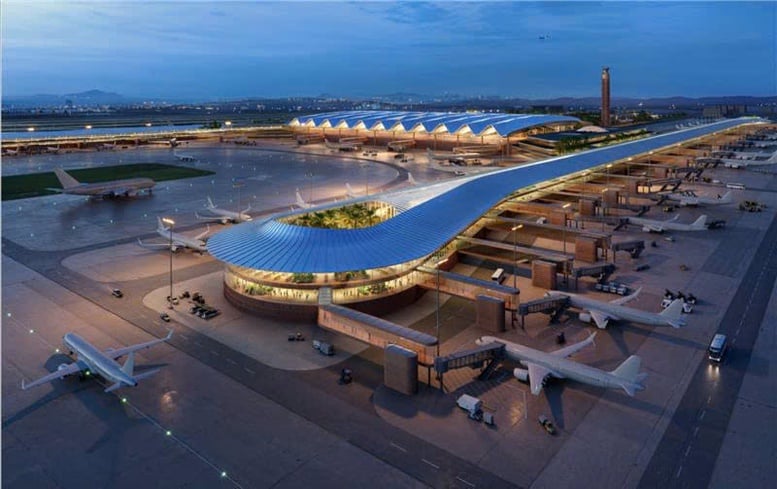
Gia Binh International Airport is also planned to meet environmental, social, and governance (ESG) criteria, following the general trend of the aviation industry.
Enhancing the capacity of the national aviation network.
Previously, at the groundbreaking ceremony for Gia Binh International Airport at the end of 2024, government leaders emphasized the need to effectively utilize various types of space, including outer space in the context of aviation economic development, maritime space, and underwater space. According to government leaders, upgrading and supplementing aviation infrastructure is a crucial part of the socio-economic development strategy given the increasing population density and growing travel demand.
From a planning perspective, representatives of the Vietnam Urban Planning and Development Association believe that establishing another airport in the Capital Region would support trade connections between localities, serve growth, and also serve dual-use purposes when needed.
Masterise Group, the selected investor, possesses strong capabilities in project management and development, along with extensive experience collaborating with leading global partners. This will contribute to the creation of Gia Binh International Airport to global standards, elevating Vietnam's aviation infrastructure. Because the project utilizes both private and public capital, it helps reduce pressure on public investment during a period when numerous infrastructure projects are being implemented simultaneously. Throughout the construction process, the project must fully comply with the approved planning and technical standards of civil aviation.
In addition, the National Assembly is considering the draft Law on Civil Aviation of Vietnam (amended), which includes provisions related to mechanisms for attracting socialized investment in aviation infrastructure. National Assembly leaders believe that regulations are needed to facilitate the expansion of public-private partnership models for airports, in order to mobilize more resources for infrastructure development.
Projects such as the Long Thanh International Airport, along with Gia Binh Airport, are part of the overall strategy to complete the national aviation infrastructure system. The addition of new airports aims to ensure the synchronization of the transportation network, increase regional connectivity, and serve diplomatic events when required.
According to the government's plan for 2026 and beyond, the goal of high growth requires infrastructure, especially aviation infrastructure, to meet transportation needs and market expansion trends. Once operational, Gia Binh International Airport, along with existing airports, will create a rationally distributed network, supporting economic development and enhancing the competitiveness of the Capital Region and surrounding localities.
Mr. Minh
Source: https://baochinhphu.vn/cang-hang-khong-quoc-te-gia-binh-mo-khong-gian-ket-noi-ho-tro-tang-truong-102251211111500394.htm

![[Photo] Prime Minister Pham Minh Chinh holds a phone call with the CEO of Russia's Rosatom Corporation.](/_next/image?url=https%3A%2F%2Fvphoto.vietnam.vn%2Fthumb%2F1200x675%2Fvietnam%2Fresource%2FIMAGE%2F2025%2F12%2F11%2F1765464552365_dsc-5295-jpg.webp&w=3840&q=75)


![[Photo] Closing Ceremony of the 10th Session of the 15th National Assembly](/_next/image?url=https%3A%2F%2Fvphoto.vietnam.vn%2Fthumb%2F1200x675%2Fvietnam%2Fresource%2FIMAGE%2F2025%2F12%2F11%2F1765448959967_image-1437-jpg.webp&w=3840&q=75)










































![[OFFICIAL] MISA GROUP ANNOUNCES ITS PIONEERING BRAND POSITIONING IN BUILDING AGENTIC AI FOR BUSINESSES, HOUSEHOLDS, AND THE GOVERNMENT](https://vphoto.vietnam.vn/thumb/402x226/vietnam/resource/IMAGE/2025/12/11/1765444754256_agentic-ai_postfb-scaled.png)




































Comment (0)