

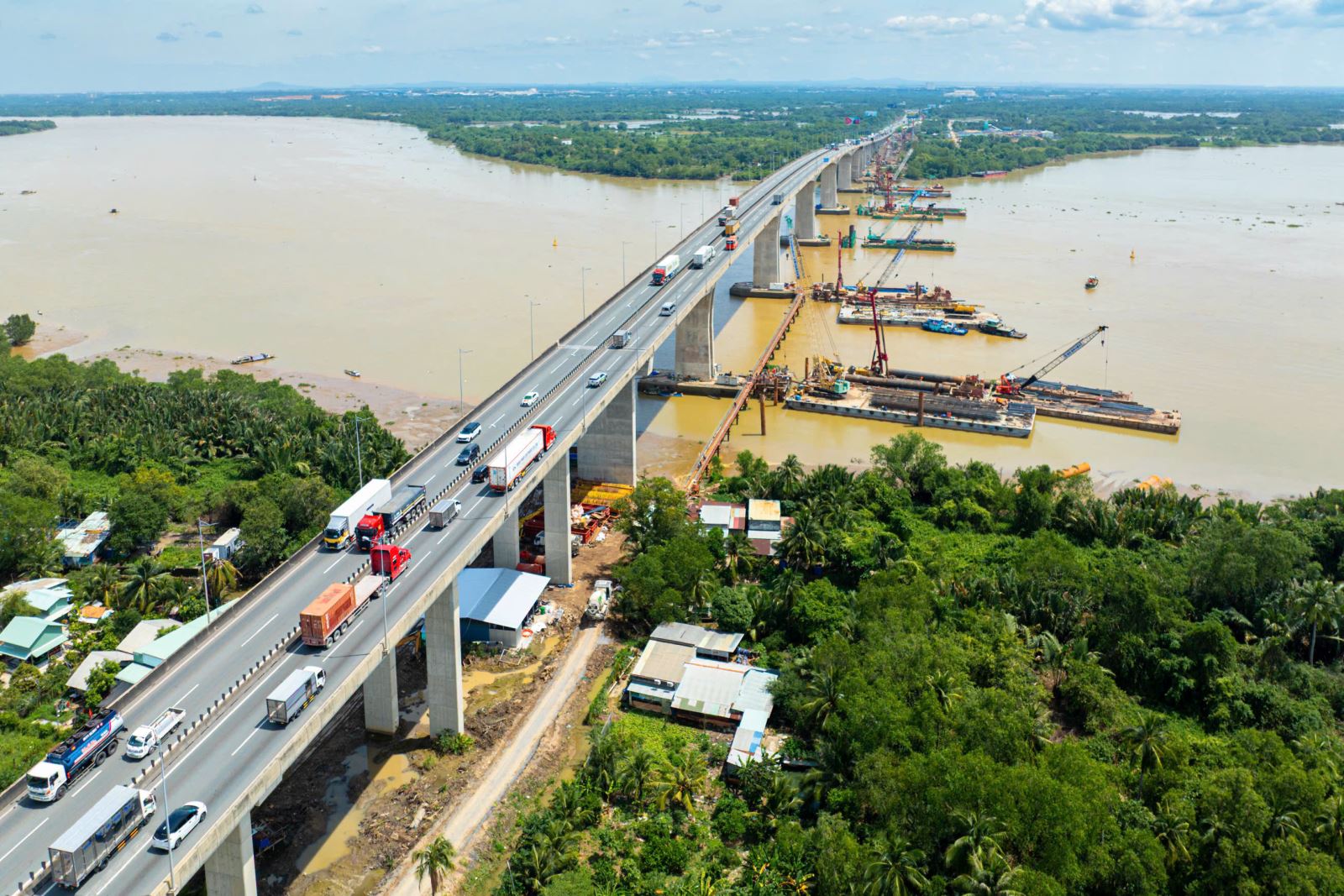
The Ho Chi Minh City - Long Thanh Expressway expansion project is approximately 22km long, passing through Ho Chi Minh City and Dong Nai province, with a total investment of over 15,000 billion VND, comprising two packages XL1 and XL2, and is invested by the Vietnam Expressway Corporation (VEC).
Construction began on August 19, 2025, and aims for basic completion by December 2026 to meet the increasing transportation demand, especially when Long Thanh International Airport becomes operational in phase 1.
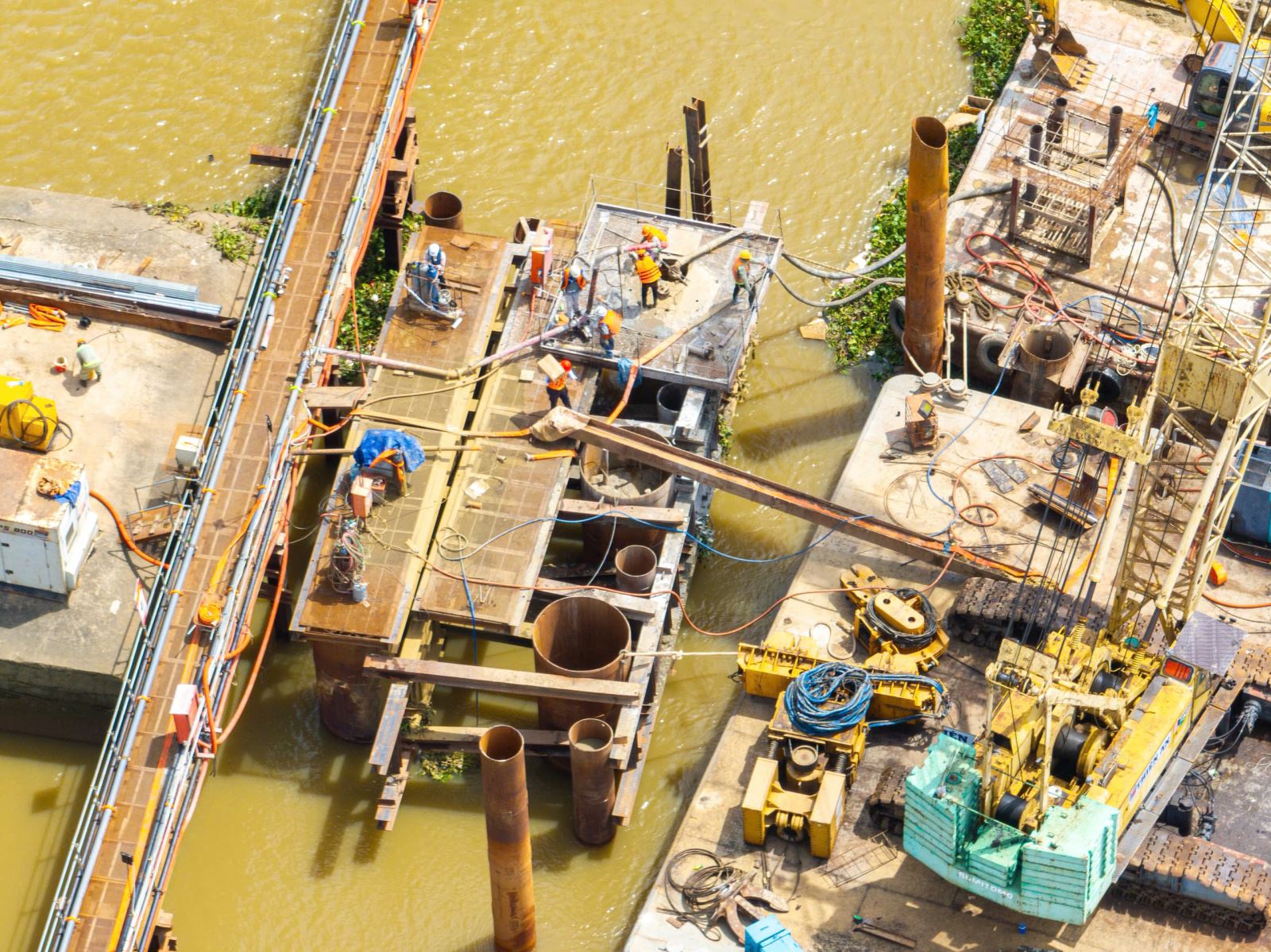
However, according to reporters' observations, after more than two months of construction, both packages are behind schedule. Currently, package XL1 has reached about 80% completion, while package XL2 is only nearly 40%. On the construction site, construction activities are mainly concentrated in the Long Thanh bridge area, while many sections from Km4+00 to Km25+920 are being constructed sporadically and at a slow pace due to the lack of "clear" land for simultaneous construction.
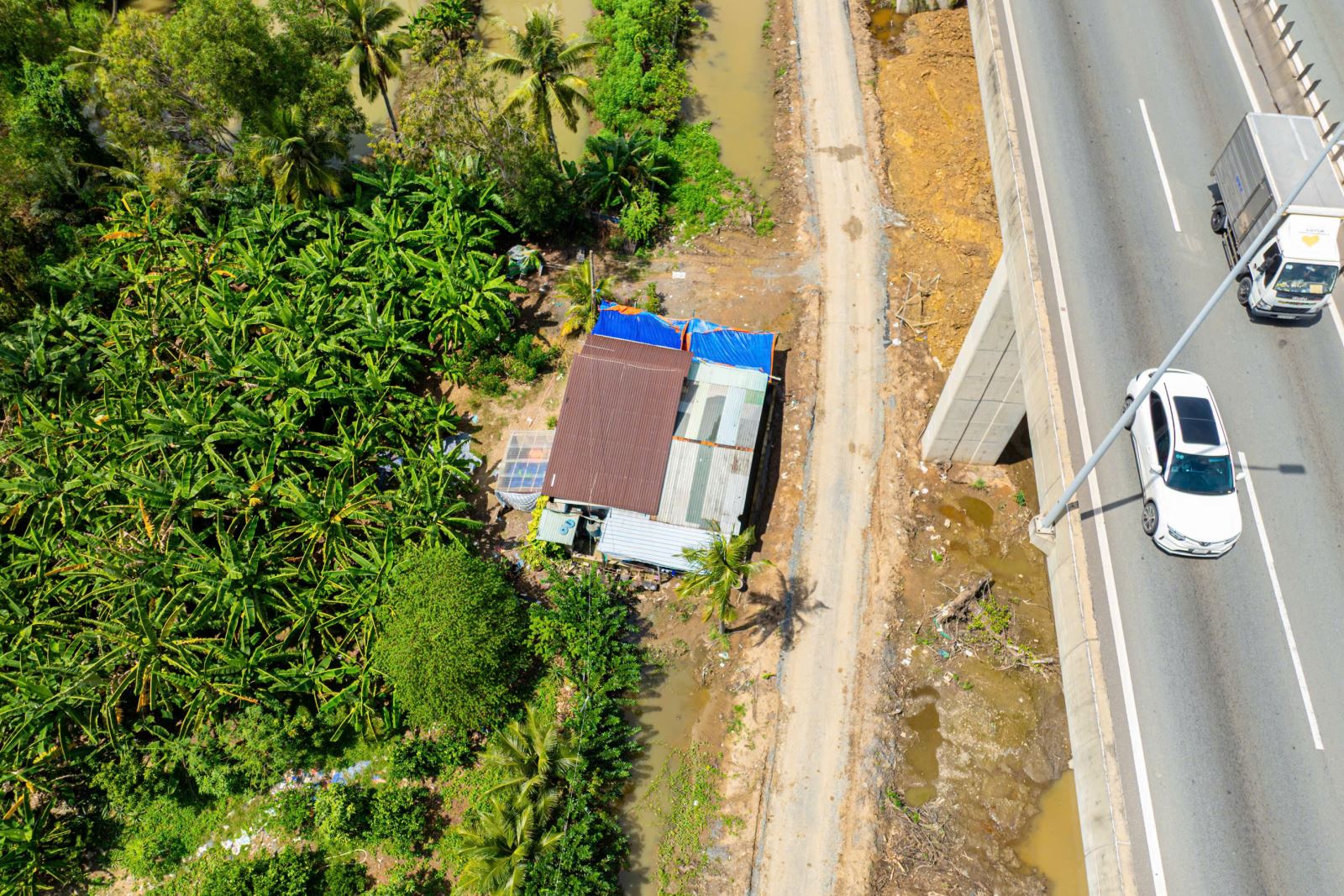
Regarding package XL1, the contractor mobilized approximately 650 personnel and 120 pieces of equipment. However, most of the machinery had to be parked on-site and could not be used for construction because the site handed over was only 5-6 meters wide, a requirement for a construction corridor that was only completed in phase 1. To achieve the designed scale of 8-10 lanes, the construction corridor needs to be 17-20 meters wide. The lack of available land has significantly slowed down the progress of pile drilling, foundation construction, and bridge approach construction.
Many locations from abutment M1 to pier T20 still lack available land. Piers T130 to T142 lack access roads, meaning the contractor, despite bringing equipment to the project nearly two months ago, has been unable to operate. For the elevated bridge section being widened by an additional 7.25m, only 2 out of 4 piles have been constructed at each pier due to unresolved land clearance issues. As for the 11m wide section (to achieve 10 lanes), only about 70% of the land has been acquired, so only 3 out of 5 piles can be constructed at the bridge piers.
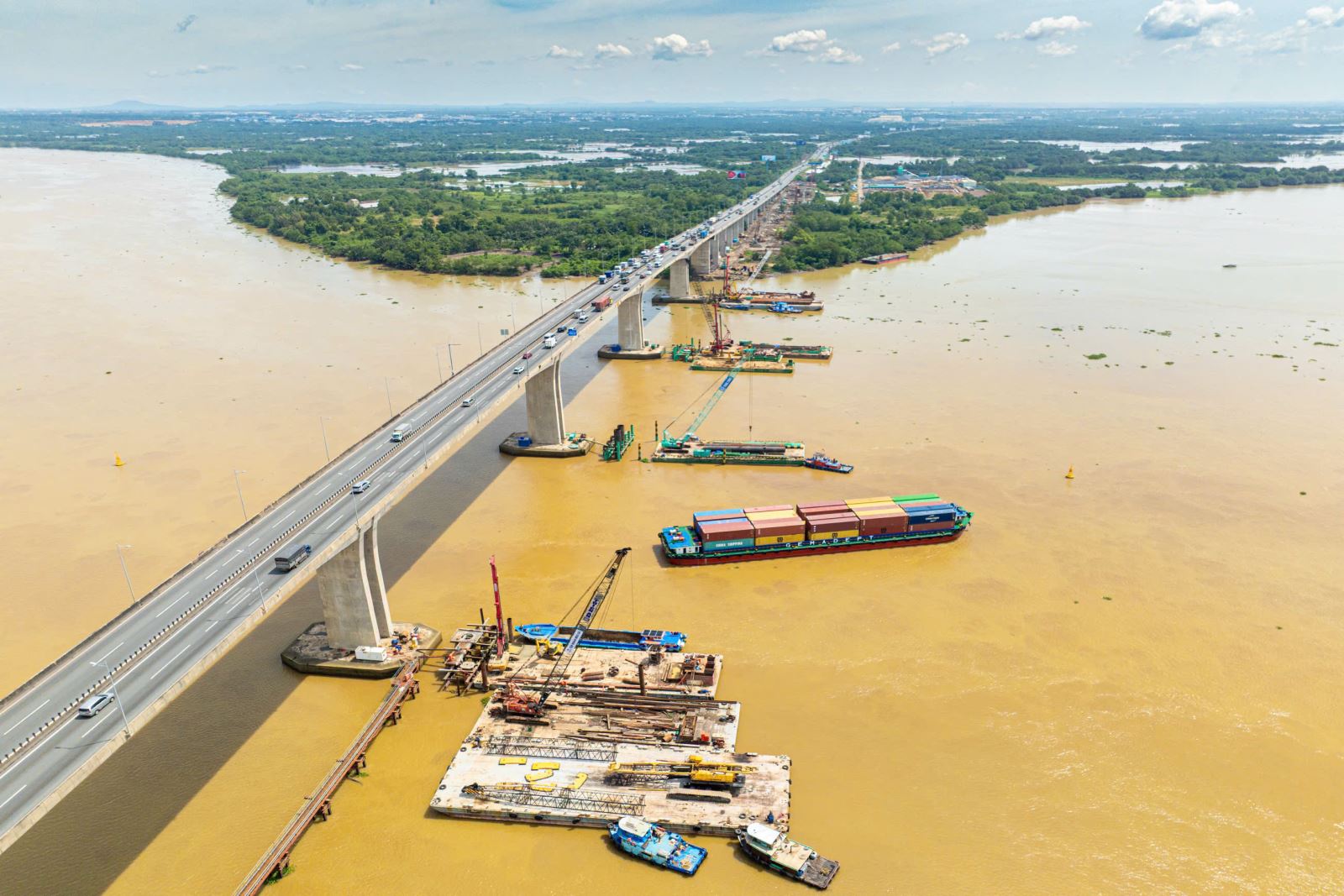
In package XL2 in Dong Nai province, more than 230 personnel and nearly 100 pieces of equipment have been mobilized. The contractor is currently clearing the site, constructing access roads, and drilling test piles and bored piles. However, construction is still facing many obstacles due to the lack of complete construction drawings for the relocation of power lines and bridge structures. Therefore, the contractor lacks the necessary technical basis to proceed with all work simultaneously.
The project is being implemented as an emergency construction project, combining design and construction. The design is divided into two phases: basic design and detailed design. VEC is in charge of the detailed design phase. However, the review and approval process for the detailed design is currently slow, failing to meet the necessary schedule for the on-site contractor.
Representatives of the contractor for the Ho Chi Minh City - Long Thanh expressway expansion project stated that the company has deployed significant manpower and equipment to the construction site but lacks the necessary land and complete design documents to begin work. If this situation persists, the entire project's progress will continue to be affected, not to mention the significant daily costs the company incurs for machinery maintenance and repairs, as well as monthly worker salaries.
Regarding the project, Mr. Nguyen Kien Giang , Deputy Head of the Department of Maintenance and Operation of Transportation Works, Ho Chi Minh City Department of Construction, said that the Ho Chi Minh City - Long Thanh expressway expansion project has two sections, one under the management of Ho Chi Minh City and one under Dong Nai province.
In Ho Chi Minh City, the Vo Chi Cong access road section will begin construction in early November. This area is not subject to land clearance issues as the first phase of compensation and site clearance has been completed, and the land is ready. However, the section from the beginning of the Vo Chi Cong access road to Dong Nai province, where VEC is the investor, currently has sufficient machinery and personnel, and is actively clearing the land to allow contractors to begin construction.
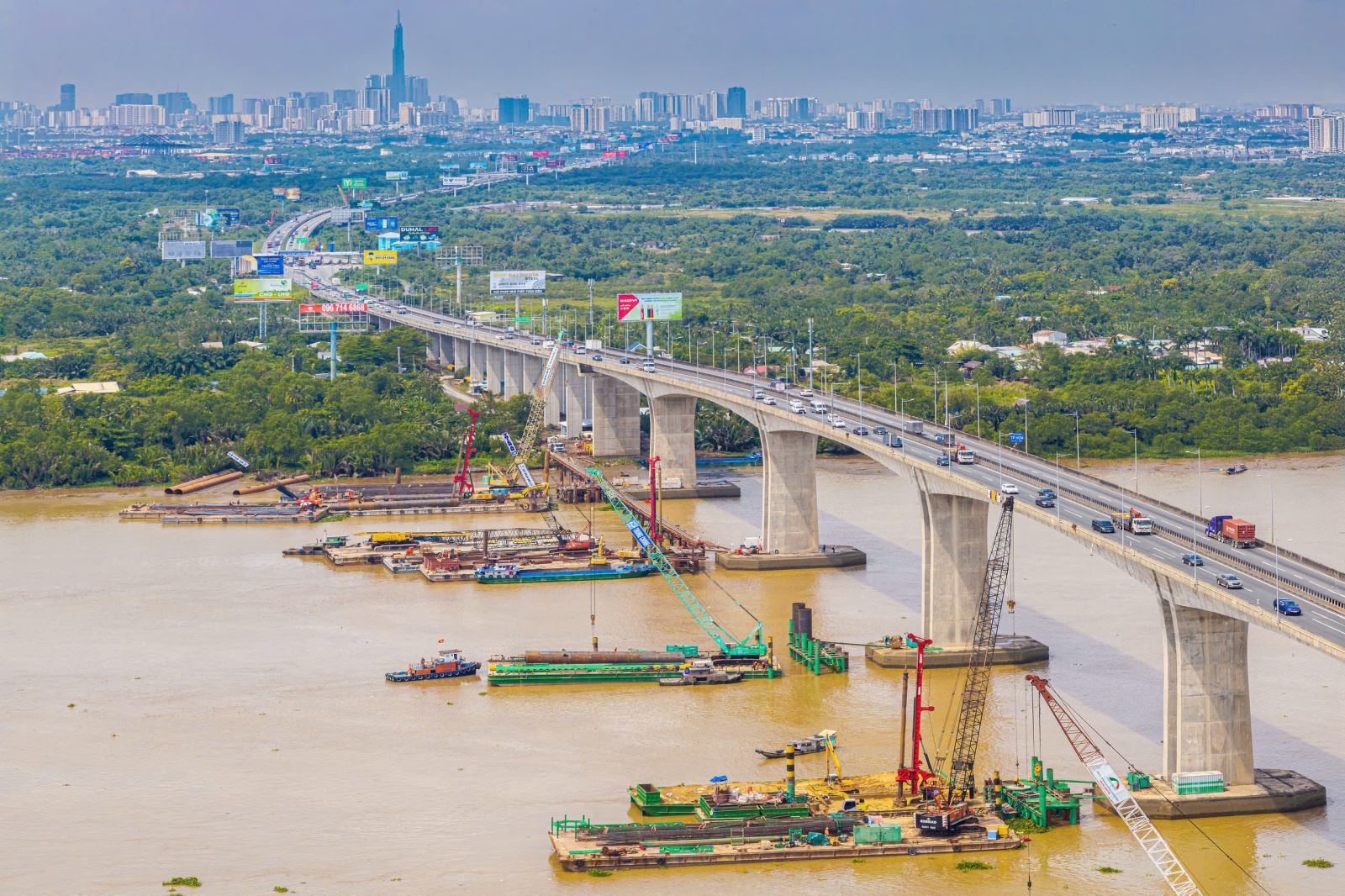
According to transportation experts, the Ho Chi Minh City – Long Thanh expressway expansion project is a vital transportation artery connecting the country's largest economic center with the Southeast region and Long Thanh airport. Any delays will not only exacerbate traffic congestion but also negatively impact the region's infrastructure development strategy.
To get the project on track, experts suggest accelerating land compensation and clearance in Dong Nai; VEC urgently completing and handing over construction drawings; and contractors working overtime when sufficient land is available to compensate for delays. Most importantly, the decisive solution remains securing a clean site – a prerequisite for the project to move from a "waiting" phase to a "construction" phase.
Source: https://baotintuc.vn/van-de-quan-tam/cao-toc-tp-ho-chi-minh-long-thanh-co-nguy-co-cham-tien-do-do-vuong-mat-bang-20251025165203155.htm































![[Video] The craft of making Dong Ho folk paintings has been inscribed by UNESCO on the List of Crafts in Need of Urgent Safeguarding.](https://vphoto.vietnam.vn/thumb/402x226/vietnam/resource/IMAGE/2025/12/10/1765350246533_tranh-dong-ho-734-jpg.webp)























































Comment (0)