

In the context of increasingly severe climate change, droughts and water shortages in the Central Highlands and South Central regions are becoming more serious. The application of remote sensing technology and digital transformation in monitoring and forecasting water resources and operating irrigation systems is considered an essential direction to ensure livelihoods for the people.
Urgent need in water resource management
In response to the increasingly complex drought situation in the Central Highlands, the Ministry of Agriculture and Environment , in collaboration with the Food and Agriculture Organization of the United Nations (FAO), has implemented the project "Assessing the Impact of Drought in the Central Highlands" using remote sensing technology , aiming to enhance monitoring and early forecasting capabilities. This technology is expected to help the irrigation sector proactively respond to climate change, improve water resource management efficiency, and protect production and people's lives.
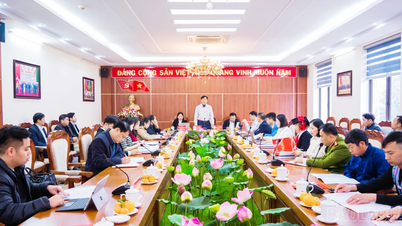
Mr. Nguyen Hong Khanh, Deputy Director of the Department of Irrigation Construction Management, emphasized the consistent direction of the Party and the State in promoting the application of digital science and technology throughout the agricultural sector, especially in the field of irrigation.
Mr. Nguyen Hong Khanh stated: “Five years ago, we focused on applying digital technology in research, planning, and supporting local water management. Recently, the Department submitted a plan to the Ministry to complete the electronic information system for monitoring and forecasting water resources. Today's trials are an important step in evaluating the effectiveness of new technologies in drought warning , especially in areas frequently experiencing water shortages such as the Central Highlands and South Central Vietnam.”
In addition, Mr. Khanh also emphasized the need to improve the accuracy of forecasts: “ We hope that research units will apply advanced technologies from around the world to reduce the forecast error rate to below 10%. When put into practical operation, the system must support localities in proactively developing production plans, regulating construction projects, and providing timely information to the people.”
According to him, the results from the project will not only benefit the pilot localities but can also be replicated in larger areas, creating a foundation for smart water resource management in the context of increasing climate extremes.
Early forecasting tools for drought and crop structure adjustment.
Mr. Nguyen Song Ha, FAO representative in Vietnam, highly appreciated the applicability and expansion potential of remote sensing technology in water resource management .
Mr. Nguyen Song Ha stated: “Remote sensing technology can analyze risks and provide appropriate warnings to management agencies, helping to build a proactive and transparent drought monitoring method. In addition to early warning, remote sensing data also supports index-based agricultural insurance, pest and disease control, and identifying crops and livestock more suitable for drought or saline intrusion conditions.”
The FAO notes that Vietnam currently lacks skilled personnel and specialized monitoring equipment, while the availability of free high-resolution imagery is limited. Therefore, it is necessary to focus on building data analysis capabilities and mastering AI tools and digital mapping to support irrigation planning.
Mr. Ha further emphasized: “Water resources are not limited to administrative borders. Modern analytical tools will help strengthen regional cooperation, especially in the basins of transboundary river systems. Early forecasting helps people minimize damage, adjust crop structures, and use water more efficiently.”
Digital transformation in irrigation, towards proactive and sustainable water management.
From the perspective of digital transformation across the entire sector, Mr. Dang Duy Hien, Deputy Director of the Digital Transformation Department, Ministry of Agriculture and Environment, believes that the digitalization process in irrigation is facing the need for significant change. “ Digital transformation is the process of changing the management model from administrative to data-driven governance. However, our irrigation data is still lacking, the information systems supporting operation are not strong enough, equipment is prone to damage, and costs are high,” Mr. Dang Duy Hien stated.
Mr. Hien pointed out several bottlenecks: manual hydrological measurements require a large workforce and the costs are incompatible with automated measurements; the technical standards for hydrology are outdated (issued in 2009) and no longer suitable; the process of estimating costs for meteorological and hydrological data services is complex, and equipment calibration costs are high; there is a lack of domestic enterprises providing sensors and data services at affordable prices.
However, Mr. Hien stated that the industry is making clear progress: “The Department of Digital Transformation is developing an IoT project for agriculture and environment and providing shared digital infrastructure for the irrigation sector. If localities implement it, they will only need sensors and data transmission lines. This is a cost-effective solution, consistent with the policy of prioritizing domestic technology as stipulated in Resolution 57.”
In addition, many domestic technology companies are developing automation systems and data services, creating a foundation for the irrigation sector to move towards comprehensive digital operation, from measurement, monitoring, forecasting to warning for the people.
Professor, Dr. Nguyen Tung Phong, Director of the Department of Water Resources Management and Construction, emphasized: Remote sensing technology only realizes its value when it receives continuous and synchronized investment, from infrastructure and equipment to human resources, research institutes, and technology transfer units. Secondary products from remote sensing technology will directly serve socio-economic development, especially agriculture and the environment, including the field of water resources.
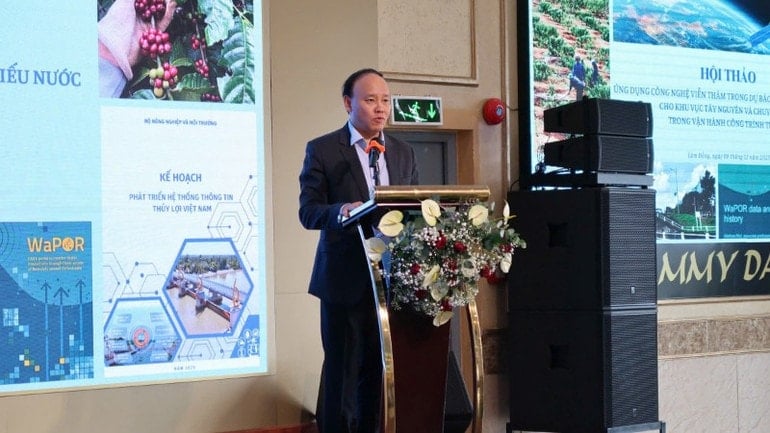
Professor, Dr. Nguyen Tung Phong also noted the unique nature of drought: “Drought does not cause immediate damage like floods, but it is insidious, prolonged, and leaves widespread consequences. In the Central Highlands, areas within the irrigation system can proactively address the problem; but what should be done and how should areas outside the system respond? This is a crucial task for the irrigation sector in achieving sustainable agricultural development.”
According to Professor, Dr. Nguyen Tung Phong, the three perspectives—state management, international organizations, and digital transformation—all converge on a common point: Vietnam needs modern technology to adapt to extreme weather conditions, optimize water resources, and protect the livelihoods of millions of farmers, aiming for smart water resource management and sustainable agricultural development.
Source: https://baolamdong.vn/chu-dong-nguon-nuoc-nho-du-bao-han-han-bang-cong-nghe-so-o-dak-lak-lam-dong-409888.html



























































Comment (0)