

Spectacular growth momentum: Record profits, high expectations.
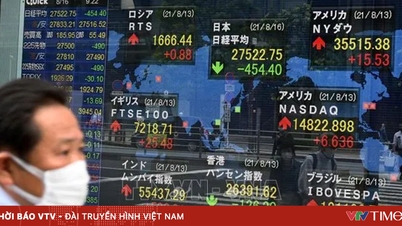
On October 16, 2025, shares of South Korea's leading electronics giant, Samsung Electronics, rose 2% in trading, reaching 96,900 won per share (equivalent to $67.52) on the Seoul stock exchange. This surpassed the previous high of 96,800 won, set in January 2021.
Samsung Electronics shares have just hit an all-time high, surpassing the record set in 2021. This surge was driven by investor confidence in the recovery of the semiconductor industry and the global boom in artificial intelligence (AI) chips.
Thus, since the beginning of 2025, Samsung's stock price has increased by 80%, affirming the company's leading position in the global technology industry.
The price increase came immediately after Samsung announced its forecast for third-quarter 2025 operating profit of approximately 12.1 trillion won (equivalent to $8.5 billion), a 30–32% increase year-on-year – the highest level in over three years. Consolidated revenue was also estimated to increase by nearly 9%, to approximately 86 trillion won, marking the third consecutive quarter of strong growth.
The AI chip "tsunami" and the recovery of the DRAM/NAND market.
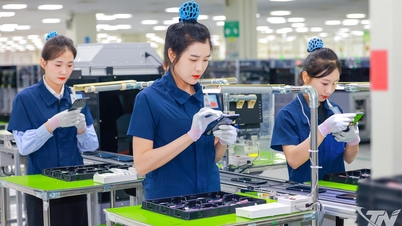
The main driver behind the surge is the strong demand for memory chips from global AI data centers – a sector attracting massive investment. The market has seen a strong recovery and soaring prices for traditional memory chips such as DRAM and NAND, which are core business areas for Samsung.
Park Sang-kyung, an economist and technology expert at the Korea Economic Research Institute (KERI), commented:
"DRAM chip prices have surged by 171.8% year-on-year, according to TrendForce data. Samsung – the world's largest memory manufacturer – is maximizing profits from this recovery. The Q3 results are not only a short-term financial boost but also confirm that the semiconductor market has truly entered a new growth cycle after the downturn."
Investor confidence is further bolstered by expectations that Samsung will play a key role in the global AI development wave. Despite facing fierce competition, the conglomerate is accelerating investment to expand its advanced chip manufacturing and semiconductor foundry operations.
Notably, major deals such as the $16.5 billion agreement with Tesla to manufacture chips for the next eight years have helped Samsung's foundry division grow its revenue by approximately 10% annually. This is a positive sign that the company is gradually regaining its position in a field that was once heavily pressured by rival TSMC.
HBM bottlenecks and intense competition
Despite its current high stock price and profits, Samsung Electronics still faces significant challenges, particularly in the high-tech race and increasingly complex geopolitical risks.
The biggest challenge today is the high-bandwidth memory (HBM) chip market, a type of chip essential for AI servers and high-performance computing.
Despite being the world's number one memory chip manufacturer, Samsung lags behind in the HBM segment – where competitors like SK Hynix and Micron are dominant.
Daniel Kim, an analyst at Macquarie Equity Research, said: "Samsung is working to finalize its HBM chip line to meet Nvidia's standards, but shipments are slow. SK Hynix currently holds a large share of the global HBM market. Samsung's slow response in the high-margin AI chip segment makes it more vulnerable."
In the second quarter of 2025, the operating profit of the equipment solutions (chip manufacturing) division fell by as much as 94% year-on-year, mainly due to poor performance in the foundry segment and the impact of the US's advanced chip export control policies to China.
Geopolitical pressure and technology investment strategies
Samsung is also facing significant pressure from the US-China trade conflict and high-tech export control barriers. These factors have forced the corporation to diversify its supply chain and increase overseas investment, particularly in the US (Texas) and Vietnam – two markets considered to have stable manufacturing environments.
Lee Jae-min, a senior advisor at the Korea Semiconductor Industry Association (KSIA), commented: "Focusing on HBM chips and 2nm chip manufacturing is consuming enormous resources. However, Samsung is leveraging record profits from its DRAM/NAND segment to reinvest in R&D and AI chip production. This strategy is a necessary step if it wants to consolidate its position in the future technology race."
In late 2024, Samsung also announced a share buyback plan worth 10 trillion won (approximately $7.19 billion) – a move seen as aimed at supporting the share price, increasing shareholder value, and consolidating the founding family's control.
Source: https://vtv.vn/co-phieu-samsung-electronics-dat-muc-cao-ky-luc-100251016232007646.htm
![[Photo] General Secretary and President To Lam works with the Party Committee of the Ministry of Health on the work of Vietnamese traditional medicine.](https://vphoto.vietnam.vn/thumb/1200x675/vietnam/resource/IMAGE/2026/05/20/1779294323718_a1-bnd-2978-3319-jpg.webp)
![[Image] "Journey of Hope" promotes the organ and tissue donation movement in Vietnam.](https://vphoto.vietnam.vn/thumb/1200x675/vietnam/resource/IMAGE/2026/05/20/1779294400833_1-8910-jpg.webp)
![[Photo] National Assembly Chairman Tran Thanh Man working with the Standing Committee of the National Assembly's Delegation Affairs Committee.](https://vphoto.vietnam.vn/thumb/1200x675/vietnam/resource/IMAGE/2026/05/20/1779294340023_ndo_br_1-1691-jpg.webp)








































































Comment (0)