

Warning of high-tech crimes in card payments and online transactions
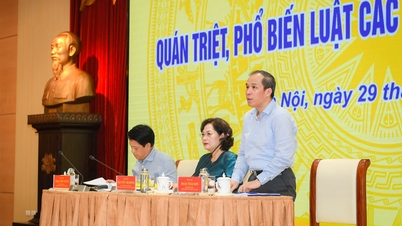
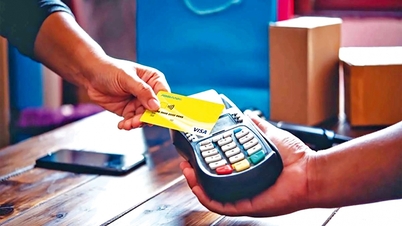
The rapid growth of digital payments in Vietnam has brought great convenience to users and promoted the digital economy . However, the downside is the increase in fraud and scams with increasingly sophisticated levels. According to the assessment of Vice President and General Secretary of the Vietnam Banking Association Nguyen Quoc Hung, fraud and scams in card payments are taking place with increasingly complex and sophisticated levels, causing damage to many people, businesses and organizations.
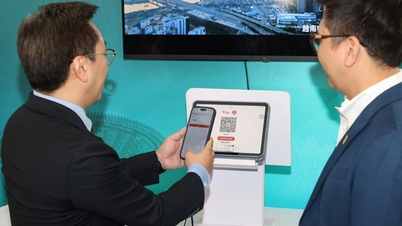
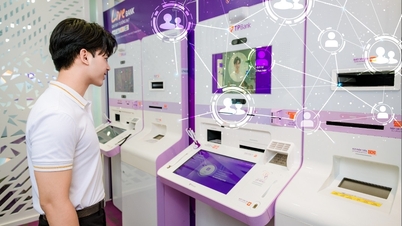
Faced with this situation, state management agencies such as the Ministry of Public Security and the State Bank of Vietnam have taken drastic measures, issuing/amending legal documents to help limit this situation. In addition, banks have invested a huge amount of resources in technology, especially biometric authentication technology, to ensure safe payment transactions, especially for transactions over 10 million VND.
 |
Although the above solutions have limited some subjects, according to Mr. Nguyen Quoc Hung, fraudulent tricks still continuously arise. Specifically, when fraudulent acts against individuals are limited, they turn to businesses in online payment activities.
From an enforcement perspective, a representative of the Cyber Security and High-Tech Crime Prevention Force (A05) pointed out that most card and account fraud cases have foreign elements and are clearly cross-border. Mr. Hoang Ngoc Bach, Head of Department 4, said that most cases related to accounts and card payments have clearly foreign elements. A typical example is the criminal activity of Skimming (theft of card data at ATMs), which was very common in the period 2016 - 2019, but has decreased significantly during the COVID-19 pandemic due to the temporary entry suspension policy. This proves the great dependence of this type of crime on foreign subjects.
Card crimes are not disappearing but are transforming into more sophisticated forms and targeting the very large credit card customer base today. Mr. Hoang Ngoc Bach said that high-tech criminals are carefully studying ATM devices to find ways to attack directly. Recently, in the US, Jackpotting has been recorded - attacking and controlling ATMs to automatically dispense money. Although it has not been widely recorded in Vietnam, Mr. Hoang Ngoc Bach also noted that credit institutions need to prepare for prevention, because these tricks all originate and are imported from abroad. In addition, the protection of personal information has not been properly cared for by cardholders. In many cases, customers give their cards to employees to swipe at the counter, without knowing whether the card information has been lost or not. Or online payment activities (e-commerce) are very diverse, only need basic information such as full name, card number, CVV/CVC code, expiration date to make transactions, creating great risks for customers. Even foreign criminals can steal chips from cards, attach them to other devices for payment, causing the money in the card to "evaporate" very quickly.
Even new security measures have become targets for attack. According to Mr. Nguyen Manh Luat, CEO of Cyberjutsu, criminals now use a series of advanced techniques to overcome defenses, including creating fake QR codes to trick users into accessing fake websites, using deepfakes to imitate the voice or image of business leaders, Real-Time Phishing attacks to steal OTP codes, or taking control of users' devices to conduct unauthorized transactions. Some techniques, such as cloning NFC cards, also allow transactions without cardholder authentication.
Criminals are no longer just targeting individuals. As biometric authentication measures help limit fraud with individual users, criminals are shifting to attacking businesses - where there are large transaction volumes, multiple layers of approvals and complex processes. According to Mr. Nguyen Quoc Hung, this shift shows that the fight against fraud needs to be approached at the system level, not just focusing on end users.
Building fundamental solutions to protect users
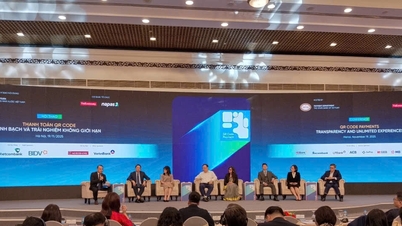
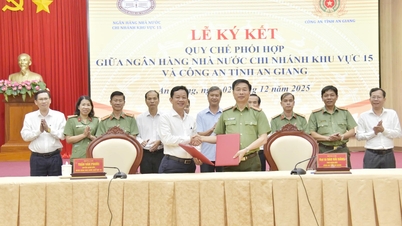
Faced with the increasingly complex and sophisticated developments of cybercrime, Mr. Hoang Ngoc Bach highly appreciated the Vietnam Banking Association's issuance of the "Handbook on coordination in supporting risk handling for accounts/cards/payment acceptance units related to money transfer/payment transactions suspected of fraud and counterfeiting". This is a very necessary solution. "I believe that with the highest cooperation, synchronization and consensus between the banking industry and the police force, we can create effective and sustainable solutions to prevent crime. Because the ultimate victims are the people, Vietnamese citizens and even our relatives", Mr. Hoang Ngoc Bach emphasized.
According to the representative of NAPAS - the main drafting unit, the Handbook consists of three chapters and thirteen articles, with an appendix of process flowcharts and forms for identifying accounts, cards, and payment units suspected of fraud and scams. The clear and detailed structure helps related organizations easily implement and avoid the situation where each unit has its own process as before. The most important point is that the Handbook clearly defines the responsibilities of the organization requesting support, including the need to prepare complete documents and vouchers within the deadline, to avoid misuse of inspection or causing congestion in the system.
However, the actual implementation process still faces many difficulties. BIDV representative said that the bank has issued internal procedures based on the Handbook and disseminated them throughout the system, but some problems still arise, especially related to coordination between members, protecting the rights of affected customers and limiting complaints during the processing stage.
According to Mr. Nguyen Quoc Hung, the Handbook is only effective when implemented seriously and synchronously. He said that although the document has just been issued, the initial results are very encouraging. Citing figures from Visa, Mr. Hung emphasized that the fraud rate in the card sector in Vietnam, which used to be the highest in the region, has now dropped sharply to 7%, while fraud through payment accounts has also been limited. This is a positive signal, but the banking industry absolutely must not be subjective.
In fact, the problem of fraud and scams in the field of card payments is not only a challenge in Vietnam, but a global issue. Vice President and General Secretary of the Banking Association Nguyen Quoc Hung said that at the 53rd ASEAN Banking Council Conference held in Myanmar recently, countries expressed their concerns and special interest in preventing and combating fraud and scams. At the same time, countries highly appreciated the issuance of the Handbook by the Vietnam Banking Association. They are also looking for cross-border coordination to prevent crimes such as blocking money transferred to other countries... This shows that the role of the Handbook is not only to standardize operations, but also to create a basis for international cooperation in preventing financial crimes.
At the same time, the Vietnam Banking Association also strongly promoted communication on the media to warn people, raise awareness of digital fraud, help customers understand the risks and protect their own assets. "The ultimate victims are people and businesses. In addition to technology and processes, user vigilance and the responsibility of the entire system are decisive factors," Mr. Hung emphasized.
He also said that the Association will soon issue a document urging all credit institutions to review internal regulations, update risk handling procedures according to the Handbook and report on arising difficulties so that the Association can guide and make appropriate adjustments. Only when the entire system is unified and synchronized in implementation can the Handbook play its role as a "shield" in protecting users and ensuring payment safety.
Source: https://thoibaonganhang.vn/cung-co-la-chan-cho-he-thong-thanh-toan-truoc-nguy-co-toi-pham-cong-nghe-cao-174524.html
![[Photo] Worshiping the Tuyet Son statue - a nearly 400-year-old treasure at Keo Pagoda](/_next/image?url=https%3A%2F%2Fvphoto.vietnam.vn%2Fthumb%2F1200x675%2Fvietnam%2Fresource%2FIMAGE%2F2025%2F12%2F02%2F1764679323086_ndo_br_tempimageomw0hi-4884-jpg.webp&w=3840&q=75)




![[Photo] Parade to celebrate the 50th anniversary of Laos' National Day](/_next/image?url=https%3A%2F%2Fvphoto.vietnam.vn%2Fthumb%2F1200x675%2Fvietnam%2Fresource%2FIMAGE%2F2025%2F12%2F02%2F1764691918289_ndo_br_0-jpg.webp&w=3840&q=75)

























































































Comment (0)