

 |
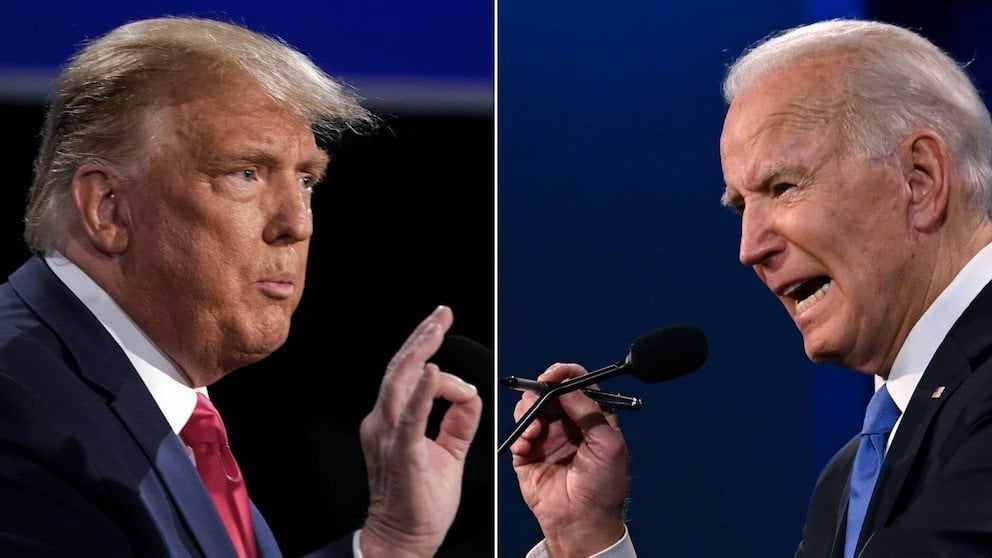
| US Election 2024: A rematch on economic policy, will President Biden's contrasting colors win against Trump? (Source: Getty Images) |
An ABC News/Ipsos poll shows that the economy is the top concern for American voters ahead of the election for the next White House occupant. So how do their plans for the future of the American economy differ?
What will be the deciding factor?
Former President Donald Trump defeated his Republican rivals in the race for the first Republican presidential nomination in 2024, setting the stage for a potential rematch with incumbent President Joe Biden – likely the Democratic candidate.
According to recent polls, the decisive issue in the race between Trump and Biden can only be the "health" of the American economy. An ABC News/Ipsos poll from November showed that 74% of Americans said the economy is very important to them, making it a top concern for voters.
Currently, neither candidate's campaign is responding to media requests for comment. However, incumbent President Biden and former President Trump stand in stark contrast on issues that directly impact the finances of American citizens, including taxes, jobs, and trade.
While President Biden, during his term, sought to raise taxes on the wealthy and certain large corporations, viewing that as an effort to bring fairness to tax laws, former President Trump took a different approach. He seemed willing to maintain, or even reverse, this policy by cutting taxes, which he considered a catalyst for economic growth.
Donald Trump has pledged to extend the tax cuts signed into law during his first term, as they are set to gradually diminish in 2025. Speaking to ABC News, Stephen Moore, a former economic advisor to the former president, revealed that he helped shape Trump's agenda for his second term.
Moore said the future administration might seek further tax cuts, but details of such a proposal remain uncertain. "Everything is still under discussion; nothing has been decided yet."
Conversely, the administration of incumbent President Biden has proposed raising taxes on the wealthy and prioritizing the early expiration of some of the tax cuts implemented by his predecessor, Donald Trump.
For example, the Biden administration could closely monitor the expiration of the 20% tax deduction on specific income generated at transitional businesses through individual owners. This move would effectively lead to increased taxes on the owners of those companies.
Meanwhile, targeting high-net-worth individuals, President Biden could impose the first type of wealth tax. Last year, the current US administration proposed a 2024 tax plan that includes a 25% tax on the assets of individuals with a net worth exceeding $100 million. Biden said this plan would only apply to 0.01% of Americans.
"I am a capitalist, but pay you your fair share," President Biden said in last year's State of the Union address.
The U.S. Congress is currently divided on this issue and may not pass such a tax increase, but President Biden could pursue it if re-elected for a second term.
Who is better than whom?
Regarding foreign economic policy, although Biden's campaign has not yet outlined a trade policy agenda for a second term, his administration has so far maintained a tough stance toward some countries considered adversaries, such as China, while pursuing trade agreements with other economies.
Specifically, President Biden maintained the tariffs imposed by his predecessor Trump on Chinese imports, escalating the confrontation with the world's second-largest economy through additional "tightening" measures, such as a ban on the export of advanced chips to the country.
On the other hand, in recent years the US has reached trade agreements on certain goods with economies such as Taiwan (China) and its ally Japan.
In December, the Biden administration also extended the suspension of tariffs imposed by the Trump administration on steel and aluminum from Europe, but the White House has yet to establish a long-term agreement to eliminate these tariffs.
As for former President Trump, he is expected to intensify the confrontational trade policies established during his first term, promising to impose tariffs on most imported goods.
Speaking to Fox Business in August 2023, Trump said that tariffs on imported goods could eventually reach 10%.
Trump also plans to tighten restrictions on Chinese-made products, including a "four-year plan to gradually eliminate all essential Chinese imports," according to a series of proposals put forward last February.
On the issue of jobs and manufacturing, both potential U.S. presidential candidates pride themselves on being job creators and fosterers of American manufacturing growth. But they have taken very different approaches to doing so.
Former President Trump's campaign presented his tariff policy as a means to protect American businesses, thereby ensuring a strong job market and, consequently, strengthening domestic supply chains.
"Mr. Trump wants more jobs created in America. He also wants more goods manufactured in America," said economic advisor Stephen Moore.
Conversely, the Biden administration has used policy tools, enacting federal laws to bring in large investments for American companies and thereby boost demand for labor and jobs.
Speaking at the Chicago Economic Club last week, Treasury Secretary Janet Yellen pointed to several measures signed into law by President Biden that have brought investment to projects focused on infrastructure, computer chips, and clean energy.
"These investments will boost our economic growth and strengthen our economic security," Yellen expressed her confidence.
For many investors on Wall Street and American voters, the likelihood of Trump's re-election is high, as they believe the billionaire businessman is better able to manage the economy than incumbent President Biden. However, numerous controversies have also erupted regarding the economic policies proposed by Trump.
No one can predict what the US economy will be like during any president's term. There were predictions that if Trump won in 2016, the US would face an economic disaster, but reality proved that prediction completely wrong. On election night, US stock market futures plummeted, but the market quickly reversed course and ended in brilliant green the very next day.
Source

























![[Photo] Prime Minister Pham Minh Chinh holds a phone call with the CEO of Russia's Rosatom Corporation.](/_next/image?url=https%3A%2F%2Fvphoto.vietnam.vn%2Fthumb%2F1200x675%2Fvietnam%2Fresource%2FIMAGE%2F2025%2F12%2F11%2F1765464552365_dsc-5295-jpg.webp&w=3840&q=75)

















































Comment (0)