

At the Hue University conference - 30 years of re-establishment and development into a national university (1994 - 2024), Hue University proposed that the Central Government promptly remove obstacles to its development into a national university.
On November 1st, to commemorate the 30th anniversary of its re-establishment (1994 – 2024), Hue University organized a seminar and meeting of leaders from different periods, as well as a workshop on the process of building and developing into a national university.
One of the three regional universities in the country.
Speaking at the conference, Associate Professor Dr. Le Anh Phuong, Director of Hue University, stated that Hue University, formerly Hue University Institute, was established in March 1957 and reorganized in 1994 according to Government Decree No. 30/CP dated April 4, 1994. It is one of the three regional universities in the country, a multidisciplinary university, "carrying out national strategic tasks and regional development tasks of the country".
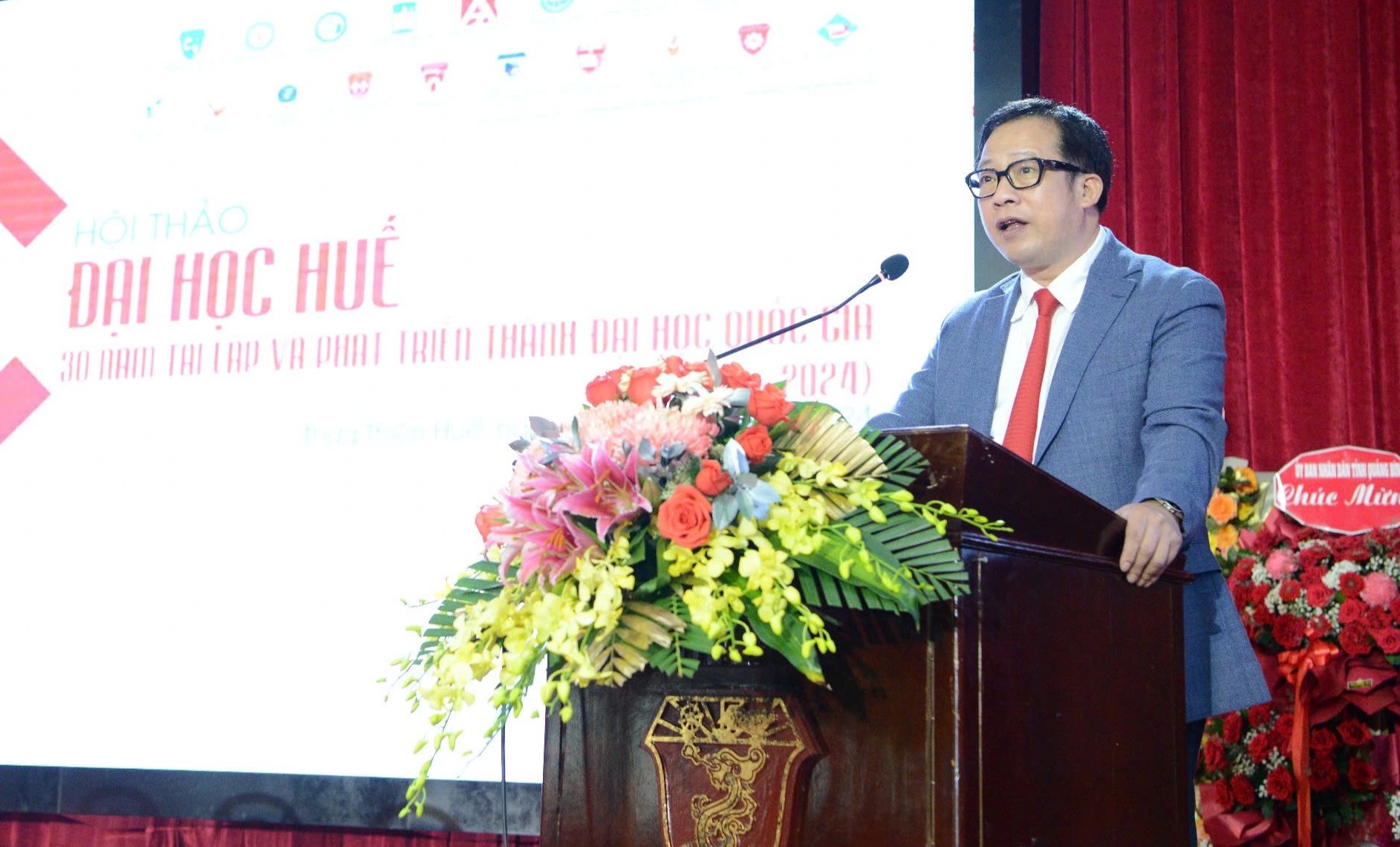
Associate Professor Dr. Le Anh Phuong, Director of Hue University, delivered a speech at the conference.
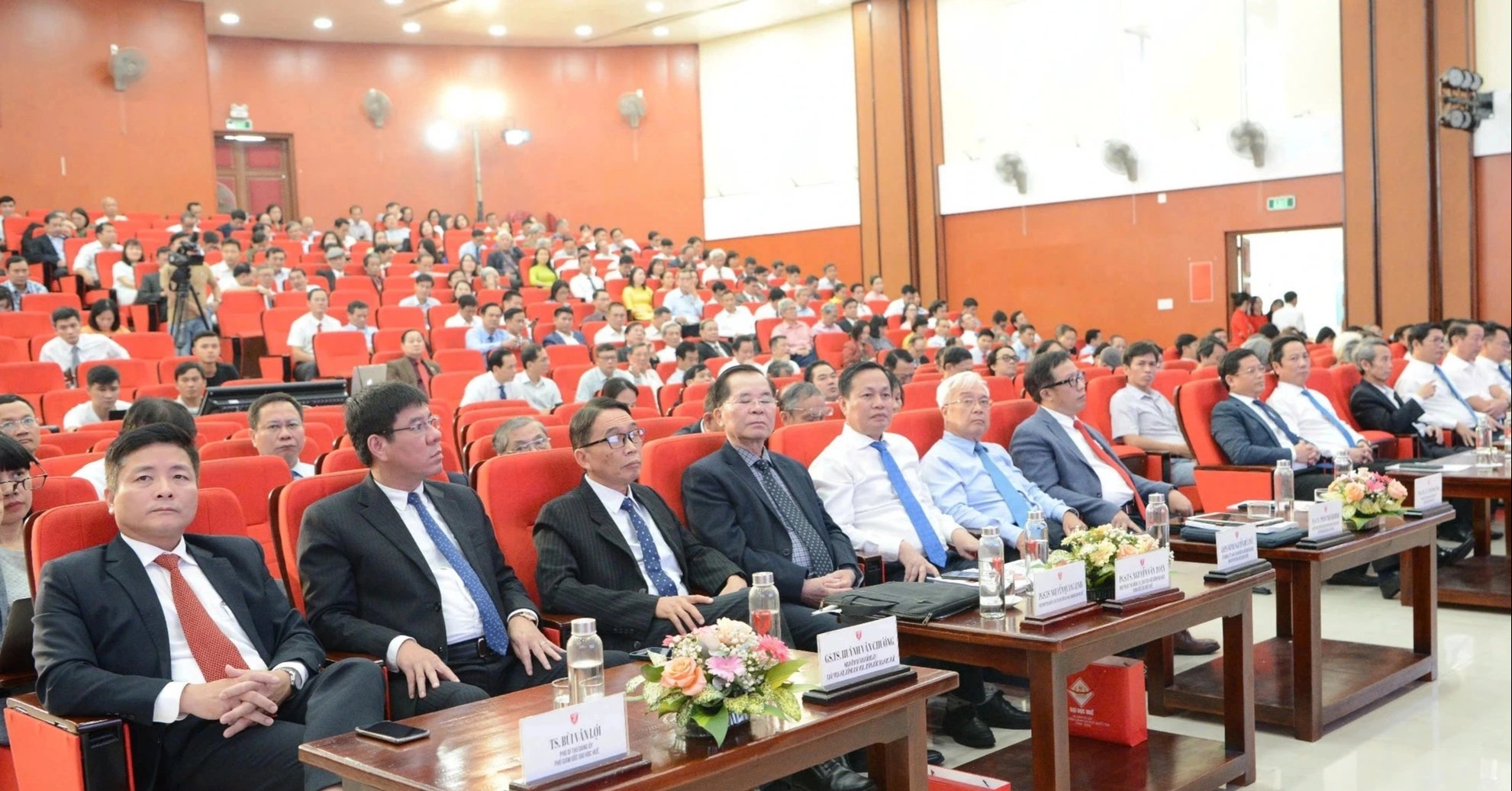
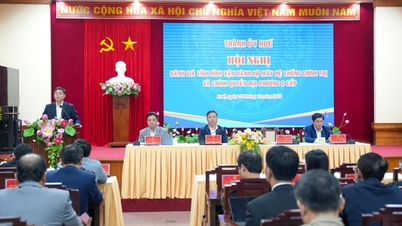
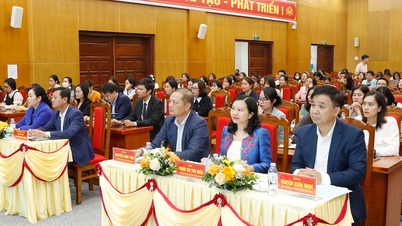
Delegates attending the workshop
In 2024, when the QS Quacquarelli Symonds organization announced the results of the world's top higher education institutions ranking for 2025 (QS WUR 2025), Hue University was included for the first time in the list, tied for the 1201-1400 position. This is a new milestone for Hue University in its efforts to be included in prestigious global university rankings.
The US News & World Report organization has also published the 2024-2025 Best Global Universities Rankings, and for the first time, Hue University appears in this ranking along with eight other Vietnamese universities. Specifically, Hue University continues to maintain its position at 1,501+ worldwide, and is one of the six best universities in Vietnam.
Proposing to the Central Committee to resolve obstacles.
According to Associate Professor Dr. Le Anh Phuong, the orientation for developing Hue University into a national university was affirmed in Conclusion 48-KL/TW dated May 25, 2009, of the Politburo. Subsequently, Resolution 54-NQ/TW dated December 10, 2019, of the Politburo further affirmed: "Building a multi-disciplinary, multi-field, high-quality education and training center on the basis of developing Hue University into a national university, striving to be among the top 300 universities in Asia."
Resolution No. 26-NQ/TW dated November 3, 2022, of the Politburo; and Resolution No. 83/NQ-CP dated May 27, 2020, of the Government both affirm the policy of developing Hue University into a national university. These are solid political and legal foundations for the development of Hue University into a national university.
Furthermore, the traditions, status, role, scale, and quality of Hue University also reflect the stature of a national educational institution. However, the process of building Hue University into a national university is facing many difficulties. These include: an inconsistent legal framework regulating autonomy mechanisms; a lack of a legal basis for implementing state-ordered projects for autonomous units; a sharp decline in public investment due to budget deficits; and a shortage of modern and advanced learning and research facilities, while society demands new, modern technology and high-quality education.
Therefore, Hue University proposes that the National Assembly soon enact laws amending and supplementing the Law on Budget, the Law on Public Investment, the Law on Public Assets, the Law on Cadres, Civil Servants, and Public Employees, and the Law on Teachers, in order to create a synchronized legal basis for implementing the university autonomy mechanism.
At the same time, we recommend that the Government promptly issue the Planning for the network of higher education institutions and teacher training institutions for the period 2021-2030, with a vision to 2050, to provide Hue University with sufficient legal basis to submit to competent authorities for consideration and approval the Project to develop Hue University into a national university.
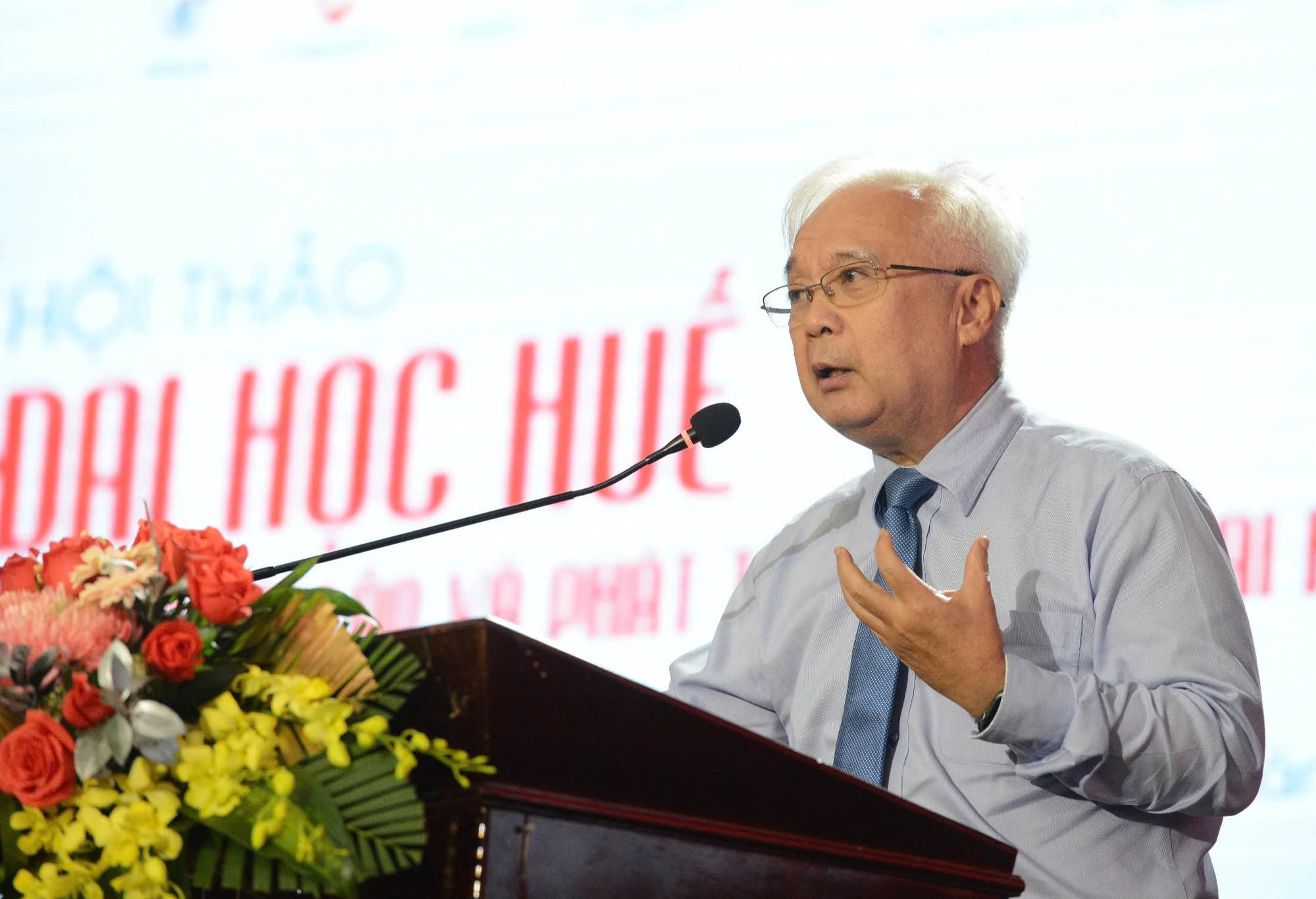
Associate Professor Phan Thanh Binh, former Director of the Vietnam National University Ho Chi Minh City, former Chairman of the National Assembly's Committee on Culture, Education, Youth, and Children, delivered a speech at the conference.
At the seminar, Associate Professor Phan Thanh Binh, former Director of the Vietnam National University Ho Chi Minh City and former Chairman of the National Assembly's Committee on Culture, Education, Youth, and Children, stated that Hue University has sufficient potential, advantages, and foundation to develop into a national university. However, this process would require support from the Government and the international community.
According to Mr. Binh, Hue University has the potential to become a leading educational center, not only in Central Vietnam but also nationwide and internationally.
"Hue University, with its advantageous location in the former imperial capital of Hue, its rich tradition, and its conditions regarding human resources and operational resources, has fundamental advantages and prerequisites to become a national university. However, interaction and coordination within the region are necessary to build a national university, a university system, which is an option worth considering," Associate Professor Phan Thanh Binh suggested.
In the 30 years since its re-establishment, Hue University has achieved many outstanding accomplishments, becoming one of the important human resource training institutions serving multiple industries and fields nationwide. Specifically, it has trained and awarded degrees to approximately 320,265 doctors, pharmacists, engineers, and bachelors; nearly 24,230 masters; and nearly 700 doctoral graduates.
Hue University currently has 3,647 staff and employees, including 214 professors and associate professors, 807 PhDs, 1,526 masters, and 38 foreign honorary professors; an increase of more than nine times compared to 1994.
In 2024, Hue University offered 153 undergraduate programs, 108 master's programs, 58 doctoral programs, 63 specialist medical programs (levels I and II), and 12 residency programs.
Source: https://thanhnien.vn/dai-hoc-hue-kien-nghi-thao-go-vuong-mac-de-phat-trien-thanh-dai-hoc-quoc-gia-185241101172248729.htm





















































































Comment (0)