

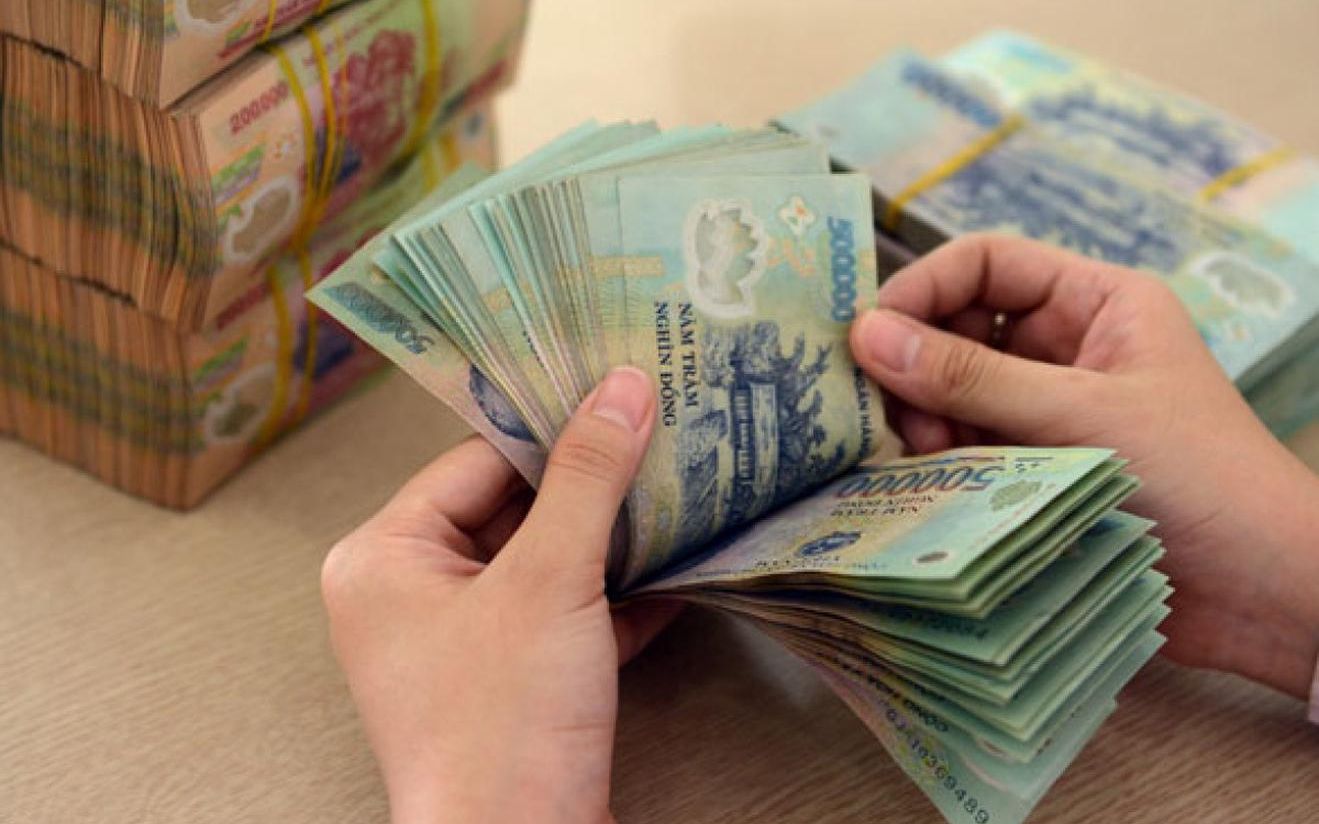
Removing the burden of 10,000 billion VND of outstanding capital
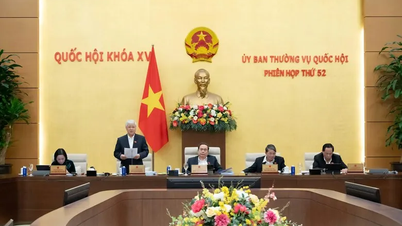
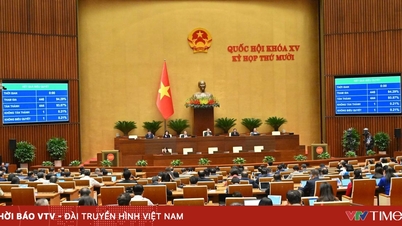
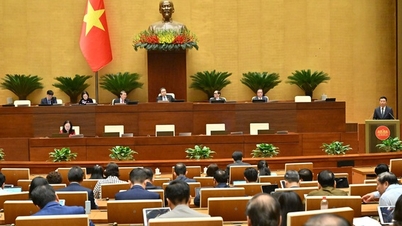
According to economic experts, the National Assembly's consideration of the Draft Law on amending and supplementing a number of articles of the Law on Value Added Tax (VAT) at the 10th Session is a clear demonstration of the Government's determination to remove institutional "bottlenecks", especially in the context of the economy needing to recover soon after the severe impact of natural disasters and market fluctuations. This is a timely and urgent move, focusing on handling problems arising from the VAT Law No. 48/2024/QH15, expected to take effect in 2025.
According to the Ministry of Finance 's Report, the new VAT Law has caused major shortcomings in practice. First of all, it is the tax regulations for unprocessed or only pre-processed agricultural products. According to current regulations, enterprises and cooperatives (HTX) buying and selling these products must calculate 5% input VAT, then can complete tax refund procedures if they export or sell under 0% tax.

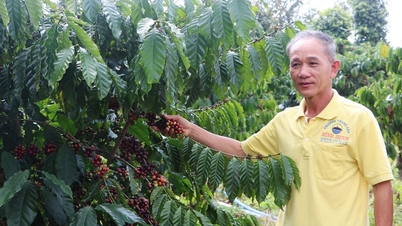
Strategic industries such as tea, coffee, food, pepper and spices alone have had to pay and retain thousands of billions of VND in VAT in advance.
This change has led to a serious stagnation of capital in enterprises. Reported figures show that strategic industries such as tea, coffee, food, pepper and spices alone have had to pay in advance and retain thousands of billions of VND in VAT. The total amount of capital occupied is estimated to be more than 10,000 billion VND.
This situation not only increases capital costs and reduces business efficiency, but also puts great pressure on cash flow, especially for large-scale export enterprises. Recently, representatives of many large industry associations have proposed to restore the old mechanism to unblock capital sources and reduce administrative burdens.
For example, there are problems in the VAT policy for animal feed. While imported animal feed is exempt from VAT, domestically produced animal feed is subject to 5% input VAT. This tax is not deductible but must be included in production costs, leading to an increase in the selling price of domestic products. This creates unfair competition, causing disadvantages for the domestic livestock industry, which is trying to develop the value chain and reduce input costs.
Unblocking capital flows, increasing competition and controlling fraud
To thoroughly resolve the problems, the Government has proposed that the National Assembly consider and approve three key amendments. The first is to restore the tax deduction policy for agricultural products. The draft Law proposes to bring back the regulation in the direction that: Enterprises and cooperatives purchasing agricultural , forestry and aquatic products (unprocessed or only processed normally) from production organizations and individuals to sell to other enterprises and cooperatives will not have to calculate VAT but will still be able to deduct input VAT.
In fact, this regulation has been applied stably since 2014, ensuring that it does not affect the State Budget revenue, while helping businesses avoid having to advance a large amount of capital to pay taxes and then wait for refunds. This is considered the most fundamental solution to solve the problem of capital stagnation and reduce administrative procedures, creating the most favorable conditions for export activities.
In addition, ensuring fair competition for animal feed. The Government proposed to remove the regulation on applying VAT rates to products of crops, forests, livestock, and aquatic products used as animal feed. This is to unify tax policies, making domestic animal feed tax-free like imported goods, thereby helping to reduce production costs and improve the competitiveness of Vietnamese agricultural products.

Need to remove "bottlenecks" in tax refunds.
In particular, removing the "bottleneck" of tax refunds. The third important amendment is the proposal to remove the regulation on tax refund conditions, which is that buyers can only get tax refunds when the seller has declared and paid taxes. Although this regulation was added to prevent fraud, especially in the field of invoices, in reality it has led to delays and risks for legitimate export businesses. They do not have the tools to check the tax obligations of a series of intermediary sellers, causing the tax refund process to stagnate.
The Government affirmed that the work of inspection, supervision and prevention of tax refund fraud will be strictly implemented through the regulations added in the Draft Law on Tax Administration (amended) being submitted to the National Assembly at the same session. This ensures the principle that each party is independently responsible before the law, while at the same time clearing the flow of tax refund capital in a timely manner.
According to Dr. Mac Quoc Anh, Vice Chairman and General Secretary of the Hanoi Association of Small and Medium Enterprises, this amendment to the VAT Law demonstrates the flexibility and listening of the State management agency. The ideal VAT policy must achieve neutrality, that is, not distort business decisions and not burden businesses with capital. Restoring the input tax deduction regulation for agricultural products in the trade chain is completely consistent with international practice and the basic principles of VAT, especially for items with a high export proportion. However, the drafting agency needs to carefully review and anticipate new legal loopholes to avoid creating conditions for profiteering or invoice fraud that may occur at the purchasing stage, ensuring no loss to the Budget.
From a business perspective, a representative of Minh Gia Import Export Joint Stock Company, a coffee exporter, expressed strong agreement with the Government's proposal. "More than VND 5,000 billion of capital in the coffee and tea industry is stuck, which is a huge number, reducing competitiveness. If the Law is amended and takes effect early from January 1, 2026 as expected, our financial pressure will be relieved immediately. Removing the condition of tax refunds binding on sellers is also a wise move, because businesses cannot and should not be responsible for the tax obligations of third parties. Instead, tax authorities should strengthen management with technology and post-tax refund inspection," the company's representative emphasized.
It can be seen that the amendment of the Law on VAT, although only adjusting a few provisions, has profound strategic significance, not only solving technical tax issues but also demonstrating the Government's commitment to building a favorable, stable and transparent business environment, creating an important driving force for the sustainable development of the agricultural and export sectors./.
Source: https://vtv.vn/go-diem-nghen-thue-gtgt-nong-san-chia-khoa-khoi-thong-dong-von-va-phuc-hoi-san-xuat-100251208144132863.htm


![[Photo] Explore the US Navy's USS Robert Smalls warship](/_next/image?url=https%3A%2F%2Fvphoto.vietnam.vn%2Fthumb%2F1200x675%2Fvietnam%2Fresource%2FIMAGE%2F2025%2F12%2F10%2F1765341533272_11212121-8303-jpg.webp&w=3840&q=75)





















![[Video] The craft of making Dong Ho folk paintings has been inscribed by UNESCO on the List of Crafts in Need of Urgent Safeguarding.](https://vphoto.vietnam.vn/thumb/402x226/vietnam/resource/IMAGE/2025/12/10/1765350246533_tranh-dong-ho-734-jpg.webp)




























































Comment (0)