

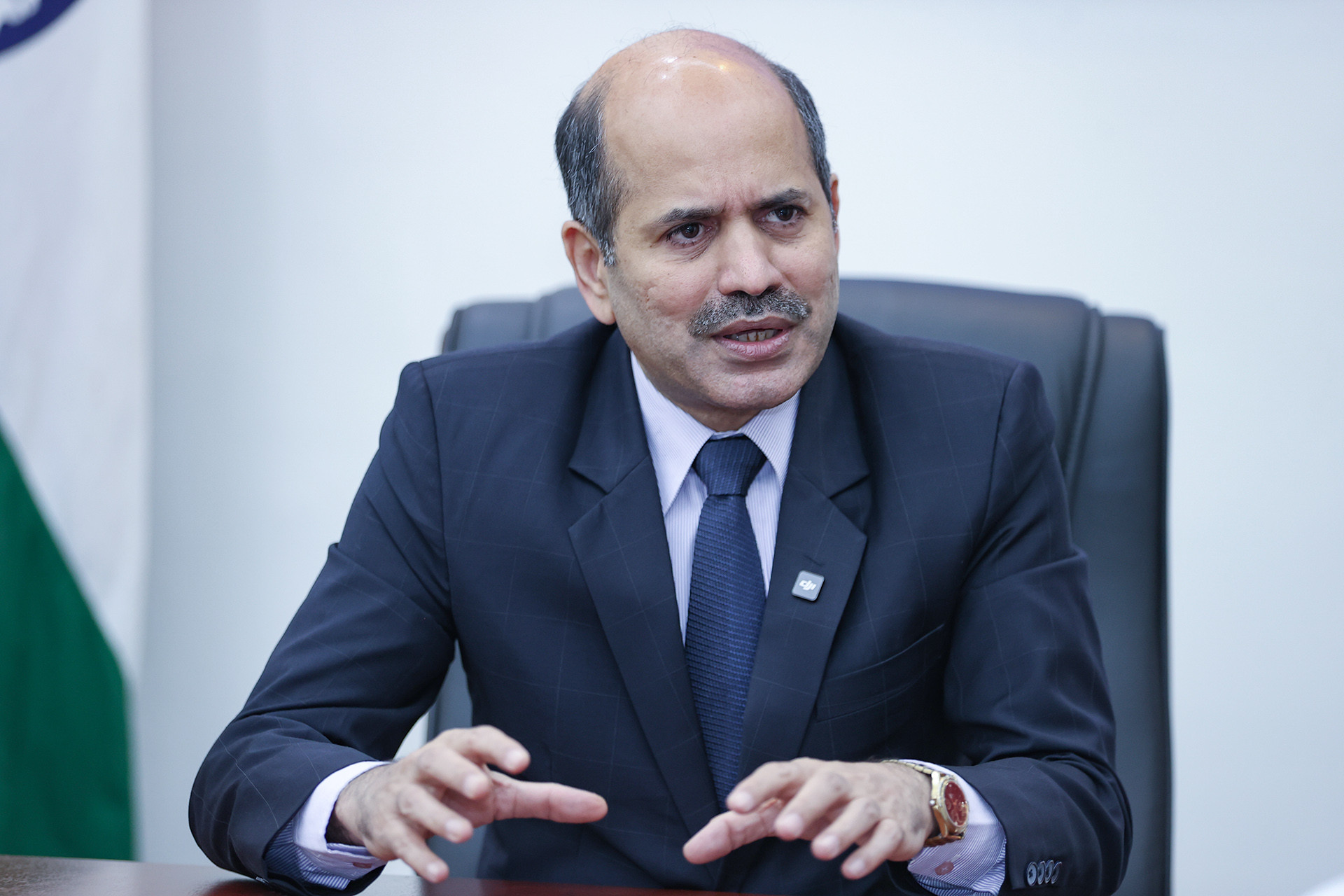
Indian Ambassador to Vietnam, Mr. Sandeep Arya. Photo: Le Anh Dung
Ambitious goals
Vietnam and India have both undergone rapid economic development and transformation over the past few decades, becoming two of the most dynamic economies of the 21st century. Ambassador, could you share your perspective on Vietnam's achievements and compare them to India's rise?
Ambassador Sandeep Arya: Vietnam has achieved remarkable growth over the past decade, maintaining stable economic growth above 6%. This is very similar to what India has achieved and is achieving.
Both countries have set ambitious goals for the future. Vietnam has Vision 2045, while India has its Vision for India's Development 2047 (Viksit Bharat 2047). Both countries aspire to become developed nations by 2045 and 2047, and are striving to maintain high economic growth rates of 7-8% per year for the next two decades.
Thus, both countries are developing very well and have ambitious growth plans, based on solid foundations. I believe there are many similarities between Vietnam and India in terms of their current positions and the goals we are aiming for in the future.
Both India and Vietnam are experiencing economic growth rates more than double the global average. This means the two countries have ample opportunities to strengthen economic cooperation, expand markets, attract investment, and leverage technological advancements.
I believe this is a very opportune time for India and Vietnam to cooperate more closely, especially in the economic field. Both countries offer attractive opportunities to expand markets, collaborate on business ventures, and apply new technological advancements.
The foundation for this cooperation is being solidly strengthened, and 2024 has already been a successful year in promoting bilateral relations.
Another aspect of India's development is its increasingly important position in the emerging multipolar world order. In other words, India is becoming a global power. What does this mean for India's foreign policy priorities in Southeast Asia, particularly with Vietnam?
Ambassador Sandeep Arya: Thank you for your positive remarks about India. We believe this stems from our efforts to be a representative voice for developing countries, to cooperate with and ensure their place and voice in the international order.
These efforts began in the 1960s. But I believe that in recent years, with the general development of the world, our desire to give a stronger voice to the countries of the Southern Hemisphere has become clearer.
As you may know, in the past few years, India has hosted three summits called the "Southern Hemisphere Voices Summit." These summits are important because current international forums may not fully reflect the interests of countries like India, Vietnam, and other developing nations, particularly in areas such as finance, economic growth, climate change, and global trade.
There is a need for a stronger presence and voice from countries like India and Vietnam in international organizations so that decisions made reflect the world's perspective more comprehensively and substantively. We are delighted to be collaborating with Vietnam, an important partner, in this joint effort.
The world today is complex and evolving with many unpredictable changes. During Prime Minister Pham Minh Chinh's visit to India on August 1, 2024, the joint statement of the two leaders emphasized the need to strengthen cooperation between India and Vietnam in light of the complex developments in the geopolitical situation.
Therefore, foreign policy, international affairs, and global developments are important pillars in the Comprehensive Strategic Partnership between India and Vietnam.
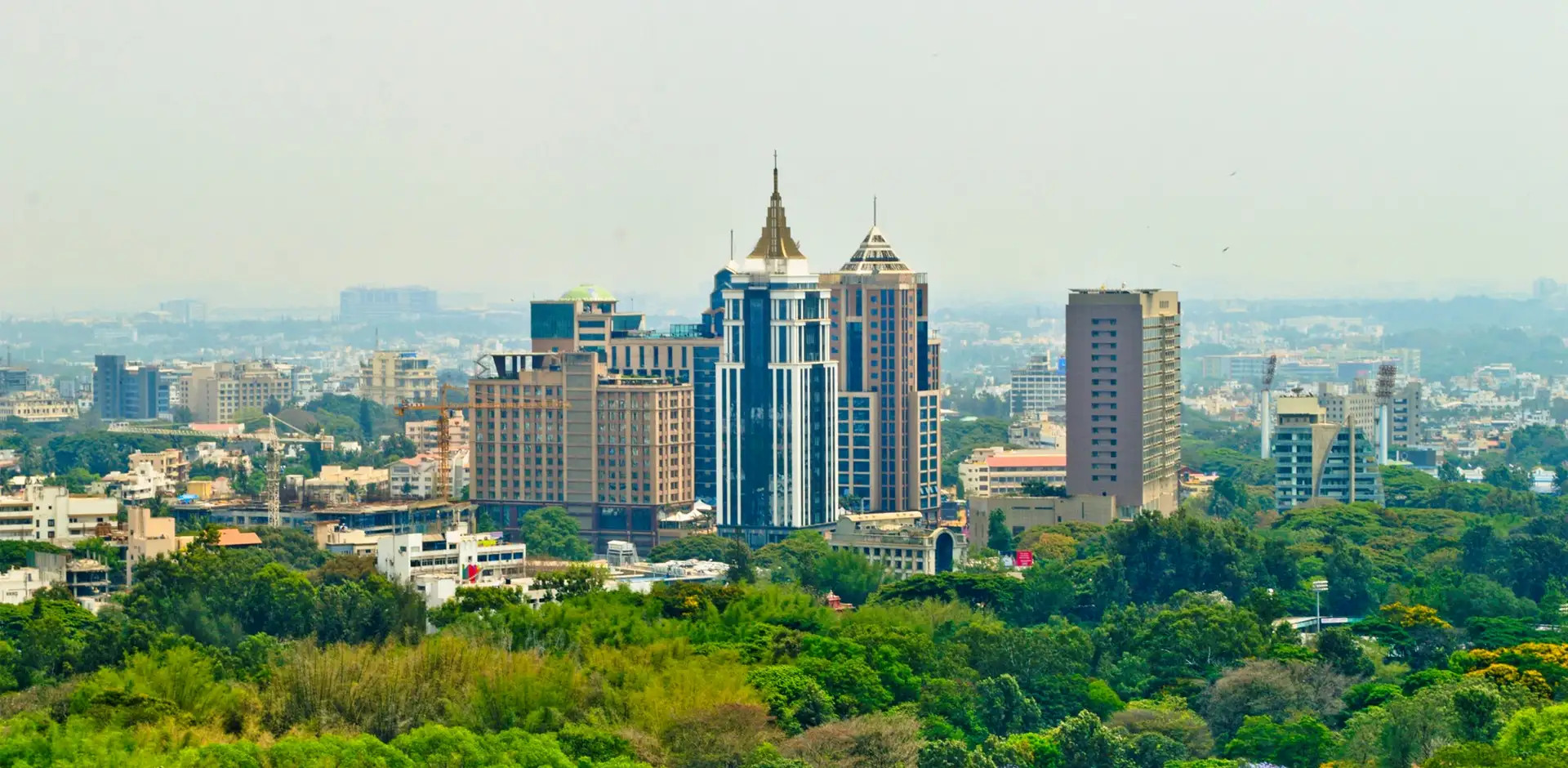
Bengaluru, the city dubbed the "Silicon Valley" of India. Photo: CAPA
India focuses on 'technological self-reliance'.
Currently, the Action Plan for the implementation of the Vietnam-India Comprehensive Strategic Partnership for the period 2024-2028 has been officially approved. In your opinion, what are the most promising areas for economic cooperation between India and Vietnam? How do you expect bilateral trade to develop in 2025 and beyond, especially in the fields of science and technology, green energy, and digital transformation – India's leading strengths globally?
Ambassador Sandeep Arya: Five months ago, the Foreign Ministers of India and Vietnam signed an Action Plan to strengthen and realize the Comprehensive Strategic Partnership between the two countries. This is a detailed document that guides our multi-sectoral cooperation.
The plan covers a wide range of areas, from political exchanges and defense and security cooperation to economic and trade cooperation, sustainable development, technology, science and innovation, culture, and tourism. All are pillars that the two countries are committed to promoting. Given their current development path, the two countries need to focus more on economic, trade, and scientific and technological cooperation. New areas such as digital technology are becoming important drivers of global economic growth.
In terms of trade, a trade volume of $15 billion is encouraging, but we believe there is still much potential for further growth, and both sides are working together to achieve this.
Currently, India's total investment in Vietnam is around US$2 billion, a modest figure but one that opens up diverse opportunities for cooperation. At the government level, we focus on promoting three pillars: trade, investment, and business cooperation. The foundation for these efforts is the ASEAN-India Goods Trade Agreement (AITIGA), along with a bilateral free trade agreement (FTA) currently under consideration by both sides.
Simultaneously, we are strengthening business connections between the two countries through specific activities: participating in specialized trade fairs and exhibitions, and organizing regular market visits. These efforts aim to help businesses on both sides understand their partners, enhance their understanding of each other's markets, and promote business cooperation.
Science and technology are another key pillar of bilateral cooperation. In India's strategic vision, we identify science, technology, and innovation as three key drivers of sustainable growth over the next decade.
Over the past 10 years, India has focused on building a foundation of "technological self-reliance" through the development of national capabilities. India's achievements in the digital and information technology (IT) sectors have been recognized globally. India's annual exports of IT products reach approximately $200 billion, demonstrating our competitiveness in this field.
Beyond trade, we are also applying digital technology to government administration and providing public services to citizens and businesses. Therefore, there are many potential areas for the two countries to share experiences and learn from each other about effective solutions and implementation methods.
In addition, there are many other technological fields besides IT and digital technology. For example, defense technology is an area where we have made significant progress. Vietnam is also aiming for greater self-reliance and stronger defense capabilities, so this is an area where the two countries can strengthen cooperation, and we are working to promote this.
Other potential areas include space technology, nuclear energy, and telecommunications (5G, 6G) – fields that are rapidly emerging globally.
Both India and Vietnam are striving to develop these areas. If the two countries cooperate closely, share experiences, and develop together, I believe this will be a powerful driving force for economic growth in both nations, while strengthening their bilateral partnership.
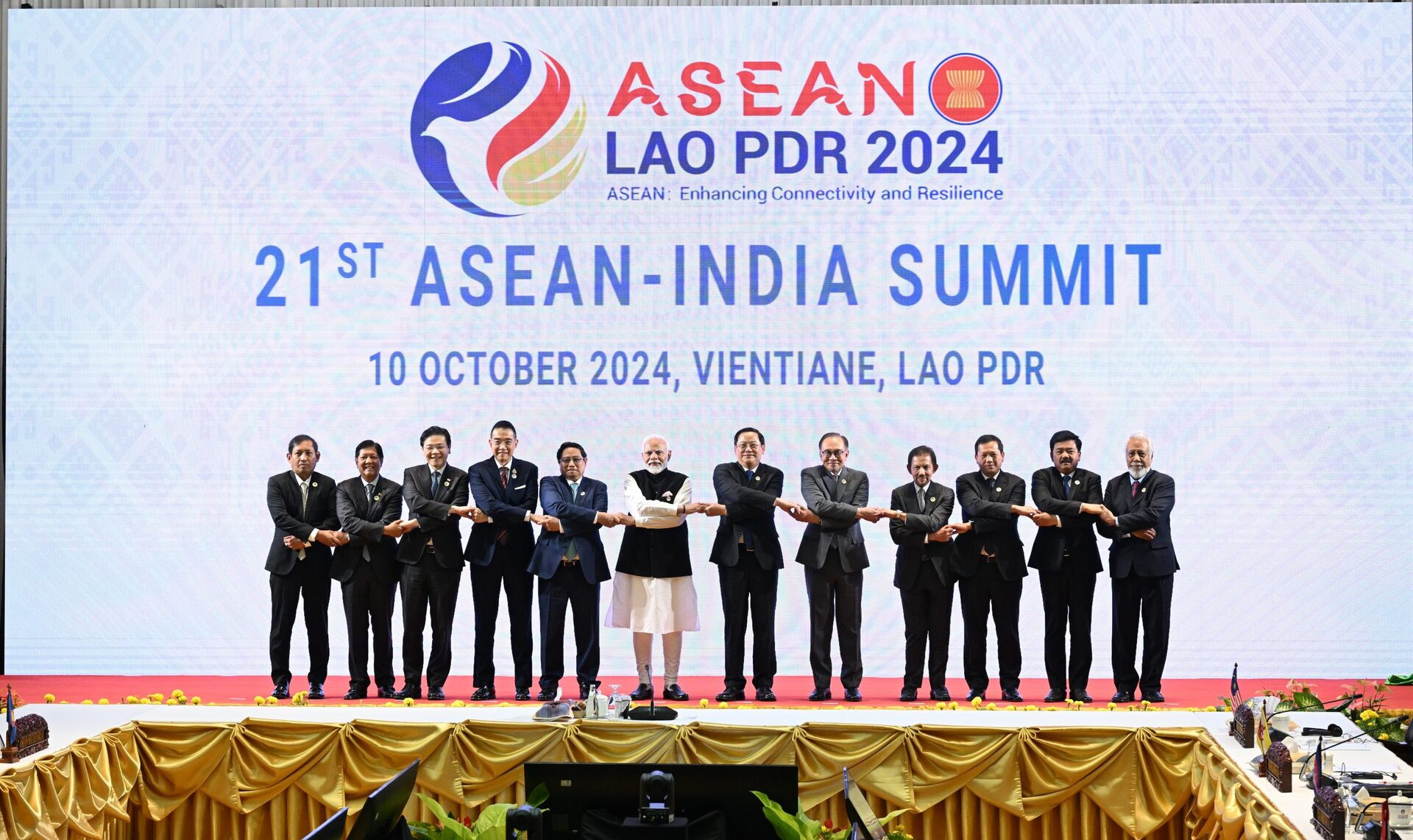
The 21st ASEAN-India Summit in Vientiane, Laos. Photo: ASEAN
Vietnam is an important partner in India's Look East Policy and Indo-Pacific Strategy. Could you elaborate on these policies and India's plans to deepen cooperation with Vietnam through these frameworks, in addition to the Comprehensive Strategic Partnership you mentioned?
Ambassador Sandeep Arya: In foreign policy, neighboring countries and the world's largest economies are often the focus. However, India's Look East Policy reflects our particular interest in the East, including Southeast Asia.
We have the bilateral Comprehensive Strategic Partnership and the India-ASEAN Strategic Partnership, established six years later. I believe both frameworks create tremendous synergy for our two countries to cooperate more effectively.
This synergy is demonstrated through close political coordination, joint voices on issues of common concern at international forums, and enhanced security and defense cooperation between India and Southeast Asian countries, including Vietnam.
And, of course, economic cooperation is a crucial pillar. As I mentioned, we have the ASEAN-India Goods Trade Agreement, signed in 2009. After 16 years, the global economy has changed considerably, and we are considering upgrading this Agreement.
We are also implementing various development initiatives. For example, within the framework of India-ASEAN cooperation, two months ago we inaugurated the Centre for Advanced Software Training and Development (CESDT) at the Posts and Telecommunications Institute of Technology in Ho Chi Minh City.
This is an India-ASEAN cooperation project implemented in Vietnam. Additionally, the Mekong-Ganga Cooperation Framework supports India-Vietnam cooperation, through which we carry out approximately 10 community projects annually in Vietnam. These are socio-economic development projects in local areas, directly benefiting the people, such as building classrooms, houses for the needy, and rural infrastructure.
Recently, we also inaugurated the Information Technology and Foreign Language Center (also known as the Army Software Park), belonging to the Information Officer School (Information and Communication University), under the Signal Corps.
Thus, numerous collaborative activities are underway, and this cooperative relationship is being increasingly strengthened. We believe that the synergy from the India-Vietnam Comprehensive Strategic Partnership and the India-ASEAN Strategic Partnership is generating new ideas for cooperation – some implemented through the ASEAN Secretariat in Jakarta, others pursued bilaterally between the two countries.
We are expanding our cooperation into new areas, including defense. Both sides are also jointly promoting a number of initiatives within the framework of the Indo-Pacific Strategy, including the implementation of the ASEAN Outlook on the Indo-Pacific (AOIP).
Ultimately, people and culture are crucial elements in the relationship between India and Southeast Asian countries, and play a key role in efforts to strengthen India-Vietnam and India-ASEAN relations.
As the Ambassador just mentioned, bilateral trade currently stands at $15 billion, a promising figure but with significant potential for further growth. India's population has recently surpassed China's, yet trade between Vietnam and China has exceeded $100 billion in recent years. This demonstrates that our two countries can achieve even greater success. So, in your opinion, which areas still have significant potential for development?
Ambassador Sandeep Arya: Regarding trade, the review of the ASEAN-India Goods Trade Agreement is expected to be completed by the end of 2025. We expect this to create a new, simpler, user-friendly mechanism that offers more favorable terms for goods from both sides. This is an important initiative at the government level.
We are also actively promoting economic cooperation and expanding market access in areas such as agriculture, healthcare, and digital technology through joint working groups between India and Vietnam. These groups are working to find new opportunities to enhance economic cooperation. Some results have been achieved, and others are underway. In 2025, you will see even more cooperation between the two countries.
Besides the efforts of the governments, we believe that the business communities of both countries also need to proactively move closer together. Currently, businesses from both sides are discussing several very promising projects.
A few months ago, VinFast announced plans to build a manufacturing and assembly plant in India, and the project is underway. We also have several large Indian corporations that are very interested in the Vietnamese market.
For example, HCL Tech, one of India's leading IT companies, has a presence in Vietnam with nearly 800 employees. They are developing software and providing IT services in Vietnam for the global market. Thus, Indian and Vietnamese businesses are increasingly interested in exploring each other's markets and collaborating on global projects. This is a very encouraging sign, promising many opportunities for future growth.
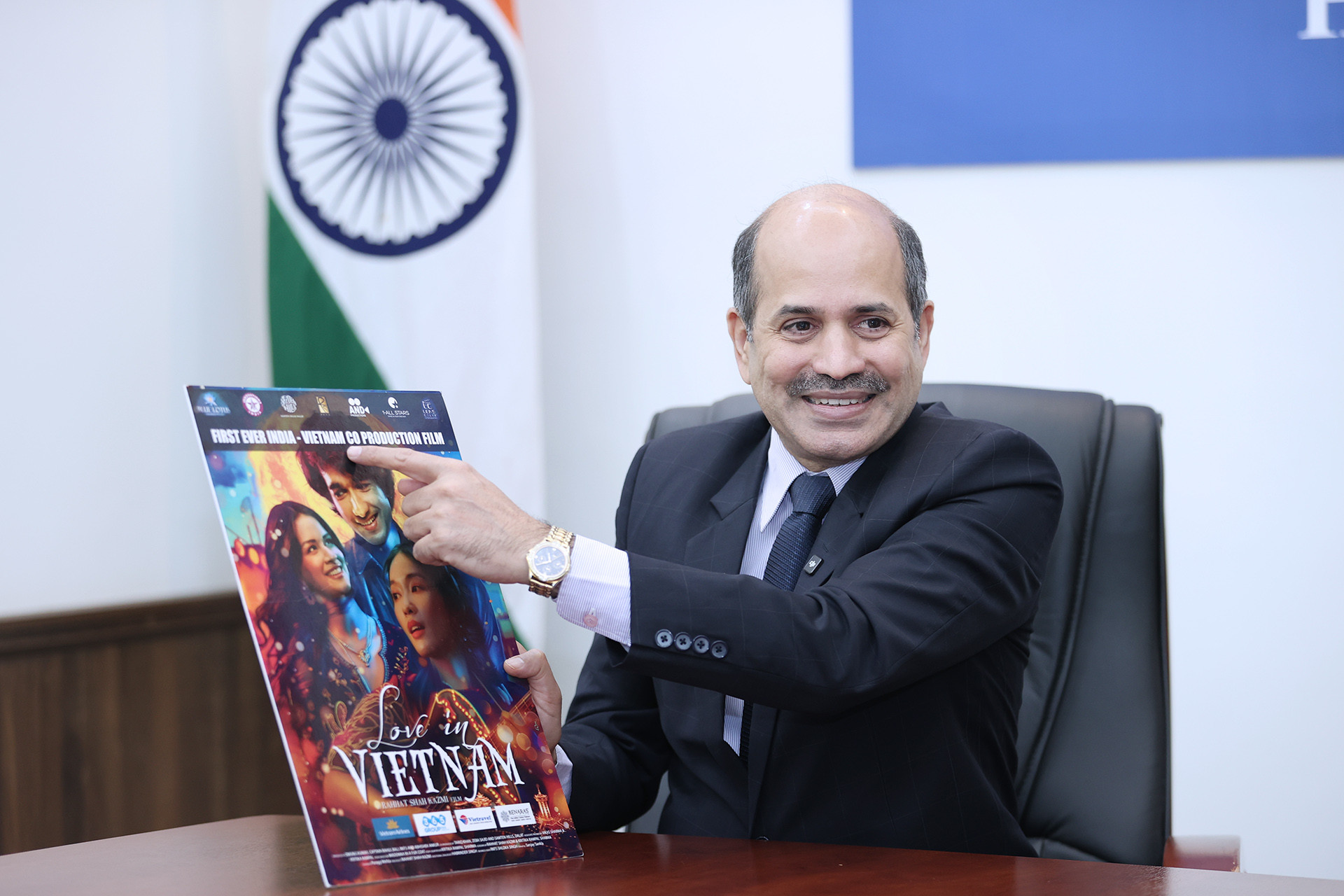
Ambassador Arya introduces the film "Love in Vietnam." A collaboration between Vietnam and India, the film is scheduled to be screened in 2025. Photo: Le Anh Dung
Tourism expansion potential
Another area of cooperation that is experiencing strong growth is tourism. Vietnam has witnessed remarkable growth in the number of tourists from India. In 2024, India became Vietnam's sixth largest tourist market. Ambassador, could you share the reasons for this growth? And conversely, what policies is India implementing to attract Vietnamese tourists?
Ambassador Sandeep Arya: Tourism is a very dynamic and promising area in the cooperation between the two countries. I believe that after the COVID-19 pandemic, both countries, especially in the tourism sector, have begun to pay more attention to each other. Direct flights between the two countries play an important role in promoting tourism.
One important factor I want to mention is that young people and the middle class in India are playing an increasingly important role in promoting tourism. They have the economic means and a desire to explore the world. In addition, language understanding, international integration, and increasing interaction between the two countries also contribute to the growth of tourism.
Therefore, in 2024, Vietnam welcomed over 500,000 Indian tourists, making India Vietnam's sixth largest tourist market. This growth was attributed to several factors, including convenient air connections, e-visa policies, and the efforts of travel companies in offering attractive tour packages. These packages often combine sightseeing with various other activities, such as meetings, conferences, leisure travel, and weddings.
In all these areas, both sides are actively implementing various activities. The civil aviation authorities of the two countries recently agreed to increase the number of flights. Just the other day, VietJet announced the opening of new routes to the Indian cities of Bengaluru and Hyderabad, starting in March this year. Currently, VietJet operates flights to six Indian cities. Indian airlines are also considering expanding their flight networks between the two countries.
On the Indian side, we are delighted with the growth in the number of tourists from Vietnam. Last year, approximately 57,000 Vietnamese tourists visited India, and this number continues to increase. If this trend continues, we can expect strong growth in bilateral tourism in the near future.
We are working to promote attractive destinations in India. For example, Bodhgaya and other Buddhist sites are very popular with Vietnamese tourists. In addition, the "Golden Triangle" comprising Delhi, Agra, and Jaipur is also a favorite destination.
We are introducing new destinations in India through survey programs for travel companies, focusing on mountainous areas, historical sites, and scenic landscapes. We expect tourist numbers to continue to increase in the coming period.
In addition, many other activities are being implemented to promote tourism. Film is one example. We organized the Indian Film Festival in Hanoi and Hai Phong. A co-production film between the two countries is also in production, titled Love in Vietnam. The film features an Indian male actor and a Vietnamese female actress from Ho Chi Minh City, and was filmed in Ho Chi Minh City, Da Nang, Da Lat, and Phu Yen. We hope the film will be released by mid-year.
In fact, cinema is a very important driver of tourism, and this has been widely recognized abroad. For example, the famous Indian filmmaker Yash Chopra is considered to have played a major role in promoting tourism from India to Switzerland. The Swiss authorities even erected a statue of him in Interlaken, a leading European tourist destination, to acknowledge these contributions.
Vietnamnet.vn
Source: https://vietnamnet.vn/dai-su-an-do-dua-khoa-hoc-cong-nghe-lam-tru-cot-hop-tac-moi-2370823.html


![[Photo] Prime Minister Pham Minh Chinh attends the Conference summarizing and implementing tasks of the judicial sector.](/_next/image?url=https%3A%2F%2Fvphoto.vietnam.vn%2Fthumb%2F1200x675%2Fvietnam%2Fresource%2FIMAGE%2F2025%2F12%2F13%2F1765616082148_dsc-5565-jpg.webp&w=3840&q=75)





































































Comment (0)