

In important agricultural rituals of ethnic minorities in the Central Highlands such as: offering sacrifices to the rice harvest, opening the granary, bringing the spirit of the rice back to the granary, celebrating the new rice harvest… the rice harvest ceremony marks the beginning of a production cycle.
There, people offer their prayers, hoping the gods will bless them with a bountiful harvest in the coming season and a prosperous, peaceful life.
With that in mind, on the morning of October 25th, the Department of Culture, Sports and Tourism, in coordination with the People's Committee of Ia Grai commune, organized the reenactment of the Jrai people's rice harvest ceremony in Dun De village, aiming to contribute to the preservation and promotion of the traditional cultural identity of the Jrai people in the area.
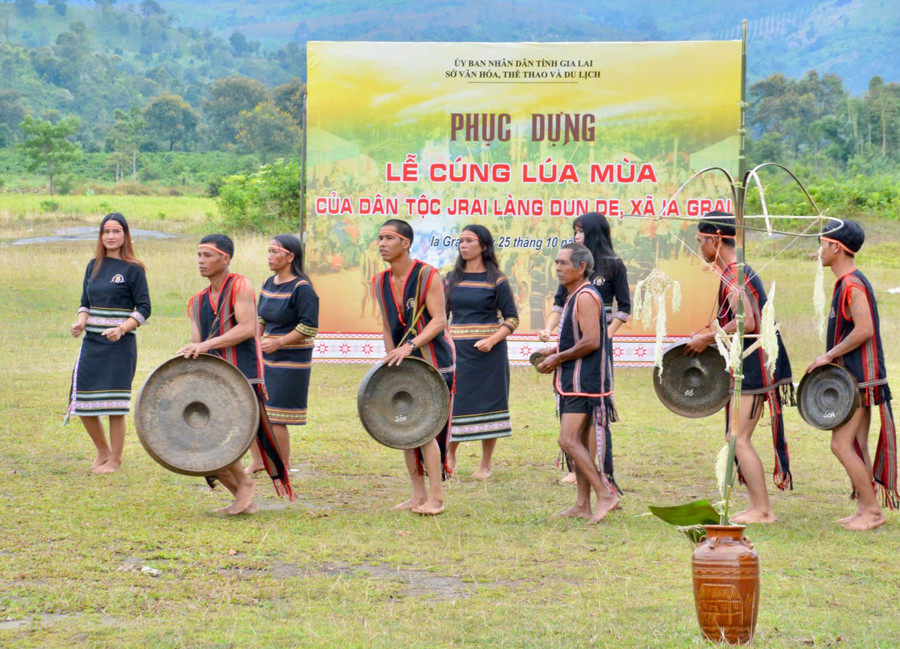
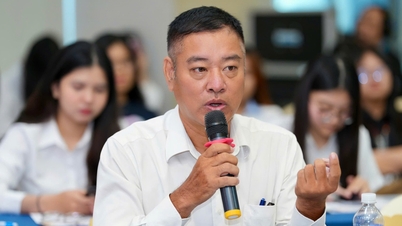
Village elder Rơ Châm Mur said: The rice harvest ceremony is performed by the villagers before the start of the new production season. "After the ceremony, the village elder sows the rice first, then the villagers sow," Mr. Mur said.
To prepare for the ceremony, the village elder held a meeting the day before and assigned specific tasks to each member. The young men went to the forest to cut bamboo for ceremonial items and to hunt pigs and chickens for sacrificial offerings. The young women were responsible for pounding rice, cooking meals, picking vegetables, and collecting water.
"Through the reenactment of the rice harvest ceremony, we will be able to revisit a rich and diverse aspect of the typical cultural values of the Jrai people."
This activity helps strengthen solidarity within the community, promotes the role of village elders, respected individuals, and artisans knowledgeable about community culture, and raises awareness among the younger generation in preserving traditional cultural identity and national heritage."
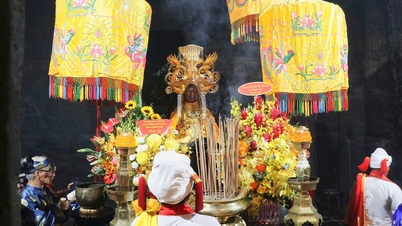
At the ceremony, Mr. Rơ Châm Hyă, representing the village elders, acted as the chief officiant, beating the drum and calling out to the villagers to gather in their traditional attire to perform the ritual.
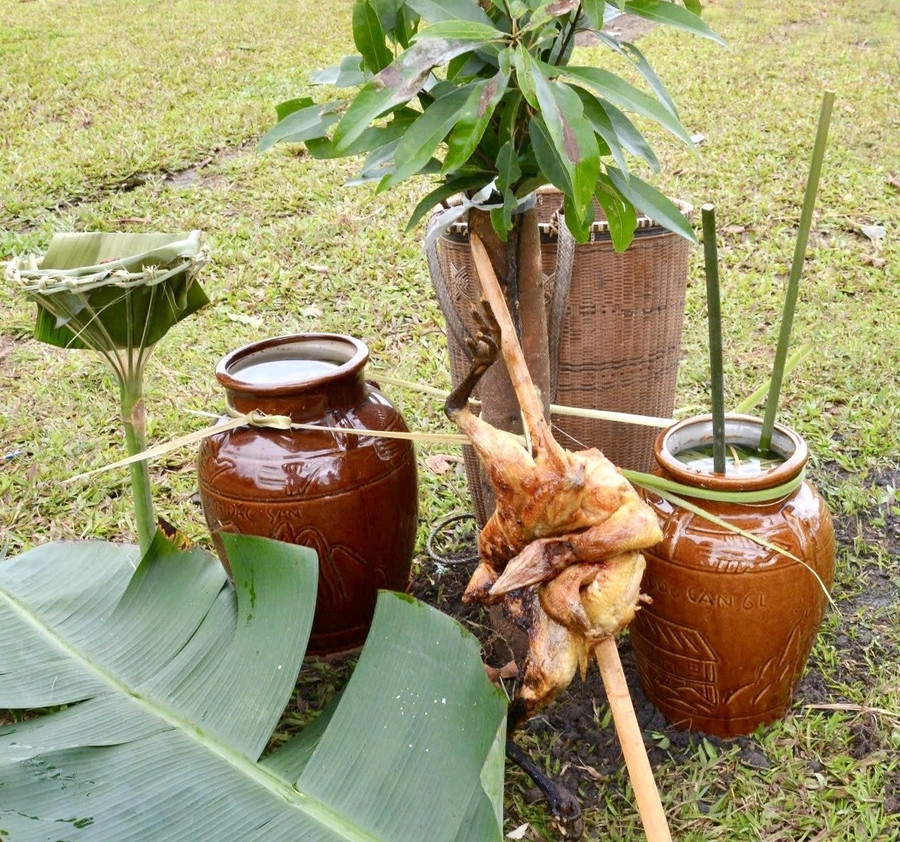
The offerings included two jars of wine, a roasted chicken, roasted pork, and rice in bamboo tubes.
Beside the towering ceremonial pole, Mr. Hyă dipped a leaf into the jar, sprinkled wine around, and recited a prayer: “O Mountain God, Water God, Rice God. Today, our village is holding a harvest festival. We invite you to come and eat and drink with us. We have prepared everything; we invite you to come and eat pork, chicken, and drink wine from the jar.”
"We pray to the gods to bless the villagers with abundant corn and rice; that everyone may be well-fed, healthy, and happy... We ask our ancestors to come here to eat, witness, and bless the villagers so that they may be as strong as buffaloes and as swift as squirrels; that everyone may be healthy and free from illness, and that every household may be peaceful."
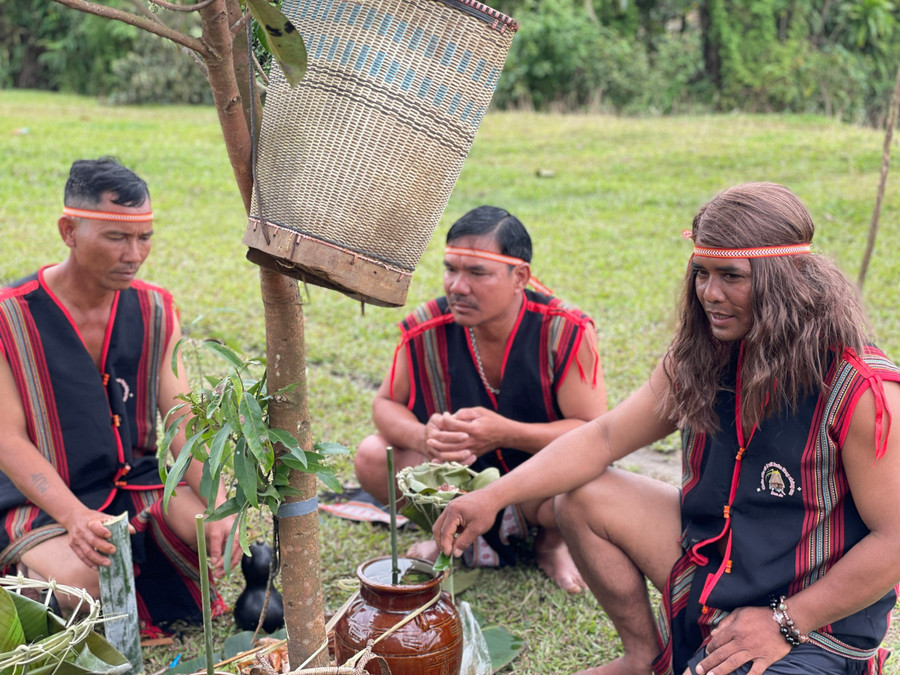
After reciting the prayers, the chief priest took a handful of rice grains and scattered them around, symbolizing the sowing of rice in the new harvest season. Then, Mr. Hyă took the first sip of the earthenware jar of wine and passed the wine vessel to the elders and then to the younger people in the village to drink together.
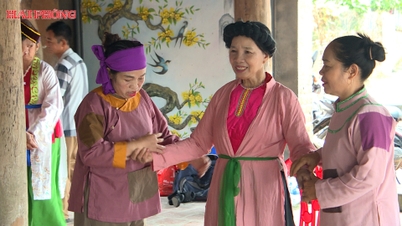
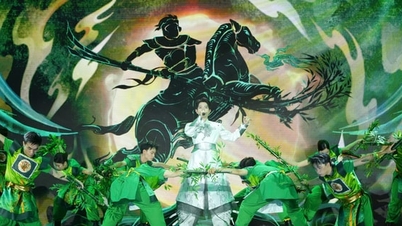
The festivities followed immediately after the solemn rituals. The resonant sounds of gongs and drums filled the air, and the rhythmic dances followed in a graceful circle. Men and women, young and old, harmonized in the vibrant sounds of the mountains and forests, intoxicated by the warm, earthenware wine.
As a member of the village's traditional dance troupe, Puih Gái proudly shared: "I was taught by my grandparents and older siblings, so every year I participate in recreating the rituals to preserve the beautiful culture of my ethnic group. I will learn more and pass it on to the younger children in the village so that we don't forget the tradition."
Attending the reenactment of the Jrai people's rice harvest ceremony in Dun De village, Deputy Director of the Department of Culture, Sports and Tourism Le Thi Thu Huong said: For many years, leaders at all levels have always paid close attention to and directed the work of preserving and promoting the traditional cultural values of ethnic groups. The reenactment of the rice harvest ceremony is an activity to implement part of the content of the Project "Preserving and promoting the value of the Central Highlands Gong Culture Space heritage in Gia Lai province in the period 2023-2025".
From now until the end of 2025, the Department of Culture, Sports and Tourism will preside over and coordinate the restoration of two more traditional rituals of ethnic groups in the province. This will not only contribute to cultural preservation but also serve as an opportunity to promote and help tourists learn more about the land and people of Gia Lai.
Source: https://baogialai.com.vn/dan-lang-dun-de-gui-den-yang-uoc-vong-duoc-mua-post570399.html
































































Comment (0)