

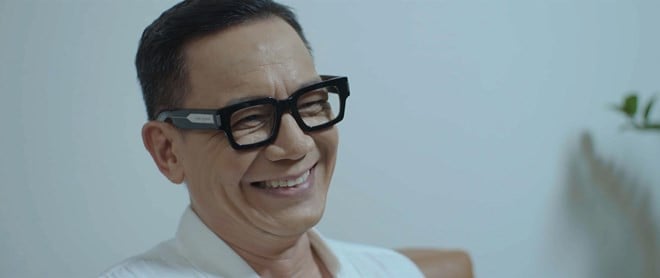
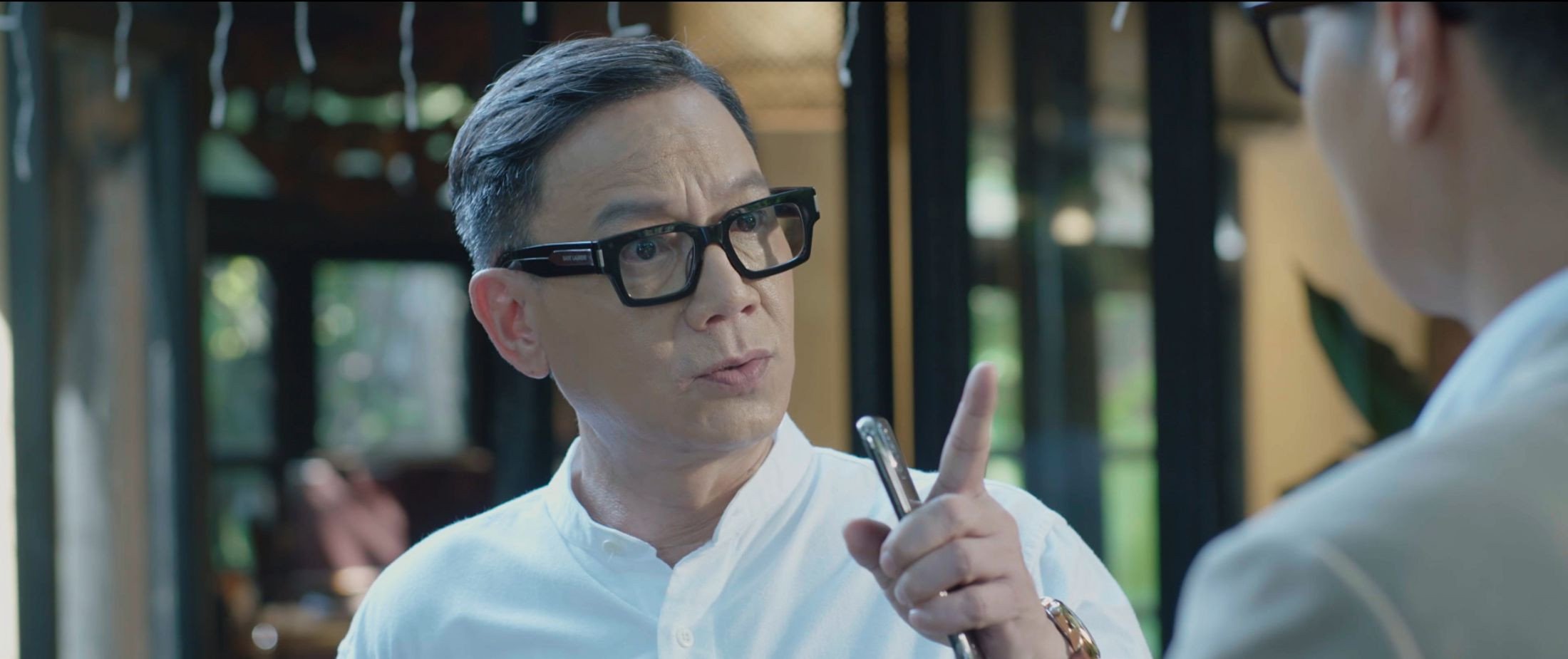
The latest role of Colonel, Meritorious Artist Pham Cuong This character is featured in the political drama "The Dividing Line," a work on the theme of combating corruption and vested interests. The character is Nguyen Van Thuy, the Chairman of Viet Dong province, who was formerly the Vice Chairman alongside Le Dinh Sach (played by People's Artist Trung Anh).
Good must have wisdom to triumph over evil.
In your opinion, how does the role of Provincial Chairman Nguyen Van Thuy in the film "The Dividing Line" differ from the role of Provincial Chairman Nguyen Tri Tue in the previous film "Provincial Chairman"?
- In 2010, I played the role of an honest, upright, and lovable provincial governor. In 2025, this time, the provincial governor character still represents justice, but he's not absolutely kind; he knows how to "fight fire with fire" because evil is not as simple as before!
The character of Provincial Chairman Nguyen Tri Tue is born amidst a context where evil is rampant and unchecked, causing anxiety and weak reflection from good, who believe that resistance and struggle will inevitably lead to further calamities. He is a purely good person, unwilling to compromise with evil; he is like a gladiator fighting rather unilaterally to eliminate negativity.
The character of Provincial Chairman Nguyen Van Thuy in the film "The Dividing Line" doesn't appear much, and doesn't directly resolve all the events of the film, but Mr. Thuy is not simply a person of "compassion and wisdom," and is especially not dogmatic. On the contrary, during the struggle, this character often has to temporarily compromise, living with evil, but without being assimilated, choosing the opportunity to expose the true face of evil masquerading as comrades.
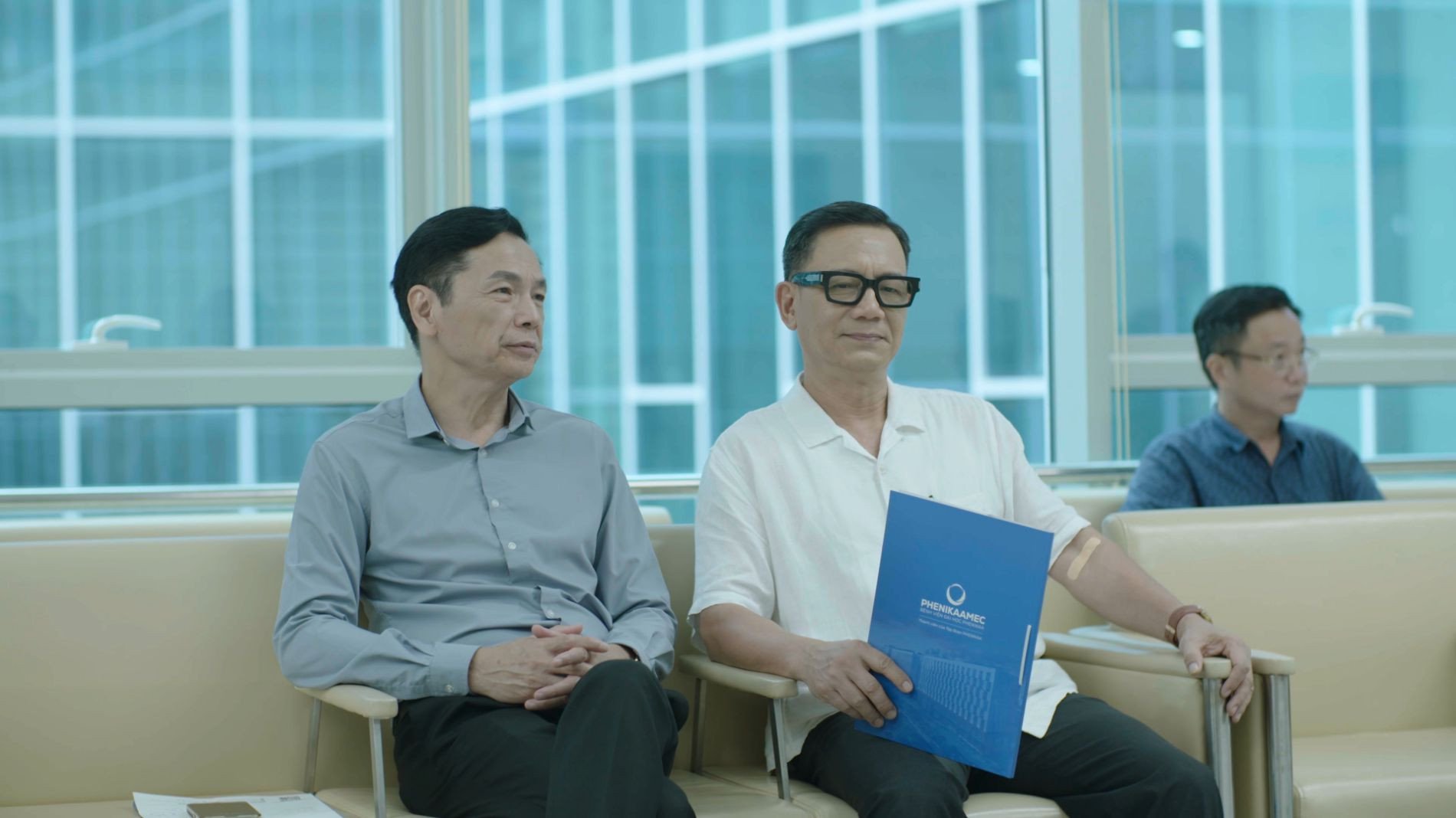
Good, in addition to its ability to win over evil, also needs the strength to destroy it. Here, good and evil are seen as two opposing, balanced battle lines, making the struggle even more arduous. The story in the work is more realistic and persuasive, aligning with the sensibilities of the era.
The struggle between good and evil, positive and negative, is a fairly common theme in television dramas in particular. However, reflecting this struggle needs to be more realistic.
What is it about political dramas that appeals to him?
- I've always liked political dramas because they allow for the exploration of the depth and diversity of the two sides of human nature, but when exploring them, they must convey the values of "truth, goodness, and beauty" that are in line with the evolving understanding and judgment of the times. I don't like characters viewed statically, clearly divided into "completely good" or "absolutely bad." People and life aren't that simple. This character has both progress and retreat, both offensive and defensive, sometimes having to "hide" or "disguise themselves as evil" to fight more effectively.
In short, to eradicate evil, we must accept good and utilize all aspects, both light and darkness, to protect the regime and safeguard the legitimate rights and interests of the people.
How did being an artist in the Army help him when playing political roles?
- First of all, I've always loved political drama films. During my career, besides being a stage and film artist, I spent eight years as Deputy Director of the Army Drama Theatre and nine years as Director of the People's Army Film Studio. During that time, I was regularly briefed on policies and guidelines, had access to many legally binding documents, and met many officials and leaders, so participating in this genre of film felt less daunting. However, I must admit that memorizing and reciting political drama lines is very difficult. It requires diligent study, memorization, and a deep understanding of the meaning of the words to avoid awkwardness.
My journey into art was entirely accidental, but it has remained a lifelong passion.
He is known to be the only one in his family to pursue art. Before achieving his current position, he worked many manual labor jobs. Which period was the most difficult for him?
- Actually, I don't find myself struggling as much as people think. My family isn't that poor; it's just that I'm the type of person who enjoys hard work. I'm the only one in my family who pursued art, probably because of fate. During high school, every summer break, I would work part-time: baking bread, making lamps, painting, even working as a construction worker for my own family. I tried everything, and the dirtier I got, the more interesting it became. I did it because I enjoyed it, not for a living, so I didn't feel tired. I even remember selling sugarcane juice while studying for the university entrance exam. I love hard work, and I love the feeling of freedom in the work I choose.
If I were to talk about difficulties, perhaps it's those times after filming when I feel the role wasn't complete. I often feel guilty afterward, thinking that if I could do it again, I would do better. That feeling is even more exhausting than manual labor. I don't consider my younger years of working hard as hardship. On the contrary, I feel fortunate to have lived life to the fullest in everything I do.
I heard that your entry into art was by chance, is that true?
- It was completely coincidental. One day, my best friend and I went to see a very popular movie at the time. While waiting for the show to start, we went outside the theater and some people mistook us for audition candidates. We were called in for an audition for a film acting role. Neither of us understood anything, but we took a chance and went in anyway. Unexpectedly, we got accepted. At the time, I kept it a secret from my family; I didn't dare tell them I was auditioning for a film acting role. Back then, auditions were a big deal. There were big names like artists Thế Anh, Lâm Tới, Trà Giang... famous throughout the country. Audiences during the subsidy era lined up outside theaters to buy tickets, so saying I was auditioning was... embarrassing! My class had many familiar faces like Thạc Chuyên, Chiều Xuân, Hồng Giang, Huệ Đàn, Tuấn Minh, Tú Oanh... When we graduated, the Vietnam Feature Film Studio was downsizing, so everyone had to find their own path. I did the same, just stepping into the profession without any prior planning, but I ended up being involved for life.
It is known that his son passed the entrance exam to Law University, so neither of his children followed a career in the arts?
- Currently, that's true, but I can still sense a deep-seated "artistic quality" in them. I think everyone has their own journey, and at some point, life will naturally place them in the right place. I strongly support my children studying law, as it helps them gain knowledge, confidence, and sound judgment. Law not only teaches people to distinguish right from wrong but also hones their ability to protect themselves. Even if the future reality changes, even with the development of AI, understanding the law and understanding oneself remains the key to a stable life.
When my children were young, I took them along to film sets, but very rarely. Back then, film shoots were often far away, so I only occasionally let them watch plays or go to the film set. Even so, I could still sense that they had talent, a lot of emotion, and that "artistic quality" lay somewhere within them. My daughter graduated from Law University a long time ago, but later she branched out into a different field, working in fashion and tea ceremony. I see it as a form of art, just expressed differently. As for my younger son, he just passed the entrance exam to Law University and is in his first semester.
Source: https://baoquangninh.vn/dai-ta-nsut-pham-cuong-doi-nghe-si-cua-toi-bat-dau-tu-mot-lan-di-xem-phim-3381801.html




































































Comment (0)