

"Soft power" in the cinematic landscape.
When discussing the strength of a nation, many people often think of its economy, science, or military . But there is another, more enduring and profound form of strength: the soft power of culture, with the family home as its core. Cinema has demonstrated this through films shot in Tuyen Quang, where the family home emerges as the cradle of character formation, a support for young people amidst change, a cultural defense line in integration, and a humanistic value that prevents people from losing themselves.
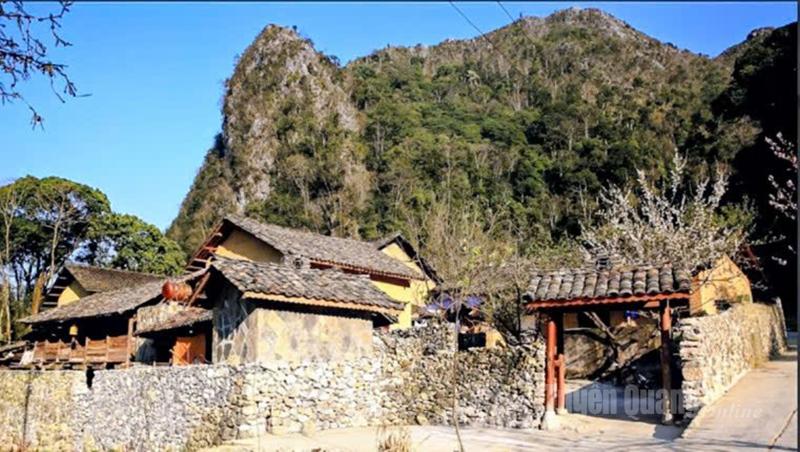 |
| The traditional Hmong house in Sa Phin commune became the main setting in the film "Pao's Story". |
Tuyen Quang has become a favored setting for many filmmakers, not only because of its majestic mountain and river scenery, but also because it preserves precious "living materials" that no modern special effects can replace: the simplicity, resilience, and loyalty of the mountain people. The film "Silence Beneath the Deep Valley" is the clearest evidence of this. The work captures impressive scenes on the mountain passes and precarious villages of the Dong Van Stone Plateau. But the greatest value the film brings lies not only in the magnificent landscape, but in the way it portrays the traditional houses of the mountainous region.
There, family is the repository of honor, affection, and tolerance. Súa accepts the arranged marriage to spare her parents shame; Vừ, despite poverty and misfortune, maintains an honest and righteous way of life. Their tragedy doesn't shatter their family, but rather illuminates the quiet beauty of the highlanders: enduring hardship without resentment; suffering pain but still thinking of loved ones. Every moment in the film, from the simple meal to the haunting sound of the flute or the solemn earthen house, is imbued with layers of meaning about loyalty, like an underground stream flowing through the mountains.
Not only "Silence in the Deep Abyss," but many films shot in Tuyen Quang, such as "Pao's Story," "Father Carrying Son," "Red Sky," "Tet in the Village of Hell," and "Journey to the Land of Legends," all touch upon a common point: the family is the bond that unites people. "Pao's Story" uses the tale of a woman's plight to reflect on the virtues of a highland woman who is resilient yet kind, suffering yet forgiving. "Father Carrying Son" becomes a symbol of the modern family by prioritizing education and the child's future above the hardships of life. "Journey to the Land of Legends" offers viewers a contemporary perspective: Only when far away do people truly understand the meaning of returning home – the place that holds peace in the soul.
"Living archive" of traditional houses in Tuyen Quang province.
Amidst urbanization, many customs of the Mong, Tay, Dao, and Pa Then ethnic groups face the risk of fading away. However, on screen, these values are vividly portrayed, even more so than in real life, from the glowing hearth, the earthen roofs imbued with the spirit of the mountains and forests, the sound of the flute calling for a lover, to sacred rituals like Gau Tao and forest worship. Cinema shows that even as the traditional house changes, it remains the bond that connects the community, the most enduring layer of cultural heritage. When these small details are recreated through visual language, viewers realize that amidst all the changes, the roots of humanity still lie within the family – the space that most enduringly preserves identity.
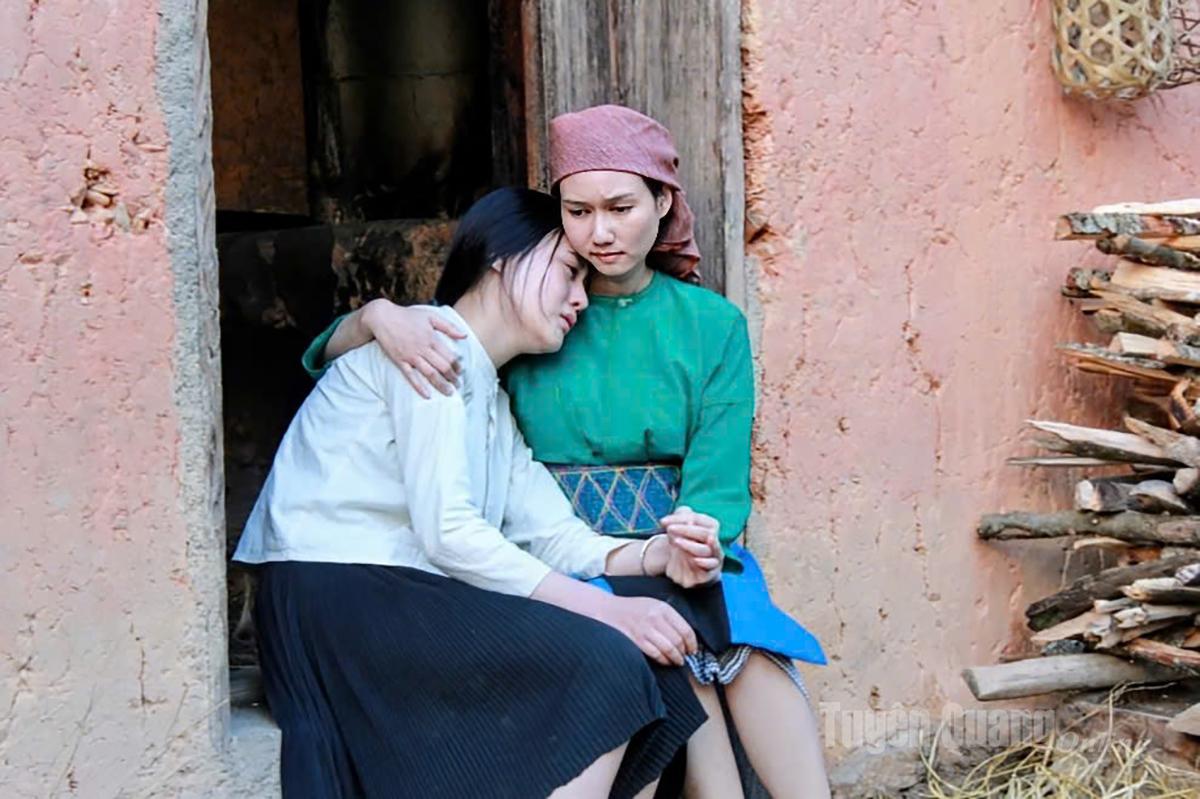 |
| A scene from the film "Silence Beneath the Abyss". |
“Every traditional house, every village, every cultural color of Tuyen Quang, when brought to the screen, becomes a ‘living archive’ of Vietnamese houses and villages,” emphasized Tai Dinh Tinh, Director of the Tuyen Quang Cultural and Film Center. Many directors believe that, after the administrative merger, the province possesses a strategic advantage for brand positioning through cinema: a vast administrative space that encompasses multiple layers of culture, landscapes, and traditional houses. This is a “gold mine” for developing cultural and film tourism and spreading traditional values in the most natural, emotionally rich, and effective way.
Audience member Duong Van Duc from Trung Son commune expressed: “When watching films shot in Tuyen Quang, I not only get to admire the familiar beauty of my homeland but also gain a deeper understanding of customs, filial piety, marital love, and community spirit.” Mr. Duc's sharing is not just a personal feeling but also proof that, when built with cultural depth, cinema not only tells stories or entertains, but also educates through emotion. A good film sometimes achieves what hundreds of pages of documentary cannot: touching the heart. Just one beautiful scene, one impactful line of dialogue can create a moving moment. And when the heart is moved, values that seemed distant suddenly become close, awakening a change in perception.
If nature has created the picturesque landscapes of Tuyen Quang, then the traditional houses are the very soul of this northernmost region. Cinema, in its own subtle way, is quietly preserving these values. And so, through the images preserved over the years, Tuyen Quang emerges not only as a land of scenery and memories, but also as a cultural anchor, where Vietnamese traditional houses are preserved, continued, and spread in today's journey of integration.
My Uyen
Source: https://baotuyenquang.com.vn/van-hoa/202512/nep-nha-qua-nhung-thuoc-phim-ve-mien-da-a0f08b6/


















































































Comment (0)