

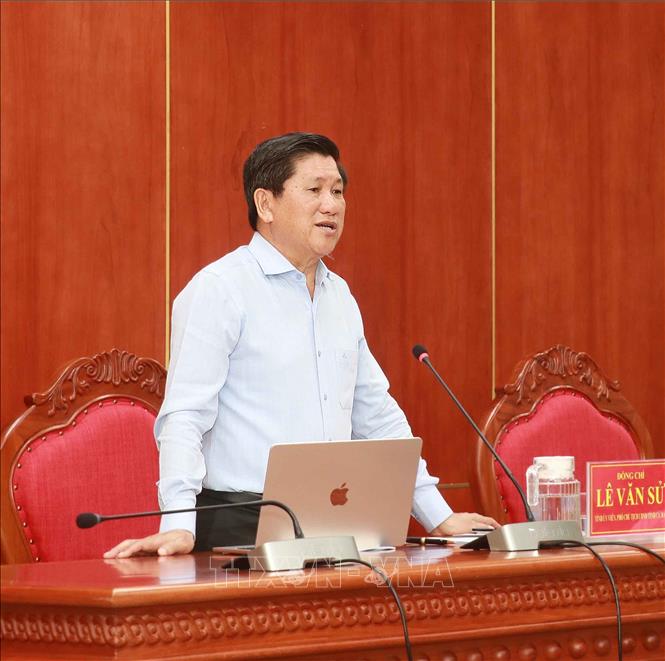
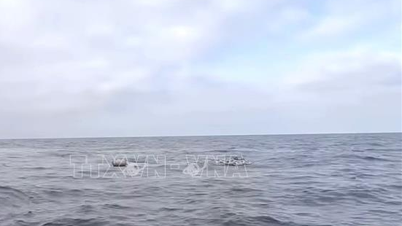
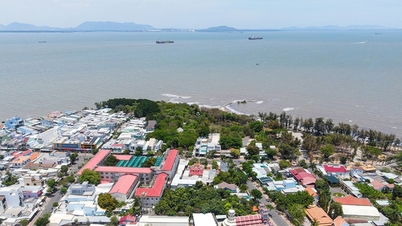
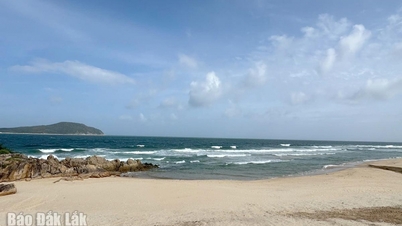
The Ca Mau Provincial People's Committee assesses this project as extremely necessary, given that the eastern coast of Ca Mau is the area most significantly affected by climate change, tidal surges, storms, and severe erosion. In fact, coastal protection projects in Ca Mau over the past years have proven highly effective in reducing erosion, protecting land and communities, and helping to restore over 1,000 hectares of coastal protection forests...
According to Lê Văn Sử, Vice Chairman of the People's Committee of Cà Mau province, historical data and satellite imagery show that from 1904 to 2014, the eastern coastline of Cà Mau province lost approximately 5.8 km of coastal land, averaging 52 m/year, with significant changes (both erosion and sedimentation). Therefore, Cà Mau province proposes implementing a project to restore the eroded natural coastal space, serving disaster prevention and climate change mitigation; and simultaneously maximizing the effectiveness of the sea bridge and Hòn Khoai Port project.
However, since the current land reclamation plan, implemented under Government Decree 42/2024/ND-CP dated April 16, 2024, on land reclamation activities, does not include provisions on shoreline restoration, the People's Committee of Ca Mau province proposes that the competent authority allow the application of specific mechanisms and policies to restore the eastern coastline, or allow the province to simultaneously adjust the provincial planning, adjust the detailed planning, and implement the project "Restoring the eastern coastline of Ca Mau to serve disaster prevention and climate change adaptation, socio -economic development, and national defense and security".
According to the draft, the project will be implemented in two phases. In phase 1, the objective is to proactively prevent and mitigate natural disasters and respond to climate change, limit the impact of sea level rise, and reduce coastal erosion. Simultaneously, it aims to combat erosion, protect the shoreline, restore mangrove forests, and recover lost coastal space. The creation of "post-reclamation" areas will result from technical solutions involving sediment deposition and retention.
Phase 2 will focus on socio-economic development on the restored land. The land area formed after the embankment will be used for infrastructure development (marine economy, marine ecotourism , coastal urban development, exploitation of renewable energy potential, logistics development, etc.), ecosystem conservation, creating tourist landscapes, and contributing to socio-economic development. Simultaneously, strategically located security and defense facilities will be situated to ensure control over the southernmost coastal line of the country.
According to this draft, the coastal restoration projects will include: erosion control embankments, coastal restoration, investment in a logistics area serving Hon Khoai General Port; breakwaters combined with viaducts, approximately 1 km from the shore, to restore approximately 1,000 hectares of coastline, from Khai Long to Dat Mui (approximately 10 km); breakwaters combined with viaducts, approximately 1 km from the shore, to restore approximately 1,500 hectares of coastline, from Rach Goc to the logistics area (approximately 15 km); breakwaters combined with viaducts, approximately 2 km from the shore, to restore approximately 400 hectares of coastline, along the Nha Mat coastal section (approximately 2 km long).
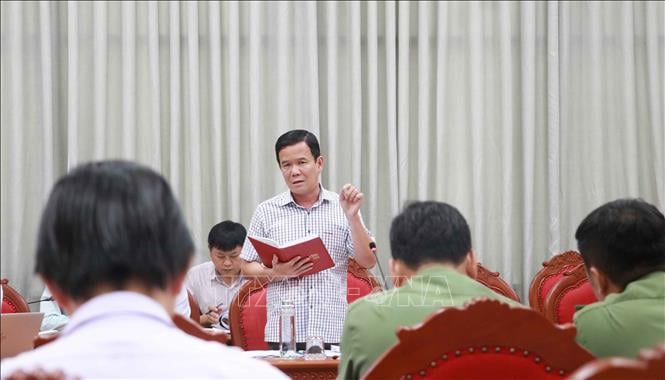
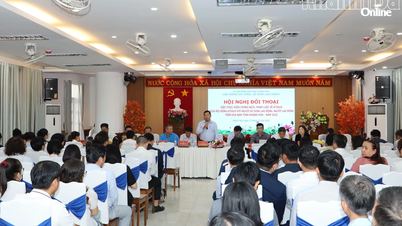
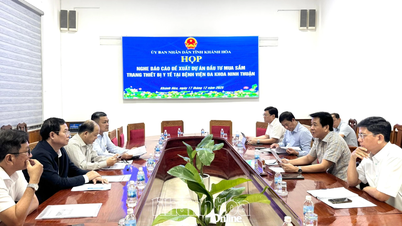
At the meeting, delegates focused on providing feedback on three funding options (state budget, land use rights bidding, and a combined PPP model) and analyzing anticipated legal obstacles during project implementation...
After hearing the analysis and assessment, Vice Chairman of the Ca Mau Provincial People's Committee Le Van Su stated that the high level of consensus in the project development process will be a solid foundation for Ca Mau to move to the feasibility study phase, which will then serve as an important basis for submitting the project to competent authorities for consideration and decision on investment policy.
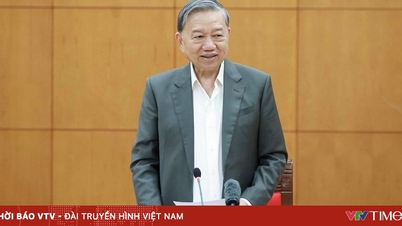
Concluding the meeting, the Standing Vice Chairman of the Ca Mau Provincial People's Committee, Lam Van Bi, requested that departments, agencies, and specialized bodies carefully review procedures related to protective forests and the conversion of forest land use purposes, as well as the determination of boundaries, scope, and timing for the creation of coastal land funds…
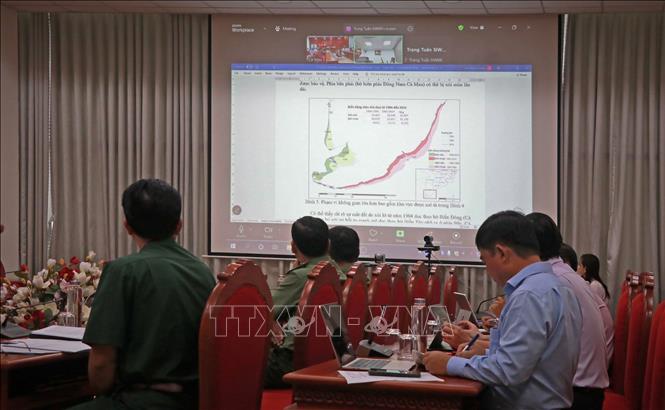
“We proactively researched and proposed the project, and it was approved by the Central Committee. Therefore, there is no reason for us to complain about difficulties or obstacles during the project implementation process; this is unacceptable. However, there are some areas under the authority of central ministries and agencies, but we must still proactively review and address difficulties and obstacles within our authority before proposing solutions for central ministries and agencies to resolve,” Mr. Lam Van Bi emphasized; while also calling for a sense of responsibility from specialized departments and agencies in contributing to and completing the project before submitting it to the Central Committee for approval.
Source: https://baotintuc.vn/thoi-su/day-nhanh-tien-do-khoi-phuc-duong-bo-bien-dong-ca-mau-20251216173417823.htm

![[Photo] Prime Minister Pham Minh Chinh receives the Governor of Tochigi Province (Japan)](/_next/image?url=https%3A%2F%2Fvphoto.vietnam.vn%2Fthumb%2F1200x675%2Fvietnam%2Fresource%2FIMAGE%2F2025%2F12%2F16%2F1765892133176_dsc-8082-6425-jpg.webp&w=3840&q=75)

![[Live] 2025 Community Action Awards Gala](/_next/image?url=https%3A%2F%2Fvphoto.vietnam.vn%2Fthumb%2F1200x675%2Fvietnam%2Fresource%2FIMAGE%2F2025%2F12%2F16%2F1765899631650_ndo_tr_z7334013144784-9f9fe10a6d63584c85aff40f2957c250-jpg.webp&w=3840&q=75)
![[Photo] Prime Minister Pham Minh Chinh receives Lao Minister of Education and Sports Thongsalith Mangnormek](/_next/image?url=https%3A%2F%2Fvphoto.vietnam.vn%2Fthumb%2F1200x675%2Fvietnam%2Fresource%2FIMAGE%2F2025%2F12%2F16%2F1765876834721_dsc-7519-jpg.webp&w=3840&q=75)
![[Image] Leaked images ahead of the 2025 Community Action Awards gala.](/_next/image?url=https%3A%2F%2Fvphoto.vietnam.vn%2Fthumb%2F1200x675%2Fvietnam%2Fresource%2FIMAGE%2F2025%2F12%2F16%2F1765882828720_ndo_br_thiet-ke-chua-co-ten-45-png.webp&w=3840&q=75)



















































Comment (0)