

Kinhtedothi - According to Mai Thi Phuong Hoa, Deputy Chairwoman of the National Assembly 's Judicial Committee, if we successfully combat wastefulness as we have in the past, our country will certainly firmly enter a new era - an era of progress.
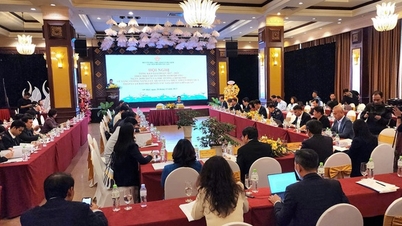
On November 4th, continuing the program of the 8th Session, the National Assembly held a plenary discussion on evaluating the results of the implementation of the socio- economic development plan for 2024; and the projected socio-economic development plan for 2025.
The General Secretary 's article on combating waste accurately assessed the current situation.
During the discussion in the National Assembly hall, Deputy Chair of the National Assembly's Judicial Committee Mai Thi Phuong Hoa expressed her agreement with the Government's report on the results of implementing the socio-economic plan for 2024 and the projected results for 2025, which highlighted many outstanding achievements.
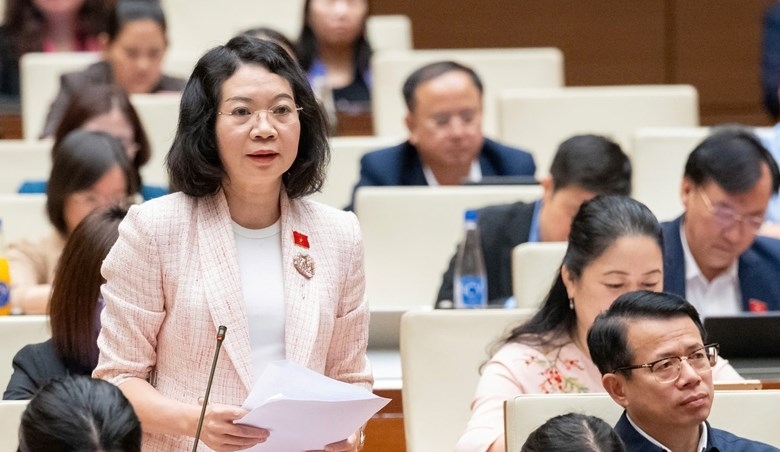
Accordingly, a clear manifestation of this is the Prime Minister's and Deputy Prime Ministers' leadership and management, which have closely followed practical realities, implemented flexible policies, provided clear solutions, and clearly defined the responsibilities of each agency, organization, and individual. GDP growth for the whole year of 2024 is estimated at 6.8-7%, with many targets met or exceeded. Infrastructure development has been strongly promoted, showing a clear breakthrough.
Along with that, Deputy Chair of the National Assembly's Judicial Committee, Mai Thi Phuong Hoa, expressed concern about the issue of combating waste in the public administration. Accordingly, in recent times, the Party and State have paid great attention to the fight against waste. Directive No. 27-CT/TW dated December 25, 2023, of the Politburo on strengthening the Party's leadership over the work of practicing thrift and combating waste. The National Assembly exercises supreme supervision and issued Resolution No. 74/2022/QH15 dated November 15, 2022, on promoting the implementation of policies and laws on practicing thrift and combating waste. Most recently, the Central Steering Committee on Anti-Corruption and Anti-Negative Phenomena has been assigned a new task: combating waste.
According to Mai Thi Phuong Hoa, Deputy Chair of the National Assembly's Judicial Committee, General Secretary To Lam's article on combating waste accurately assessed the current situation, identified the causes, and offered many effective solutions. It can be said that this is a strong and profound message, encouraging all citizens, especially officials in the public administration, to reconsider how they use and manage resources throughout society.
The article by the General Secretary clearly states: "Wastefulness is still quite widespread, in many different forms, and has been causing many serious consequences for development."
Combating waste, ushering in a new era.
According to Mai Thi Phuong Hoa, Deputy Chair of the National Assembly's Judicial Committee, there is still a segment of officials who have a tendency to downplay the importance of combating waste in their management activities. For a long time, they have only considered waste as an act that needs to be rectified but not yet considered serious, nor as an act that poses a danger to society. Some officials even believe that waste is merely the inefficient management and use of state capital and assets.
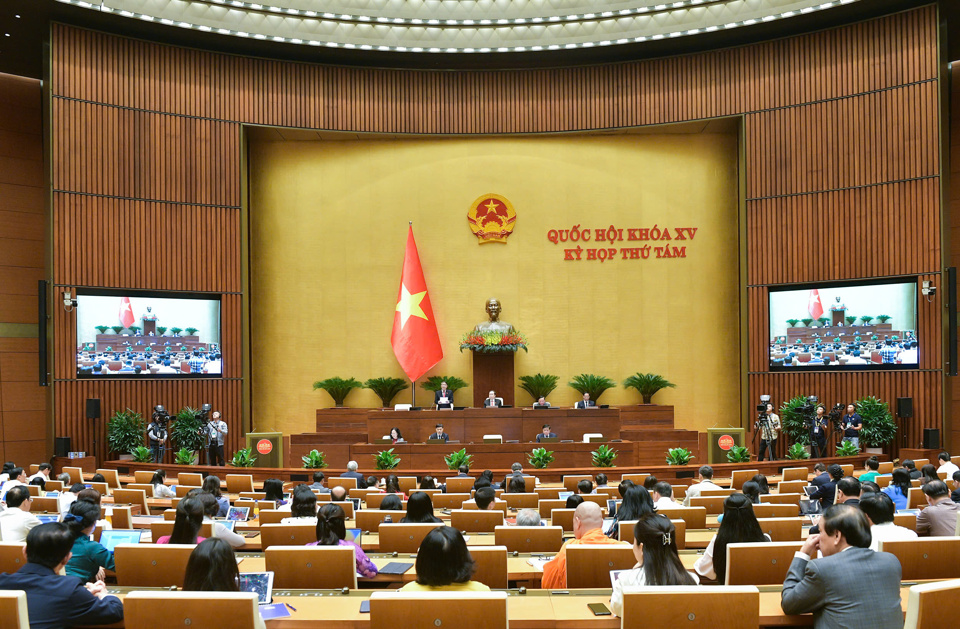
In reality, there is also a waste of opportunities and time, which, according to experts, is the greatest waste of intangible human resources. Once opportunities and time pass, they never return. As General Secretary To Lam has stated: Cumbersome administrative procedures waste the time of citizens and businesses; the fear of responsibility and shirking of work waste opportunities for the development of localities and the country.
According to Mai Thi Phuong Hoa, Deputy Chair of the National Assembly's Judicial Committee, the "achievement-oriented mentality," "term-based thinking," and "subjective thinking" of some officials who want to implement projects in their localities and ministries during their leadership term to demonstrate their competence and dynamism have failed to achieve the desired results due to hasty approaches, subjective calculations, and a lack of full compliance with procedures.
Recently, several projects have been singled out by the Central Steering Committee on Anti-Corruption, Waste, and Negative Practices, providing concrete examples. Another reason, according to the delegates, is that while sanctions for wasteful behavior have been enacted, their deterrent effect is not high enough. The Law on Practicing Thrift and Combating Waste stipulates individual responsibility, the responsibility of leaders, and the handling of violations that lead to wastefulness. However, these regulations are primarily warning and reminder-like in nature. The Penal Code has two articles addressing criminal acts resulting in wastefulness: Article 179 on the crime of negligence causing damage to state property, agencies, organizations, and enterprises, and Article 219 on the crime of violating regulations on the management and use of state property causing loss and waste.
In practice, the provisions of this Law are rarely used to address wasteful behavior, but are usually dealt with under other charges such as "Violation of accounting regulations causing serious consequences," "Violation of bidding regulations causing serious consequences," etc. With this approach, although the crime is still punished, the deterrent and educational effect against wastefulness is not high.
"If we successfully combat waste as we have in the past, our country will certainly firmly enter a new era - an era of progress," emphasized Mai Thi Phuong Hoa, Vice Chair of the National Assembly's Judicial Committee.
Source: https://kinhtedothi.vn/dbqh-chong-lang-phi-vung-vang-buoc-vao-ky-nguyen-moi-ky-nguyen-vuon-minh.html

![[Photo] Prime Minister Pham Minh Chinh presides over a meeting on private sector economic development.](/_next/image?url=https%3A%2F%2Fvphoto.vietnam.vn%2Fthumb%2F1200x675%2Fvietnam%2Fresource%2FIMAGE%2F2025%2F12%2F20%2F1766237501876_thiet-ke-chua-co-ten-40-png.webp&w=3840&q=75)



















































































Comment (0)