

(NLĐO) - The second meteor shower of October, named Orionids, will be at its peak on the night of October 21st and the early morning of October 22nd, according to positioning in Ho Chi Minh City.
According to Date and Time, on the peak night of the Orionids meteor shower, observers can see about 20 meteors falling per hour.
The Orionids are one of the most spectacular meteor showers of the year. Not only do they contribute to the "double meteor shower," but they are also the result of a familiar object striking Earth's atmosphere for the second time this year with its trail of rocky dust.
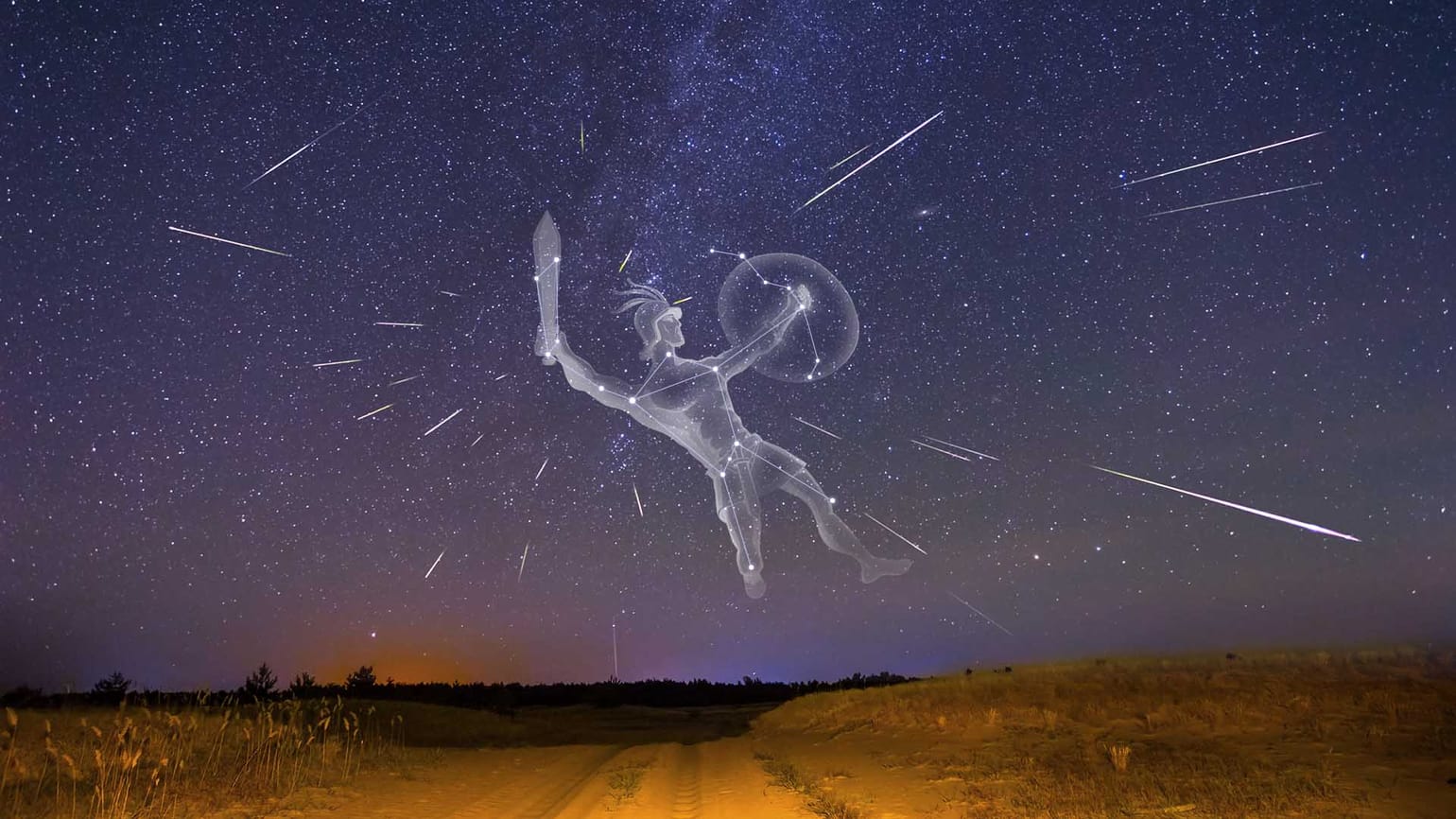
The image of the Orionids meteor shower is combined with a graphic depicting the constellation from which it originates - Photo: STAR WALK
The Orionids are named after the location where the meteor shower appears to appear in the sky: the constellation Orion, or Lạp Hộ, which means "hunter" in Chinese.
Therefore, to find the Orionids fireballs, you need to look towards the raised arm holding a bow of the hunter constellation in the sky.
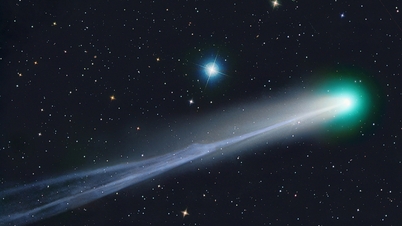
However, the true source of this meteor shower is Halley's Comet, an object with a 76-year orbit around the Sun.
Although Earthlings won't see this comet return until 2061, its long, rocky, dusty tail still crosses Earth's orbit twice a year.
When this rocky, dusty tail strikes the planet's atmosphere, the debris will fall to the ground, forming a meteor.
Back in May, Halley created the Eta Aquarids meteor shower, originating from the constellation Aquarius.
The Orionids are the second meteor shower to peak in October. They begin falling on October 2nd, gradually intensify until their peak on October 21st, and will weaken and disappear completely after November 7th.
Therefore, the Orionids had a period of falling in parallel with the Draconids meteor shower from the constellation Draco, creating a double meteor shower phenomenon from October 6th to 10th.
To see Orionids, you should allow your eyes to adjust to the darkness for about 15-20 minutes, find a place with ample space, and hope for good weather.
Source: https://nld.com.vn/dem-nay-viet-nam-don-cuc-dai-mua-sao-bang-tu-ke-2-lan-tan-cong-196241021091222198.htm

























































































Comment (0)