

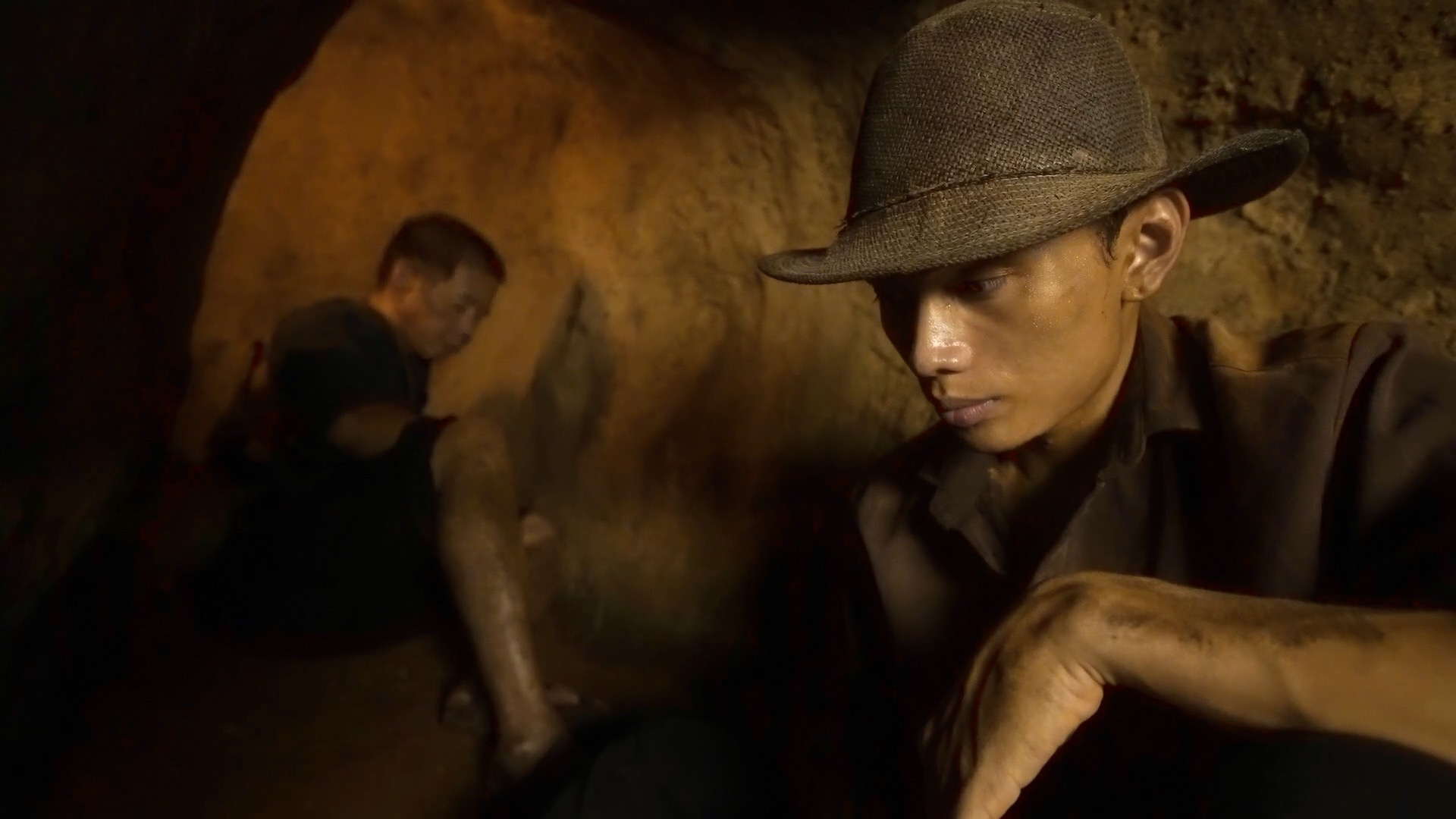
Scene from the film "Underground Tunnels - The Sun in the Darkness". (Photo: Galaxy Studio)
Bui Thac Chuyen is a name that almost guarantees the quality of the films he makes, from television series to feature films, regardless of the subject matter. His film "Underground Tunnels: The Sun in the Darkness," released to commemorate the Liberation Day of Southern Vietnam and the reunification of the country, received high praise from colleagues, experts, and audiences alike, for its meticulous attention to detail in the script, acting, sound, visuals, and music .
“The Tunnels – The Sun in the Darkness” is a project that director Bui Thac Chuyen has been nurturing for over 10 years. He shared at the film's premiere in Hanoi that 11 years ago, he had the opportunity to visit the Cu Chi Tunnels and was deeply moved to witness firsthand this very special area, located only about 30-35 km from Ho Chi Minh City, which had once housed a revolutionary base for decades, a place that even the most powerful colonial empires could not penetrate. This is because it contained a unique tunnel system unlike any other in the world . Even more surprising is that the inhabitants of these tunnels were the people themselves, who somehow managed to stay and fight against some of the world's most powerful armies.
Bui Thac Chuyen recounted: "At that time, I thought that I absolutely had to make a film about this place. And then, I also discovered that no film had ever been made about the Cu Chi Tunnels, which was a challenge, but I was still determined to do it."
|
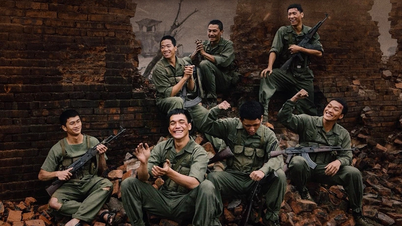
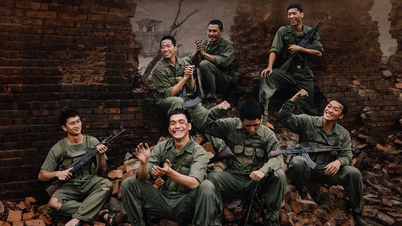
The guerrillas in the film are very young. |
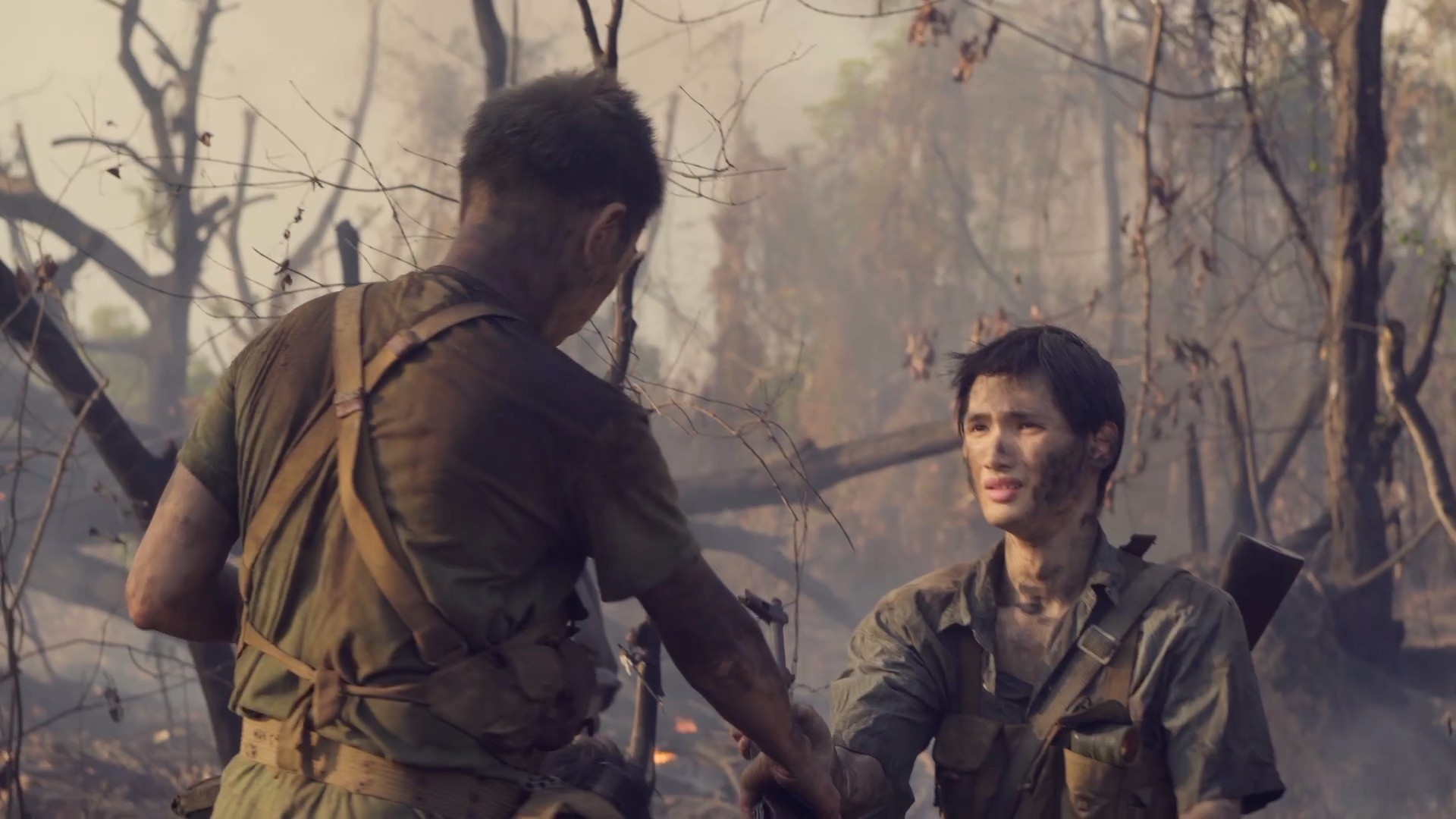
"Underground Tunnels - The Sun in the Darkness" is a privately funded film, and also the first revolutionary historical film made entirely without state investment. However, the film also received significant support from local agencies and departments.
Director Bui Thac Chuyen said: "This is the first time a privately produced film has received so much support from the Ho Chi Minh City People's Committee, the City Party Committee's Propaganda Department, and various ministries and departments..."
|
Many types of heavy weaponry are deployed in the film. |
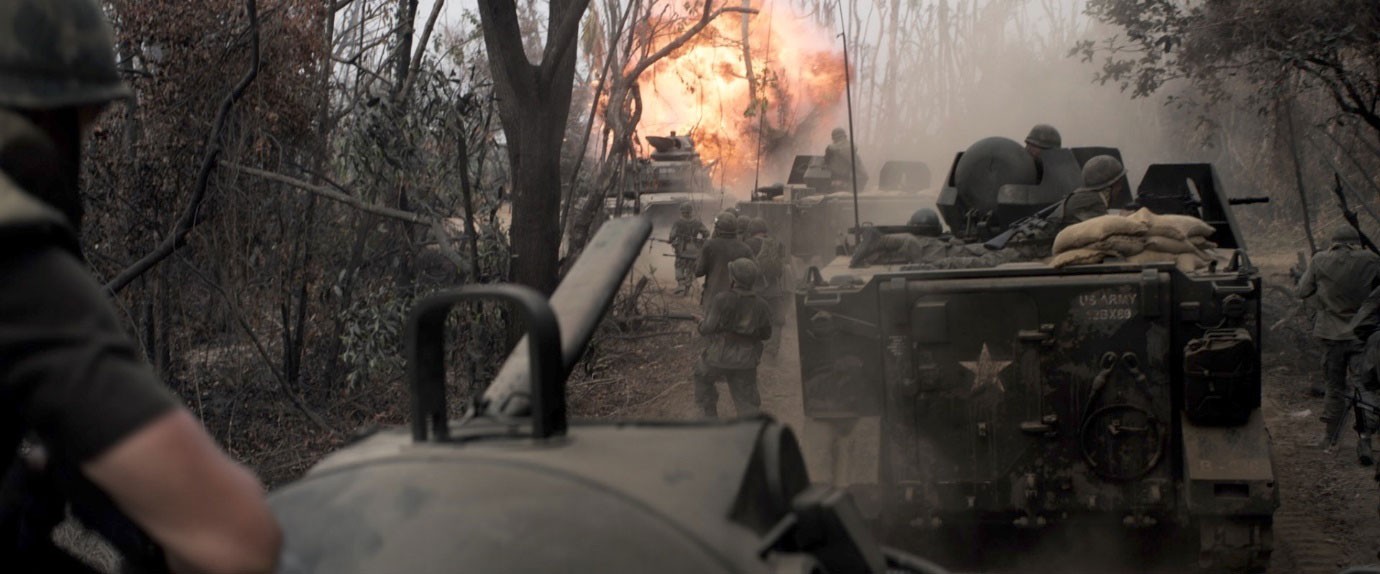
This also marks the first time a Vietnamese feature film project has utilized many of the heavy weapons that the US used in the war in South Vietnam at that time, such as M-48 Patton tanks, M113 ACAV armored assault vehicles, UH-1 Iroquois helicopters, Swift Boat (PCF) Patrol Craft Fast warships, LCM-8 small landing craft, and other military equipment.
Thanks to this, the clashes between tanks, warships, and heavy weapons between the professional American army and the "barefoot, iron-willed" Cu Chi guerrillas were convincing and captivating for viewers.
Speaking about the film, director Bui Thac Chuyen said that privately produced films like this are very necessary for history. “We hope the film will be a small gift for the 50th anniversary of national reunification. And the fact that many people go to see the film is what truly means the film is complete.”
|
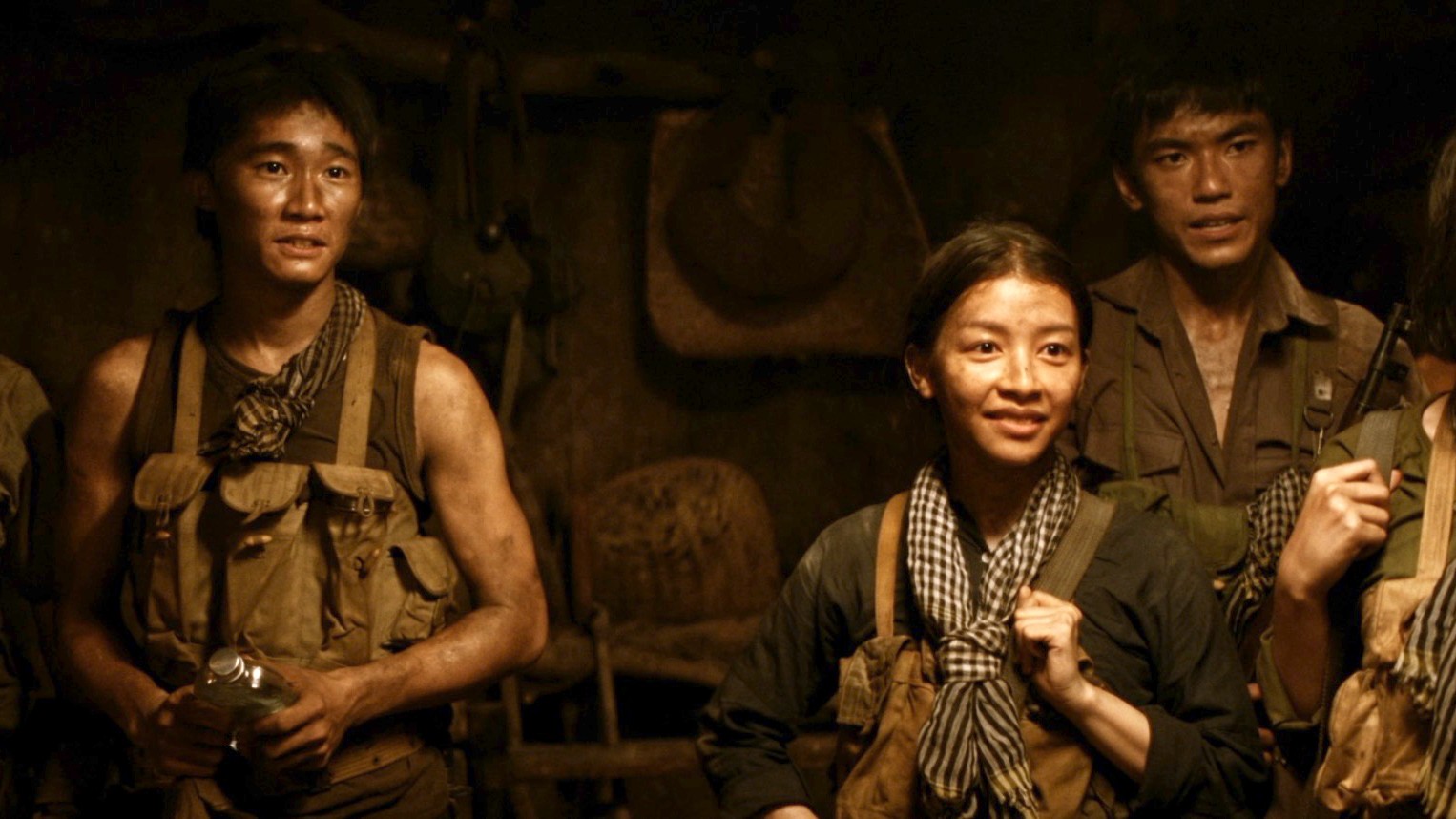
"The Tunnels - The Sun in the Darkness" is inspired by real events after 1967, telling the story of a 21-person guerrilla squad fighting in the Cu Chi area, tasked with holding their ground and maintaining their territory. The squad, commanded by Bay Theo (Thai Hoa) at the Binh An Dong base, was assigned the mission of assisting Hai Thung (Hoang Minh Triet) in "protecting medical equipment and supplies for the field hospital."
But in reality, their mission was far more arduous – to protect the area so that Hai Thung's strategic intelligence group could transmit crucial secret documents via radio waves, as well as infiltrate the US military's communication lines. The radio communications were detected and tracked by the US military. From here, Bay Theo, Ba Huong (Ho Thu Anh), Tu Dap (Quang Tuan), and the other guerrillas had to face increasingly fierce and sophisticated raids on the tunnels…
In the film, Bay Theo's wife is killed in action, his daughter (Khanh Ly) is also a guerrilla fighter in the team, and Bay Theo is both the team leader and an older brother to the young soldiers such as the strong-willed Ba Huong (Ho Thu Anh), the sweet-voiced Ut Kho (Diem Hang Lamoon), and Ba Hieu (Nhat Y)... The film also features Bui Thac Phong, son of director Bui Thac Chuyen and Meritorious Artist Le Tu Oanh, in the role of a Cu Chi guerrilla fighter.
As the raids intensified, Bay Theo's entire team was exhausted under the pressure. "Uncle Six" (Cao Minh), a senior officer, arrived at Binh An Dong base in time to encourage them, boosting their confidence and determination. The love story between Ba Huong (Ho Thu Anh) and Tu Dap (Quang Tuan) is a beautiful, romantic tale set during wartime, adding an optimistic note to the film.
|
The consistently dark and cramped setting evoked strong emotions in the audience. |
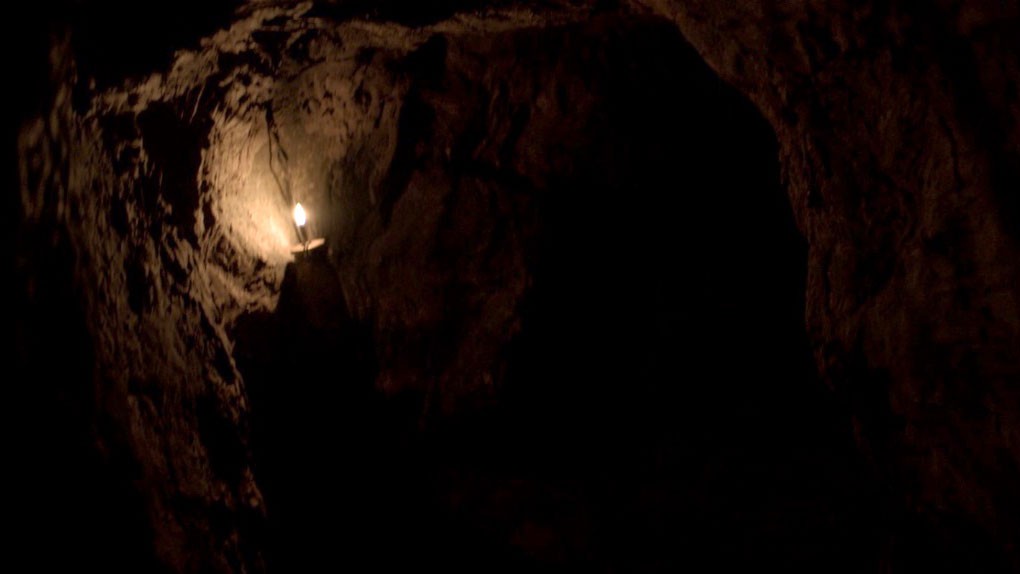
The film is shot from the perspective of someone inside the tunnels, with close-up and low-angle shots, realistically depicting the cramped, dark space of the tunnels, which nevertheless served as the "home" for dozens of people from the Cu Chi region.
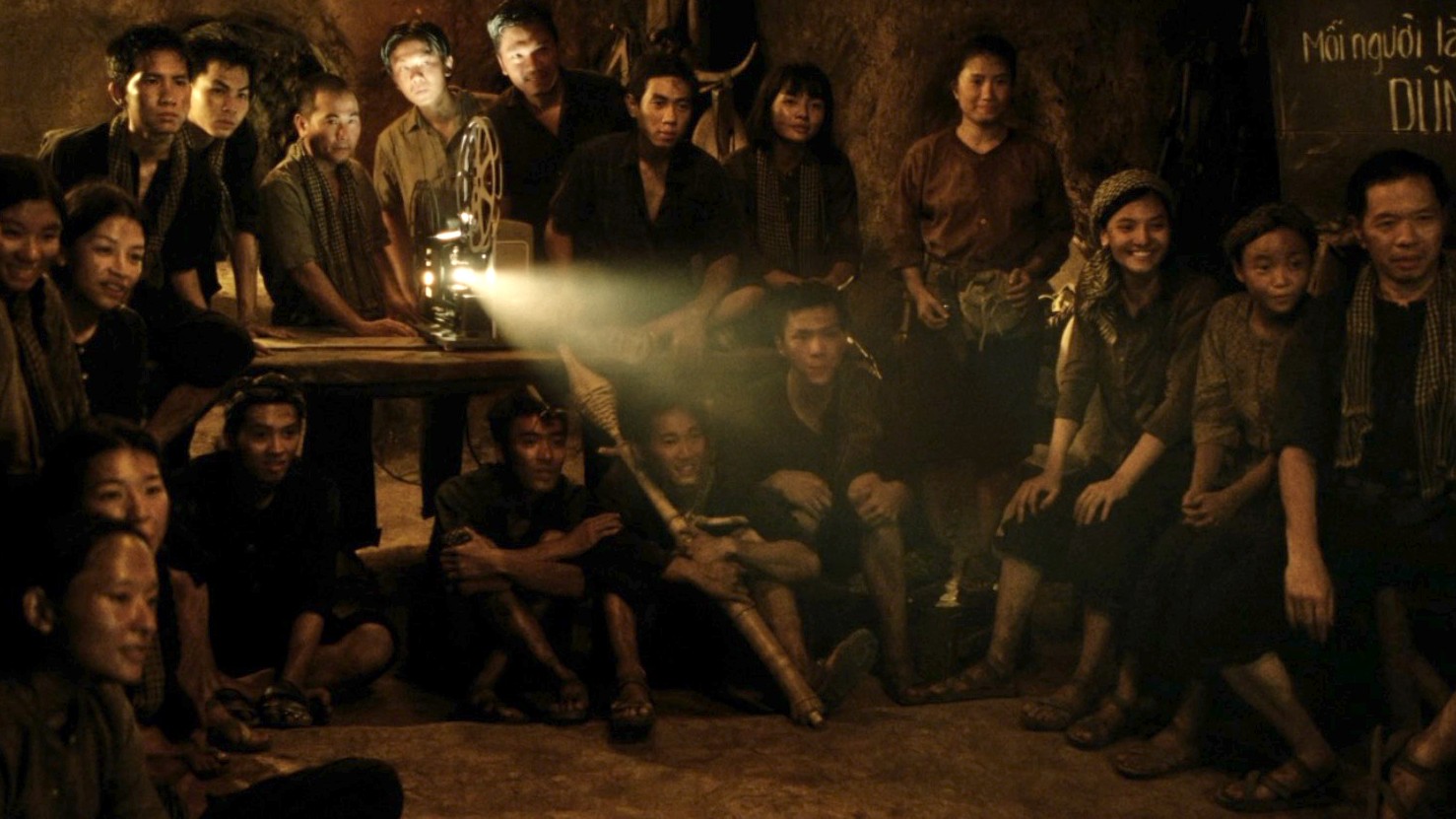
Inside the tunnels, there were chickens and a green iguana roaming around. Amidst the earth-shattering bombing raids, traditional Vietnamese folk songs could be heard to provide solace, and even films were shown underground, bringing hope and unwavering faith in victory.
|
Ba Huong and Ut Kho in the film. |
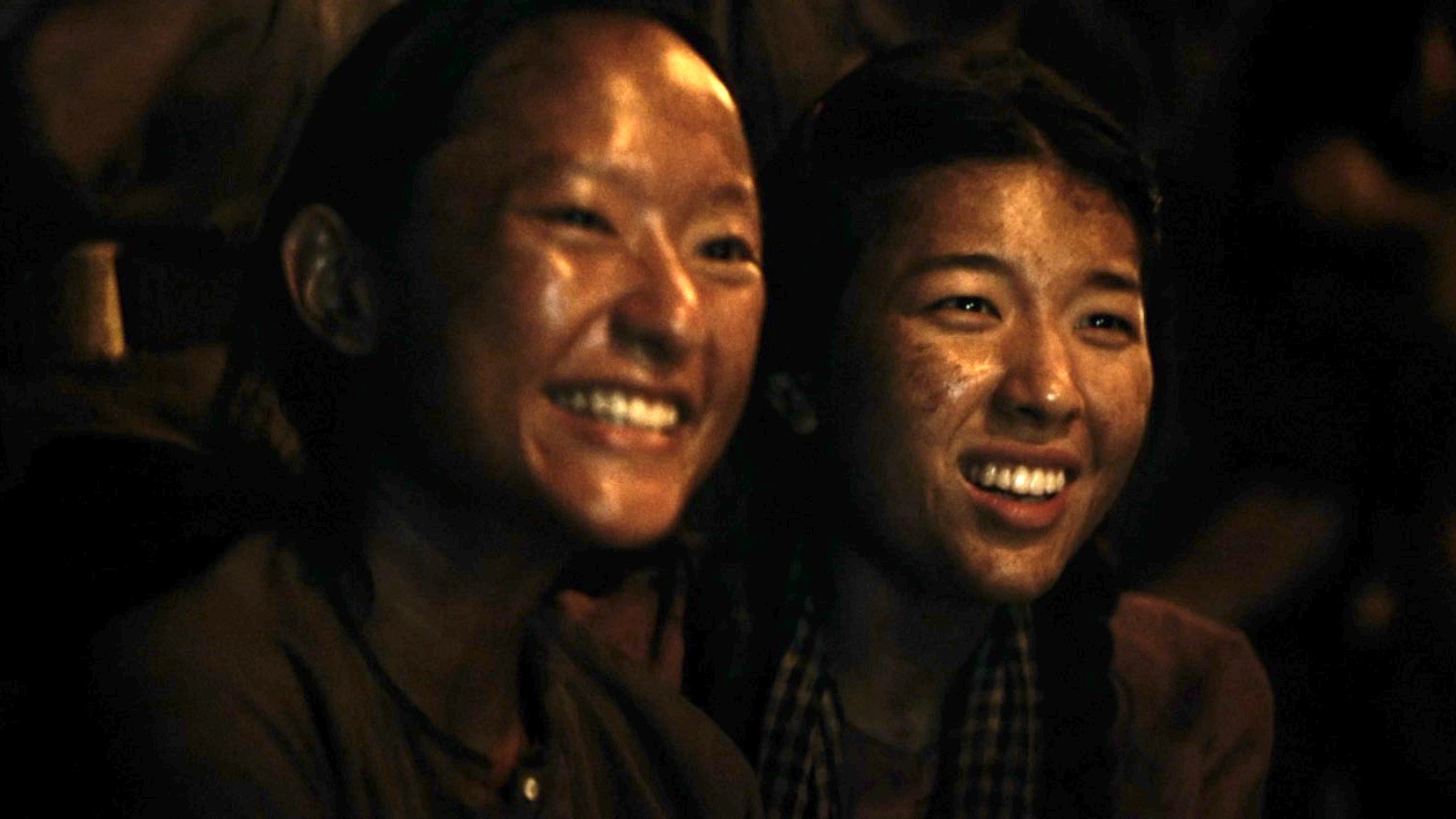
The story in the film is told entirely naturally by the characters. A cold-hearted Ba Huong, after catching Tu Dap, a draft dodger whose family had known her mother before, stubbornly goes out alone at night with a gun to find the truth. Her first act upon returning is to hit the young man for "never promising to marry him off." A naive Ut Kho, on the brink of life and death when the water from the river, pumped in by the American soldiers, has flooded the bunker, still calmly says, "I'm pregnant." Then there's the scene of uncovering the "secret" with guns and ammunition, and the guerrilla fighter's joyful excitement upon discovering a B40 grenade launcher.
Such stories and scenes made viewers cry, laugh, shed tears, and be unable to take their eyes off the screen for even a second.
|
The entire guerrilla squad watched the movie under a hail of bombs. |
While director Bui Thac Chuyen's "Brilliant Ashes" still elicits mixed opinions, despite its numerous film awards, "The Tunnel - The Sun in the Darkness" offers viewers a truly complete and unified experience, as if they themselves were part of the film.
Director Bui Thac Chuyen's shots and camera angles are so realistic that, while watching the film, viewers often feel suffocated and have to take deep breaths as if to replenish their oxygen supply. These include scenes of underground tunnels enduring bombing raids, shaking on all sides, dust swirling inside, scenes of American soldiers releasing toxic smoke into the tunnel entrances, and scenes of a guerrilla fighter suffering from asthma lying sprawled on the ground, gasping for breath…
|
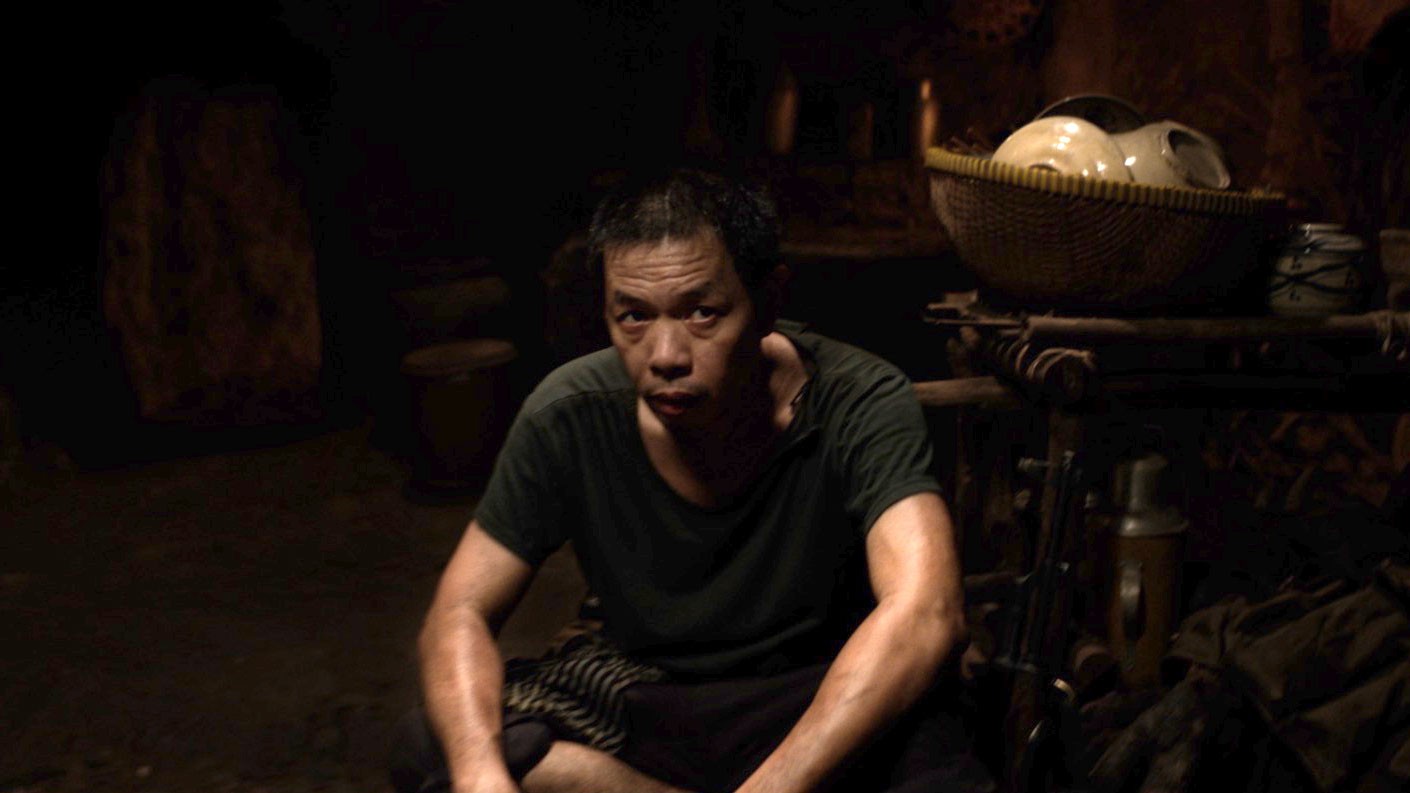
Thai Hoa perfectly portrayed the character of Bay Theo. |
The film uses live-recorded dialogue, so the language is very natural and relatable. Viewers can easily hear the characters swearing and getting angry in many specific situations.
In the final part of the film, director Bui Thac Chuyen very subtly brings the heroes of Cu Chi from that era to the screen, directly recounting their lives and battles in that special land during those years, interspersed with documentary footage to show that the film could only reflect a part of the brutality that took place there.
Pieces of art and history stand together, painting tragic and heroic images, yet without clichés, about a war where victory is defined by the most ordinary, simple people. "The Tunnels - The Sun in the Darkness" has now been called by audiences "a film to watch to feel more patriotic."
Tuyet Loan - Nhandan.vn
Source: https://nhandan.vn/dia-dao-mat-troi-trong-bong-toi-doi-cho-chinh-phuc-nhung-giai-thuong-quoc-te-post870406.html

![[Image] Close-up of the newly discovered "sacred road" at My Son Sanctuary](/_next/image?url=https%3A%2F%2Fvphoto.vietnam.vn%2Fthumb%2F1200x675%2Fvietnam%2Fresource%2FIMAGE%2F2025%2F12%2F13%2F1765587881240_ndo_br_ms5-jpg.webp&w=3840&q=75)






















![[Image] Close-up of the newly discovered "sacred road" at My Son Sanctuary](https://vphoto.vietnam.vn/thumb/402x226/vietnam/resource/IMAGE/2025/12/13/1765587881240_ndo_br_ms5-jpg.webp)




















































Comment (0)