

| The Ministry of Industry and Trade and IDH collaborate to support the sustainable development of the textile, garment, and footwear industries. HanoiTex and HanoiFabric 2024: Bringing the latest technology to the textile industry. |
According to Mr. Vu Duc Giang, Chairman of the Vietnam Textile and Garment Association, textile and garment businesses are applying modern technologies such as 3D printing in design, digitalization, and the increased use of artificial intelligence in fashion production of ready-made garments based on anthropometric parameters. This helps businesses reduce costs and improve productivity.
As a company aggressively pursuing digital transformation, PPJ Group currently operates a closed-loop textile and garment supply chain. Speaking about this, Mr. Dang Vu Hung, Chairman and CEO of PPJ Group, stated that PPJ Group's relatively complete digital ecosystem allows access to and control over every aspect of its production, business, and corporate management. PPJ Group has successfully built, perfected, and operated a comprehensive ERP digital management system, successfully bringing advanced information technology and green technologies from around the world into its textile and garment production and business operations.
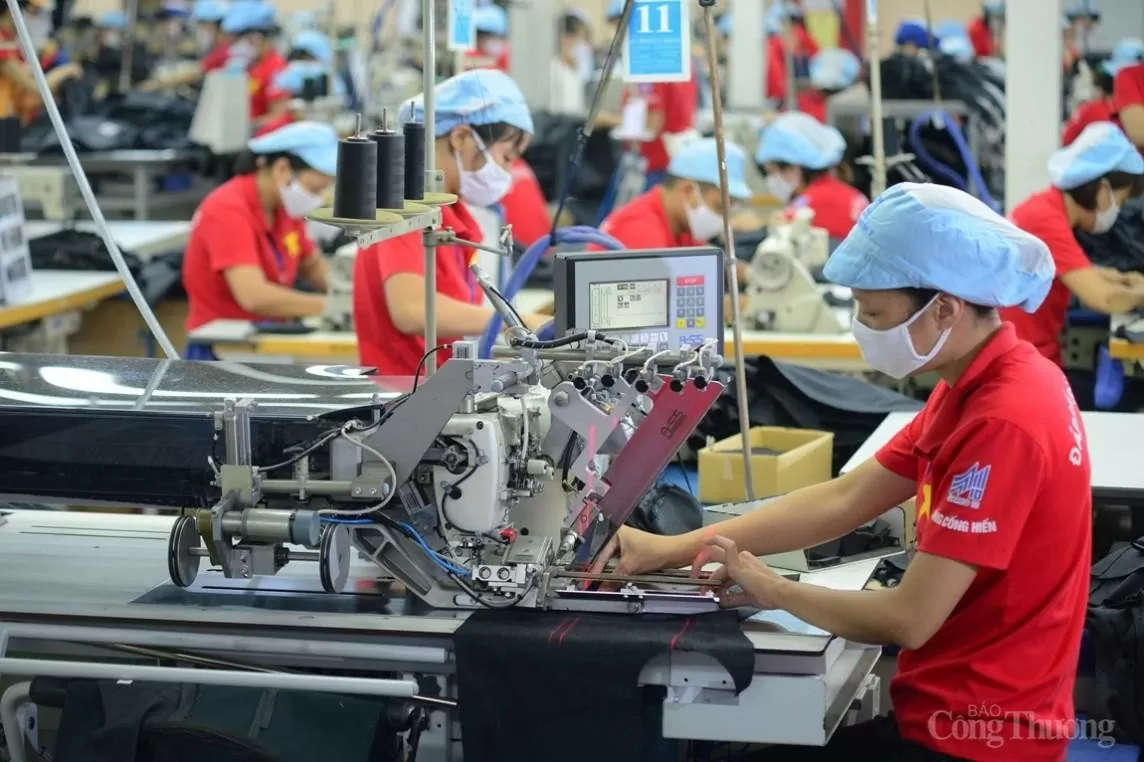 |
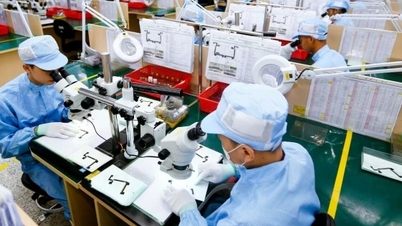
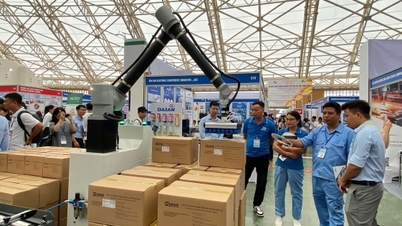
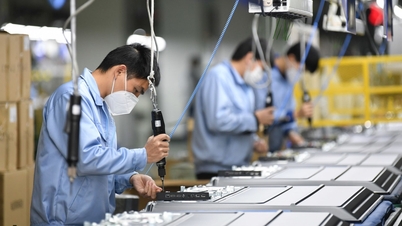
| Textile and garment businesses are embracing digital transformation. Photo: NT |
PPJ Group has also mastered advanced textile techniques and technologies, increasing automation and integrating digital and green technologies into its entire textile production system. “ Laser technology (creating fashion effects on garments), Diamond Finishing technology (helping fabric surfaces adapt better to lasers without the need for chemicals or detergents), Eflow (washing and dyeing using nanobubble particles, maximizing water, chemical, and electricity savings), Ozone (decolorization, deodorization, and color uniformity)… have all been developed and operated by PPJ Group using its own equipment. 3D and Metaverse technology in product design and presentation is also a superior strength of PPJ Group, reducing physical samples by nearly 30% – equivalent to 3000 garment samples per month – compared to traditional design methods ,” Mr. Dang Vu Hung informed.
Despite achieving results in the transformation, both the leaders of the Vietnam Textile and Garment Association and PPJ Group acknowledge that this path remains very challenging for businesses.
The cost of transformation is considerable. For PPJ Group, in just the last five years, they have invested over $5 million in digital operating systems (hardware and software); tens of millions of dollars in technology and manufacturing of green transformation equipment, and this figure is certainly not going to stop there.
On the other hand, during the transformation process, businesses not only face financial difficulties, but also a significant barrier due to the lack of skilled human resources capable of grasping and mastering technology. Currently, many businesses have to hire foreign experts to fill many key management positions from middle to senior levels at considerable expense, in order to operate and effectively apply new technologies from around the world, facilitating faster and more efficient transformation.
The main challenge lies in the financial policy aspect. Currently, the Government and the State Bank of Vietnam are very interested in encouraging credit institutions to focus on mobilizing capital and implementing financial support packages that prioritize digital transformation, green development, and sustainability. However, in reality, the implementation of green credit still faces many obstacles due to the incomplete and unspecified legal framework, the still quite complex appraisal process, and especially the lack of specific and transparent criteria to determine the "green" nature of projects, which would serve as a basis for granting green credit to businesses.
Furthermore, due to the specific nature of textile and garment production operations, businesses urgently need support from credit institutions, which should design suitable financial packages to improve access to capital and ensure long-term financial stability during the transformation process.
To overcome these challenges, Mr. Vu Duc Giang suggested that businesses need support from the Government and relevant agencies. Businesses participating in digital transformation and green transformation need support from the State in terms of consumer markets, preferential loans, etc.
The association recommends that the Government and relevant ministries and agencies implement policies and solutions to directly or indirectly support businesses and financial institutions in accessing international green finance sources, training programs, and international experience exchanges on green growth and green finance.
According to experts, technology is a tool for businesses to achieve their digital transformation and green transformation goals. However, first and foremost, clear objectives are needed; a culture of innovation must be fostered; and digital infrastructure, including both national and enterprise infrastructure, must be built. In particular, during the digitalization process, attention must be paid to protecting the data and information of the business itself and its employees.
Source: https://congthuong.vn/doanh-nghiep-det-may-bat-nhip-chuyen-doi-so-353278.html


















































































Comment (0)