

Instead of traditional markets, textile and garment businesses are striving to find new markets for their products to diversify their market reach and increase profits.
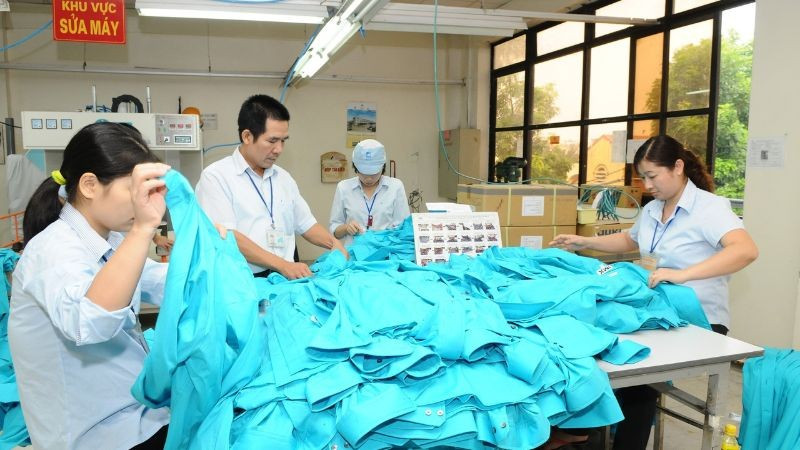
Businesses are striving to find new markets.
In the third and fourth quarters of 2024, Vietnam Textile and Garment Group (Vinatex) expects to export its first orders of fire-resistant fabrics and clothing to Indonesia, India, the Middle East, and the United States.
According to Mr. Le Tien Truong, Chairman of the Board of Directors of Vinatex, this is a product that can have a very rapid growth rate, but it will depend heavily on the policies of each country, and it is a unique product that is not entirely the same as the products we have been producing in recent years.
Mr. Truong stated that this is a product with high technical requirements, legal aspects, and copyright issues, not a typical fashion item. Through cooperation between Vinatex and Coast Group (UK), the goal is to achieve revenue of 2-2.5 million USD, with the aim of doubling the revenue annually in the first five years.
According to experts, niche products such as fire-resistant clothing and fabrics, compared to other conventional items, have clearer growth potential and less competition in the market. Therefore, the fact that domestic textile and garment businesses are embracing this niche market with fire-resistant products is very encouraging, opening up promising opportunities in a vast market. The important thing is that businesses need to actively invest in infrastructure, equipment, and human resources, as well as strive to master the technology and production processes.
As a leading corporation in the textile and garment industry, the Vietnam Textile and Garment Group has recently made efforts to boost textile and garment exports by seeking new markets and producing new products to meet both domestic and international demand.
According to Mr. Cao Huu Hieu, General Director of Vietnam Textile and Garment Group, most garment businesses have enough orders to last until the end of the fourth quarter of 2024 - the peak season for Christmas and Tet (Lunar New Year) orders. It is predicted that Vietnam's textile and garment export turnover in 2024 will increase by 8-10% compared to 2023.
These positive signs, in addition to the recovery of the global economy and the resurgence of consumer spending, are also thanks to efforts to expand into new export markets such as Africa and India. Proactively seeking new customers, especially in niche markets, is considered key to helping textile and garment businesses maintain stability in the current period.
Meanwhile, at May 10 Corporation, after experimenting with selecting complex, small-quantity orders, this year they continue to maintain orders with difficult technical requirements and flexible order acceptance times. Choosing challenging orders helps the company more easily find orders and partners in global markets.
Regarding new markets, Mr. Pham Van Viet, Chairman of the Board of Directors of Viet Thang Jean Co., Ltd. (VitaJean), shared that since the Covid-19 pandemic, Vietnam's garment exports to Russia have grown significantly. Vietnamese garment products are of high quality and have designs that suit the tastes and fashion trends in the Russian market. This is a very favorable time for Vietnamese textile and garment businesses to strengthen cooperation with the Russian Federation in this field…
What opportunities are there for 2024?
According to the Ministry of Industry and Trade, the country's textile and garment exports are expected to recover better in the coming months. This is because, seasonally, the third quarter is the period when Vietnam's textile and garment exports reach their highest level of the year. Furthermore, most garment businesses have secured enough orders to last until the end of the third quarter of 2024 and are continuing negotiations to sign contracts until the end of the fourth quarter of 2024 – the peak production season for Christmas and Tet (Lunar New Year) orders.
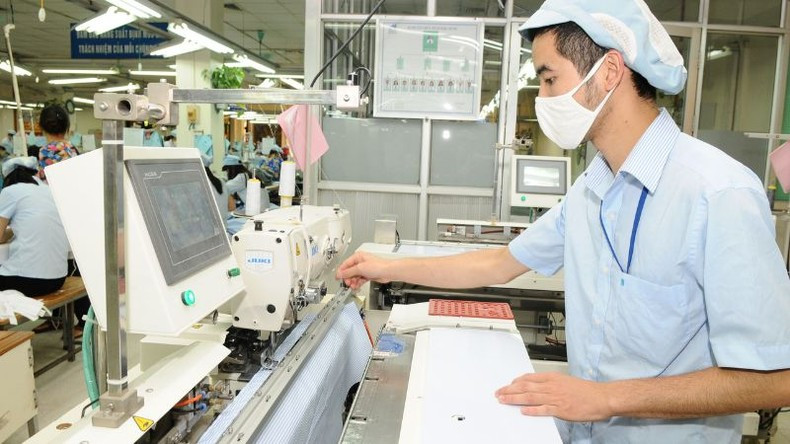
Simultaneously, according to a recent survey by the U.S. Fashion Institute (USFIA) on the competitive advantages of textile and garment exporting countries to the United States, Vietnam scored higher overall than China and Bangladesh, as businesses are increasingly shifting their suppliers away from China. Therefore, in the long term, Vietnam's textile and garment market share is expected to continue expanding in this market.
According to the Ministry of Industry and Trade, Vietnamese textile and garment businesses have an advantage thanks to their geographical location, large port system, and ability to produce a diverse range of high-value products such as vests, winter coats, and swimwear with rich designs and fast delivery. However, in the long term, if other countries catch up in production capacity, the Vietnamese textile and garment industry will face many challenges.
In parallel, textiles and footwear are two industries with a high degree of openness, exporting 70-80% of their production, thus making them highly dependent on and vulnerable to fluctuations in the global market. Therefore, diversifying export markets and avoiding putting all your eggs in one basket is the right direction and has been implemented by the Ministry of Industry and Trade for many years.
Specifically, through monthly trade promotion meetings, the Ministry has directed and coordinated with Vietnamese trade offices abroad to support businesses in exploring and finding customers, especially in markets that have signed free trade agreements.
Environmental protection is a crucial issue that textile and garment businesses must also prioritize. Businesses need to focus on selecting environmentally friendly and recyclable materials that align with the circular economy trend. This is because businesses in this sector are facing a series of challenges, from implementing extended manufacturer responsibility mechanisms for waste management, carbon border regulation, German supply chain auditing laws, and especially the shift from "fast fashion" to "sustainable fashion" strategies.
In this context, greening and sustainable development are competitive criteria that major markets such as the EU, the US, and Japan require from suppliers, in addition to factors such as quality, price, and delivery time.
Despite remaining challenges and shortcomings, with many positive signs for the remainder of the year, Vietnam's textile and garment industry expects to achieve its export target of $44 billion in 2024.
Source


![[Photo] Two flights successfully landed and took off at Long Thanh Airport.](/_next/image?url=https%3A%2F%2Fvphoto.vietnam.vn%2Fthumb%2F1200x675%2Fvietnam%2Fresource%2FIMAGE%2F2025%2F12%2F15%2F1765808718882_ndo_br_img-8897-resize-5807-jpg.webp&w=3840&q=75)






























































































Comment (0)