

On September 18th, the Ho Chi Minh City Trade and Investment Promotion Center (ITPC), in collaboration with the Trade Representative Office of the State of Rheinland-Pfalz (Federal Republic of Germany) in Vietnam, organized a workshop titled "Complying with import and export trade regulations under the EVFTA to optimize costs and take advantage of tax incentives".
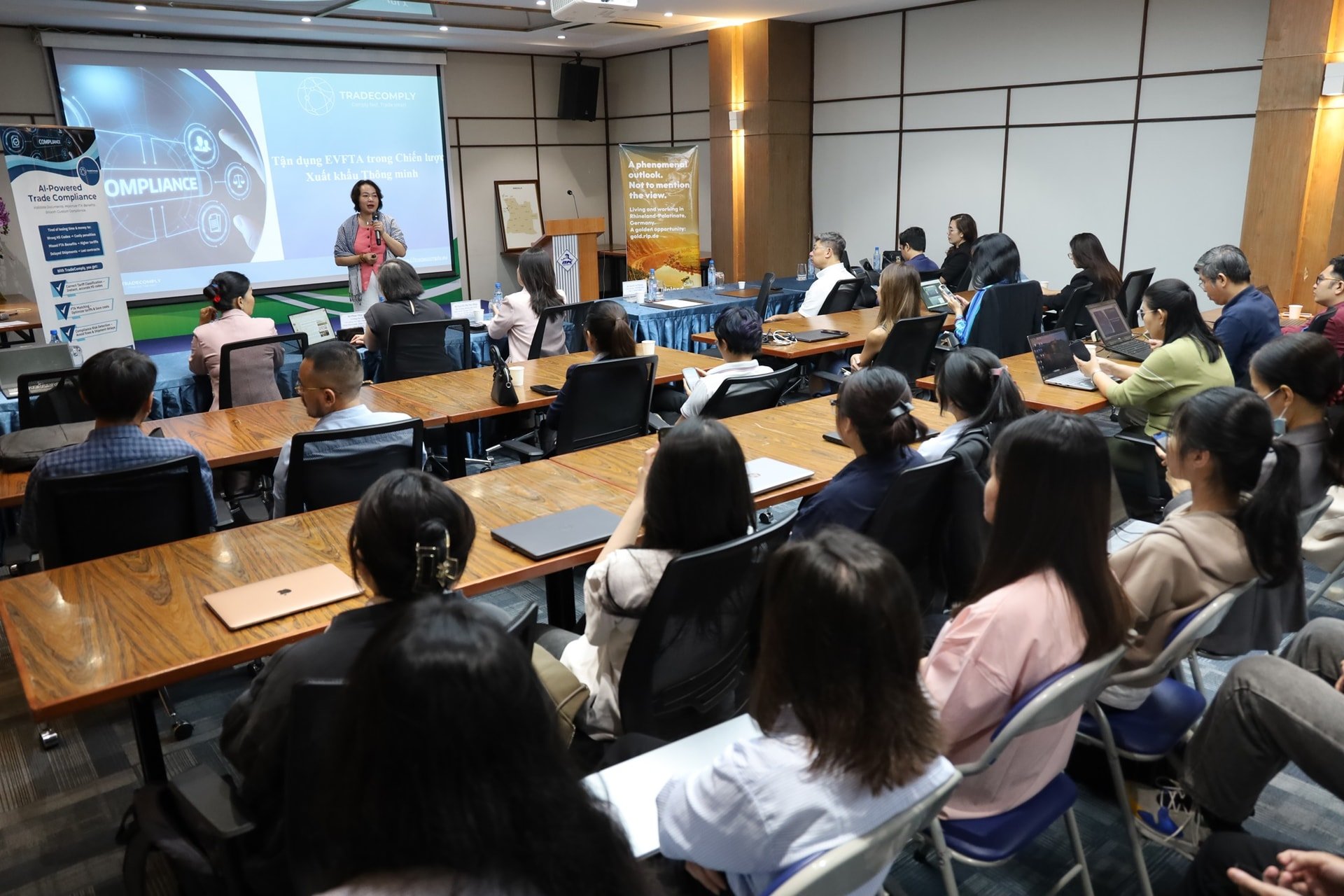
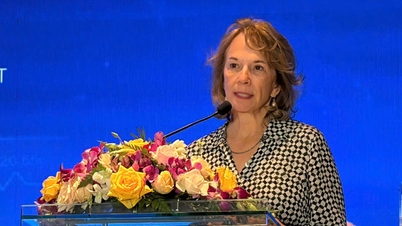
Speakers sharing their insights at the conference. Photo: Organizing Committee
In the context of increasingly deep integration, the Vietnam-EU Free Trade Agreement (EVFTA) not only opens up many opportunities for preferential tariffs for Vietnamese goods, but also imposes strict requirements on rules of origin, technical standards, environmental standards, and social responsibility. Understanding and complying with these regulations will help businesses take advantage of preferential treatment, optimize costs, reduce risks, and enhance brand value in the international market.
At the seminar, Ms. Nguyen Thi Phuong, CEO of TradeComply Company, stated that the EVFTA brings great opportunities, and strict adherence to the new regulations is a key factor for Vietnamese businesses to truly benefit and protect their position in the European market.
The EVFTA's commitment to eliminating nearly 99% of tariffs within 7 years will create a competitive advantage for key domestic industries such as textiles, footwear, furniture, processed agricultural products, and seafood, especially since the EU is Vietnam's third largest export market.
For example, the tariff rate on shirts exported to Germany was reduced from 12% to 0%, saving nearly $1 million for a shipment of 1 million shirts. Similarly, the tariff rate on roasted coffee was reduced from 7-11% to 0%, giving Vietnamese exporters a significant competitive advantage over their counterparts from Brazil or Indonesia.
The EVFTA is seen as a "golden opportunity" for Vietnamese small and medium-sized enterprises (SMEs), but this is only true if businesses comply with the regulations.
A new wave of stringent EU regulations is about to directly impact Vietnamese exporters. Starting in 2026, the Border Carbon Adjustment Mechanism (CBAM) will impose carbon taxes on imported goods such as iron and steel, cement, aluminum, and fertilizers, requiring Vietnamese exporters in these sectors to report their CO2 emissions .
In addition, the EU's Anti-Deforestation Regulation (EUDR), which will apply to SMEs from mid-2025, will require products such as coffee, timber, and rubber to demonstrate non-deforestation origins, necessitating effective traceability systems.
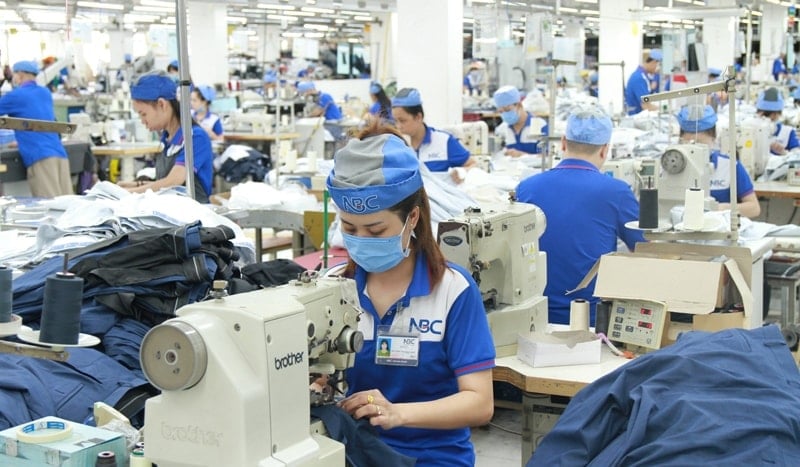
Garment products will benefit from the EVFTA when exported to Europe. In the photo: Garment production for export at Nha Be Garment Company. Photo: NBC
EU importers are also increasingly demanding transparency in the supply chain regarding labor and environmental issues, in accordance with accountability regulations and ESG standards. Therefore, Vietnamese SMEs that fail to meet these requirements may be excluded from the supply chain.
To navigate this complex environment, Ms. Nguyen Thi Phuong emphasized that Vietnamese businesses need to change their mindset. International trade is no longer simply about logistics and price; the core issue is compliance with the regulations and standards of the importing market. Proactive compliance is essential to save costs, enhance negotiating power, and expand market share in the EU.
According to Ms. Phan Thuy My, Head of the Trade Representative Office of the State of Rheinland-Pfalz (Federal Republic of Germany) in Vietnam, the EU has updated its rules of origin, providing greater flexibility for goods, especially those with certificates of origin and priority sectors, effective from January 1, 2025. These revised rules must be reflected on the transport certificate and supplier declaration.
The European Commission is also developing new digital systems, such as the ELAN system for agricultural products, to simplify customs procedures. Another new regulation is the Safety Declaration, which requires that goods imported into the EU from non-EU countries must have this declaration, submitted by the carrier.
In addition, the Carbon Border Adjustment Mechanism (CBAM) has required importers to report emission data for high-carbon products such as steel, aluminum, cement, and certain chemicals since October 2023.
Ms. Phan Thuy My emphasized that businesses, when conducting business activities in Europe in general and Germany in particular, should seek complete information and assistance from the German Chamber of Industry and Commerce (IHK).
Source: https://hanoimoi.vn/doanh-nghiep-viet-can-lam-gi-de-tan-dung-toi-da-uu-dai-thue-tu-evfta-716463.html


























![[Video] The craft of making Dong Ho folk paintings has been inscribed by UNESCO on the List of Crafts in Need of Urgent Safeguarding.](https://vphoto.vietnam.vn/thumb/402x226/vietnam/resource/IMAGE/2025/12/10/1765350246533_tranh-dong-ho-734-jpg.webp)



















































Comment (0)