

Ho Chi Minh City – the economic engine of the country – continues to set ambitious targets for 2025, aiming for a GRDP growth rate of around 8-8.5%. This indicates that the city government is focusing on recovery, attracting investment, and creating momentum for the next phase of development.
With Vietnam still attractive to FDI, investors' confidence in the long-term prospects of the Vietnamese market remains very positive. This advantage will create a foundation for large-scale industrial, infrastructure, and technology projects in Ho Chi Minh City. These developments directly impact the development opportunities for businesses in the city as they connect supply chains and attract foreign partners.
Moreover, signs of investment in data centers and AI capabilities are becoming increasingly clear as many major domestic and international providers have announced large-scale data center projects, including major projects launched in Ho Chi Minh City to meet the growing demand for artificial intelligence and cloud services.
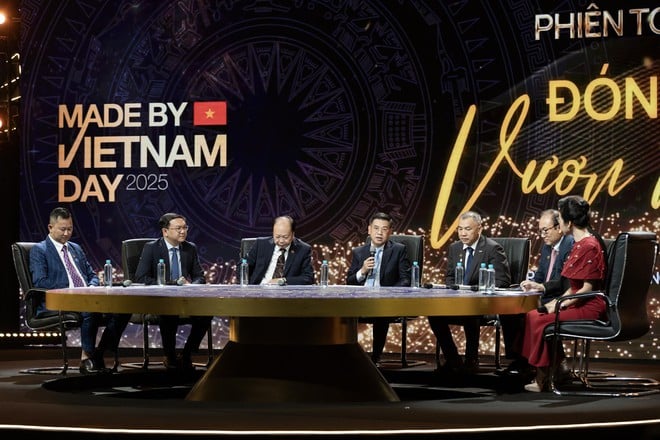
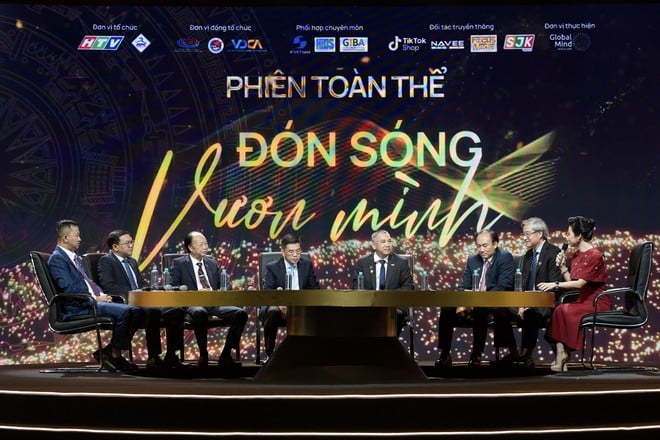
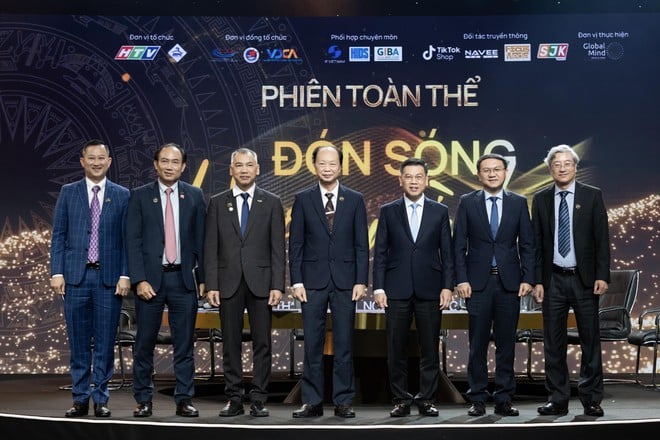
The plenary session "Catching the Wave - Rising High" within the framework of the Made by Vietnam Forum 2025.
At the Made By VietNam Day 2025 inspirational and recognition event series, the plenary session "Catching the Wave - Rising High" within the framework of the Made by VietNam Forum 2025, attended by representatives of Ho Chi Minh City leadership, private enterprises, and policymakers, painted a picture that was both promising and contained many practical challenges for the newly merged Ho Chi Minh City. Ho Chi Minh City will have to transform new opportunities into new driving forces and prepare for the city's businesses to "rise high".
Opening the seminar, Mr. Nguyen Van Dung, Vice Chairman of the People's Committee of Ho Chi Minh City, reiterated the most important turning point that the entire Party Committee, government, and people of the city have achieved in 2025: the merger of Ho Chi Minh City with Binh Duong and Ba Ria - Vung Tau .
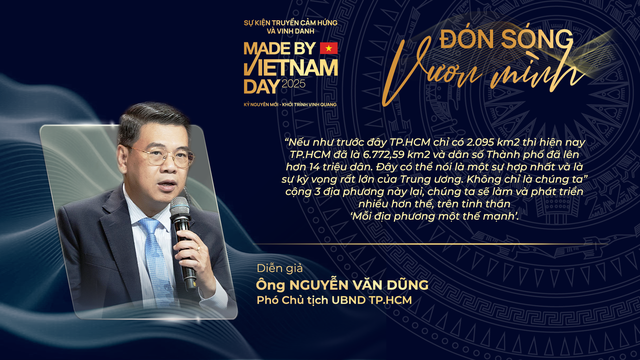
The Vice Chairman of the City People's Committee stated that this is not just about expanding the city's boundaries, but also about creating an opportunity to build a new development space for the Southern key economic region. With this expansion, the city will unlock new potentials, become a regional growth pole, and attract greater resources to become a "megacity" as envisioned by the central government.
In light of the new situation, Mr. Nguyen Van Dung also affirmed that the new Ho Chi Minh City government will work alongside businesses, remove administrative obstacles, and create conditions for projects to be implemented quickly and efficiently. This commitment raises expectations, but also places pressure on both sides: the government must act quickly, and businesses must proactively seize opportunities.
As the global landscape shifts to data and AI, digital infrastructure becomes crucial. Ho Chi Minh City will not only have to address transportation infrastructure issues but also create conditions for the development of digital infrastructure. Speaking at the "Catching the Wave - Rising High" plenary session, Mr. Dong Mai Lam – representative of Schneider Electric Vietnam and Cambodia – warned that we need to prepare for this strategically and with clear planning. This is because data centers are no longer just a few megawatts of infrastructure as before, while the computing needs for AI are pushing consumption up to hundreds of megawatts, even gigawatts. Therefore, the issue is not just about land or fiber optic cables, but about ensuring sustainable energy sources, the ability to integrate renewable energy, and optimal operating standards.
General Director Dong Mai Lam further affirmed that, with Vietnam identified as one of the strategic markets in Southeast Asia, Schneider Electric is ready to transfer technology, collaborate with universities to build research facilities to train personnel, and apply EcoStruxure solutions to optimize operations, save energy, and reduce carbon emissions.
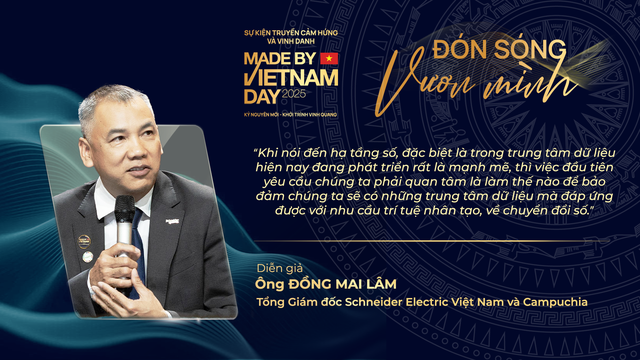
Clearly, if Ho Chi Minh City wants to attract large-scale investment in technology and data, the city needs to plan its energy roadmap, prepare its electricity infrastructure, and encourage a synchronized investment model between physical and digital infrastructure.
As Ho Chi Minh City is determined to help businesses break through and thrive, building policies to create favorable conditions for business development is something we need to pay attention to. From that perspective, Mr. Lam Dinh Thang - Director of the Department of Science and Technology of Ho Chi Minh City - presented the policy framework that the city focuses on important pillars.
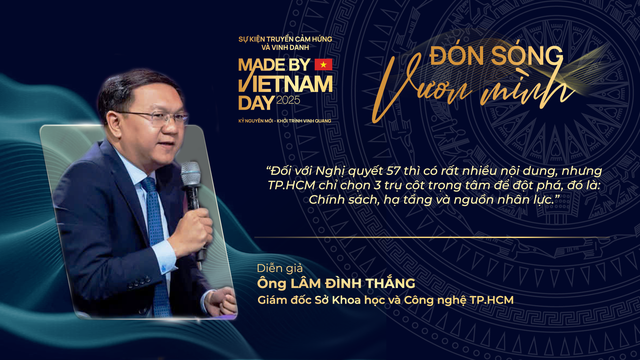
Furthermore, Mr. Lam Dinh Thang emphasized that policies are only truly meaningful when businesses know, understand, and can access them. Therefore, the city not only issues support programs but also designs accompanying implementation mechanisms to help businesses take advantage of the city's available resources and conditions.
With concrete efforts to provide maximum support to businesses, especially small and medium-sized enterprises (SMEs) and startups in the science, technology, and innovation sectors, the Director of the Ho Chi Minh City Department of Science and Technology demonstrated to the entire seminar a more attractive investment environment than ever before after the COVID-19 pandemic.
Having been involved with the business community for many years, Mr. Nguyen Dinh Thang - Vice President of the Vietnam Digital Communication Association and Vice President of the Central Committee of the Vietnam Record Association - believes that government support is only a necessary condition, while businesses themselves must have a spirit of "self-reliance". To achieve this, businesses need to build a solid foundation to create strategic confidence that helps them overcome challenges and move towards long-term goals.
From there, Mr. Nguyen Dinh Thang put forward a very specific "principle" for action: Innovation must involve continuous innovation in products, processes, and models; Connection creates synergy between businesses, and between businesses and the State; Sharing means sharing knowledge, experience, and resources to achieve sustainable development together. These should not be just empty calls to action, but should become practical guidelines for businesses to proactively build their teams, management, finance, and ecosystems.
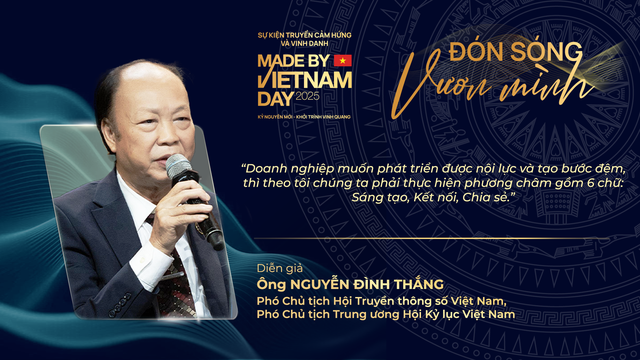
At this plenary session, Mr. Nguyen Dinh Thang also did not shy away from the risks that SMEs and startups often face. From there, he offered suggestions for businesses to proactively learn, take advantage of consulting programs, participate in symbiotic exchange networks with large enterprises, and utilize high-quality resources trained by corporations and universities.
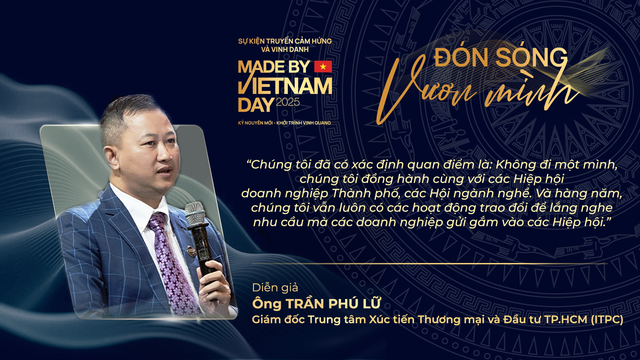
Although the support policies clearly demonstrate the city's strategic efforts, the current weakness lies in the fact that many SMEs lack up-to-date information or the capacity to take advantage of these opportunities. This is the gap that the Ho Chi Minh City Trade and Investment Promotion Center (ITPC) needs to address, creating a bridge to connect the government and businesses, enabling them to listen to and understand each other better.
In an effort to bring policies closer to businesses, Mr. Tran Phu Lu, Director of the Ho Chi Minh City Trade and Investment Promotion Center (ITPC), presented a plan to build a digital trade and investment promotion system – a database connecting products, markets, and business needs.
According to Mr. Lu, the goal of ITPC in developing this plan is to help the government promptly identify difficulties, build appropriate support programs, and at the same time help businesses find domestic and international partners. This platform, if well-functioning, will be a bridge connecting policies directly from "on paper" to "on the ground".
Besides the fact that businesses often focus on export strategies to "reach the global market" - targeting global markets such as the US and EU, speaker Pham Binh An - Deputy Director of the Ho Chi Minh City Institute for Development Research - reminded businesses that there is still an advantage that must be fully utilized: the domestic market.
In reality, the domestic market of over 100 million people and the expanding middle class in Ho Chi Minh City will be a major source of demand that domestic businesses understand well in the future of this new era. Investing in distribution networks, building brands, and improving product quality are essential steps to capitalize on this vital resource.
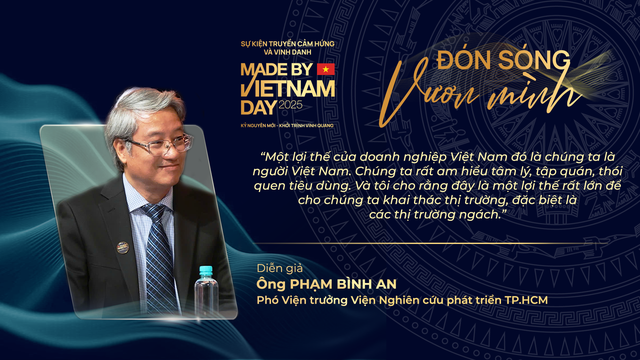
To build an internationally recognized brand, branding, transparent governance, and access to capital markets are the most important factors that businesses need to consider and grasp during their expansion journey.
The true story of Vietjet – from its startup journey to becoming a billion-dollar listed company on the stock exchange and ranked in the VN30 group – as told by Mr. To Viet Thang, Permanent Deputy General Director of Vietjet, demonstrated at the Plenary Session that: A development roadmap based on aspiration and transparent governance is essential.
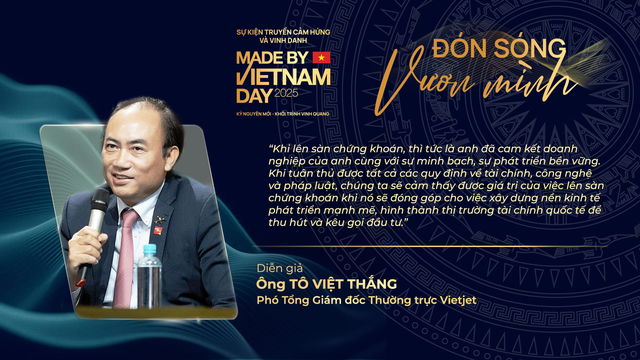
Furthermore, Vietjet is also a success story, from its ambition to popularize air travel for the people to its decision to list on the stock exchange. This not only demonstrates the commitment to sustainable development of our country's first private airline to investors but also helps the airline officially mobilize resources for expansion, building its brand to the level it is today.
The plenary session "Riding the Wave and Rising" concluded with a clear message: Ho Chi Minh City is facing a historic opportunity to become a dynamic growth hub of the region, with the focus on Resolution 68 and the pioneering role of Ho Chi Minh City after the merger; however, this opportunity will only be transformed into achievement when there is concrete and synchronized action between the State, businesses, networking organizations, and international partners.
The government continues to refine policies and expedite procedures; businesses must be proactive, innovative, connect, and share; the bridge between the government and businesses must become more substantive; and it is necessary to successfully achieve the goals of industrialization and modernization to enhance domestic competitiveness.
If all parties work together to translate their commitment into concrete projects, the new Ho Chi Minh City will truly develop into a dynamic, sustainable economic center leading the country.
Please tune in to HTV News at 8 PM and the 24-Hour World Program at 8:30 PM every day on HTV9.
Source: https://htv.com.vn/don-song-vuon-minh-doanh-nghiep-viet-va-su-menh-dan-dat-nen-kinh-te-ky-nguyen-moi-222250813175923995.htm
















![[Video] The craft of making Dong Ho folk paintings has been inscribed by UNESCO on the List of Crafts in Need of Urgent Safeguarding.](https://vphoto.vietnam.vn/thumb/402x226/vietnam/resource/IMAGE/2025/12/10/1765350246533_tranh-dong-ho-734-jpg.webp)


















































Comment (0)