

The event was organized by the Department of Culture, Sports and Tourism in collaboration with the Project Management Board for Sustainable Forest Management and Biodiversity Conservation of Quang Nam province and the World Wide Fund for Nature (WWF) in Vietnam.
According to statistics from the Vietnam Tourism Association, the country currently has 33 national parks, 57 nature reserves, 13 species and habitat conservation areas, 53 landscape protection areas, and 9 biosphere reserves. Quang Nam province alone has one national park and two species and habitat conservation areas. This is considered a potential opportunity for tourism businesses to develop and create unique tours for each locality and region. Each year, ecotourism activities in these special-use forests attract more than 2 million visitors, generating over 100 billion VND in revenue and contributing positively to the local development.
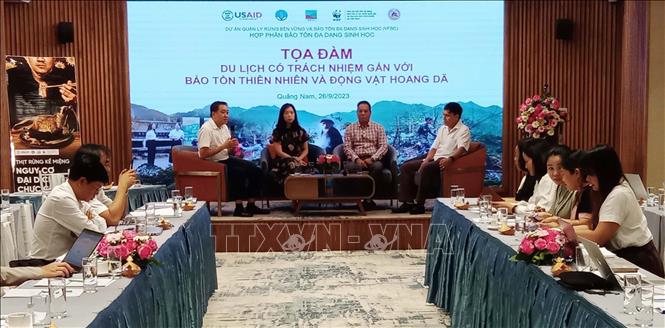
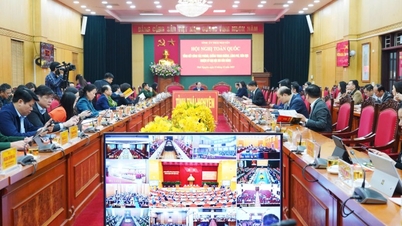
A view of the conference.
Mr. Hoang Hoa Quan from the Vietnam National Tourism Administration shared that, for responsible tourism to be linked with wildlife and nature conservation, tourism activities must both contribute to economic development and create livelihoods and income for the community. Tourism activities must contribute to protecting heritage values, conserving ecosystems, and reducing direct discharge of waste into the natural environment.
In Quang Nam province, in 2023, the tourism industry aimed to attract 7 million visitors and generate 9,000 billion VND in tourism revenue. To achieve this goal, in addition to solutions to promote the recovery and acceleration of the tourism industry after the pandemic, the province is developing green tourism, community tourism, ecotourism, and responsible tourism associated with the protection of nature and wildlife. These initiatives are being implemented and increasingly disseminated to businesses and residents.
According to Van Ba Son, Deputy Director of the Quang Nam Department of Culture, Sports and Tourism, responsible tourism linked to the conservation of nature and wildlife is the foundation for sustainable tourism development. To achieve this humane goal, tourism businesses, tourists, and local communities must change their perceptions of local customs and the demand for hunting wild animals for food, decoration, or souvenirs. Therefore, the goal of developing tourism in conjunction with the conservation of nature and wildlife was a key topic of discussion among the workshop participants, aiming to harmonize the interests of tourism businesses, travel agencies, destinations, and tourists.
Based on an analysis of the harmful impacts and risks facing wildlife through the negative aspects of tourism activities, tourists, and the negative effects of trapping, trading, and consuming wildlife, delegates proposed solutions that are harmonious, sustainable, and avoid conflicts between economic interests and the conservation of nature and wildlife.
According to VNA/News Agency
Source

![[Photo] Prime Minister Pham Minh Chinh holds a phone call with the CEO of Russia's Rosatom Corporation.](/_next/image?url=https%3A%2F%2Fvphoto.vietnam.vn%2Fthumb%2F1200x675%2Fvietnam%2Fresource%2FIMAGE%2F2025%2F12%2F11%2F1765464552365_dsc-5295-jpg.webp&w=3840&q=75)

![[Photo] Closing Ceremony of the 10th Session of the 15th National Assembly](/_next/image?url=https%3A%2F%2Fvphoto.vietnam.vn%2Fthumb%2F1200x675%2Fvietnam%2Fresource%2FIMAGE%2F2025%2F12%2F11%2F1765448959967_image-1437-jpg.webp&w=3840&q=75)
































![[OFFICIAL] MISA GROUP ANNOUNCES ITS PIONEERING BRAND POSITIONING IN BUILDING AGENTIC AI FOR BUSINESSES, HOUSEHOLDS, AND THE GOVERNMENT](https://vphoto.vietnam.vn/thumb/402x226/vietnam/resource/IMAGE/2025/12/11/1765444754256_agentic-ai_postfb-scaled.png)












































Comment (0)