

Waste, seemingly "invisible," is far from harmless.
According to statistics, Vietnamese people burn nearly 60,000 tons of votive paper offerings each year, equivalent to nearly $228 million "burned" in smoke. Many people still think that the ash from votive paper offerings is just the burnt residue of paper, but most of the votive paper offerings today are coated with a layer of imitation gold or silver metal for a more attractive appearance, along with ink, glue, thin plastic film, etc. When burned, these layers do not burn completely but produce tiny dust particles carrying heavy metals such as lead, cadmium, and chromium. Numerous environmental studies have shown that burning votive paper offerings also significantly increases PM2.5 fine dust levels and emits toxic substances such as CO, NOx, SO₂, and dioxins.
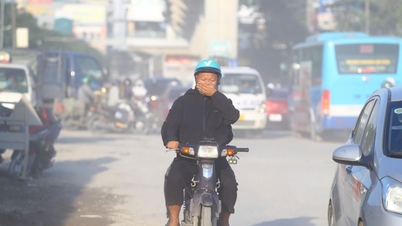
Over the past week, many monitoring stations in Hanoi recorded AQI levels above 220, a very unhealthy level, especially on December 11th. Hung Yen and Thai Nguyen also recorded readings exceeding 200. In the capital city, the period leading up to Tet (Lunar New Year) each year sees air pollution levels far exceeding the World Health Organization (WHO) recommended safe thresholds. Besides air pollution from increased construction and traffic, the burning of votive paper and garbage by many families at the end of the year also contributes to the noticeable increase in pollution.
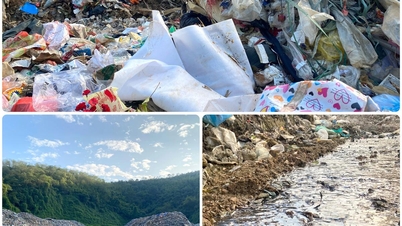
Besides affecting air quality, ash containing heavy metals, when it falls to the ground, reduces the soil's ability to absorb water, slows down organic decomposition, and can seep into groundwater. Over time, this accumulation degrades both soil and water quality, causing a chain reaction affecting the ecosystem and people's health.
Initiatives to promote greener religious practices.
Recognizing the negative impacts of ash from votive offerings on the environment and public health, many initiatives have been implemented to minimize pollution – from proper collection and disposal of ash to encouraging more environmentally friendly forms of religious practice.
In Hanoi , many temples and shrines have proactively limited the burning of votive paper. At the Quan Thanh Temple complex, for the past 15 years, the Management Board has consistently encouraged people to "visit with sincerity," lighting only one incense stick and avoiding excessive use of votive paper to prevent waste, reduce pollution, and ensure fire safety. Yen Phu Pagoda (Hanoi) has also implemented a model to limit the burning of votive paper, while encouraging the use of clean incense to reduce smoke and dust within the complex grounds, contributing to air quality protection and limiting the release of ash into the environment.
From a community perspective, the Keep Vietnam Clean organization is implementing the campaign “Kitchen God Day 2026 - Clean Ashes, Green Tet and Giving Good Deeds,” aiming to raise awareness about the impact of ash from votive offerings on the environment and health. The campaign has attracted particular attention from those concerned about air pollution in Hanoi.
Along with that, many families have voluntarily reduced the burning of votive paper, choosing more environmentally friendly ways to commemorate their ancestors. However, changing a long-standing habit is not easy. To create sustainable change, appropriate communication solutions are needed, along with encouraging people to proactively choose more civilized, safe, and green forms of religious practice.
Source: https://baophapluat.vn/giam-dot-vang-ma-giam-o-nhiem.html


![[Photo] Prime Minister Pham Minh Chinh attends the Conference summarizing and implementing tasks of the judicial sector.](/_next/image?url=https%3A%2F%2Fvphoto.vietnam.vn%2Fthumb%2F1200x675%2Fvietnam%2Fresource%2FIMAGE%2F2025%2F12%2F13%2F1765616082148_dsc-5565-jpg.webp&w=3840&q=75)






































































Comment (0)