

New points in teacher recruitment
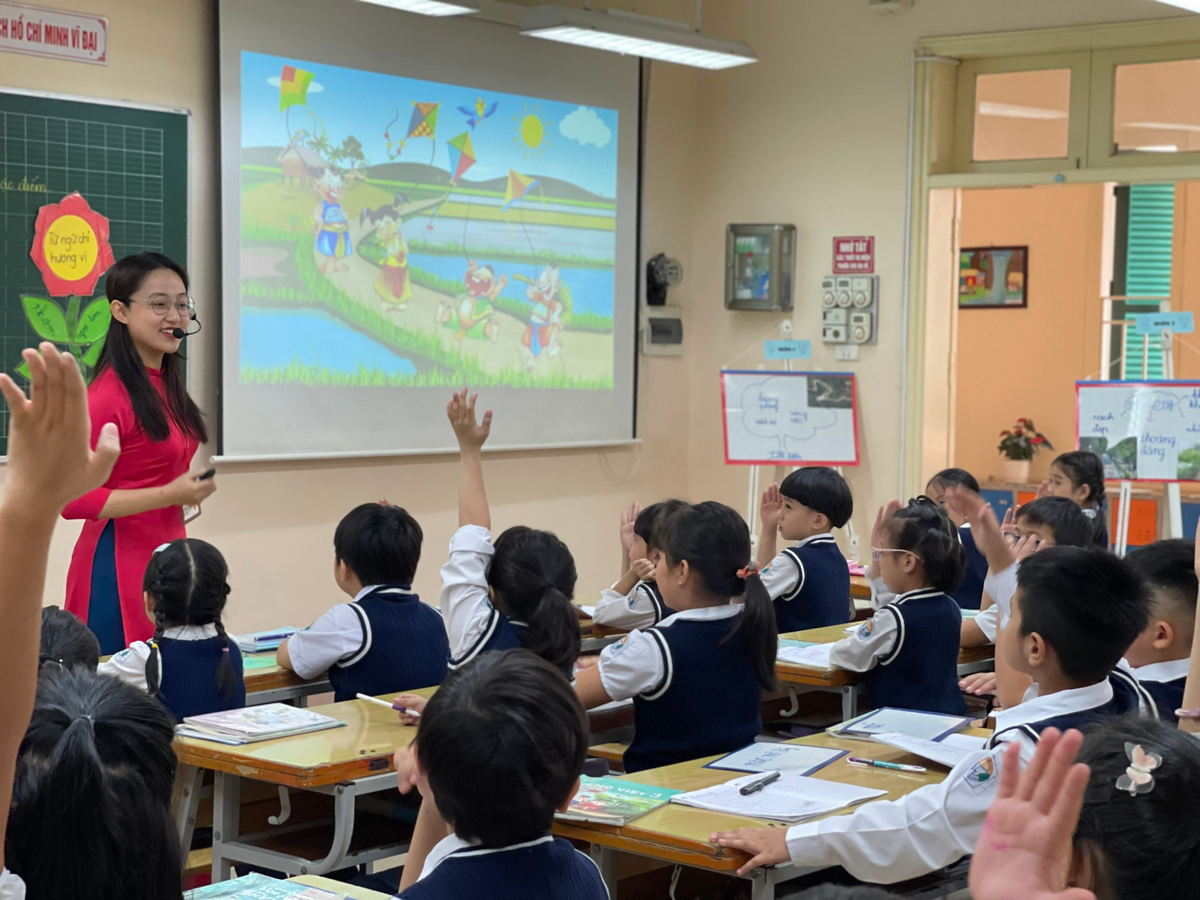
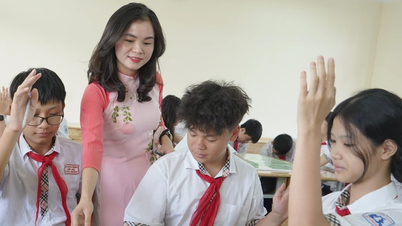
In the 2025-2026 school year, the Department of Education and Training of Ho Chi Minh City will directly recruit teachers for all levels. With the scale of the city's education sector after the merger, there will be more than 2,100 public educational institutions from preschool to high school, with a recruitment need of 5,696 teachers in all three regions: region 1 (former Ho Chi Minh City), region 2 (former Binh Duong province) and region 3 (former Ba Ria - Vung Tau province). In the first recruitment round, the city had 10,175 candidates and 3,908 qualified candidates.
Ms. Tran Thi Ngoc Chau, Deputy Director of the Department of Education and Training of Ho Chi Minh City, said that in addition to the professional qualifications, the department wants to recruit teachers with pedagogical skills and skills corresponding to each job position. Therefore, candidates must go through 2 rounds of exams, including round 1, which is to check the recruitment conditions based on the registration form according to the job position requirements. Those who meet the requirements will enter round 2 and participate in the knowledge and professional skills test in the form of drawing lots for practice questions, presenting knowledge, illustrating skills and answering questions from the Examination Board within 15 minutes.
Also in Ho Chi Minh City, 29 schools are currently given autonomy to recruit teachers, based on the development strategy and actual conditions of each unit. This will be implemented from 2022-2023 when the Ho Chi Minh City Department of Education and Training pilots the decentralization of recruitment to specialized schools, high schools and affiliated kindergartens.
Meanwhile, according to the draft Circular regulating the authority to recruit teachers that the Ministry of Education and Training is seeking comments on, the Department of Education and Training is in charge of organizing recruitment for kindergartens, primary schools, secondary schools, and general schools with many levels of education, with the highest level being secondary school. In case the Chairman of the Provincial People's Committee delegates recruitment to another agency or unit, the delegation must be advised and implemented by the Department of Education and Training. If the delegation is to the educational institution itself, this unit must meet the prescribed conditions.
For high schools, general schools with many levels (high school is the highest level), specialized schools and continuing education facilities, the Department of Education and Training is still the unit in charge of recruitment. The principal or director of the facility can directly recruit if authorized by the Provincial People's Committee and the facility meets the prescribed conditions.
The draft Resolution on specific mechanisms and policies to implement the Resolution of the Politburo on breakthroughs in education and training development also assigns the Director of the Department of Education and Training the right to recruit and receive in the province. With the authority to mobilize, rotate, arrange, assign, and change job positions, the draft stipulates that the Department of Education and Training shall flexibly implement if the scope is two or more communes, while the People's Committee at the commune level shall implement within its management scope.
In fact, in the past, teacher recruitment was under the authority of the Department of Home Affairs and the People's Committees at the district/provincial level, the education sector only had an advisory function. Many opinions have pointed out certain shortcomings in the management and development of the teaching staff when applying this regulation. With the new point in the draft on teacher recruitment and rotation, it is expected to remove the bottlenecks in recruiting a teaching staff to ensure sufficient quantity and quality.
Voice from the grassroots
Mr. Nguyen Van Cuong - Principal of Nam Dang Primary and Secondary Boarding School for Ethnic Minorities (Vo Lao Commune, Lao Cai Province) said that similar to many schools in disadvantaged areas, the school is facing a shortage of teachers in many subjects, especially new subjects according to the 2018 general education program. Whether assigned to the school or the commune, the problem of recruitment sources is the biggest obstacle. In addition, recruitment examinations instead of entrance exams should also be considered for education in disadvantaged areas to improve recruitment efficiency. To recruit suitable candidates, the school can organize in-depth interviews to assess motivation, understanding of disadvantaged areas or require direct practical teaching to test pedagogical skills and ability to handle real-life situations in the classroom. Candidates also need to have a commitment to a minimum working time in disadvantaged areas along with clear sanctions if they violate this commitment.
Meanwhile, Mr. Nguyen Cuong Nghi - Chairman of the People's Committee of Hap Linh Ward (Bac Ninh Province), acknowledged that delegating the right to recruit teachers to each school or commune and ward level is not suitable for the current capacity. The reason is because the commune and ward level apparatus is designed to undertake comprehensive administrative and social tasks, and does not have a specialized department on education or human resources strong enough to preside over a recruitment period of a specific nature such as teacher recruitment. Mr. Nghi said that the most reasonable solution at present is to maintain the model of schools registering their quotas and recruitment needs, then the Department of Home Affairs and the Department of Education and Training organize a centralized exam.
Proposed combination of "old and new"
Talking to reporters of Dai Doan Ket Newspaper, Dr. Hoang Ngoc Vinh - former Director of the Department of Vocational Education (Ministry of Education and Training) supported the fact that principals of general schools are allowed to directly recruit teachers because this is the agency directly responsible for the quality of education and the quality of students. Ho Chi Minh City has 29 schools piloting this, it needs to be summarized and evaluated properly.
Regarding the specific process, Dr. Vinh said that the Department of Education and Training should assign recruitment targets to schools, issue standards and carry out supervision. In cases where schools report that they do not have the capacity and conditions to recruit teachers (such as in remote areas, with difficulties in recruiting sources, etc.), the Department of Education and Training can support this step.
Dr. Vinh also proposed that the Department of Education and Training participate in organizing the theoretical exam to create a common, uniform and less costly exam. After the preliminary round of theory, the practical exam and interview stages will be assigned to the schools. For transparency, it is necessary to establish a supervisory board with representatives from the commune and the Department of Education and Training.
Agreeing with this proposal, Dr. Le Duc Thuan - education expert, former Head of the Department of Education and Training of Ba Dinh District (old), Hanoi, analyzed that if the authority to recruit teachers is given to the Department of Education and Training, after the merger, the scale of the education sector in many localities will be very large, which may cause overload. Meanwhile, if this authority is given to the commune and ward levels, problems may arise. For example, previously, the district level had separate specialized departments such as the Department of Education and Training, the Department of Internal Affairs with clear functions and tasks and qualified personnel, but with the current smaller scale of the commune level, the Department of Culture and Society with a small number of people cannot meet the professional requirements.
To avoid shortcomings, Dr. Le Duc Thuan proposed to combine all old and new options. In which, the feasible option is to recruit teachers in two rounds. Round one is to test basic knowledge, general knowledge called the theoretical round organized by the Department of Education and Training once a year in the whole province. Thereby, recruiting teachers with sufficient qualifications, majors and basic knowledge suitable for the recruitment criteria of each different locality. In round 2, the practical round will be assigned to the head of the unit as the chairman of the recruitment council based on the reviewed quota, the number of missing quotas. The members can invite cadres of the commune, ward, and cadres of higher levels to participate. The school will have professional groups, experts hired by the school to organize a public, systematic exam so that teachers can practice according to the job positions the school wants to recruit.
“Each school has its own strategic goals, so teacher recruitment must be consistent with the school’s development strategy in the next phase. This approach is completely new and different from the past, but it is consistent with the current two-level local government model,” Dr. Le Duc Thuan said.
Regarding the rotation, transfer, and secondment of teachers, Ba Dinh district (Hanoi) has previously carried out the transfer with the consensus of all relevant parties. Accordingly, the Department of Education and Training coordinated with the Department of Internal Affairs to preside and advise with the active participation of the principals. The principals discussed with each other in advance, so that teachers could go to learn about the other school first, and when the teacher wanted to go, the district-level government would issue a decision. Currently, the authority to transfer and mobilize surplus or shortage of teachers in a commune should be assigned to the Commune Chairman, but the opinions of the teachers are required. Schools with shortages will receive those who want to return, and places with surpluses will be able to transfer those who want to go in a scientific, methodical, and public manner.
When it is necessary to transfer between one commune and another, the city must be involved. The Department of Education and Training and the Department of Home Affairs need to review the entire city, the Provincial People's Committee presides or authorizes the Department director to preside. The method is similar to that at the commune level.
Source: https://daidoanket.vn/giao-quyen-tuyen-dung-giao-vien-ve-xa-phuong-con-nhieu-ban-khoan.html
![[Photo] Cat Ba - Green island paradise](/_next/image?url=https%3A%2F%2Fvphoto.vietnam.vn%2Fthumb%2F1200x675%2Fvietnam%2Fresource%2FIMAGE%2F2025%2F12%2F04%2F1764821844074_ndo_br_1-dcbthienduongxanh638-jpg.webp&w=3840&q=75)































![[VIMC 40 days of lightning speed] Da Nang Port: Unity - Lightning speed - Breakthrough to the finish line](https://vphoto.vietnam.vn/thumb/402x226/vietnam/resource/IMAGE/2025/12/04/1764833540882_cdn_4-12-25.jpeg)






































Comment (0)