

(Journalist & Public Opinion Newspaper) For a long time, when discussing the development of the cultural industry, many have argued that we have not fully exploited the potential of our heritage resources. Why is this the case, and where are the obstacles? How can we sustainably exploit heritage resources? The Journalist & Public Opinion Newspaper had a conversation with Professor, Dr. Tu Thi Loan about these issues.
We need to remove these barriers.
"Transforming heritage into assets" - this is a topic that has been discussed extensively, and we all agree on it. However, the question of how to transform heritage into assets remains quite vague. According to you, what should we do to turn heritage into resources for development, to bring about real change, and not just empty slogans?
- Obviously, it's a difficult issue, which is why we keep advocating for it without much success. But in my opinion, doing anything requires not only unity of awareness and action but also many other factors. First and foremost, we need resources, including human resources, financial resources, and material resources. When the workforce lacks sufficient professional skills and expertise, and the related infrastructure such as roads, hotels, and restaurants is inadequate, the heritage site remains stagnant, unable to attract tourists or develop tourism products or cultural industry products.

Professor, Doctor Tu Thi Loan. Photo: quochoi.vn
Besides that, mechanisms and policies are also extremely important. We keep talking about it, but we haven't created a favorable legal framework; with so many obstacles and barriers, it's very difficult to transform heritage into assets. Furthermore, we need to create a very open and healthy market for tourism businesses and businesses in the cultural industries to develop.
+ In order to exploit historical sites for tourism development, there has been a situation where new structures are renovated and built, disrupting the original structure of the sites, "modernizing" them, and over-exploiting them... There is also a tendency to "grandioseize" historical sites/heritage, causing them to become distorted and inaccurate. Do you think there needs to be a limit to the exploitation of heritage? And if so, how should it be managed?
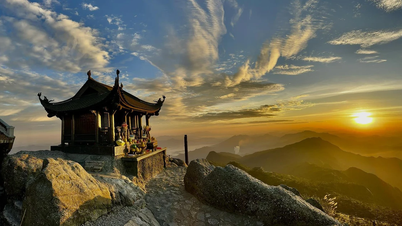
- This certainly requires strict state management. If we let the people, the management boards, and the temple caretakers do whatever they want, chaos will surely ensue. In fact, not long ago, at Huong Pagoda, there were cases of fake temples and pagodas, forcing authorities to intervene and demolish them. In the Trang An scenic area, there have also been instances of people building a road with thousands of steps within the core of the site. There have also been record-breaking performances with 5,000 people, and thousands of people singing traditional folk songs, claiming that this is to create a brand and attract tourists. But the essence of heritage is not like that. If the grandiose approach damages and destroys the heritage, we need principles for this.
We already have the tools, namely the UNESCO Conventions and, in particular, the recently passed Law on Cultural Heritage. All these laws are regulations that help us protect and promote the value of our heritage. We must recognize that heritage is a national asset, an asset of humanity, so we must have strict regulations to restrain and control the "red line," preventing violations from occurring.
The community must share the benefits.
+ In the process of transforming heritage into resources for development, how are the roles and rights of the communities that possess that heritage defined, Madam?
- One of the United Nations' requirements for sustainable cultural development clearly stipulates that the benefits of exploiting cultural heritage must be shared fairly with the community where the heritage is located or the custodians of the heritage. In socio -economic development, local leaders always require that each heritage exploitation project create a certain number of jobs for the people, generate revenue for the State as well as the local residents… Therefore, the role of the community as one of the stakeholders must certainly be to share in the benefits. This can be clearly seen in Hoi An, where people in the heritage area are able to engage in trade, benefit from tourism activities, and exploit many related services. At Hung Temple, Huong Pagoda, Bai Dinh Pagoda, Ponagar Tower, Ba Chua Xu Temple on Sam Mountain, and many other places, people also reap many benefits from exploiting the values of heritage in tourism activities. When people have jobs and their living standards improve, they will voluntarily join hands to protect the heritage.
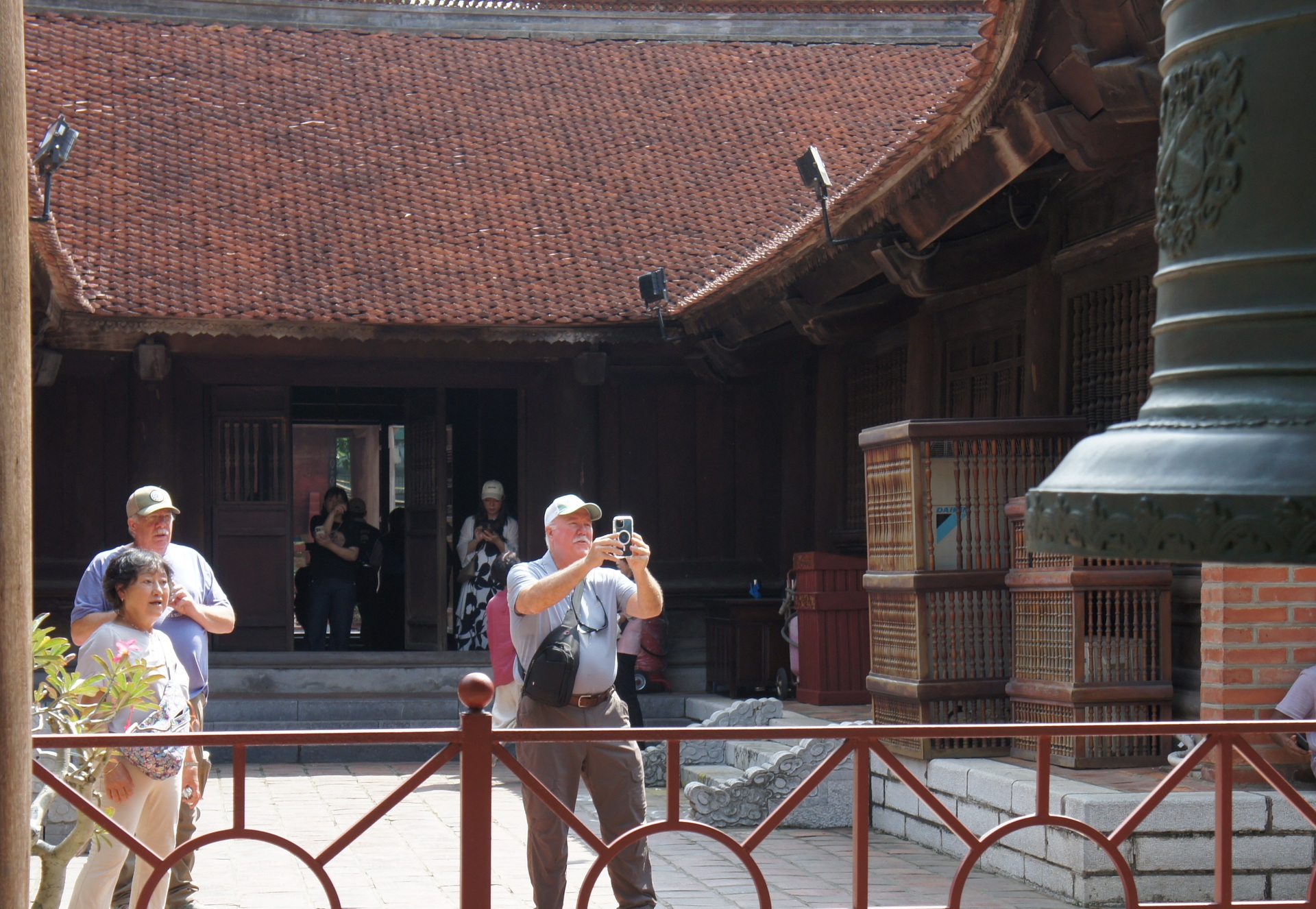
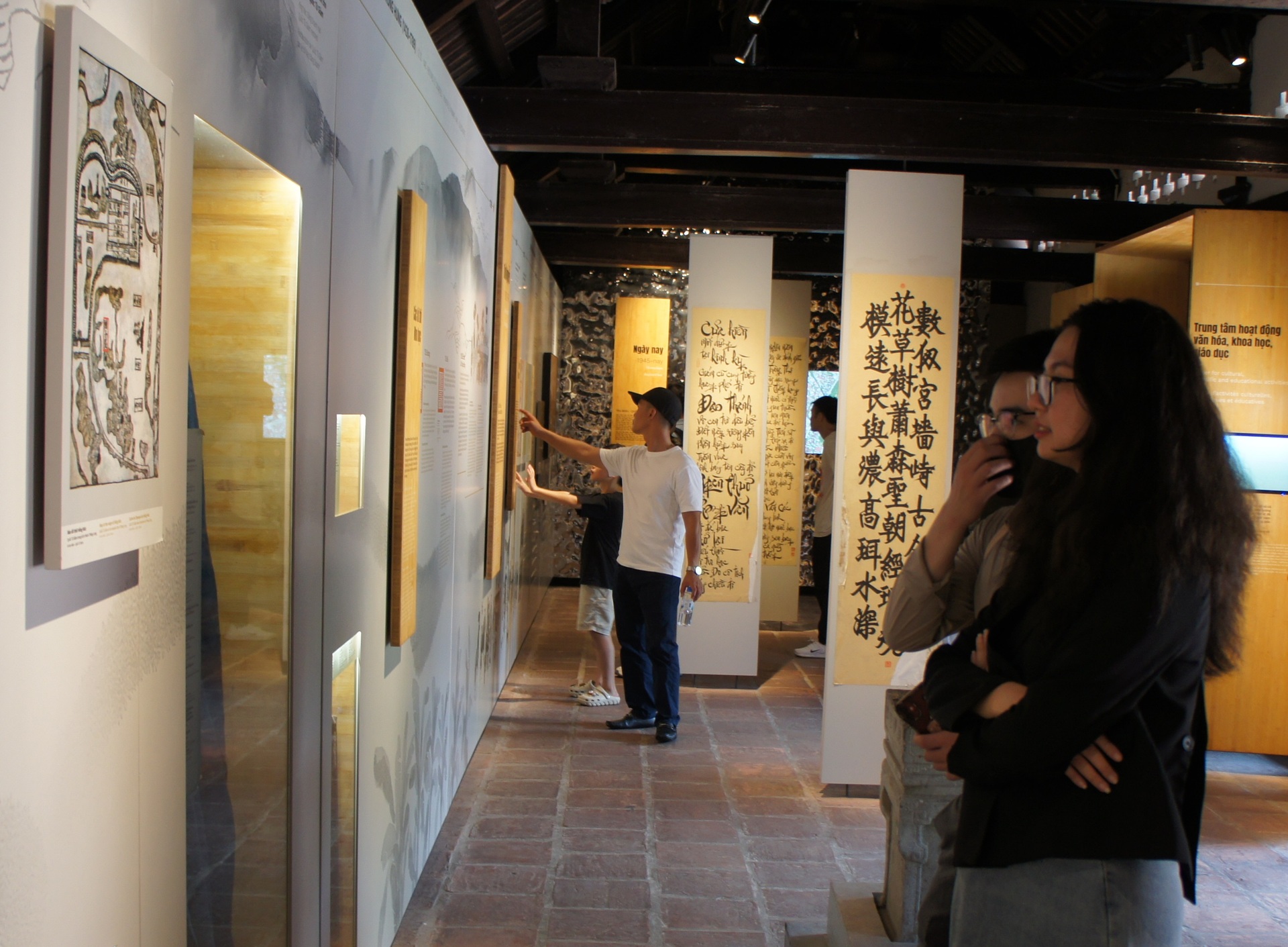
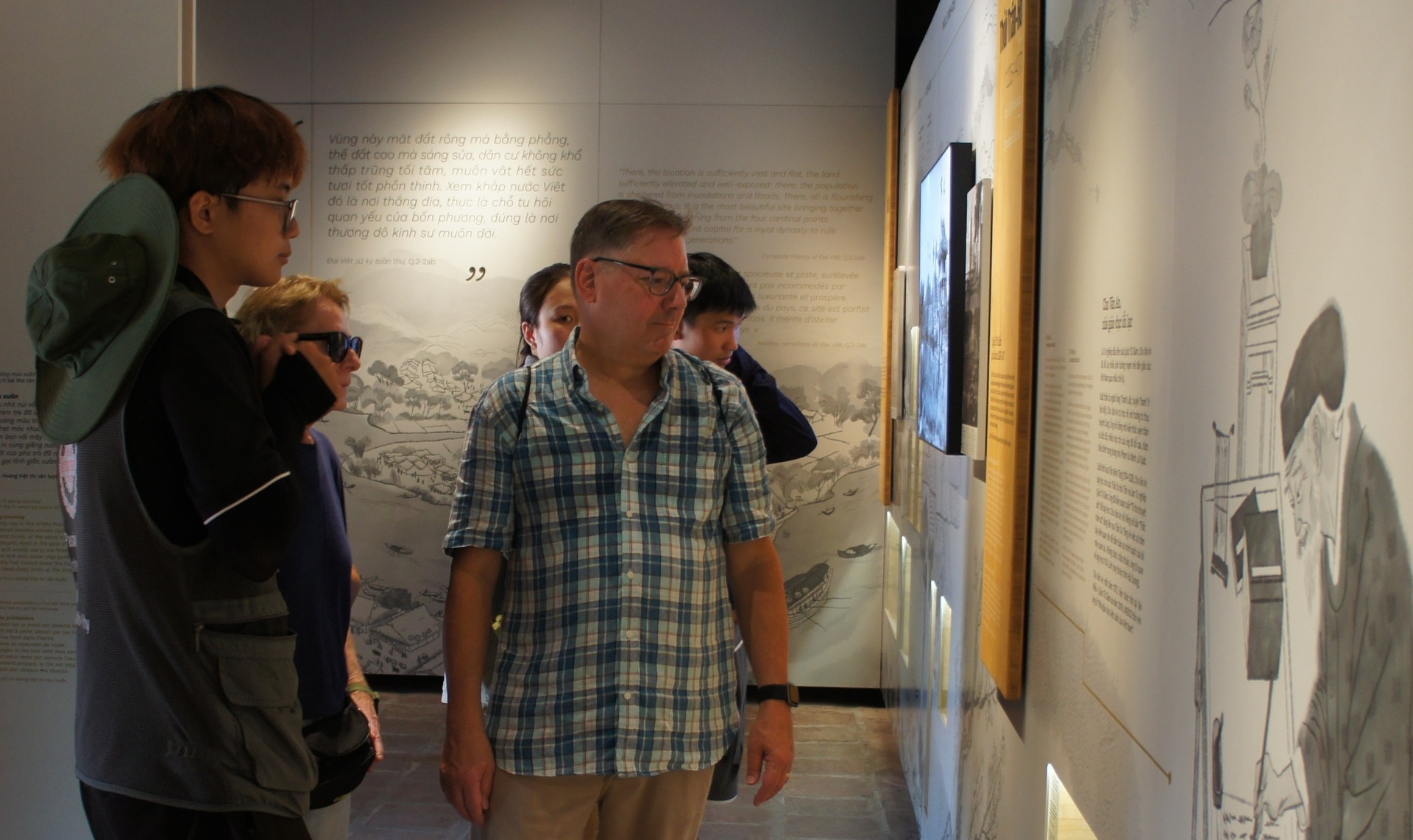
The Temple of Literature - National University complex has always been a popular tourist attraction in Hanoi. Photo: Temple of Literature - National University Management Board.
+ But in reality, not every place can do that. For example, in Duong Lam, there was once a story about people asking to return the title of historical site.
- The story of exploiting and protecting heritage requires close cooperation from all stakeholders. For example, when tourism businesses exploit the heritage, they must allocate a certain percentage of their revenue to the local authorities, who then redistribute it to the people. Even if the people are not allowed to build houses, they must still benefit from the heritage. Many countries do this very well. For instance, in Lijiang Village in China, when the people participate in maintaining the ancient village, they share in the benefits significantly. Thanks to tourism connections, the people there have developed traditional crafts and supporting services…
Returning to the story of Duong Lam, we need to learn from foreign models like those of South Korea and Thailand. Duong Lam has many things that can be transformed into unique tourism products; what we lack is the ability to breathe life into them. We haven't created compelling stories associated with this ancient village to tell tourists, such as the recent "Essence of Northern Vietnam" live performance at Thuy Pagoda, or Trang An becoming "famous" after the movie "Kong: Skull Island"... With Duong Lam, perhaps simply associating it with a film or a cultural event would effectively promote its inherent unique features. Looking more broadly, we can fully exploit contemporary elements associated with heritage, integrating creative elements into traditional heritage, thereby creating tourism products that attract visitors. If we remain passive, freezing our heritage and living with the ashes of the past, it will be very difficult to achieve breakthroughs.
Thank you, ma'am!
The Vu (Execution)
Source: https://www.congluan.vn/gs-ts-tu-thi-loan-khong-the-dong-bang-di-san-de-song-voi-tro-tan-qua-khu-post328145.html

































































Comment (0)