

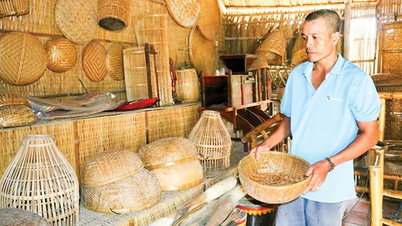
The combination of traditional craft villages and tourism contributes to bringing the image of Vietnam closer to the world as a unique cultural destination; at the same time, these craft villages are also a rich source of inspiration for modern creative industries. Patterns from Van Phuc silk have appeared in high-end fashion collections of many Vietnamese and international designers. Tuong Binh Hiep lacquer paintings are displayed in art exhibitions abroad, while Tan Van pottery has become a source of inspiration for modern interior design products.
Despite their immense potential, traditional craft villages are facing numerous challenges in the context of modernization and globalization. These challenges include not only the risk of decline but also the potential for degradation and loss of their inherent identity if appropriate strategies are not implemented. This would be an irreparable loss.
Over the past period, the Party and the State have issued many guidelines and policies to promote the sustainable development of craft villages in the cultural industry. One of the major orientations is the Program for the Preservation and Development of Vietnamese Craft Villages giai đoạn 2021-2030, approved by the Prime Minister in Decision No. 801/QĐ-TTg dated July 7, 2022.
The program aims to restore and preserve at least 129 traditional crafts and 208 traditional craft villages at risk of extinction by 2030; recognize 213 new traditional crafts and 96 traditional craft villages; develop approximately 301 craft villages linked to tourism ; ensure that over 80% of craft villages and traditional craft villages operate effectively; provide 100% of workers in craft villages with training, retraining, and advanced training in vocational skills, occupational safety and hygiene skills, and basic information technology knowledge; and ensure that at least 50% of craft villages have products protected by trademarks. The average annual growth rate of production value in craft villages is expected to reach approximately 10%.
Previously, the Government issued Decree 52/2018/ND-CP dated April 12, 2018, on the development of rural industries, prioritizing support for craft villages at risk of extinction, especially those of ethnic minorities. This policy encourages the development of craft villages linked to the market and international integration, while promoting circular production models, saving raw materials, and protecting the environment. This helps craft villages adapt to green development trends, enhance brand value, and bring Vietnamese handicrafts to a wider market.
The State also focuses on perfecting mechanisms for honoring and rewarding artisans – the “souls” of craft villages. The Ministry of Culture, Sports and Tourism, in coordination with other ministries and agencies, is developing policies to support artisans in developing their careers, participating in training, and passing on their skills. The awarding of titles such as “People's Artisan” or “Outstanding Artisan” is not only a recognition but also an incentive for the younger generation to continue the heritage, contributing to solving the problem of manpower shortage. However, for craft villages to truly become a powerful resource and make a positive contribution to the cultural industry, the cooperation of the entire society is needed.
Traditional craft villages are not only valuable assets of Vietnam but can also be considered one of the "golden keys" to contributing to the goal of developing cultural industries in the new era.
From the government's perspective, it is necessary to enact preferential policies regarding capital, land, and taxes to encourage artisans to develop their crafts, and to build appropriate training programs for young artisans to ensure continuity. Organizing numerous domestic and international trade fairs and programs to showcase traditional handicraft products will create a bridge, giving craft villages opportunities to promote and introduce their products and find markets.
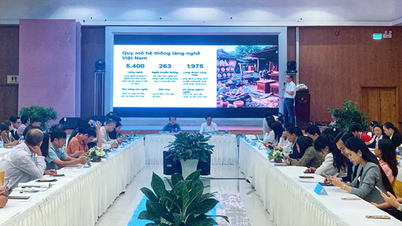
Local authorities need to conduct specific assessments of craft villages to develop appropriate support policies. Craft villages themselves need to increase their adaptability, reorganize their production structures, enhance cohesion, and limit spontaneous, fragmented, and small-scale production and business activities that lead to low efficiency. They should foster initiative and creativity, finding ways to adapt to societal demands, such as diversifying product designs, being flexible in accessing and applying technology and marketing products, and expanding markets. Digital technology should be recognized as an indispensable key; craft villages can create promotional videos on social media platforms to advertise their products domestically and internationally.
According to Professor Claus (Lund University, Sweden), the digitalization process and the application of new technologies are important trends in production in craft villages, helping to preserve and maintain the traditions and heritage of these villages and creating a connection between those traditions and heritage and the younger generation. In addition, the preservation and development of traditional craft villages need to integrate multi-valued culture, such as combining them with tourism and incorporating craft villages into travel itineraries.
Each craft village needs to build its own brand, linked to its unique story, to create a distinctive identity. On the other hand, collaboration with designers, filmmakers, artists, and businesses also opens up new opportunities for the development of craft villages. Around the world, many countries have successfully transformed traditional craft villages into a resource contributing to the development of the cultural industry; these can be considered valuable lessons for Vietnam.
In Japan, the government has preserved the washi paper-making and Arita pottery traditions by providing financial support to artisans, building national brands, and integrating them with tourism. Visitors can participate in handmade paper-making workshops or try their hand at pottery, enhancing the value of their cultural experience.
In Italy, high-end crafts such as leather goods and Murano glassmaking have become iconic by associating their products with brand stories, transforming each item into a work of art with high value in the global market. South Korea has also cleverly incorporated traditional craft villages like Incheon pottery village, Jeonju traditional paper-making village, and Hahoe mask-making village into films and K-pop, attracting the attention of young people and international tourists.
Traditional craft villages are not only valuable assets of Vietnam but can also be considered one of the "golden keys" to contributing to the goal of developing the cultural industry in the new era. With proper investment, the cooperation and joint efforts of the State, businesses, and the community, along with learning from international experience, Vietnam can completely transform these craft villages into an important highlight, contributing to promoting sustainable development from traditional values. This journey is not only a responsibility but also a source of pride for every Vietnamese person in the effort to preserve and spread national identity to the world.
Great cultural and economic value
Source: https://nhandan.vn/phat-trien-ben-vung-tu-tai-nguyen-di-san-post868221.html
















































































Comment (0)