

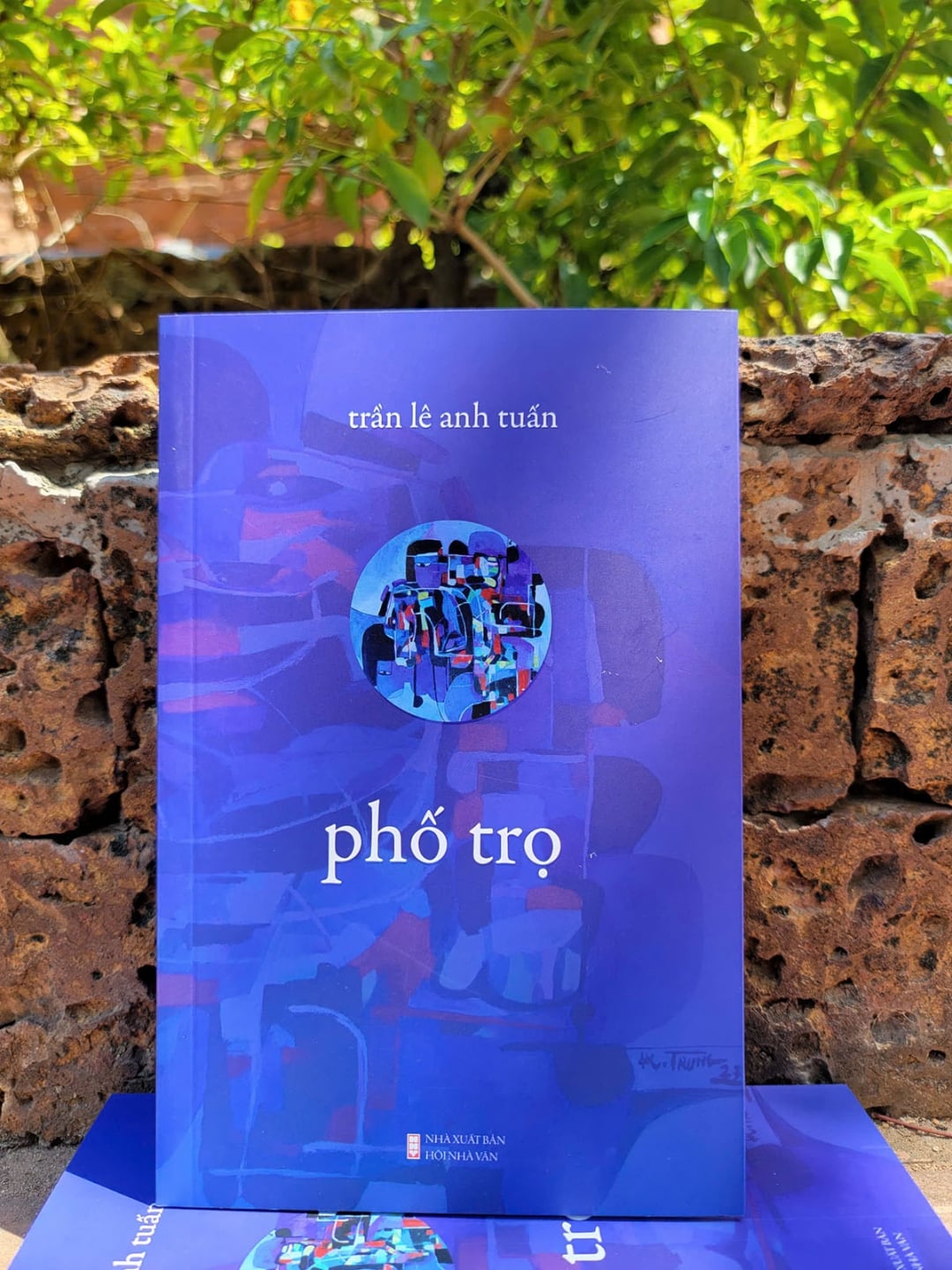
(Read the poetry collection "Boarding Street" by Tran Le Anh Tuan, Vietnam Writers Association Publishing House, 2025)
Holding in my hands the poetry collection "Boarding Street" by young poet Tran Le Anh Tuan ( Dak Lak Literature and Arts Association), I couldn't help but be surprised by the weight of the words, distilled through sublime emotions and talent at its most flourishing stage.
This poetry collection is a world of subtle yet profound movements, where memories, nature, people, and love intertwine like a river flowing through seasons of accumulation. It is a collection imbued with the tranquil beauty of old Phu Yen province – the place where the author was born, raised, and carried throughout his creative journey.
From the quiet solitude of laborers to the very personal stirrings of love, "The Boarding House" emerges as a warm, pure, yet melancholic realm of emotions. From the very first poems of the collection, the nature of Phu Yen province is depicted with a beauty that is both familiar and novel, both intimate and evocative of the deepest layers of memory.
In "Spring Rain in Lanh," rain is not only a landscape of the homeland but also its soul: "Spring rain in Lanh never stops / Rain falls like the sound of people intact amidst the ruins." Nature is not static but always rushes into the heart, awakening memories that seemed to have sunk deep. In the poem "La Hai," the author writes: "The wind still blows on the bridge / Rain falls on the old clothes / La Hai is fragrant with coffee / But why is the river of my homeland so silent?"
That "quietness" is not only of the river but also of the people and the depth of emotions hidden within the small envelope of this mountain town. Nature and people are intertwined in every word, creating a space that is both real and dreamlike, like moonlight casting a hazy glow on a dreamy mind.
 |
But "The Boarding Street" is not just about nature. The poetry collection is also a portrait of human lives and simple professions that are rich in humanistic values. In the poem "The Shoemaker," we encounter the image of an old man sitting "there for thirty years" with "hands that have never rested." Each pair of shoes, each stitch, seems to recreate a lifetime filled with memories and affections that no words can fully express.
Similarly, "The Tailor" recreates the image of people quietly mending the wounds of life: "Who still threads thread through the night / Like the way the city mends its wounds with fallen leaves." Just a few gentle lines of poetry encapsulate a philosophy of life: people always heal themselves in their own unique, natural way, like the city continuing to shine its lights after a rainstorm. Sharing the same theme of depicting quiet human lives, "The Potter" is like a song about traditional culture: "Here are the jars. Here are the vases. Here are the jugs. Here are the pots. Here are the lime containers. Sweat. Tears. Here are the pavilions. Here are the temples. Here are the dynasties… Here are the centuries. Here are the millennia." The dense enumeration creates a sense of historical depth and the layers of ancient crafts that have endured through the passage of time.
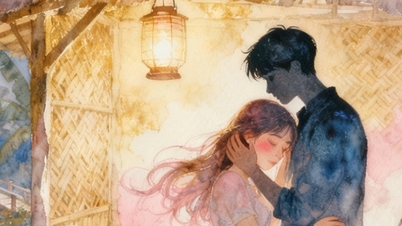
In particular, the theme of love in the poetry collection has a very unique tone: both romantic and melancholic, somewhat distant yet full of anguish. Love is not boisterous but like a silent stream, weaving through each memory. In the poem "Empty Street," the evening bell "Resounds in the realm," blending with "The sound of ambulance sirens. Crying. Tears…". This seemingly disjointed sequence of images creates a poignant rhythm of the days of isolation, when love and loss intertwine. The poem "Street of Lodging," which is also the title of the collection, marks a haven for the soul - a place one can return to after long journeys: "Everyone has a place to return to / Even if the small alley is shrouded in mist."
The poetry collection reveals the depth of the author's perspective on culture, history, and people. Poems like "Epic Night" place the reader in the mythical space of the Central Highlands: "You are now the whispering sound of gongs piercing the night… You are now epic / The ritual of spring." Or in "The Babonneau Bunker Guard," the author lets history enter poetry through the image of "a lamp that shines for a hundred years" - a symbol of memory, of anonymous faces that silently passed through youth. The sadness, sacrifice, and beauty of history are expressed through verses imbued with humanistic values.
Tran Le Anh Tuan's poetry is imbued with symbolic and surreal elements, often transcending familiar descriptions to open the door to unexpected associations. In "Standing on the Mouth of a Volcano," the author writes: "I stand for time to eat / As you have eaten me." A strange image, both mysterious and haunting, prompts the reader to pause and contemplate. Similarly, in many other poems, the fragmented structure, like a film reel pieced together, creates an unexpected continuity through a rich field of associations. This is precisely what makes Tran Le Anh Tuan's poetry unique: freedom of emotion without being unrestrained; ambiguity in imagery that nonetheless touches the depths of the reader's soul.
"The Boarding House" is therefore not only a poetic journey but also a journey of rediscovering spiritual values: quiet professions, moments of love, memories of home, the sorrows of the times, and the profound layers of culture embedded in every vein of the land. This collection of poems not only marks a maturation in the young writer's creative work but also contributes to the landscape of contemporary Vietnamese youth poetry with a voice worthy of respect: lyrical yet insightful, fresh yet deeply rooted in identity, romantic yet grounded in the realities of life.
Source: https://baodaklak.vn/van-hoa-du-lich-van-hoc-nghe-thuat/van-hoc-nghe-thuat/202512/hanh-trinh-tro-ve-mien-ky-uc-va-nhung-phan-nguoi-lang-le-fa80c1f/




















































































Comment (0)