

On the afternoon of August 4th, a delegation of Vietnamese expatriates in South Korea, including teachers and children aged 10-13, arrived in Hanoi to begin the 5-day program "Delegation of Vietnamese expatriate children and teachers in South Korea visiting Vietnam 2024," which will take place in Hanoi, Ninh Binh, and Quang Ninh.
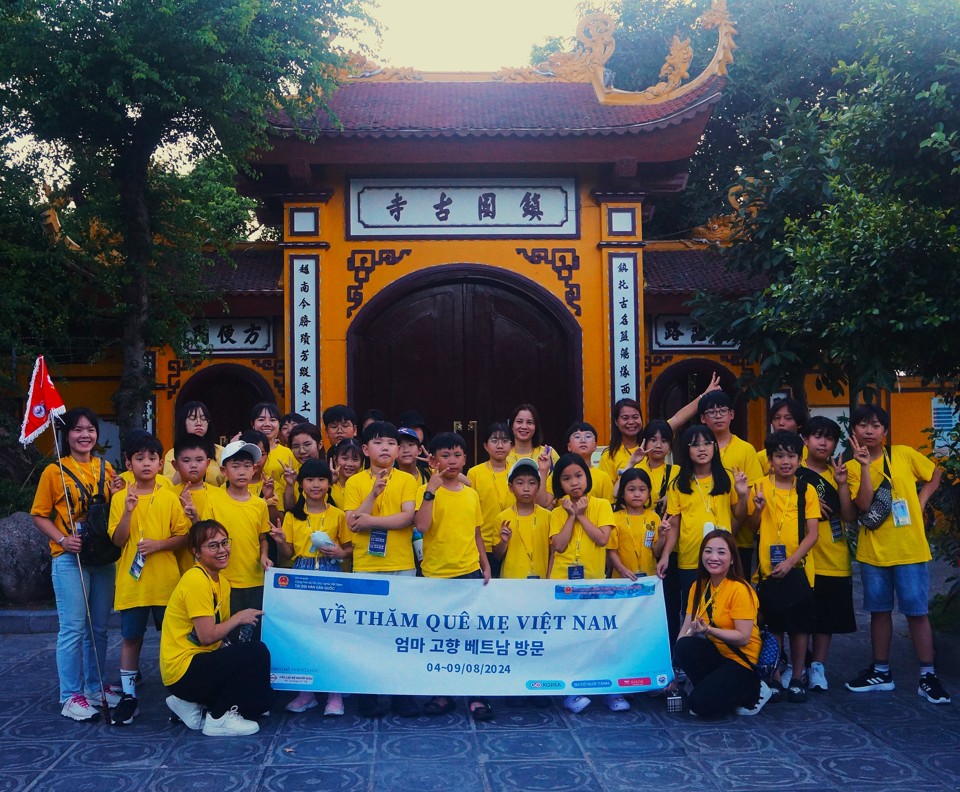
During their first two days in Vietnam, the delegation of Korean expatriate teachers and children visited famous landmarks in the capital city. Their first stop was Tran Quoc Pagoda, located in the middle of West Lake and over 1,500 years old. Here, the delegation was overwhelmed by its long history and amazed by its unique beauty, a place that the famous travel website Wanderlust included in its list of "10 most beautiful temples in the world ".
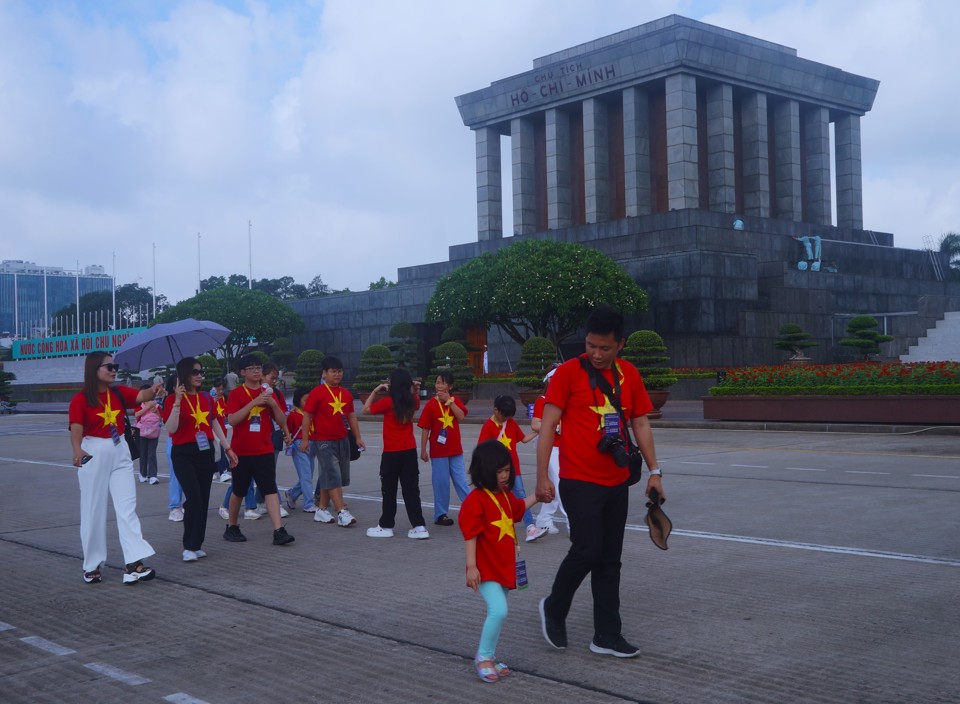
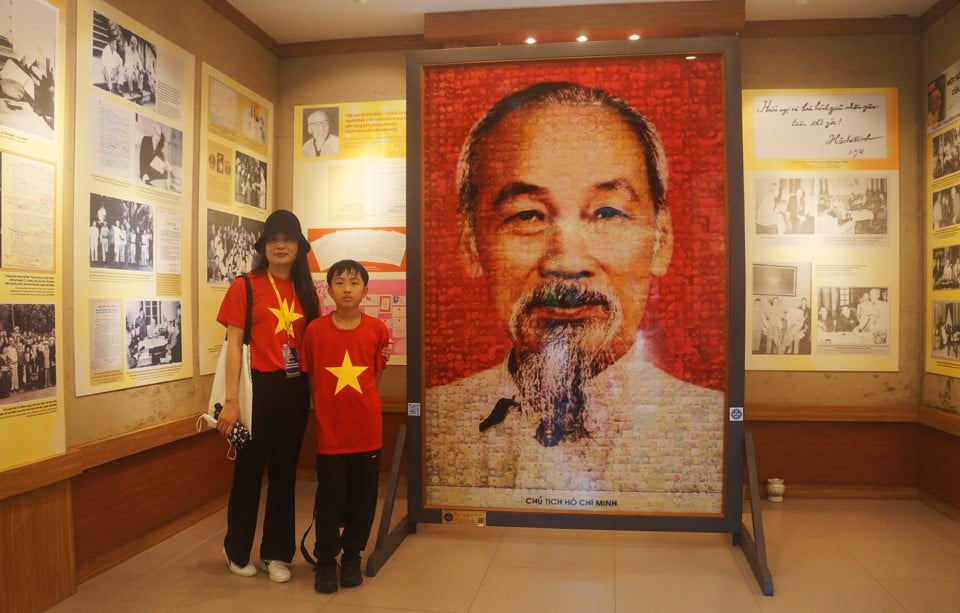
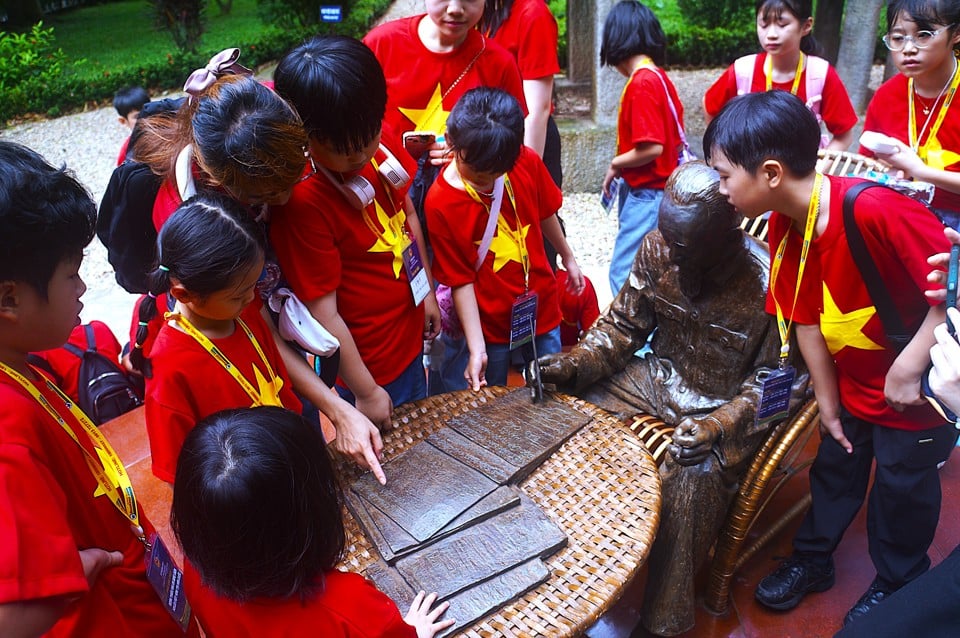
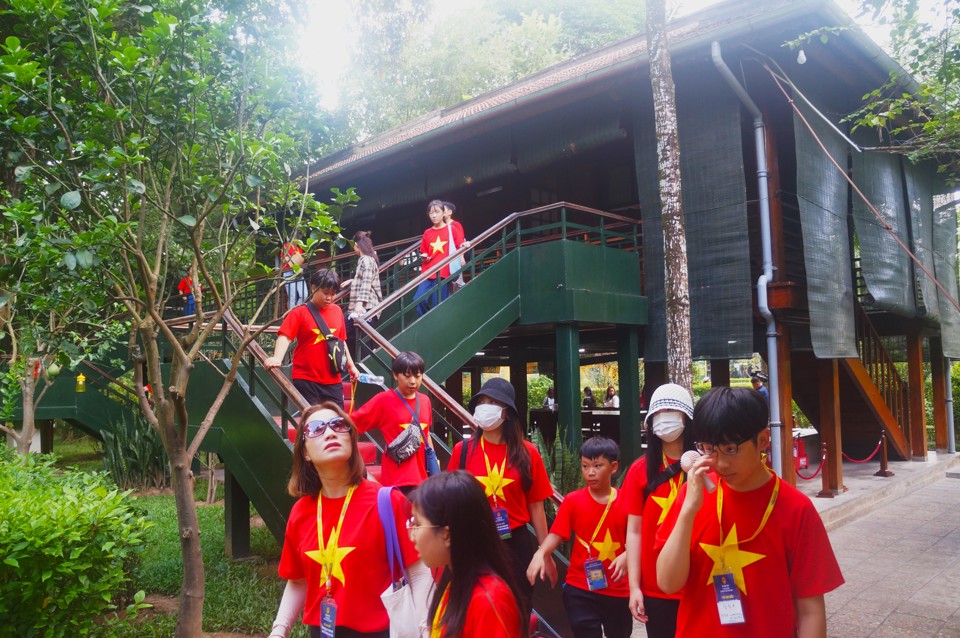
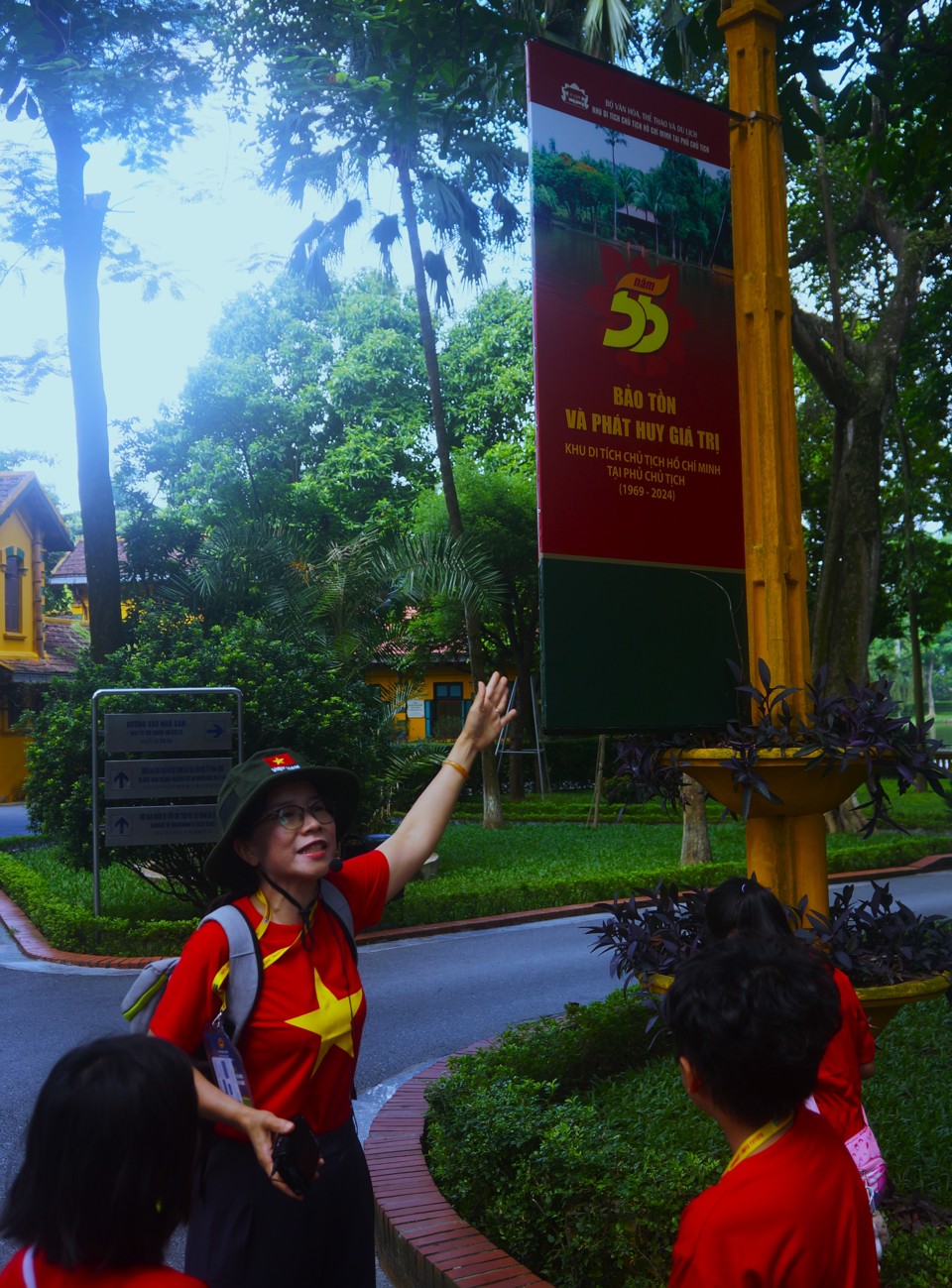
The following day (August 5th), the delegation arrived at Ba Dinh Square early to visit the Ho Chi Minh Mausoleum and the Presidential Palace complex. Having been away from their homeland for a long time, the delegation members were deeply moved by the opportunity to visit President Ho Chi Minh's mausoleum and hear stories about his great achievements. In particular, the overseas Vietnamese children were delighted to visit President Ho Chi Minh's stilt house for the first time, feed the fish, and hear stories about President Ho Chi Minh's love for children.
“ President Ho Chi Minh was a brilliant and strong man. I really admire Uncle Ho and my teacher often teaches me the song ‘Who loves Uncle Ho Chi Minh more than the children and teenagers?’” a Vietnamese-American child said in Vietnamese. Although born and raised in South Korea, the children are taught Vietnamese by their parents and can communicate independently using their mother tongue. The most touching moment was when they all sang “As if Uncle Ho were present on the day of great victory” and loudly recited the slogan “Democratic Republic of Vietnam independent” in Vietnamese.
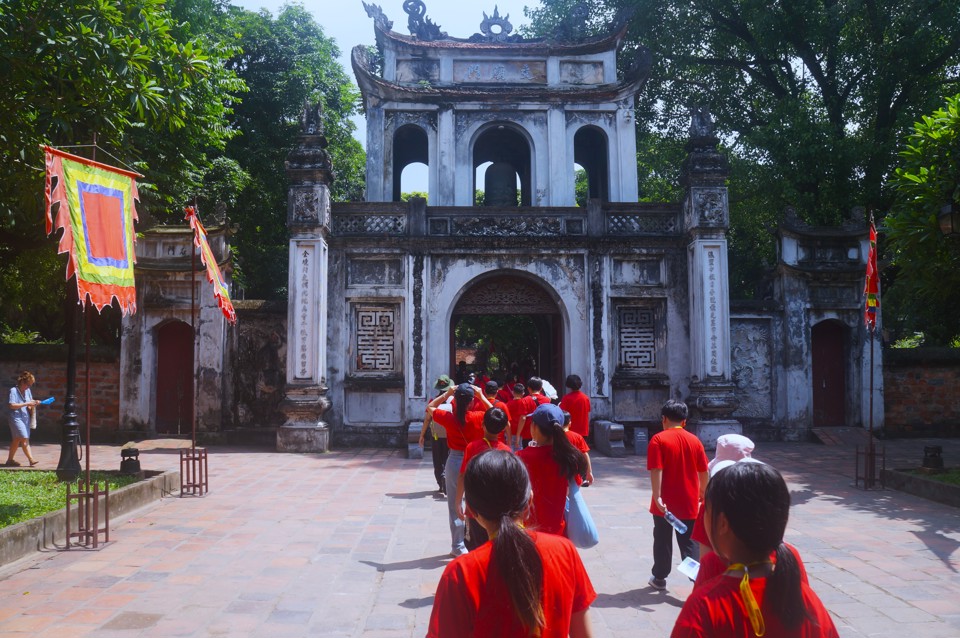
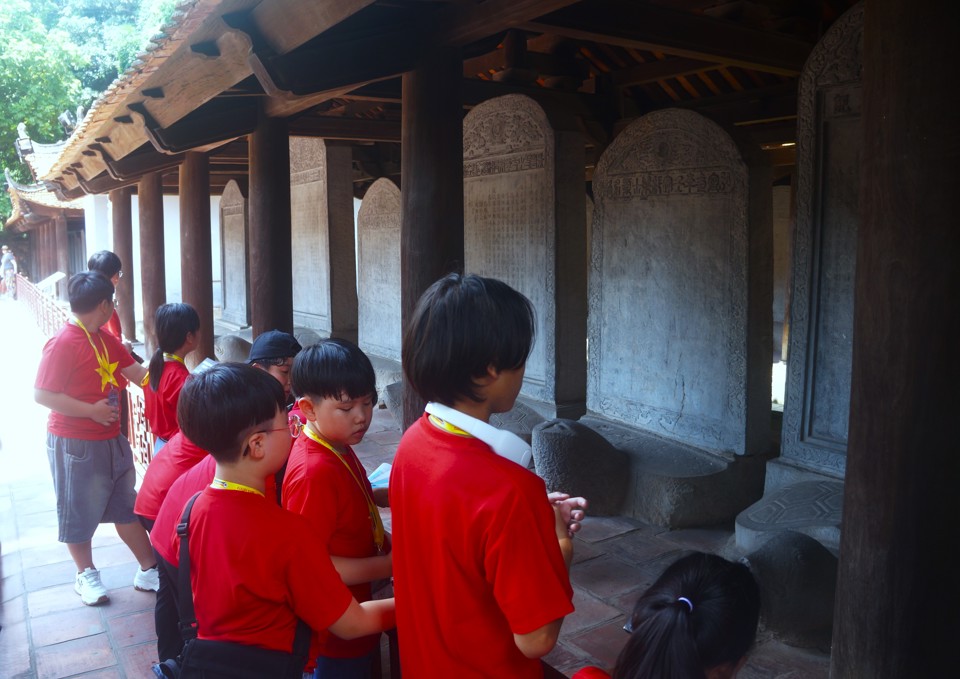
Leaving the Presidential Palace, the delegation stopped at the Temple of Literature – National University. Visiting and learning about Vietnam's first university for the first time, the overseas Vietnamese children were amazed and impressed by their homeland's scholarly traditions. Le Trang, an overseas Vietnamese child, excitedly shared that thanks to the tour guide and the interpreter, she learned that this was where the children of Vietnamese kings and queens used to study, and that Vietnamese education in the past was very developed.
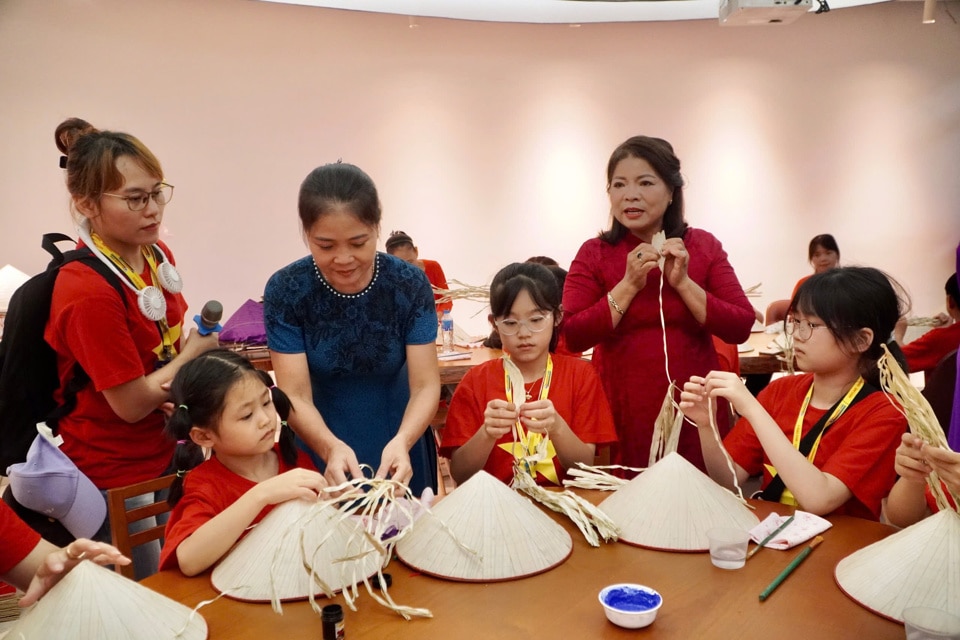
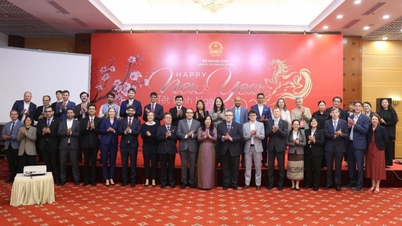
Concluding their two-day stay in Hanoi, the delegation paid a courtesy visit to the leaders of the State Committee for Overseas Vietnamese and toured the Korean Cultural Center in Vietnam. There, the overseas Vietnamese children watched artisans demonstrate the making of conical hats and enthusiastically tried their hand at weaving and braiding their own hats.
Nurturing patriotism in overseas Vietnamese children.
"The 2024 Vietnamese Overseas Children and Teachers' Delegation from South Korea Visits Vietnam" is an opportunity for Vietnamese children living in South Korea to return to their homeland, learn about and experience the cultural and historical values of the nation. In addition, the program helps them understand and be proud of their homeland, connect with their roots, and thereby build national pride, solidarity, and a sense of responsibility to the community.
“The goal of the trip is for the children to see how beautiful Vietnam is, how much pride they can have in its history, and to love their homeland even more. In addition, the trip will help them become more independent in group activities and improve their Vietnamese communication skills,” Dr. Do Ngoc Luyen, a lecturer at Kwang Un University and representative of the delegation of Vietnamese teachers and children in South Korea, shared with a reporter from the Economic & Urban Newspaper.
According to Mr. Doan Quang Viet, a member of the Vietnamese expatriate teachers' delegation in South Korea, Vietnamese parents are very conscious of teaching their children about Vietnamese history and legends. However, it is only through trips with real-life experiences that children truly internalize national pride and confidently introduce to their friends in South Korea the proud historical figures and achievements of their homeland.
As someone who wants his children to learn about and explore many places in Vietnam, Mr. Viet emphasized: "Understanding one's own ethnicity is the best tool to avoid discrimination. If we are conscious of and knowledgeable about our ethnicity, no one can look down on us, regardless of our nationality."
Maintaining one's mother tongue in a foreign land.
The Vietnamese community in South Korea is a young community, formed only after the two countries established diplomatic relations in 1992. However, it is one of the fastest-growing communities (currently with nearly 277,000 people). Therefore, the demand for learning Vietnamese in South Korea is increasing, especially among the children of overseas Vietnamese.
Speaking with a reporter from Kinh tế & Đô thị (Economy & Urban Affairs), Ms. Nguyen Thi Le Hoa, President of the Vietnamese Association in Gwangju City and Jeolla Province, said that the community is offering free Vietnamese language classes for children, both online and offline. According to her, the Vietnamese language is the identity of the Vietnamese people, and as long as the Vietnamese language is used, Vietnamese culture will remain. Furthermore, the children of Vietnamese expatriates in Korea are of mixed Vietnamese and Korean heritage, so the ability for them to preserve Vietnamese culture in Korea is extremely meaningful.
With the implementation of its multicultural policy, the Korean government has supported multicultural centers in provinces and cities nationwide to teach Vietnamese to children of Korean-Vietnamese families and Korean students interested in learning Vietnamese.
Since 2014, South Korea has chosen Vietnamese as a second foreign language in its university entrance examination. Some high schools have also included Vietnamese as an official subject since 2018.
Source: https://kinhtedothi.vn/hanh-trinh-ve-que-me-cua-thieu-nhi-kieu-bao-han-quoc.html



























































Comment (0)