

In the first nine months of 2024, Vietnam achieved certain results in managing and utilizing ODA funds. However, alongside these achievements, many challenges remain in the allocation and disbursement of these funds.
| Identifying shortcomings to remove bottlenecks in ODA disbursement; Breakthroughs in decentralization and promoting ODA disbursement. |
Disbursement remains sluggish.
As of September 30, 2024, the total amount of foreign capital yet to be allocated in detail is over 2 trillion VND (out of a total of 20 trillion VND already approved). The allocation of capital has not progressed as expected mainly due to many projects not having completed the required investment procedures, obstacles in equipment valuation, and an ineffective bidding mechanism.
Regarding disbursement, the Ministry of Finance 's report shows that from the beginning of the year to September 30, 2024, only over 4.8 trillion VND had been disbursed, reaching only 24.33% of the plan assigned by the Prime Minister. This situation is quite similar to the same period in 2023 (which also only reached 28.37%). Such figures indicate that due to various reasons, issues related to ODA capital and preferential loans from foreign donors, especially in disbursement, have persisted for a long time without being resolved.
Several factors have contributed to the failure to meet expectations in the progress, allocation, and disbursement of ODA funds. Among these, complex and time-consuming procedures are arguably the leading cause. For example, procedures for approving contract changes and disbursing ODA funds are often inconsistent, hindering coordination among relevant agencies. Similarly, the lengthy international bidding process for selecting consulting firms as required by some donors also negatively impacts the progress of other construction projects.
Furthermore, the discrepancies and inconsistencies between Vietnam's legal regulations and the technical requirements of the donors also lead to difficulties in project coordination and implementation. Differences between Vietnamese regulations and international contract models such as FIDIC (a contract issued by the International Federation of Consulting Engineers, used by many countries and international financial institutions) give rise to numerous additional procedures, affecting payment schedules and project completion.
The delay in site preparation and handover also affected the construction process; limitations in the management capacity of project owners also significantly impacted the ability to implement projects effectively and on schedule. Some donors interfered quite deeply in the project implementation process by providing feedback and requesting adjustments to many technical aspects, creating additional procedures and prolonging the project timeline.
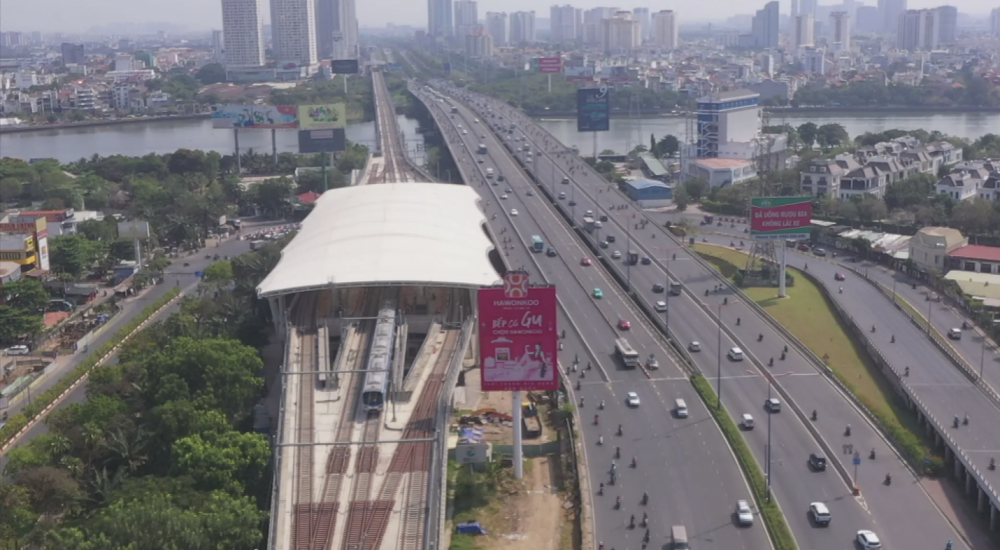 |
| The Ho Chi Minh City Metro Line 1 project has begun trial runs. |
| At a mid-term press conference on October 17th, Mr. Sugano Yuichi stated that during Japan's fiscal year (April 2023 to March 2024), JICA signed loan agreements totaling 102.2 billion yen (approximately US$678 million), the highest figure since 2017. Simultaneously, JICA's technical cooperation projects in Vietnam reached 5.2 billion yen (approximately US$35 million), the largest in the world during the same fiscal year. In addition, JICA's non-refundable aid to Vietnam reached 1.1 billion yen (US$7.5 million) in committed capital. |
High expectations for the amended Public Investment Law
In the current investment scale, ODA funding accounts for a relatively small portion; however, projects are concentrated in essential areas for local communities. Therefore, more effective implementation will create positive ripple effects, contributing to socio-economic development. To improve the efficiency of ODA utilization and address long-standing obstacles and issues, a comprehensive approach involving multiple solutions is necessary. This includes strengthening decentralization and delegation of authority; enhancing coordination among agencies in advising, negotiating, and approving loan agreements. Furthermore, improving project preparation quality, developing realistic capital plans that match the capabilities of investors, and effectively managing land acquisition will help projects proceed on schedule.
In addition, simplifying project adjustment procedures, improving regulations on grant aid projects, strengthening coordination with donors to promptly resolve difficulties, issuing specific regulations and guidelines to maximize harmonization between Vietnamese and donor regulations, and adjusting legal regulations to align with international standards such as the FIDIC model contract… are also crucial issues that need attention.
A positive development is that the draft Law on Public Investment (amended), to be submitted to the National Assembly soon, includes many amendments and additions related to the management and use of ODA and concessional loans from foreign donors. For example, the draft proposes allowing the disbursement of foreign capital allocated by the central budget to be independent, not dependent on the budget plans or estimates of other funding sources. This aims to increase flexibility and efficiency in the management and use of foreign capital, especially ODA and concessional loans from international donors. This is a new feature compared to the current law, which lacks specific regulations for this independent disbursement.
Regarding the decentralization of authority, the draft proposes decentralizing authority and simplifying the procedures for approving and adjusting investment policies and investment decisions for projects using ODA funds, similar to those for projects using domestic capital. This will help localities and project owners be more proactive in the implementation of projects, minimize administrative procedures, and increase transparency.
Commenting on the draft Law on Public Investment (amended), Mr. Sugano Yuichi, Chief Representative of the JICA Vietnam Office, said that the amendments are quite positive.
“Previously, some regulations in Vietnamese laws were not consistent or synchronized with the regulations of donors, leading to difficulties in implementing necessary procedures and causing delays in the implementation process. Therefore, we expect and also recognize that in this revision, the obstacles related to the inconsistencies between Vietnamese domestic regulations and the regulations of donors will be resolved,” said Mr. Sugano Yuichi, adding: “We view these revisions quite positively, aiming to facilitate ODA projects as well as projects using foreign loans. We are also closely monitoring the progress and content of the revision of the Law on Public Investment.”
Source: https://thoibaonganhang.vn/hieu-qua-von-oda-nhin-lai-va-huong-toi-156906.html


![[Image] Close-up of the newly discovered "sacred road" at My Son Sanctuary](/_next/image?url=https%3A%2F%2Fvphoto.vietnam.vn%2Fthumb%2F1200x675%2Fvietnam%2Fresource%2FIMAGE%2F2025%2F12%2F13%2F1765587881240_ndo_br_ms5-jpg.webp&w=3840&q=75)













































































Comment (0)