

This is an opportunity for the public to admire many works of art made from clay and bonsai trees, a culmination of the skillful hands and dedication of artisans.
Pottery tells stories
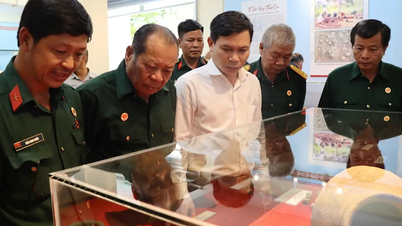
Held at the thematic exhibition hall of the Pleiku Museum (Pleiku ward), the ceramics exhibition "Soul of the Earth" (from August 29th to September 15th) not only features artifacts from the Museum but also attracts 7 private collectors from within and outside the province to participate with 80 sets of rare artifacts (each set containing 3-5 items).
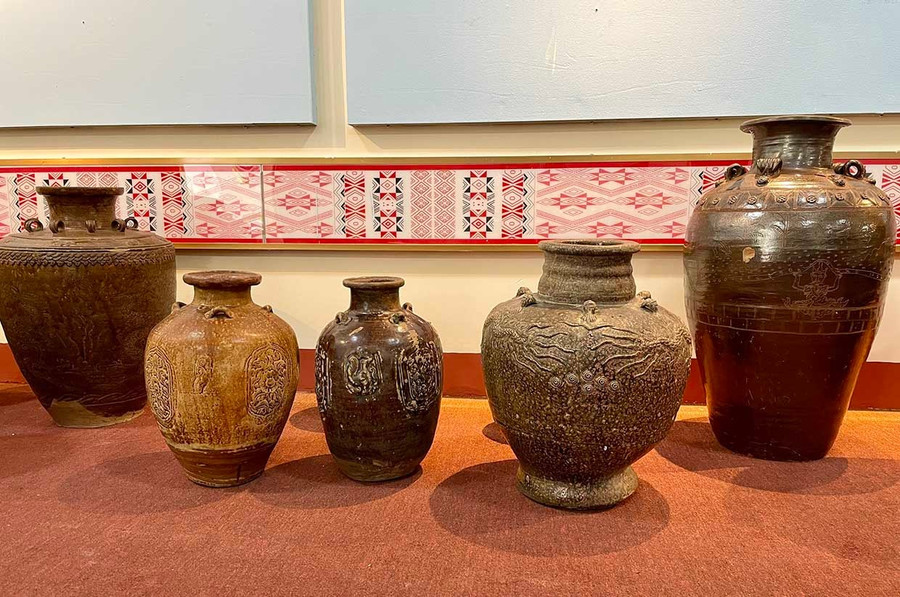
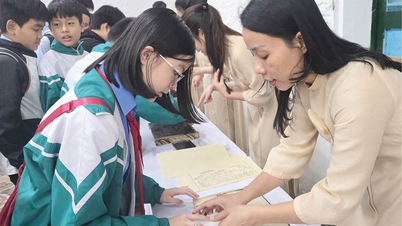
According to Mr. Le Thanh Tuan, Director of the Pleiku Museum, the exhibition consists of four parts: From earthenware to pottery - the transformation journey of clay; Glazed ceramics - the essence of pottery; Ceramics in the flow of modern life; and a corner for experiencing pottery making by hand by ethnic minorities in the Central Highlands. Visitors can gain a comprehensive overview of pottery in Vietnam, tracing its history back to approximately 10,000 years ago, when ancient Vietnamese people learned to exploit clay to create pottery products for daily life.
Early pottery is associated with the following cultures: Phung Nguyen, Dong Dau, Go Mun, Dong Son (North); Pre-Sa Huynh, Sa Huynh (Central); Dong Nai culture (South), Bien Ho culture (Central Highlands)... Later, glazed pottery – a major step forward in the history of ceramics – began to appear in Vietnam around the 1st-3rd centuries during the period of Chinese rule. During the feudal period, Vietnamese pottery experienced a leap forward with a diverse range of beautiful and sophisticated glazes.
The 15th to 18th centuries were a period of strong development in trade between Vietnam and countries around the world , creating favorable conditions for the pottery industry in Vietnam to develop remarkably, with many famous pottery production centers emerging.
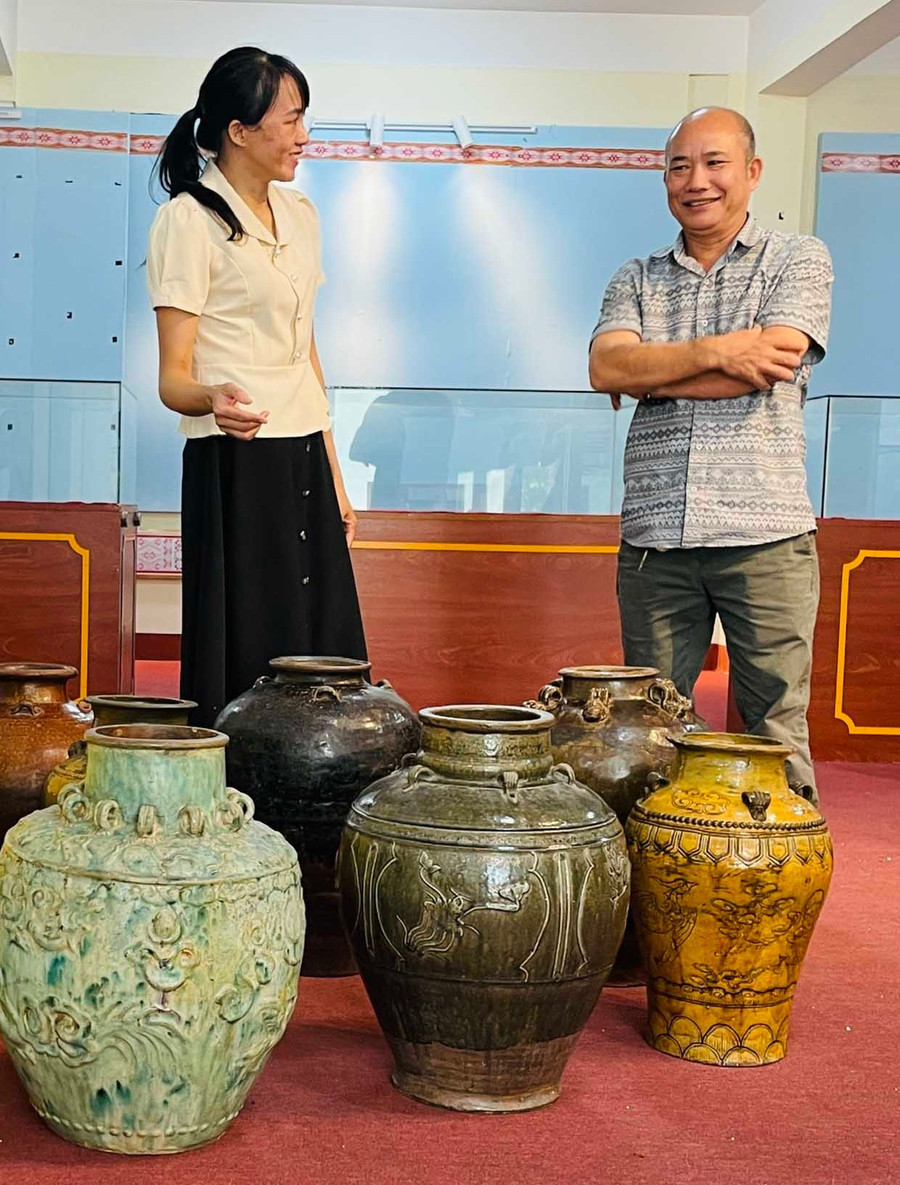
In particular, the exhibition introduces visitors to an interesting aspect: the role of jars in the lives of ethnic minorities in the Central Highlands. In ancient Central Highlands society, only wealthy families with high social status could own many jars. Through the buying and selling activities of the local people, the jar collections encompass many ancient pottery styles from China, Thailand, and Khmer; ancient pottery from Binh Dinh, My Thien, Chau O, and Quang Duc; and pottery from Cay Mai, Lai Thieu, and Binh Duong...
Contributing 34 precious artifacts to the exhibition, collector Dang Hoang Than (An Khe ward) said that, besides the blue and white ceramics from the Kangxi period, he is most fond of the jars and pots from the Central Highlands. He put a lot of effort into collecting some items, for example, a pair of rain-praying jars (an important ritual of the local people) with embossed toad figures. Passionate about collecting antiques, collector Man Phong Son also brought 12 unique artifacts from Dak Lak to participate in the exhibition, including Go Sanh ceramics, created around the 15th century.
"This is a community asset, but I'm fortunate to have the opportunity to preserve it. I hope to contribute to this platform so that viewers can have a more diverse perspective on ceramics," Mr. Son shared.
Take a stroll through a forest of "miniature ancient trees".
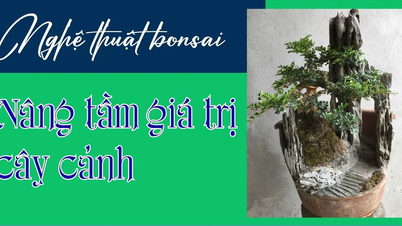
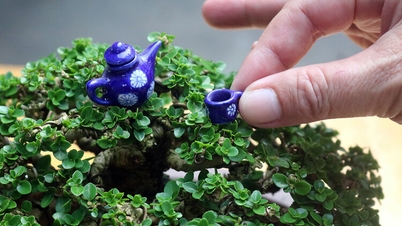
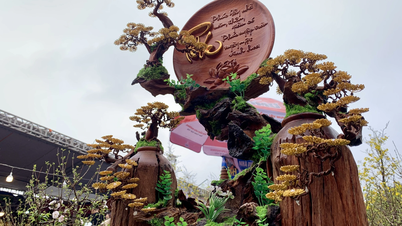
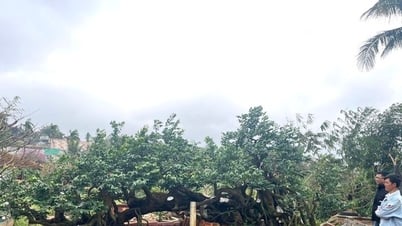
Also on this occasion, the Gia Lai Bonsai Club, in collaboration with the Pleiku Museum, inaugurated the bonsai exhibition "Green Charm of the Great Forest". Approximately 100 bonsai works will be displayed in the museum grounds (from August 29th to September 5th), showcasing the talent and creativity of the artisans.
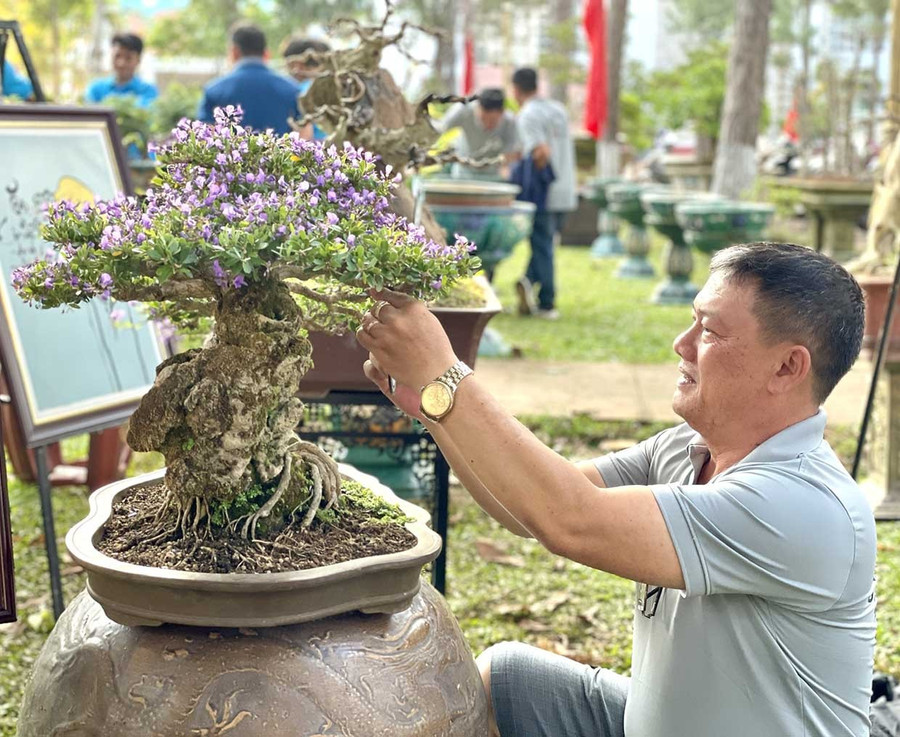
According to Mr. Nguyen Thanh Toan, Chairman of the Gia Lai Bonsai Club, these are all valuable bonsai works owned by 24 club members, meticulously shaped from many precious tree species with enduring vitality such as: three-leaved pine, juniper, cypress, reclining juniper, fig, banyan, etc.
"Compared to previous exhibitions, this time the number of trees on display is the most diverse in terms of species, with more than 40 varieties. Each piece is both artistic and a cultural symbol, reminding us of the spirit of harmony with nature and honoring the enduring beauty of nature," Mr. Toan emphasized.
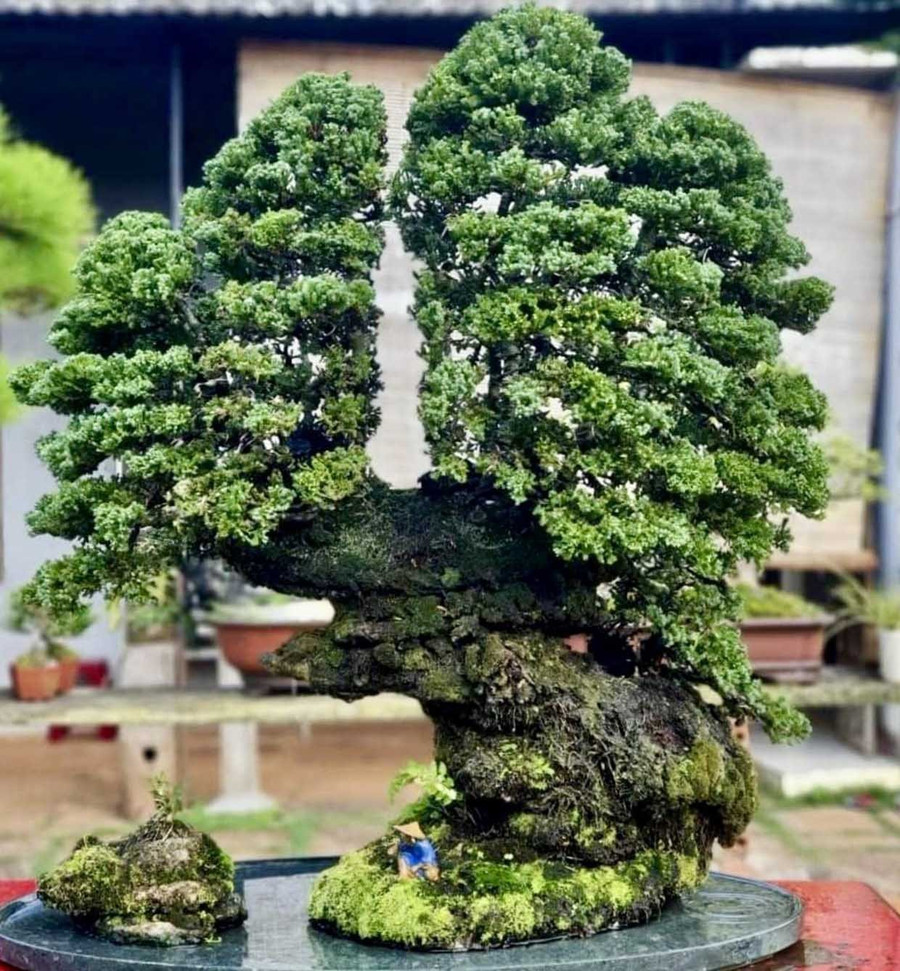
Participating in the exhibition, Mr. Le Duc Vinh Hao (An Phu ward) brought 7 bonsai trees of diverse species such as Taiwanese juniper, water jasmine, boxwood, shimpaku… Among these, his most cherished work is the "juni forest" shaped like the Rooster and Hen Islet in Ha Long Bay. He patiently nurtured this work from a seedling, pursuing its shaping for the past 30 years, and only now has it been completed. Thanks to his great perseverance and unique ideas, this work has been honored to be featured in several prestigious bonsai magazines.
The exhibition promises to offer locals and tourists a unique and enriching experience during the National Day holiday on September 2nd.
Source: https://baogialai.com.vn/hoi-tu-hon-dat-tinh-cay-mung-ngay-quoc-khanh-post564756.html









































































Comment (0)