

Located in the Sea of Japan, the "golden island" of Sado not only attracts tourists with its impressive historical journey dating back to the Tokugawa Shogunate, but also holds a special place in the hearts of its people with its distinctive local culture.
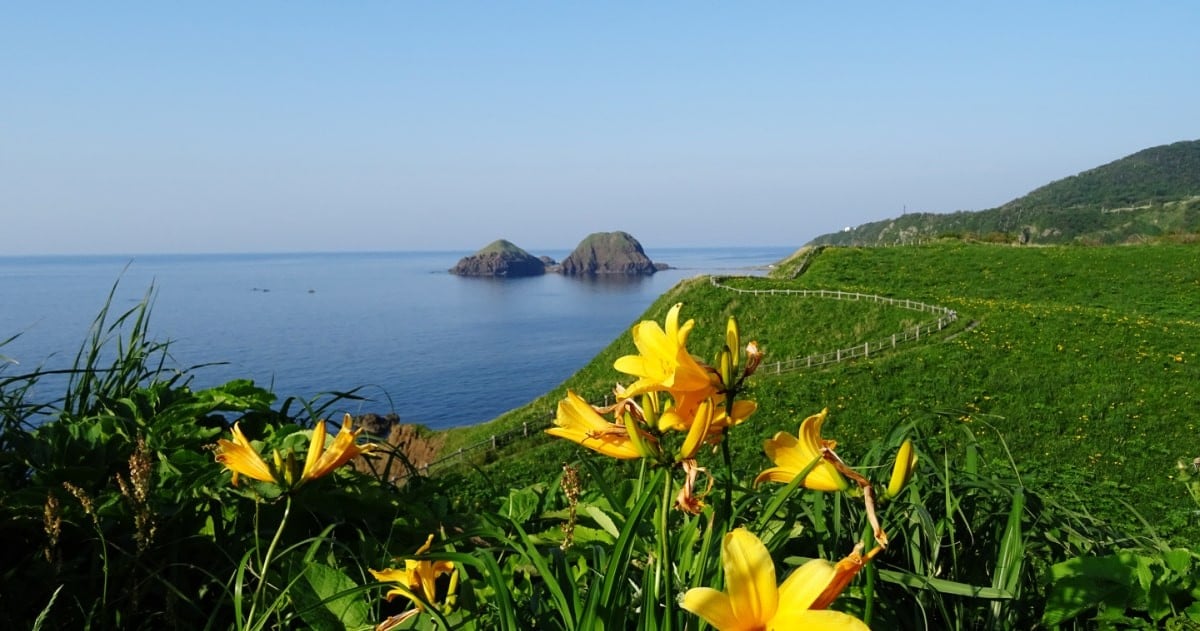 |
Located in the Sea of Japan, Sado Island has a total of 55 gold and silver mines, and over the 400 years since the Edo period, it has produced 78 tons of gold and 2,330 tons of silver. (Source: sadotravel.wordpress) |
Sado Island is located in Sado City, Niigata Prefecture, Japan. According to the Kojiki (Ancient Records) – the earliest known chronicles of the Land of the Rising Sun – it is the seventh island created by the two gods Izanagi and Izanami.
According to archaeological evidence, Sado was inhabited approximately 10,000 years ago and experienced a prosperous period in its history associated with the precious metal - gold.
In 1601, a gold mine was discovered on Sado Island, and Shogun Tokugawa Ieyasu began exploiting and directly controlling it. It became a crucial source of financial support for the Tokugawa Shogunate – to this day the longest-lasting and most stable government in Japanese history, ruling for 260 years. The Tokugawa Shogunate, Edo Shogunate, or Edo Period are all different names for the same period of Tokugawa rule, from 1603 to 1868.
In 1952, most of the gold mines were abandoned, and only about 10% of the total mining workforce remained on the island. In 1989, the last gold mine was completely closed, and Sado gradually shifted its focus to tourism development. On January 28, 2022, Japanese Prime Minister Kishida Fumio announced plans to nominate the Sado Gold Mines as a UNESCO World Heritage Site.
Dr. Miles Oglethorpe, President of the International Commission on the Preservation of Industrial Heritage (TICCIH), stated: “At the beginning of the 17th century, Japan accounted for as much as one-fifth of the world’s gold supply, more than half of which is believed to have originated in Sado.”
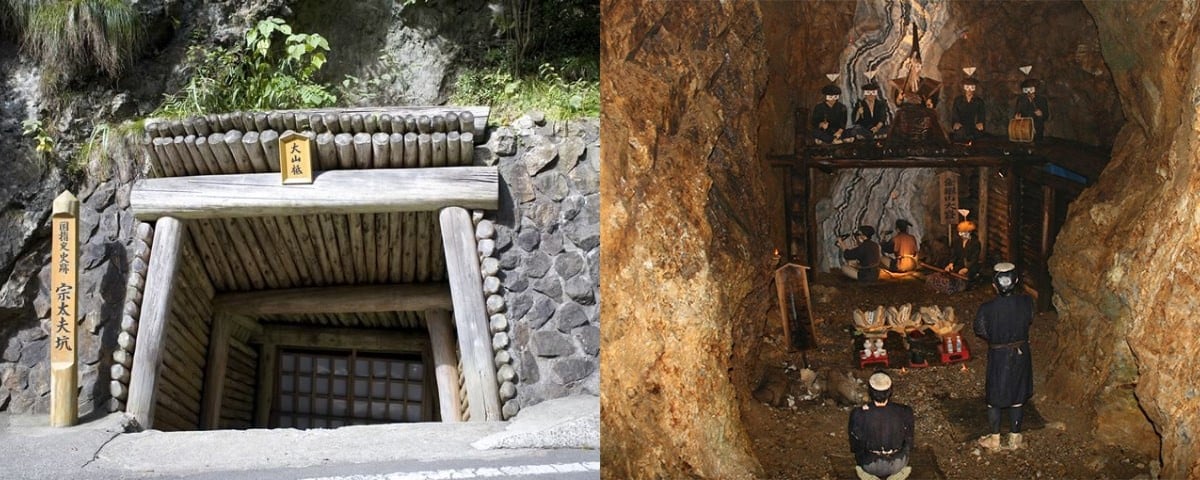 |
| Sodayu Tunnel - a metal mining tunnel from the early Edo period. (Source: city.sado.niigata.jp) |
Today, visitors can relive the golden age of Sado in the Aikawa district, an area that once boasted large gold and silver mines. The Tokugawa Shogunate at that time. There were once only about a dozen houses along the coast before the gold mine was discovered, but then the population increased rapidly, at one point reaching 50,000 people in the 1610s and 1620s. Today, the gold mine is open to visitors with a museum showcasing and introducing the activities of the past.
Besides its gold mines, the culture of Sado Island is largely influenced by the customs of the Hokuriku region and western Japan, with exiled nobles and intellectuals during the Kamakura (1185-1333) and Muromachi (1336-1573) periods bringing with them forms of court culture such as poetry and musical instruments.
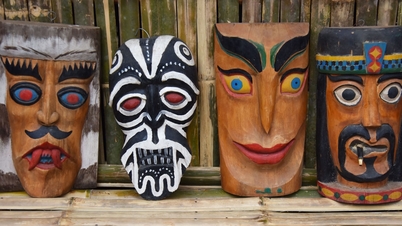
Furthermore, Onidaiko (or Ondeko - the masked dance) is a rare traditional performing art found only on Sado Island. Over 120 villages here have Onidaiko groups, and the art form has been passed down from generation to generation.
During Onidaiko performances, performers wear Oni masks and dance to the rhythmic beat of drums. This is considered a Shinto ritual to ward off evil spirits and pray for a bountiful harvest.
Source
![[Image] National Assembly discusses the implementation of the socio-economic development plan.](https://vphoto.vietnam.vn/thumb/1200x675/vietnam/resource/IMAGE/2026/04/20/1776696707422_ndo_br_img-20260420-185419-jpg.webp)
![[Photo] General Secretary and President To Lam meets with National Assembly delegates from ethnic minorities.](https://vphoto.vietnam.vn/thumb/1200x675/vietnam/resource/IMAGE/2026/04/20/1776696701056_a1-bnd-8331-3342-jpg.webp)








































































Comment (0)