

Currently, seven hamlets in Mo Vang commune—Khe Long 2, Khe Long 3, and parts of Khe Dam, Sai Luong 2, Sai Luong 3, Suoi Dam, and Khe Canh—still lack access to the national power grid, impacting the lives of hundreds of ethnic minority households.
Without access to the power grid, my family had to spend 16 million VND to buy a 3kg hydroelectric generator, installed at the foot of a waterfall nearly 2km from our house. We then bought electrical wires and hired workers to run them to our home. However, the electricity and water supply are only sufficient for lighting, cooking, and running fans. Larger appliances like refrigerators and washing machines are unusable. Every rainy season, the generator gets clogged with debris, requiring us to go all the way to the source to clean it, or it could even be swept away at any time.
The lack of a stable power supply has created a major obstacle to socio-economic development, widening the regional gap. People are forced to rely on manual production methods, leading to low productivity and low income.
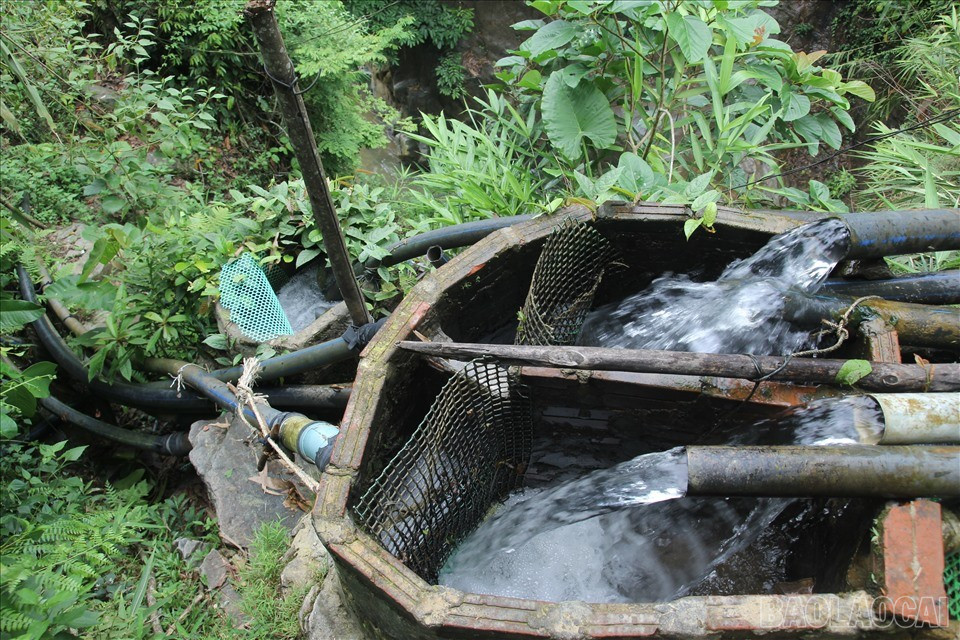
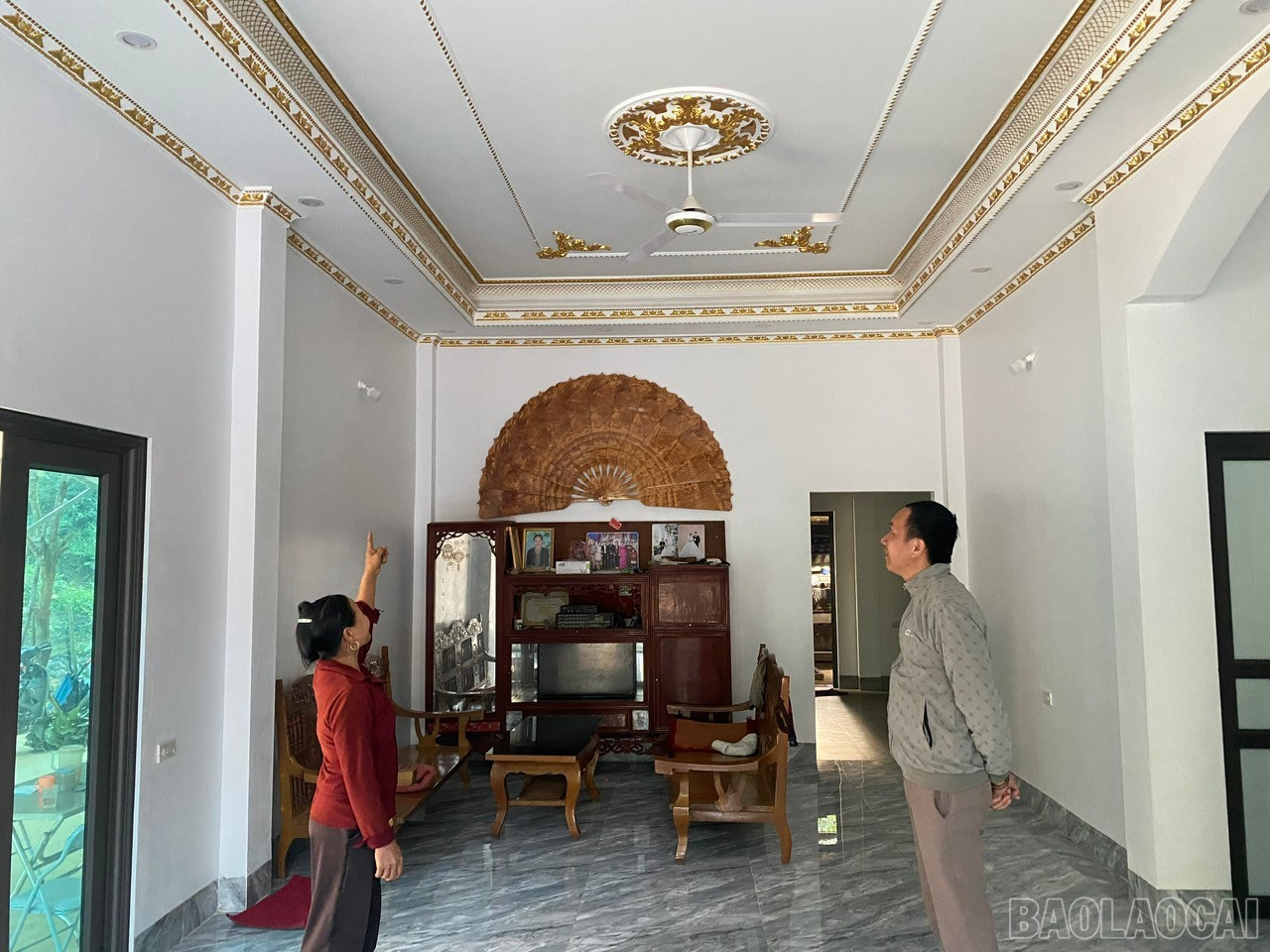
Faced with this situation, Mo Vang commune has identified bringing electricity to the villages as a key political task and an urgent need of the people. The goal is for all villages to have access to the national power grid by 2026, and the commune has implemented this with high determination.
The project to build power lines to Mo Vang commune is part of the Rural Electrification Project from the National Grid in Yen Bai province (formerly) giai đoạn 2014 - 2025, with a total investment of VND 526.6 billion. The project aims to provide electricity to 113 villages and hamlets in 7 districts of the former Yen Bai province, including 7 villages in the current Mo Vang commune (a merger of the former Mo Vang commune, Van Yen district and the former An Luong commune, Van Chan district).
Immediately after the two-tiered local government system was put into operation, Mo Vang commune began reviewing tasks, unifying plans, and mobilizing the entire political system to promote the project.
The commune organized numerous awareness campaigns and direct outreach to each affected household, clearly explaining the project's objectives, benefits, and regulations regarding the power grid protection corridor.
At the same time, effectively leverage the role of the Village Development Committee, influential community members, and self-governing clan leaders – considering them as the core force in mass mobilization work, helping to overcome difficulties and create favorable conditions for land clearance and construction of project components.
However, currently, Mo Vang commune is still facing some difficulties related to land clearance and tree felling within the power grid protection corridor.
To address this issue, the local authorities coordinated with the investor to establish a new Compensation, Support, and Resettlement Council to fully take over the responsibilities of the old Council; at the same time, clearly assigned tasks to each member. Simultaneously, the commune maintained the operation of a Rapid Response Team to closely monitor the site, promptly handle any arising situations, and support the people and the contractor during the construction process.
Thanks to the coordinated and decisive involvement of the Party committees and authorities, and the support of the people, the project is being implemented in the right direction and has achieved many positive results. At this point, the construction progress is basically meeting the requirements.
For the electricity project in the former Mo Vang commune, the contractor has erected approximately 97% of the low-voltage poles and installed approximately 85% of the low-voltage power lines. The medium-voltage lines and substations, including pole erection and equipment frame installation, have been completed.
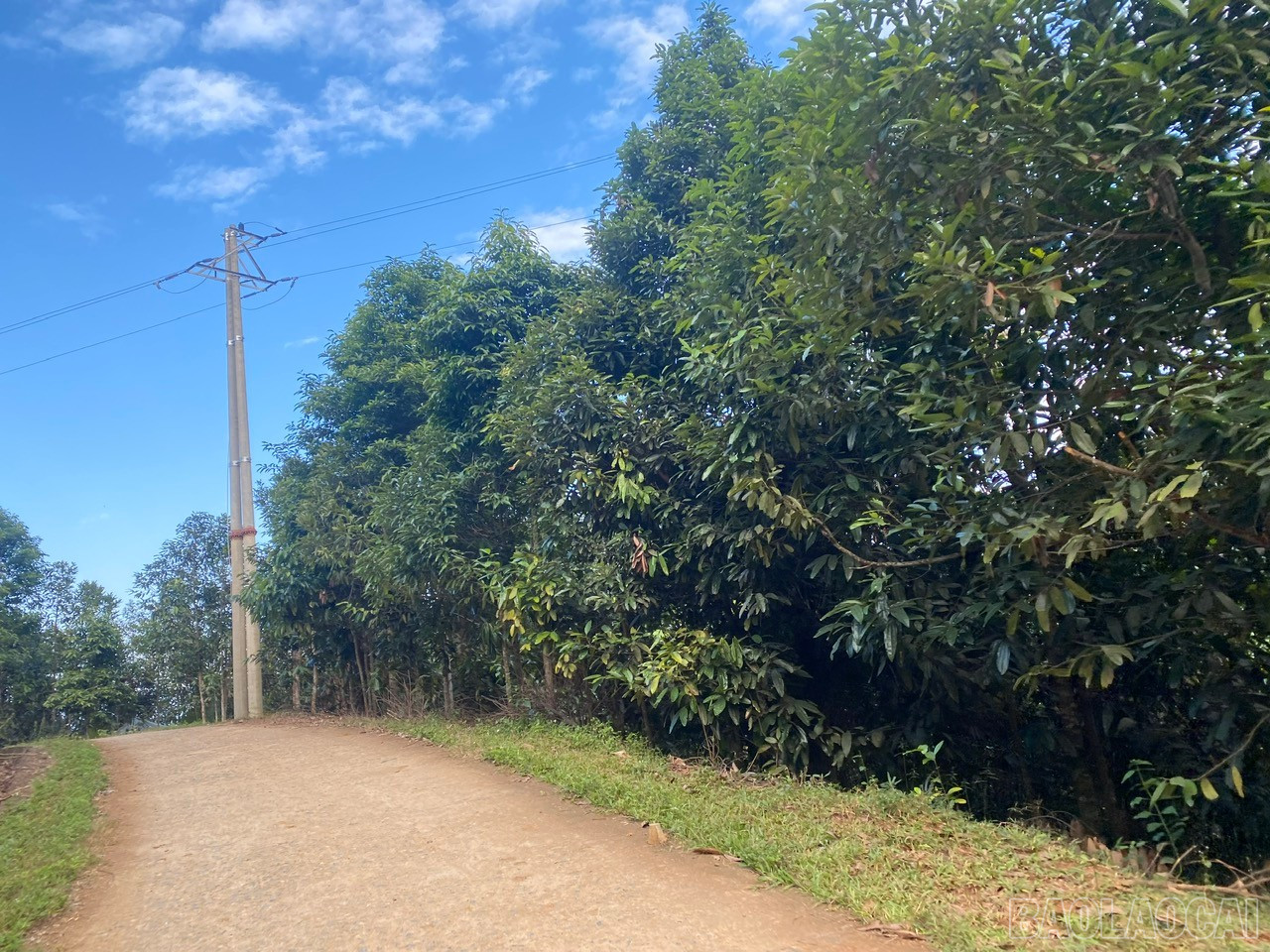
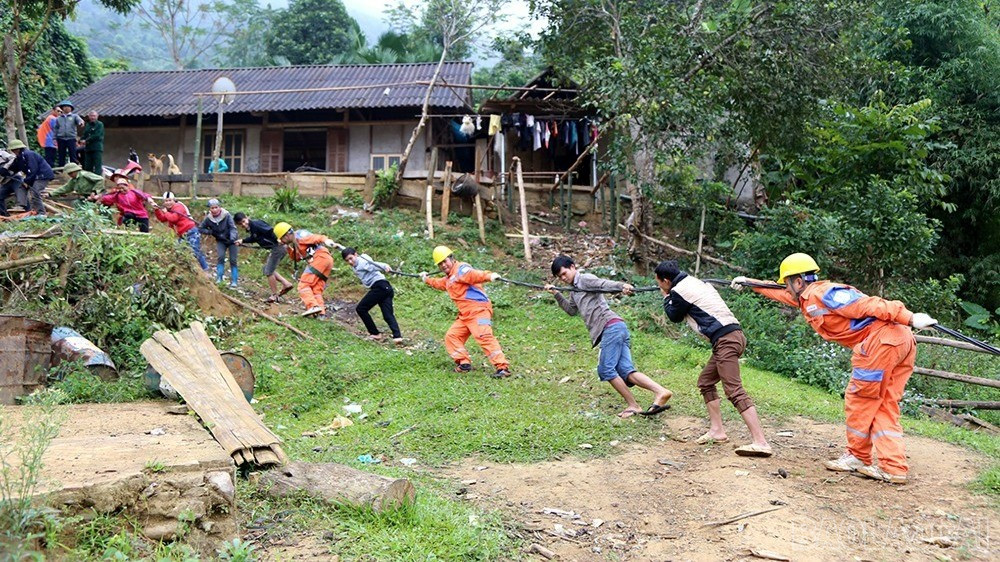
The power supply project in An Luong commune (formerly) has reached approximately 80% completion, including excavation and foundation casting, pole erection, and grounding. Some sections are delayed due to landslides caused by heavy rains on the road leading to the Pa Che substation, and construction remains stalled. At the 35kV Khe Canh substation, road construction has required design adjustments at four locations at the beginning of the line, but these adjustments have not yet been approved, preventing the necessary land clearance for further implementation.
Mr. Do Cao Quyen, Chairman of the People's Committee of Mo Vang commune, added: "The people of Mo Vang commune have requested the province to allocate funds for compensation and land clearance as soon as possible. The commune has submitted a full report and hopes that all levels and sectors will soon approve the funds to pay the people according to regulations, creating conditions for the project to be completed on schedule. We will closely coordinate with the Department of Industry and Trade, the consulting unit, and the contractor to expedite the remaining stages. The goal is to complete the entire system and energize it as soon as possible, immediately after the competent authority approves the compensation funds and hands over the construction site."
Mo Vang commune is making steady progress on its journey to "light up" the entire area. With the determination of the Party committee, the government, and the unity of the people, the time when 100% of the villages in Mo Vang commune have access to the national power grid is not far off.
Source: https://baolaocai.vn/mo-vang-no-luc-dua-dien-ve-ban-post888680.html
![[Photo] General Secretary and President To Lam visits and delivers a policy speech at Tsinghua University.](https://vphoto.vietnam.vn/thumb/1200x675/vietnam/resource/IMAGE/2026/04/14/1776164592318_vna-potal-tong-bi-thu-chu-tich-nuoc-tham-va-phat-bieu-chinh-sach-tai-dai-hoc-thanh-hoa-trung-quoc-8700658-5437-jpg.webp)
![[Photo] General Secretary and President To Lam and his wife begin their state visit to China.](https://vphoto.vietnam.vn/thumb/1200x675/vietnam/resource/IMAGE/2026/04/14/1776133794926_z7723148772587-ffefa3c4b1e54e100de1554593a862c6-jpg.webp)

![[Image] Expediting land clearance at Alley 310 Nghi Tam to facilitate the construction of Tu Lien Bridge](https://vphoto.vietnam.vn/thumb/1200x675/vietnam/resource/IMAGE/2026/04/14/1776160406551_ndo_br_z7724148990408-9e5d4777e3c4504998b4286178b2e66e-jpg.webp)














![[Photo] General Secretary and President To Lam receives Slovak Prime Minister Robert Fico](https://vphoto.vietnam.vn/thumb/1200x675/vietnam/resource/IMAGE/2026/04/13/1776080592076_a1-bnd-8227-6002-jpg.webp)









































Comment (0)