

| EVFTA: Opening the way for Vietnam-Sweden trade. FTAP portal - a "handbook" of information about the Swedish market. |
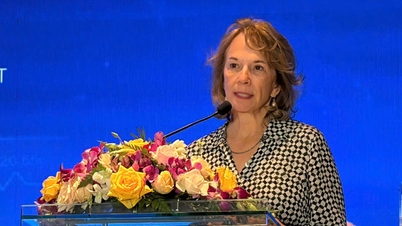
Ms. Nguyen Thi Hoang Thuy, Commercial Counselor of the Vietnamese Trade Office in Sweden, also responsible for the Nordic market, cited statistics from the Swedish International Trade Centre showing that import growth from Vietnam in the period 2018-2022 averaged 9% per year, which is quite impressive.
 |
| Ms. Nguyen Thi Hoang Thuy - Commercial Counselor, Vietnam Trade Office in Sweden, concurrently responsible for the Nordic market. Photo: VNA. |
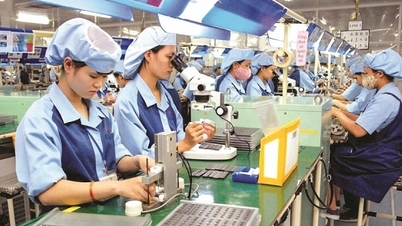
In 2022 alone, according to data from the General Department of Vietnam Customs, the value of Vietnamese exports to Sweden reached US$1.264 billion, an increase of 5.4%, and imports reached US$353 million, an increase of 9.9%. The total trade turnover reached US$1.617 billion, an increase of 6.3% compared to 2021. Currently, Vietnam's main exports to Sweden include various types of telephones, computers, electronic products and components, textiles, footwear, iron and steel products, and spare parts. Vietnam's main imports from Sweden are telecommunications equipment, various types of machinery and equipment, and pharmaceuticals.
Ms. Nguyen Thi Hoang Thuy said that the Vietnam Trade Office in Sweden is planning to organize a series of events on the sidelines of the high-level visits that the two countries ' prime ministers have previously agreed upon, such as the Vietnam - Sweden Business Forum, meetings with potential investors, organizing a Vietnamese Goods Week in Sweden, as well as organizing Swedish business delegations to Vietnam to attend major fairs such as the Sourcing Fair in June 2024 and the International Food Fair (FoodExpo), to further promote bilateral trade relations between Vietnam and Sweden.
According to Ms. Hoang Thuy, 2023 was a challenging year for the global economy due to the lingering impact of several major upheavals, such as the Russia-Ukraine conflict, China's zero-COVID policy, and the policy responses of various countries to combat inflation. Weak aggregate demand and rising costs led to a contraction in production, business, investment, and trade.
With such an overall economic picture, consumers are increasingly pessimistic, limiting unnecessary shopping and spending, leading to reduced consumer demand and reduced imports. Vietnam's exports recorded a sharp decline in many key commodities. Exports to Sweden also decreased sharply in 2023. However, according to Trade Counselor Nguyen Thi Hoang Thuy, compared to other Asian countries, Vietnam still ranks second in exports to Sweden, just behind China.
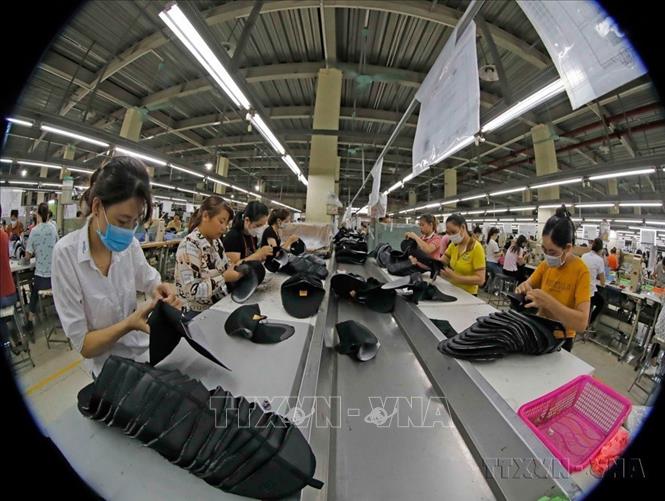 |
| Vietnam's main exports to Sweden are footwear, textiles, seafood, wooden products, handicrafts, computers... Photo: Tran Viet/VNA |
With the Vietnam - European Union Free Trade Agreement (EVFTA) signed on June 30, 2019 and taking effect from August 1, 2020, the trade opportunities opening up for Vietnamese and EU businesses, including Sweden, are huge.
However, Trade Counselor Hoang Thuy said it is difficult to evaluate the effectiveness of the EVFTA after more than 3 years of implementation when the agreement was put into effect during a period of global economic instability due to the COVID-19 pandemic, followed by the Russia-Ukraine conflict that disrupted the supply and demand chain, energy and food crises, high inflation, and people cutting spending.
Nevertheless, it must be affirmed that the EVFTA will certainly help mitigate the negative impacts on the economy and will gradually become effective. The most obvious effect is that tax incentives give many Vietnamese goods a competitive advantage over their rivals in the market.
For example, rice, which was previously almost absent in Sweden, with a turnover of only a few tens of thousands to more than 100,000 USD due to its inability to compete with rice from Cambodia and Thailand, has now increased to more than 3 million USD and is gradually increasing its market share in this region. Similarly, some agricultural and aquatic products with a 0% tax in the first year also show a clear competitive advantage.
For certain processed and manufactured goods, the EVFTA not only brings tax benefits but also makes Swedish businesses more enthusiastic about the Vietnamese market, especially in the context of these businesses having a great need to find new markets to relocate their investments and business. Many Nordic business delegations have visited Vietnam for surveys, such as Autoliv Group, which specializes in producing safety products for automobiles, with 72 factories in many countries around the world and sales revenue of 8.2 billion USD/year.
However, the Swedish market also faces many challenges because of its small population, just over 10 million people, small market, and high demand for domestic consumer goods, so businesses in this country mainly import from distributors in the EU center. The small market, large geographical distance while there are no direct flights from Vietnam, as well as no cooperation on seaports and airports, also make it difficult to bring Vietnamese goods directly to the Swedish market.
Furthermore, Vietnamese goods exported to the EU market in general, and Sweden in particular, must first comply with rules of origin from the raw material production stage in order to benefit from preferential tariffs. Meanwhile, most of Vietnam's key export items do not have a reliable source of raw materials, which will be a difficulty and a challenge for Vietnamese businesses.
Besides certificates of origin, Vietnamese businesses must also comply with other strict regulations, such as environmental issues and technical standards. Overcoming these difficulties will give Vietnamese goods a firm foothold in the Swedish market in particular and the EU market in general.
In addition, Ms. Nguyen Thi Hoang Thuy emphasized that businesses need to pay attention to the new consumer trends in Sweden to adjust their production. Swedish consumers are very concerned about environmental issues, so they pay attention to products produced through processes that ensure environmental protection standards and sustainable products. Regarding food, consumers are increasingly inclined to consume organic food. It is projected that by 2030, the consumption of organic food in Sweden will triple from the current level.
For everyday consumer goods, customers tend to choose simple, convenient, reusable products made from recycled materials. In general, consuming green and clean products is the dominant trend. Consumers are increasingly paying attention to labels and certifications printed on products, rather than the product itself, and they are willing to pay 20-50% more for products with environmental protection or social responsibility/sustainable development certifications.
Source link




























![[Video] The craft of making Dong Ho folk paintings has been inscribed by UNESCO on the List of Crafts in Need of Urgent Safeguarding.](https://vphoto.vietnam.vn/thumb/402x226/vietnam/resource/IMAGE/2025/12/10/1765350246533_tranh-dong-ho-734-jpg.webp)






















































Comment (0)