

These funds typically pursue a variety of objectives, including: fiscal stability, reducing budget volatility due to changes in oil, gas or other commodity prices; savings for future generations; supporting the country’s economic development through restructuring and development of state-owned enterprises; and increasing international influence. Through strategic investments, sovereign wealth funds can create economic and political relationships with global partners.
To help countries overcome economic crises, Government Investment Funds play an important role in stabilizing markets, supporting troubled financial institutions and stimulating the economy.
These funds used tools such as buying bad assets, pumping money into the system and guaranteeing loans to prevent the collapse of the financial system and minimize the negative impact of the crisis.
During the recent Covid-19 crisis, countries with government investment funds have used a total of hundreds of billions of USD to support the economy and support struggling businesses such as airlines, banks, tourism , etc.
In many countries, the Government Investment Fund is established on the basis of an independent law, such as the Korean Investment Company Law, the Law on the Establishment of the Turkish Government Investment Fund, the Law “On the Government Investment Fund” of Kazakhstan, the Law on the Establishment of the Public Investment Authority of Kuwait...
In particular, the case of Singapore's "Government companies" (Temasek and GIC) is specifically named in the Constitution, has a mechanism for protecting assets, appointment regime and periodic reporting. This affirms the position and importance of these two organizations in ensuring the Government's reserve fund, meeting the needs of the economy in necessary cases.
In line with the operation of the international economy
In the Southeast Asia region, Government investment funds are established mainly by receiving ownership rights from state-owned enterprises of countries and the State continues to increase capital during operations like Temasek such as investment funds Khazanah of Malaysia, Vaupak Fund of Thailand, INA and Danantara of Indonesia, in which the total assets to date of Temasek of Singapore are more than 300 billion USD (accounting for more than 60% of GDP), Khazanah of Malaysia is 33 billion USD (8.5% of GDP) or most recently Danatara (Indonesia) established in early 2025 was announced to have a capital of 900 billion USD (twice the GDP of Indonesia).
In particular, Temasek - a standard, reputable and effective government investment fund , holds control of 35 government enterprises with diverse industries, from enterprises in most of the key industries and sectors of the Singapore economy including: infrastructure, transportation, energy, seaports, real estate, telecommunications, technology to zoos, hotels, leather shoe production, soap... with a portfolio value of 354 million S$ equivalent to 8.5% of Singapore's GDP. Temasek is responsible for restructuring, equitization, divestment of capital in enterprises, focusing on management and bringing good assets to the stock exchange.
By March 2025, Temasek's net portfolio value had grown to S$434 billion (over $290 billion), equivalent to about more than 60% of Singapore's GDP.
The Singapore government, through the Ministry of Finance (MOF), continued to fund Temasek after its establishment. Over the 20-year period from 2003 to 2023, the Ministry of Finance invested approximately S$70 billion in Temasek. Of this, S$50 billion came from Temasek's own dividends to the government.
Following the process of corporatization/equitization of previous member organizations and enterprises, after more than 50 years of operation, Temasek continues to play the role of both a financial investor and a strategic partner, supporting State-owned enterprises in restructuring, developing and optimizing value.
Through these activities, Temasek contributes to improving operational efficiency and enhancing value for its shareholders. In the context of Vietnam's economy, through comparative research between SWF models, it can be seen that Vietnam should choose Singapore's Temasek model to aim for the development of the State Capital Investment Corporation (SCIC) in the coming time.
Ensure separation of capital management
Temasek and SCIC have similar roles and missions, both were established from the need to separate state management from business management and operations of enterprises and with a common mission in the initial stage of restructuring, equitizing state enterprises, divesting state capital to increase the participation of the private sector and supporting the development of financial and securities markets and in the long term, managing, preserving and developing state capital through investment and capital trading activities according to market principles.
The main assets of Temasek and SCIC at the time of establishment were from receiving the right to represent the owner in state-owned enterprises (not from resources or foreign exchange reserves).
According to Temasek's experience, increasing the transfer of enterprises to SCIC will help reduce the number of state-owned enterprises, promote the restructuring process, and innovate state-owned enterprises more effectively; professionalize the management and investment of state capital; increase flexibility and initiative in restructuring, divestment and reinvestment, focus resources on investing in the development of large-scale enterprises and highly efficient enterprises; accumulate and create large enough resources and create scale advantages for SCIC to implement strategic and key investment plans.
In addition, the Temasek model is a successful example in helping the Government to transform from an administrative owner to a strategic investor in enterprises through an organization that is an enterprise, not an administrative agency. This is the core goal of a standard market economy – said SCIC Chairman Nguyen Chi Thanh.
In the gloomy global economic picture, the State Capital Investment Corporation (SCIC) continues to demonstrate its role as a "state capital fulcrum" with outstanding performance, making positive contributions to the Vietnamese budget and capital market.
The business results for the first 10 months of 2025 demonstrate the stability of the investment model, risk management capacity and flexible adaptability to fluctuations. By the end of October 2025, SCIC achieved total revenue of VND 11,794 billion and after-tax profit of VND 11,367 billion, completing 98% and 123% of the annual plan, respectively.
By the end of 2025, total revenue is expected to reach VND 12,079 billion, up 17% compared to 2024; after-tax profit will reach VND 11,182 billion, up 15% compared to 2024, achieving the double-digit growth target assigned by the Government, the Prime Minister and the owner's representative agency.
This result helps SCIC basically complete the targets in the 5-year Plan 2021-2025 assigned by the Prime Minister according to SCIC's Development Strategy, in which the target of paying to the State budget is estimated at over VND 40,000 billion, equal to 150% of the plan; ROA (net profit ratio on assets) and ROE (net profit ratio on equity) average over 13%/year. Since its establishment, SCIC has paid to the State budget over VND 100,000 billion, affirming its position as one of the "locomotives" of the State enterprise system.
To optimize enterprise value, since its establishment up to now, SCIC has successfully sold capital in 1,065 enterprises with a capital cost of VND 13,138 billion and earned VND 54,669 billion, an average of 4.2 times the capital cost.
Of the nearly 6,000 state-owned enterprises that have been restructured and divested recently, SCIC alone has implemented it in 1,000 enterprises, making an important contribution to the restructuring of the state-owned enterprise sector, bringing in significant revenue for the budget while promoting the development of the private economic sector, the financial and securities market and the economy in general. SCIC's successful experience, especially in determining starting prices, organizing public auctions of entire lots, and handling existing business problems, has been widely studied and applied to other state-owned enterprises, corporations and general companies.
Affirming the role of national investors
Following the Government's orientation on improving the efficiency of State capital use, SCIC has proactively promoted investment activities in 2025, with the total disbursement value by the end of October reaching VND 10,874 billion, focusing on key areas with high spillover effects on the economy.
In the final months of the year, SCIC plans to continue disbursing capital to key infrastructure projects, including PPP transport projects, investments in BOT enterprises and investments in bonds and potential bank stocks. Thus, in the 5-year period of 2021-2025, SCIC's total investment value will reach about VND 19,000 billion, an average of nearly VND 4,000 billion per year, focusing on industries and fields with the potential to spread and create high added value for the economy, thereby affirming the Government's role as a key investor in economic development.
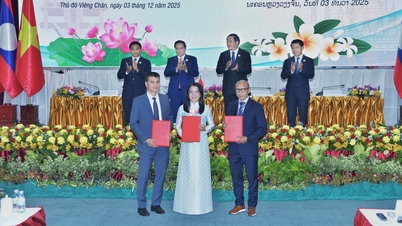
In addition to domestic investment activities, in 2025, SCIC signed many international cooperation agreements focusing on digital infrastructure, technology, minerals, finance, equitization and agriculture, aiming at projects capable of mobilizing private capital, promoting sustainable development and spreading value to the Vietnamese economy. These strategic cooperation models have helped SCIC diversify resources, mobilize international capital, access a global partner network and apply modern fund management standards, thereby consolidating its position as a professional national investor, gradually approaching the model of leading regional Government Investment Funds such as Temasek (Singapore).
Up to now, the scale of state capital in the enterprises that SCIC has received is still very limited, with the total state capital only equal to about 2% of the total state capital in the enterprises and the value of new assets equal to about 1.5% of GDP.
While SCIC's enterprise portfolio is increasingly narrowing and the plan to transfer new enterprises with state capital invested in SCIC is not specific, limiting SCIC's role in restructuring and improving the operational efficiency of the state enterprise sector in the coming time, in order to move towards the Temasek model for SCIC's development in the coming time, it is necessary to clearly define state enterprises and thoroughly transfer all enterprises in the group operating on a commercial basis to SCIC.
To effectively carry out this transfer, there should be specific regulations on the time limit for transferring the right to represent state capital ownership to SCIC, especially for large, effectively operating enterprises.
The current charter capital granted to SCIC is still very modest compared to the need for investment expansion and SCIC's Development Strategy. Therefore, in addition to receiving enterprises, it is necessary to allow SCIC to retain the maximum profit after tax to set up a Development Investment Fund, supplement SCIC's charter capital to invest in business expansion towards successfully transforming into a professional investment fund model of the Government.
Source: Nhan Dan Newspaper
Source: https://htv.com.vn/huong-toi-muc-tieu-thanh-lap-quy-dau-tu-chinh-phu-222251203134332162.htm















![[Photo] Worshiping the Tuyet Son statue - a nearly 400-year-old treasure at Keo Pagoda](/_next/image?url=https%3A%2F%2Fvphoto.vietnam.vn%2Fthumb%2F1200x675%2Fvietnam%2Fresource%2FIMAGE%2F2025%2F12%2F02%2F1764679323086_ndo_br_tempimageomw0hi-4884-jpg.webp&w=3840&q=75)
![[Photo] Parade to celebrate the 50th anniversary of Laos' National Day](/_next/image?url=https%3A%2F%2Fvphoto.vietnam.vn%2Fthumb%2F1200x675%2Fvietnam%2Fresource%2FIMAGE%2F2025%2F12%2F02%2F1764691918289_ndo_br_0-jpg.webp&w=3840&q=75)












































![[Infographic] 3 timelines of the "Quang Trung Campaign"](https://vphoto.vietnam.vn/thumb/402x226/vietnam/resource/IMAGE/2025/12/04/1764800248456_fb_ava-2.jpeg)













Comment (0)