

However, experts believe these changes have yet to address the core issues of workforce quality and governance, raising questions about their long-term sustainability.
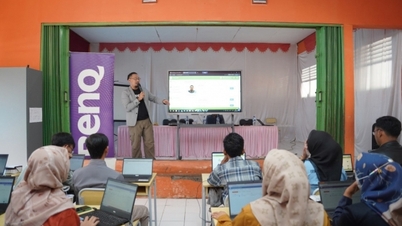
In a recent press conference, Minister for Primary and Secondary Education Abdul Mu'ti highlighted the progress in promoting technology application in schools as a positive development. One of the key programs is the distribution of interactive smart screens (IFPs) to enhance visual learning and collaboration between teachers and students.
With over 45,000 devices already distributed and another 120,000 in production, the Ministry aims to equip nearly 289,000 schools nationwide. Mr. Mu'ti affirmed that IFPs are not simply projection screens, but advanced learning tools that complement teacher training programs and a digital resource library.
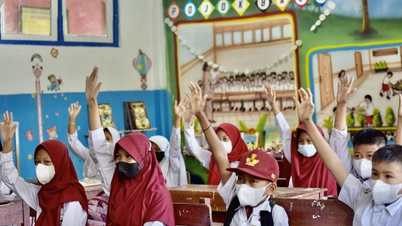
Alongside digitalization, large-scale programs for renovating and rebuilding school facilities are being implemented. Indonesia still faces serious deterioration in many educational institutions, particularly in rural areas and regions outside of Java.
With the goal of repairing 300,000 classrooms in 100,000 schools, the renovation effort exceeded expectations in its first year, with over 16,000 schools repaired this year using a budget of 16.9 trillion rupiah.
It is noteworthy that in some areas such as Yogyakarta and North Sulawesi, central government funding acts as a catalyst, attracting community support for the construction or upgrading of classrooms.
While infrastructure and technology are two important pillars, improving teacher welfare is considered a key factor in enhancing the sustainable quality of education. Indonesia has long faced income disparities, particularly between public school teachers and contract teachers without permanent positions. Minister Mu'ti stated that certification programs and competency allowances have been expanded, helping thousands of teachers improve their professional skills and income.
Certified teachers who are not civil servants will receive an additional allowance of up to 2 million rupiah per month, while civil servants will receive an allowance equivalent to their basic salary. In addition, over 300,000 contract teachers will receive a monthly allowance of 300,000 to 400,000 rupiah next year.
However, these programs remain controversial. Education observers argue that current reform measures focus primarily on technical aspects and infrastructure, while the core issues lie in the quality of human resources and the governance system.
Iman Zanatul Haeri, representing the Teacher-to-Teacher Association (P2G), expressed concerns about the sustainability of the welfare program and warned of the risk of budget losses in construction projects if there is a lack of transparent oversight. Mr. Iman stated: “The fundamental solution lies in establishing a national minimum wage for teachers. What teachers need is not just short-term subsidies, but a stable income that ensures a decent standard of living.”
Overall, the first year of education reform in Indonesia has yielded clear progress, particularly in school modernization and teacher welfare improvement. However, to achieve the goal of comprehensive and equitable improvement in educational quality, these measures need to be accompanied by reforms to the governance system, investment in pedagogical capacity, and strategies to narrow regional inequalities. The road to reform remains long, and the first year has only laid the groundwork.
Education analyst Ina Liem stated: “Indonesia’s education system is plagued by planning that lacks a basis in local realities, deep regional disparities, and ineffective budget oversight mechanisms. Technological advancements are only effective when accompanied by digital skills training and the development of a digital learning culture that fosters critical thinking and information ethics.”
Source: https://giaoducthoidai.vn/indonesia-day-manh-so-hoa-giao-duc-post754888.html


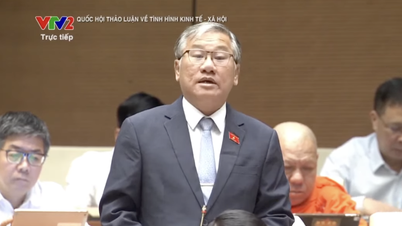
![[Image] National Assembly discusses the implementation of the socio-economic development plan.](https://vphoto.vietnam.vn/thumb/1200x675/vietnam/resource/IMAGE/2026/04/20/1776696707422_ndo_br_img-20260420-185419-jpg.webp)

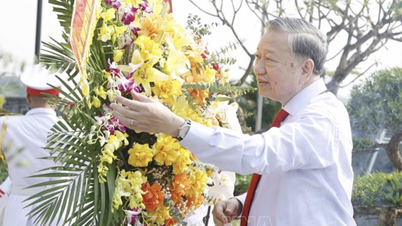
![[Photo] General Secretary and President To Lam meets with National Assembly delegates from ethnic minorities.](https://vphoto.vietnam.vn/thumb/1200x675/vietnam/resource/IMAGE/2026/04/20/1776696701056_a1-bnd-8331-3342-jpg.webp)


























































Comment (0)