

In the context of increasingly strong demands for innovation to meet today's audience tastes, the theater urgently needs to focus on training and utilizing young talents, and implement decisive actions to unlock and create momentum for a new era.
Many positions are lacking in qualified replacements.
On December 10th, in Hanoi , the Hanoi Theatre Association organized a seminar on the theme "Young Talents in the Development of Contemporary Theatre" to clarify the current "crisis" of a shortage of young artists, and to suggest practical solutions to promote the training and utilization of young theatrical talents in the new era.
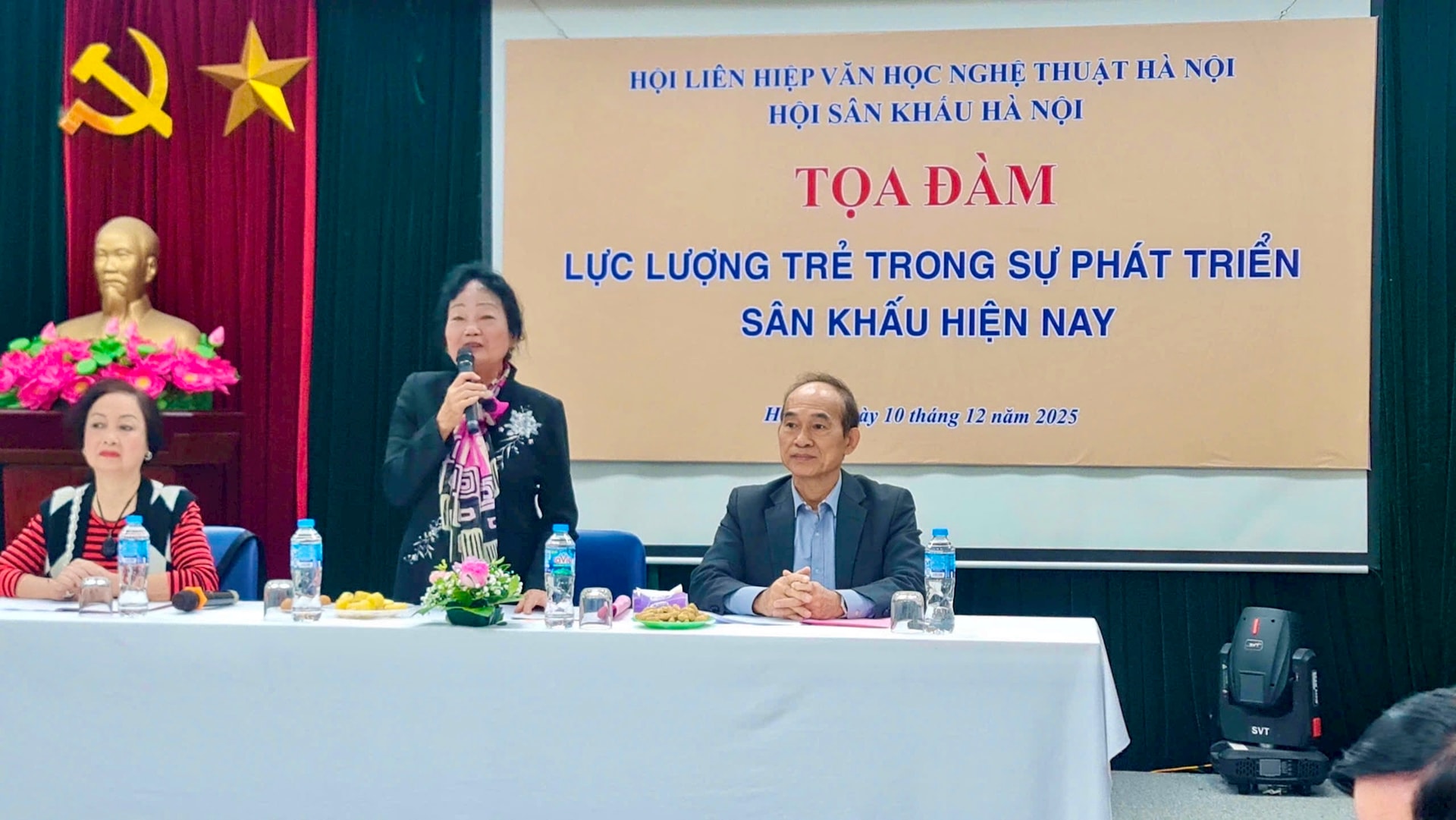
In his opening remarks at the seminar, People's Artist Bui Thanh Tram frankly pointed out the worrying reality that traditional performing arts are facing a crisis of a shortage of young artists, especially talented individuals capable of inheriting and developing the precious artistic heritage of their ancestors. Statistics from the Department of Performing Arts (Ministry of Culture, Sports and Tourism) in 2024 show that actors aged 20-25 only account for 5.6% of the total performing force nationwide. This extremely low percentage forces many plays to have older artists impersonate younger characters – a paradox that has occurred for many years.
The shortage of qualified candidates is exacerbated by the fact that the Hanoi University of Theatre and Film has not enrolled students in traditional arts such as Tuong, Cheo, and Cai Luong for many years. Art troupes still desperately need personnel, but the recruitment mechanism lacks flexibility, staffing quotas are increasingly tightened, and the raised retirement age means many artists who have passed their prime remain on the payroll, inadvertently taking positions that should be available to younger generations.
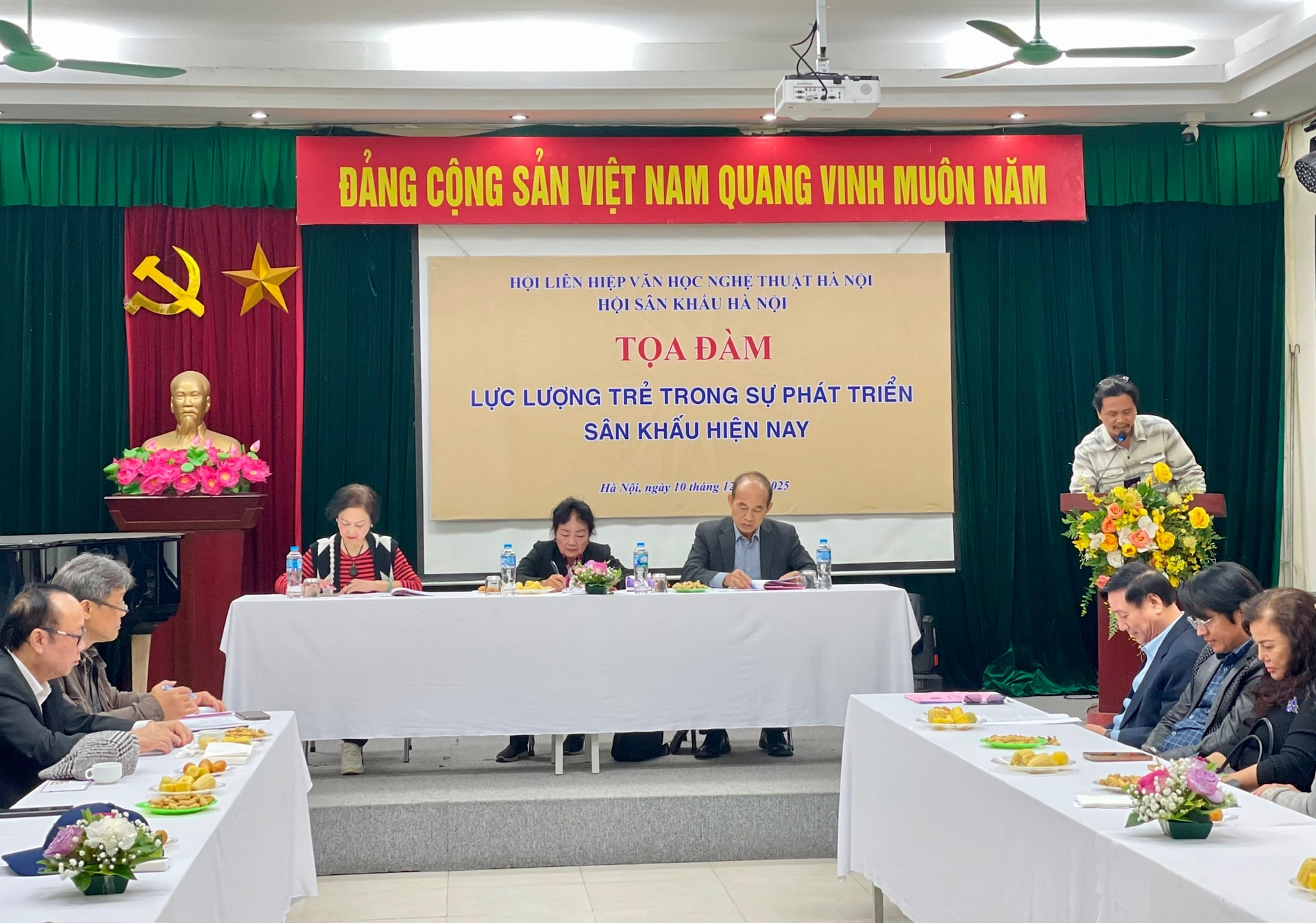
The human resource gap is also evident in the uneven development of creative departments. Actors account for up to 90% of the workforce, while crucial components such as writers, directors, artists, musicians, choreographers, sound and lighting technicians, or research and critical teams are extremely scarce. Many theaters only have minimal actors and technical staff, lacking the personnel to produce scripts, design art, or conduct in-depth research for each genre. This puts traditional folk opera at risk of lacking writers.
At recent professional festivals and competitions, almost no young directors have made a significant impact. Those considered "young" are mostly nearing 50, and many have transitioned from acting to directing.
“The profession of directing is particularly difficult. To take the helm of a play, they need extensive life experience, the ability to synthesize and connect the entire creative process – something that fresh graduates find very hard to achieve. Meanwhile, the pressures of making a living mean fewer opportunities to practice. Each theater only invests in a few plays a year, so no one dares to ‘risk’ entrusting a play to an inexperienced director because it’s easy to end up with a failed project. This vicious cycle leaves young directors without an environment to hone their skills, leading to their gradual decline,” shared People’s Artist Bui Thanh Tram.
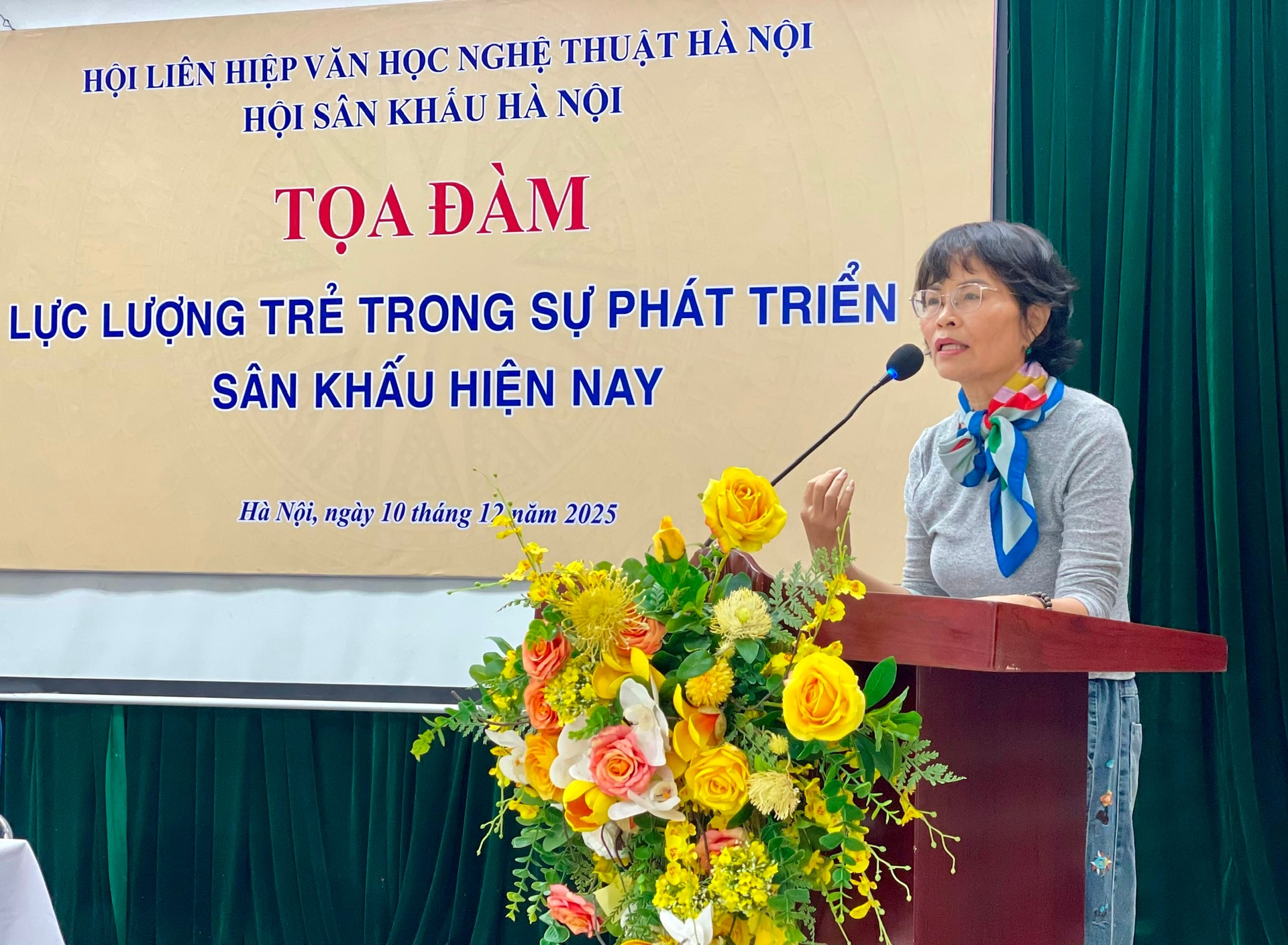
The team of theorists and critics is also in a "low point." Dr. Cao Ngoc, a theater researcher, said that this force has seriously declined, with almost no successors. The Hanoi University of Theatre and Film has not been able to enroll any theory students for decades.
Author Nguyen Toan Thang likens this shortage to a "desert of the next generation of theorists." Besides systemic issues, the new entertainment environment also strongly attracts young people away from professions that require depth, perseverance, and dedication…
There is movement, but it needs to be more decisive.
The emergence of young creative forces not only brings a breath of fresh air to art, catering to public taste, but also carries the responsibility of preserving and developing art. According to Meritorious Artist Pham Ngoc Duong, in the context of integration and digital transformation, young creative forces play a crucial role in promoting art. Many young authors are not afraid to confront challenges, directly addressing issues that need to be addressed, and have produced many highly contemporary works of art.
"Their works vividly portray the rhythm, the breath, and the people of today, bringing art closer to all audiences, especially young audiences," commented Meritorious Artist Pham Ngoc Duong.
Director and Meritorious Artist Nghiem Nhan believes that young theater artists possess three outstanding advantages. Firstly, a spirit of creativity and a willingness to experiment. They dare to "boldly break old molds," quickly absorbing modern theatrical languages such as dramaturgy, non-linear drama, visual theater, surreal theater, and absurdist theater. Secondly, they "master technology," skillfully using multimedia, mapping, 3D stage, and XR/VR – elements that open up new expressive spaces and enhance visual impact. Thirdly, they are sensitive to social issues, from individual identity to generational conflict, making their works a forum for dialogue with the audience and their own generation, thus improving the performances.
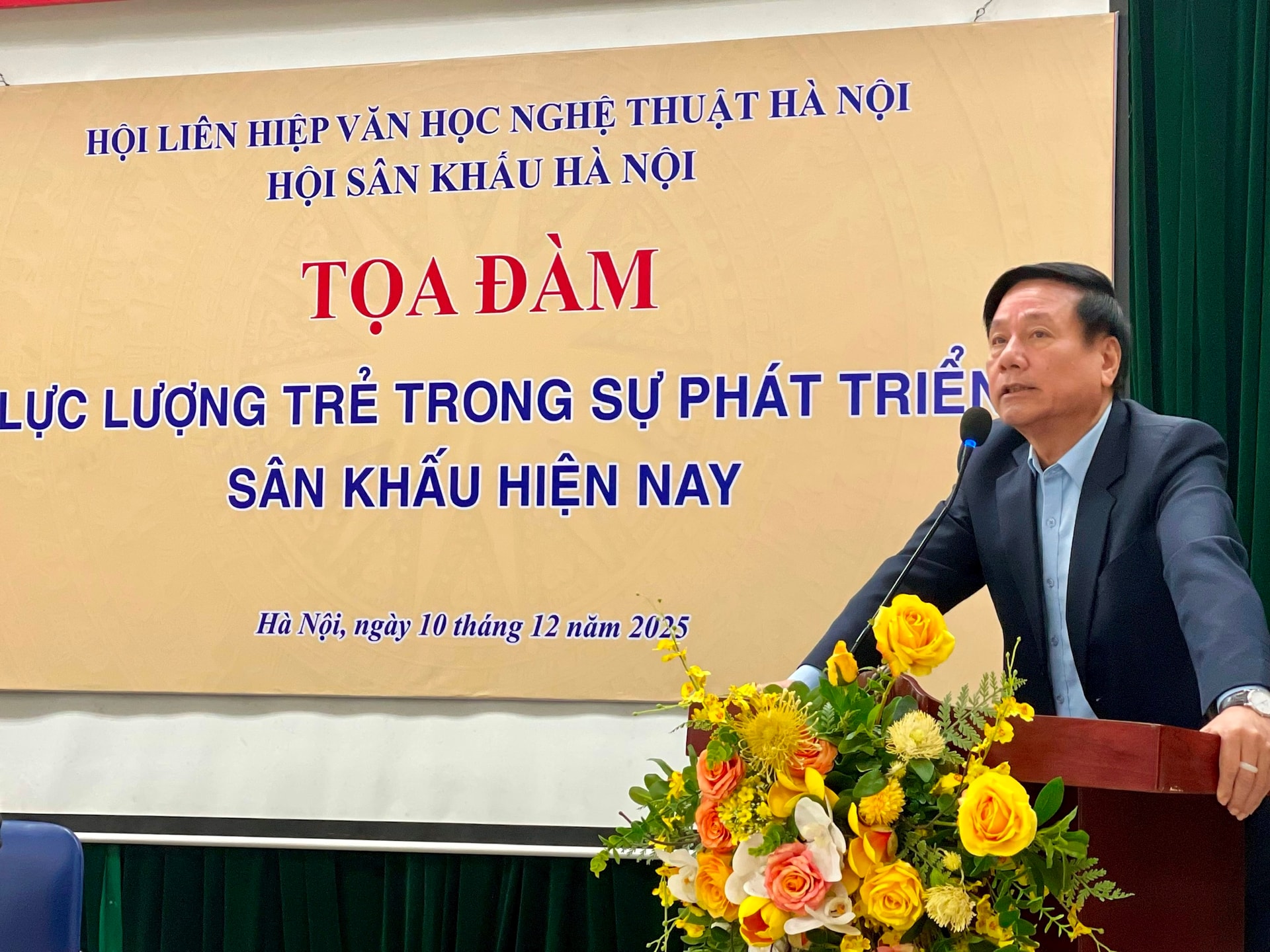
Recognizing this issue, in recent years, the leadership of the Hanoi Cheo Theatre has adopted a policy of "ceding" the stage to the younger generation, especially the actors. People's Artist Thu Huyen, Director of the Hanoi Cheo Theatre, expressed: "The theatre's spirit is to always create opportunities for young artists to express themselves, both to satisfy their passion and to learn from previous generations. Therefore, we assign seasoned artists to perform alongside young talents, creating an exchange and continuity between generations. The young artists are very enthusiastic and they progress very quickly."
The Hanoi Drama Theatre also gives opportunities to young actors in leading roles in many plays, and favors selecting and using scripts by young authors with many new ideas that are relevant to today's times...
However, to enter a new era and meet the demands of today's audience with multimedia theatrical works, the application of modern technology, and new forms of expression, the theater industry needs to be even more decisive in utilizing young talent.
Director Nghiem Nhan suggested that theaters should allocate 20-30% of their annual production slots to young talents, and organize in-depth mentoring programs connecting young artists with older artists to learn the craft systematically; at the same time, establish a "fund for the development of young theater artists," invest in technology, and create experimental spaces.
Having worked in the theater field for many years, People's Artist Tran Quoc Chiem, Chairman of the Hanoi Union of Literature and Arts Associations, agrees that theater in the new era must develop in a modern direction. Even traditional art forms must be presented in a fresh style, applying technology and artificial intelligence to reach today's audience, especially young people. Therefore, the Vietnam Association of Theater Artists, the Hanoi Theater Association, and the Hanoi Union of Literature and Arts Associations always want to be a bridge, seeking, discovering, and promoting young talents in the field of theater, and introducing them to art organizations.
Source: https://hanoimoi.vn/khoang-trong-luc-luong-tre-tren-san-khau-bao-dong-do-ve-su-ke-can-726340.html



![[Photo] General Secretary and President To Lam presides over a meeting on preparations for the review of one year of operation of the three-tiered government system.](https://vphoto.vietnam.vn/thumb/1200x675/vietnam/resource/IMAGE/2026/06/02/1780391821195_a1-bnd-4595-9717-jpg.webp)














![[Image] Affirming the aspirations and new standards of the Vietnamese real estate market in the new era.](https://vphoto.vietnam.vn/thumb/1200x675/vietnam/resource/IMAGE/2026/06/03/1780441948766_giai-thuong-bat-dong-san-2026-minh-duy-6-7364-jpg.webp)













































Comment (0)