

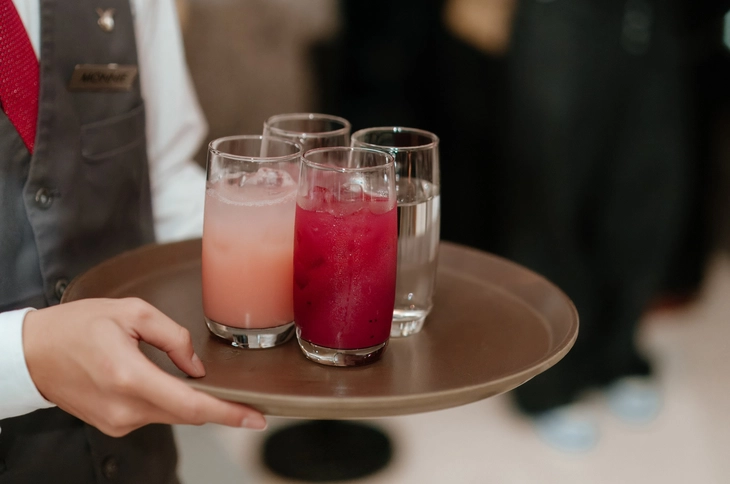
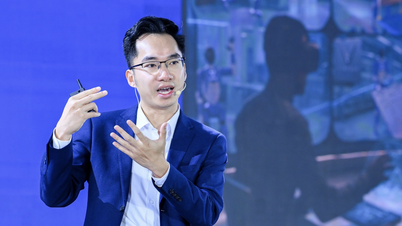
The mindset of a person being able to do many jobs and live many different professional lives is becoming more and more popular - Photo: MH
No longer choosing a career to live, but to live the way they want
I am teaching two online classes, one for translation and interpretation certification, and one for English teaching certification at two universities in Ho Chi Minh City.
Initially, I thought the students would be mostly English teachers. But the class turned out to be very diverse: there were dental technicians, pharmacists, Spanish tour guides, business people, book translators.
They come from unrelated professions, but meet in a common aspiration: the desire to change careers to pursue a new lifestyle and working model, more suitable to personal values and aspirations in a volatile era.
The story of the class reflects a larger movement taking place in Ho Chi Minh City and around the world : a career is no longer just "something to do to make a living", but increasingly becoming "a way of life that each person wants to choose".
My son, who is studying graphic design in New Zealand, has a compulsory subject called Freelancing. It is not a subject that teaches technical skills, but rather how to survive in the new job market: how to find a job, build a personal brand, negotiate contracts, work remotely and understand the rights of freelancers.
From the outside, this may seem like a minor subject. But it actually equips students with a whole new career mindset: the mindset of someone who can do many jobs, live many different professional lives, and be autonomous in designing their own future.
Those signals are consistent with global surveys. According to the World Economic Forum's Future of Jobs 2023 report, more than 23% of the global workforce, or more than 1 billion people, will have to change occupations by 2030 due to the impact of automation, AI and economic upheaval.
In the US, the average worker has 12 jobs in their lifetime; between 2018 and 2023 alone, 40-50% changed jobs, and about a quarter moved to a completely new field. This suggests that workers are constantly moving between multiple careers, not because of insecurity, but because they want to live in a way that better suits their lifestyle.
This trend is particularly evident in Ho Chi Minh City, the youngest, most dynamic and experimental city in the country.
In the online classes I lead, many students share that they want a career that “fits the lifestyle they want,” not the “most stable” one. Some want to have time for their families; some want to work creatively instead of being tied to office hours; some are willing to leave a stable job just to pursue a field they truly love. It is worth noting that many of them come from Ho Chi Minh City, where the spirit of freedom to experiment with careers and the desire to live differently is especially strong.
SkillsFuture Model
However, the need for adults to retrain and change careers is increasing faster than the education system can meet it. Most current training programs in Vietnam are still designed for young people to study full-time, and are less suitable for working people.
The program is long, the tuition is high, the schedule is fixed, the content is heavy on theory while career changers need short, flexible courses, which can be studied in the evening or on weekends, and focus on practical skills. This opens up great opportunities for educational institutions in Ho Chi Minh City if they know how to adjust the program design to accompany the new generation of learners.
Some countries have gone ahead. Singapore, with its SkillsFuture model, offers thousands of modular courses and covers up to 90% of tuition fees for people over 40, making it easier for them to change careers and integrate into new industries.
Germany has a dual education model, combining theory at school with practice at businesses, allowing students to study and earn income, reducing risks for career changers.
In Australia, Recognition of Prior Learning (RPL), which recognizes skills and experience, helps workers reduce the time and cost of retraining. Thanks to RPL, I was exempted from many credits when applying to teach at a vocational school in the TAFE system without having to start over.
These models show that education can be a powerful motivator for career change if properly designed.
When workers change careers, they not only change their own futures but also help shape new economic segments. Lifestyle-based career choices create new consumer demand, new services, new creative spaces and contribute to shaping the urban identity of Ho Chi Minh City, a city that is aiming to become a creative and livable city by 2030.
It can be said that those who are re-studying, changing careers, working freelance or multi-job are the pioneering force creating the city's "lifestyle economy".
In the context of a constantly changing global economy, changing careers is no longer an inevitable turning point, but rather the adaptability of workers and the development opportunity of an entire city.
If the education system were more flexible, if skills were more fairly recognized, and if Ho Chi Minh City invested in the right direction in creative industries, experiential services, and a freelancer support ecosystem, career changes would not only help individuals move forward but also create new growth engines for the city.
A livable city is a place where people not only come to find work, but also where each person can find their own lifestyle.
The generation chooses a career to live "true to oneself"
In recent years, Ho Chi Minh City has witnessed the proliferation of lifestyle-oriented industries: creative design, photography and media, barista and artisanal cuisine, wellness, experiential tourism, content creation, and countless short-term classes such as painting, pottery, personal marketing or video making.
Co-working spaces, small studios, freelance support services and flexible working models are also thriving. Behind these seemingly "random" professions lies a major shift: young people are deciding on careers based on how they want to live, experience and express themselves.
Source: https://tuoitre.vn/kinh-te-lifestyle-thuc-day-nguoi-tre-chon-nghe-phu-hop-cach-song-20251204140313334.htm


![[Photo] Cat Ba - Green island paradise](/_next/image?url=https%3A%2F%2Fvphoto.vietnam.vn%2Fthumb%2F1200x675%2Fvietnam%2Fresource%2FIMAGE%2F2025%2F12%2F04%2F1764821844074_ndo_br_1-dcbthienduongxanh638-jpg.webp&w=3840&q=75)































![[VIMC 40 days of lightning speed] Da Nang Port: Unity - Lightning speed - Breakthrough to the finish line](https://vphoto.vietnam.vn/thumb/402x226/vietnam/resource/IMAGE/2025/12/04/1764833540882_cdn_4-12-25.jpeg)


































Comment (0)