

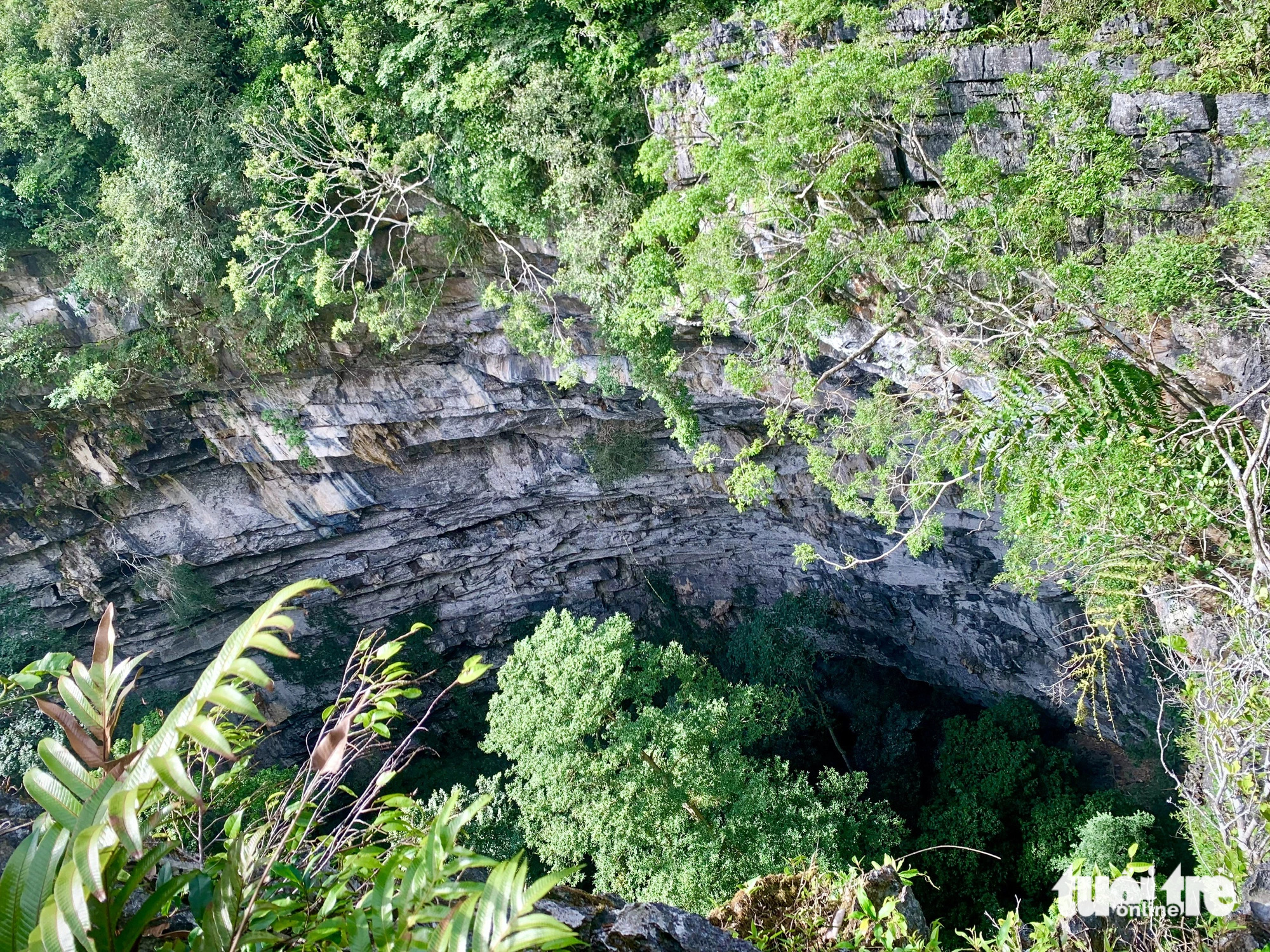
The top of the C-shaped sinkhole has a steep cliff, with many trees below - Photo: NGUYEN HOANG
The sinkhole was discovered through satellite images a long time ago, but this is the first time people have set foot on it, in Huong Son commune, Huong Hoa district, Quang Tri province, in the Bac Huong Hoa Nature Reserve.
First human footprints found in sinkhole
More than 2 years ago, the Quang Tri Discovery group (Dong Ha City) discovered this sinkhole through satellite images. Based on that, from the proposal of a reporter from Tuoi Tre Online newspaper, the Management Board of Bac Huong Hoa Nature Reserve coordinated with Huong Hoa forest rangers to organize an expedition to explore this sinkhole on June 29 and 30.
From the final point in Tria village (Huong Son commune), the expedition team spent 1.5 hours walking along the stream to reach the campsite.
From here, the group spent nearly 5 hours climbing uphill through the forest to reach the sinkhole.
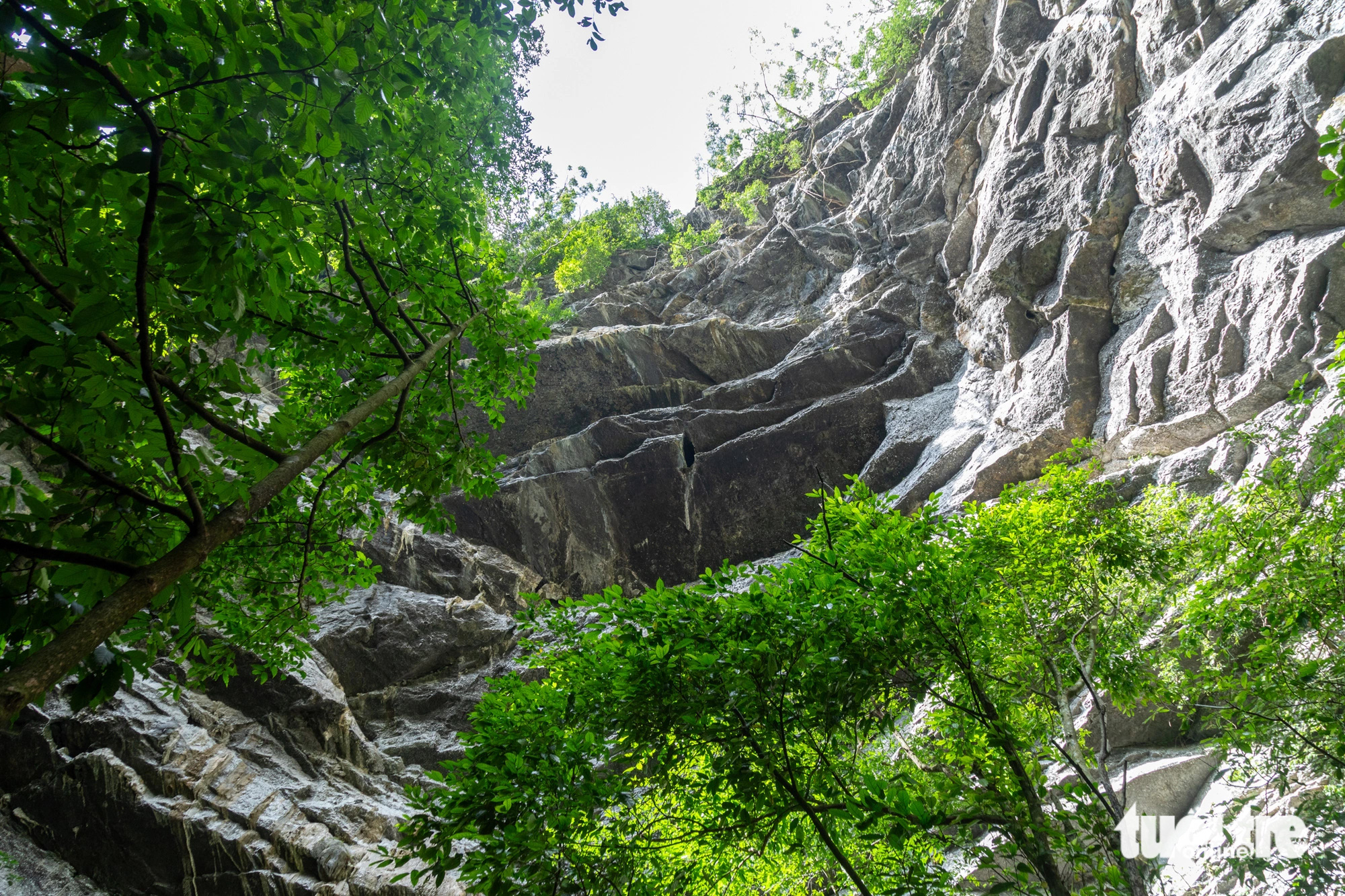
The steep cliff of the sinkhole seen from below - Photo: HOANG TAO
Mr. Nguyen Tan Hieu - Deputy Director of the Management Board of Bac Huong Hoa Nature Reserve - confirmed that this was the first expedition team to set foot on this sinkhole. "Previously, the reserve had never known about the existence of this sinkhole. Even the rangers and local people had never set foot here," said Mr. Hieu.
The sinkhole is located at an altitude of nearly 800m above sea level. The top of the sinkhole is C-shaped, a vertical cliff more than 100m high. The top of the cliff protrudes outwards, forming a frog's jaw below. On the cliff, there are many small green trees taking root and living.
Opposite this C is a collapsed, steep section. The expedition team followed this steep section to enter the sinkhole. On the way into the sinkhole, the team discovered many caves and holes but did not have the time or means to explore.
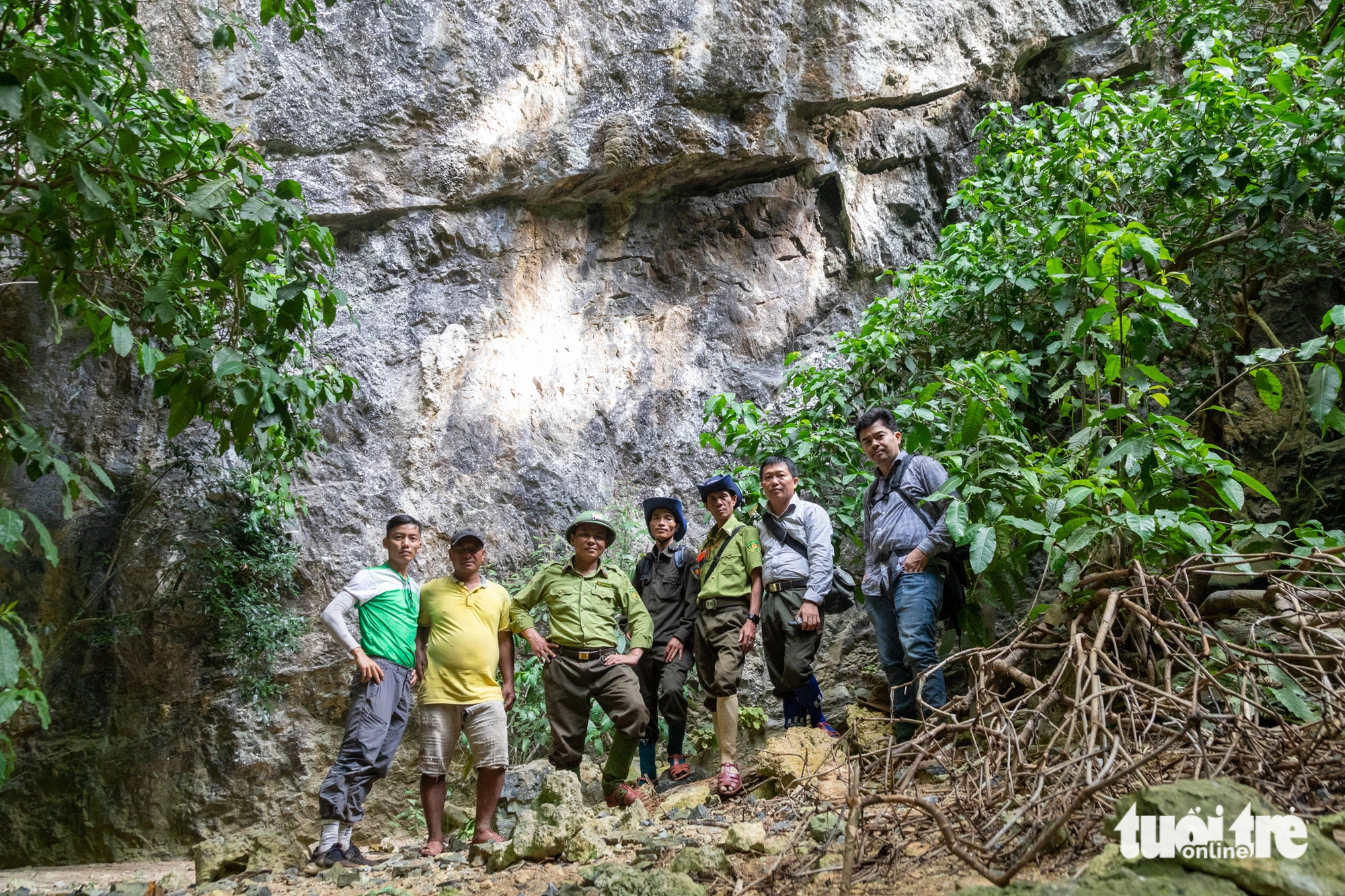
The team that discovered the sinkhole - Photo: HOANG TAO
There were many trees in the sinkhole, many of which had a circumference larger than a person could hug. These trees were very tall and straight. In addition, there were very fresh and clear footprints of civets, monkey droppings, and bird nests in the sinkhole.
Notably, in the pit there are 5 American MK81 bombs left from the war.
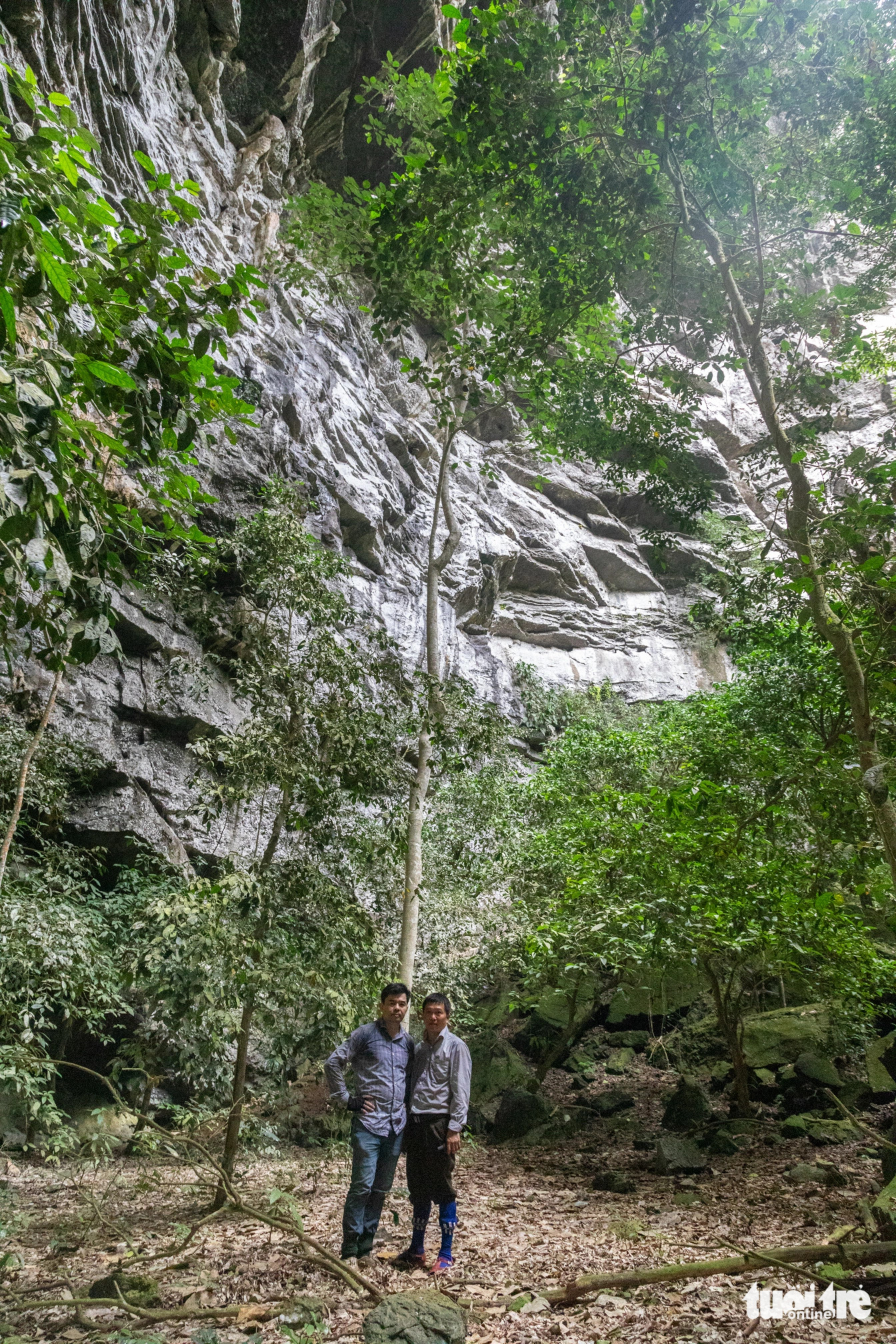
Tall green trees in the sinkhole - Photo: HOANG TAO
Potential for exploiting adventure tourism
Participating in the expedition, Dr. Le Tuan Anh - Central Institute for Scientific Research - said that the area around the sinkhole has a very high biodiversity, containing many undiscovered values. Dr. Tuan Anh suggested that in the coming time, we should focus on investigation and survey to record new species, enhancing the biodiversity value of the reserve.
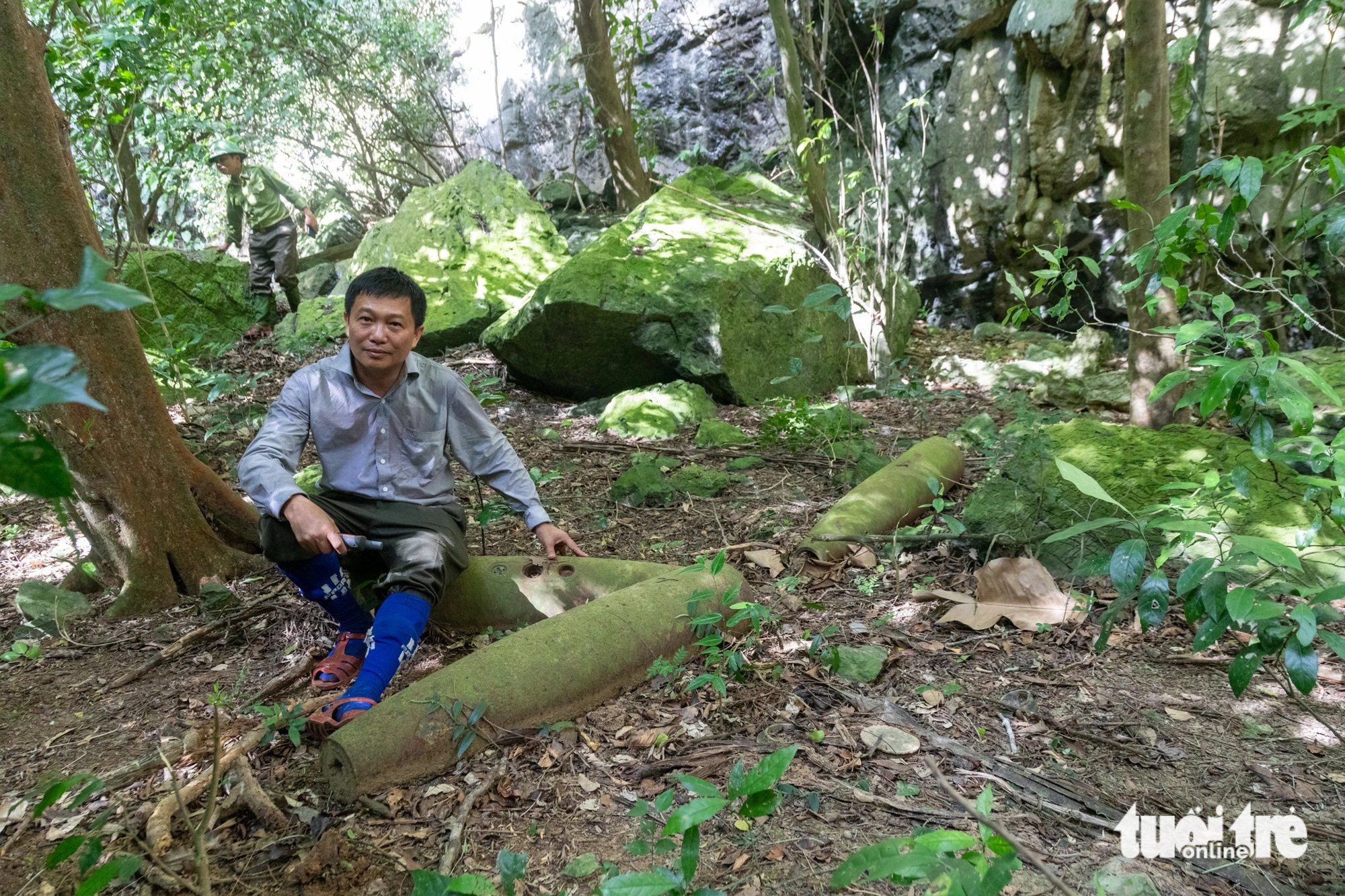
In particular, the crater has many unexploded American bombs left over from the war - Photo: HOANG TAO
Ms. Hoang Thi Lan Phuong - a tourist from Vung Tau - who joined the expedition said the trip left many deep impressions.
"I am very happy to be part of the group that discovered the sinkhole in the middle of the mountains and forests of Quang Tri. I will tell everyone to come to Quang Tri with its beautiful, majestic and wonderful scenery," said Ms. Phuong.
Currently, the Management Board of Bac Huong Hoa Nature Reserve is submitting a project to develop ecotourism in this area.
With the discovery of this sinkhole, along with rich, pristine flora and fauna, many rivers, streams, and caves, this land has great potential to develop adventure tourism and trekking in the forest.
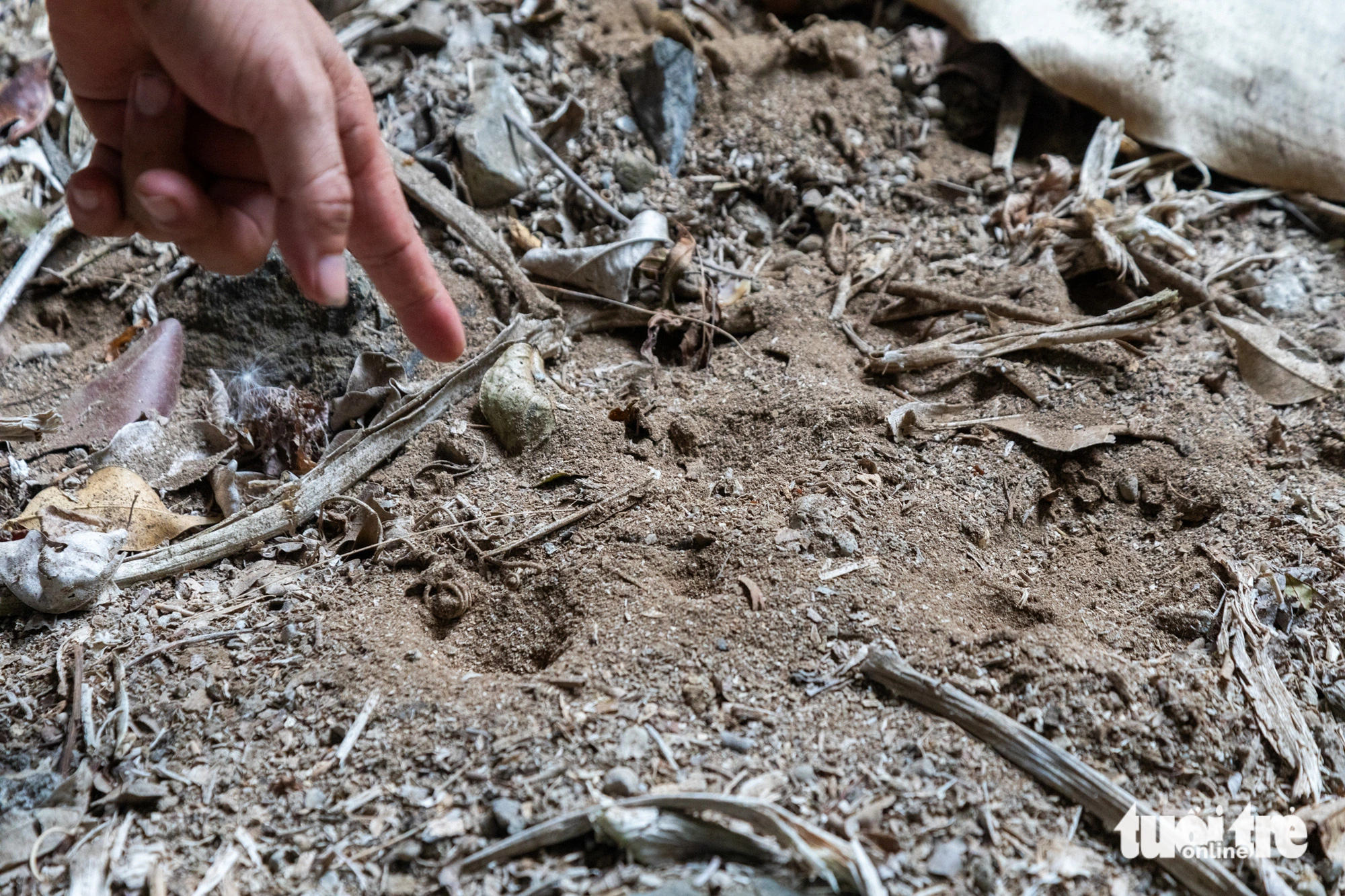
Animal footprints in the sinkhole - Photo: HOANG TAO
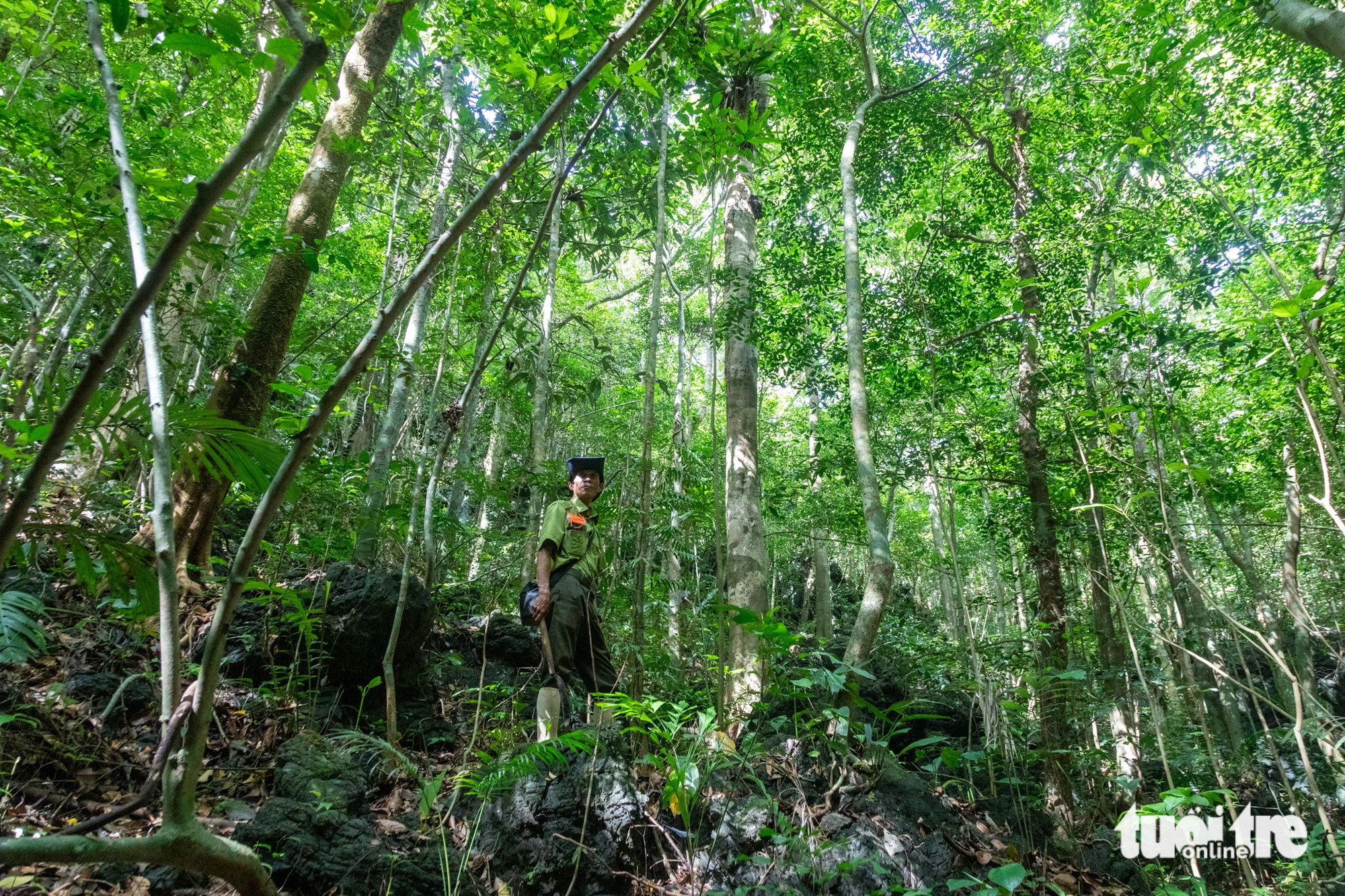
Plants in the sinkhole - Photo: HOANG TAO
Source: https://tuoitre.vn/la-ky-ho-sut-chua-co-dau-chan-nguoi-giua-rung-dac-dung-quang-tri-20240701104010655.htm
































![[Video] The craft of making Dong Ho folk paintings has been inscribed by UNESCO on the List of Crafts in Need of Urgent Safeguarding.](https://vphoto.vietnam.vn/thumb/402x226/vietnam/resource/IMAGE/2025/12/10/1765350246533_tranh-dong-ho-734-jpg.webp)






















































Comment (0)