

Stock market investors lost 8.316 billion VND.
Late on May 23rd, the State Bank of Vietnam announced a reduction in the policy interest rate. Accordingly, the ceiling interest rate for deposits has been lowered to 5% per year. This is the third consecutive reduction by the State Bank of Vietnam in 2.5 months.
Immediately afterwards, many commercial banks simultaneously adjusted down deposit interest rates. In some places, the highest rate even fell below 7% per year. This created room for the banking system to reduce lending interest rates, thereby supporting businesses.
However, contrary to investors' expectations, despite the interest rate reduction, the VN-Index not only failed to rise but also declined, causing significant losses for investors.
The reason is that after the two previous interest rate cuts, the number of borrowers who could access low interest rates was not large, especially since credit growth in the first quarter of 2023 was very low.

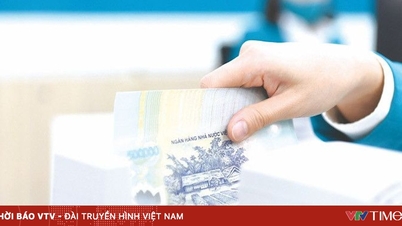
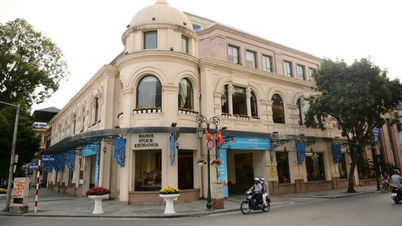
Following the news of the interest rate cut, the stock market not only failed to rise but also declined, causing investors to lose 8,316 billion VND. (Illustrative image)
At the close of trading last weekend, the VN-Index stood at 1,063.76 points, down 2.09 points, or 0.2%, compared to the May 23rd session, before the announcement of the third interest rate cut. As a result, the market capitalization of the Ho Chi Minh City Stock Exchange decreased by 8,316 billion VND.
VCBS Securities commented that last week, the market did not experience many positive changes in terms of points, but differentiation was quite evident with demand alternating across different sectors to maintain the index within the 1,060 - 1,070 point range. Among them, oil and gas and construction stocks were the most prominent with increases of approximately 3%.
Following the reduction in the policy interest rate on May 23rd, the State Bank of Vietnam held a meeting with senior leaders of 26 commercial banks. Accordingly, the commercial banks agreed to reduce lending interest rates by 0.5 percentage points on existing loans from May 29th to provide financial support to customers amidst signs of slowing production and business activities.
VCBS assesses this as a continued positive signal demonstrating the consistent policy of the State Bank of Vietnam in reducing borrowing costs for the economy , supporting businesses and individuals' access to capital at lower interest rates.
Positive signs emerged, but foreign investors were net sellers.
Although the central bank's interest rate cut has not yet had a positive impact on the stock market, experts still expect the VN-Index to improve soon due to the time lag involved in this policy. However, one factor is still holding the market back: net selling by foreign investors.
VCBS has presented a positive scenario, predicting that the VN-Index will continue to fluctuate for 1-3 sessions before entering a new upward trend. VCBS recommends that investors continue to closely monitor the market and consider allocating 20-30% of their capital to stocks that are undergoing corrective consolidation and successfully testing resistance levels in sectors such as securities, oil and gas, and construction.
Nevertheless, VCSB still emphasized the actions of foreign investors. According to VCBS, given the uncertain market trend, foreign investors continued to aggressively sell off shares in the last trading session of the week with a trading volume of 395 billion VND, focusing on selling HSG, NVL, and VND.
Meanwhile, Mirae Asset Securities Company particularly highlighted the foreign investor factor, as they unexpectedly sold net in all five sessions, with the value remaining high in each session.
According to Mirae Asset's calculations, last week (May 22-26, 2023), domestic individual investors were the strongest net buyers with a total value of over VND 3,796 billion, while foreign institutional investors were the strongest net sellers last week with VND 2,354 billion.
Last week, funds experienced net outflows across the board. Open-ended funds such as VN-Diamond, VFMVN30, and E1VFVN30 (Thailand) saw the strongest selling pressure, with net outflows of $4.1 million, $11.9 million, and $6.5 million respectively. Among closed-end funds, those managed by Dragon Capital led the group with $3.5 million in outflows.
According to Mirae Asset, Vietnam is one of the few countries experiencing net selling by foreign investors, second only to Thailand. Strong net buying by foreign capital was seen in Japan, Taiwan, and South Korea.
Source
























































































Comment (0)