

 |
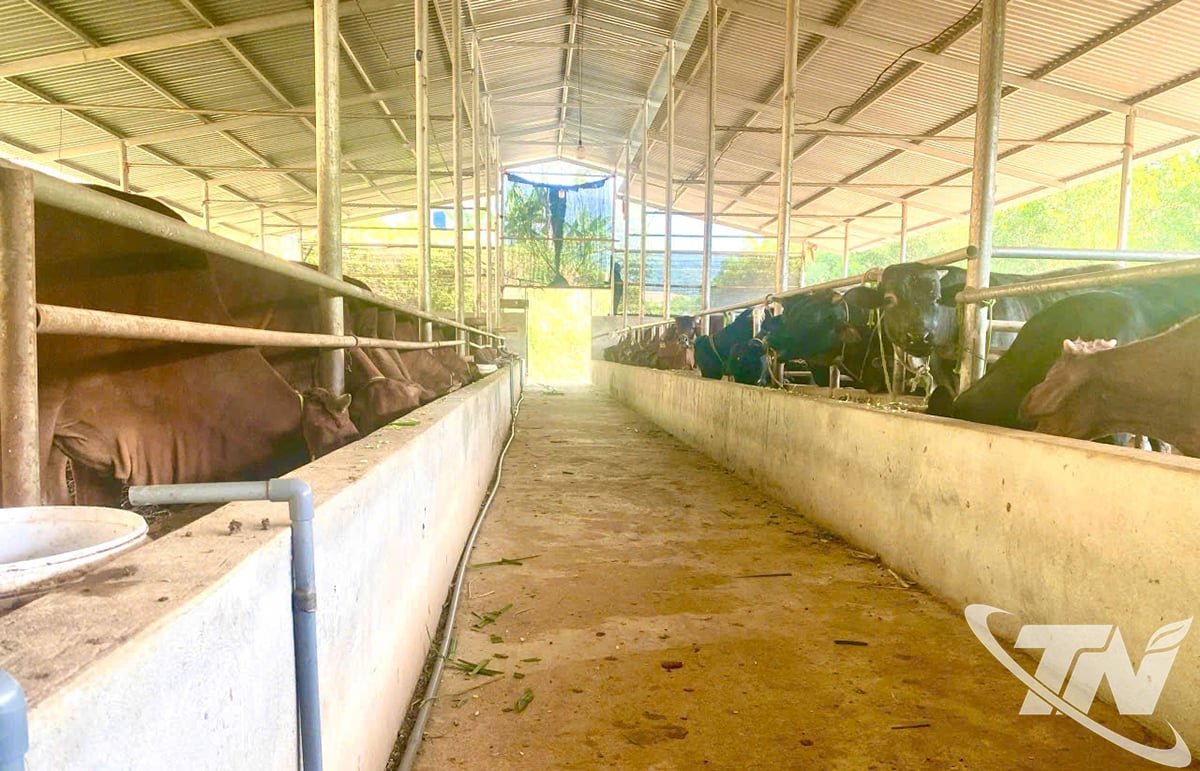
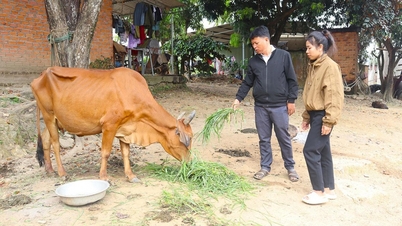
| The cattle barn of Mong Cooperative No. 11 is built according to modern technical processes, helping the cows grow well. |
Mong cattle cooperative No. 11, in Tan Lap hamlet, was established in 2019 with 8 members. At first, the cooperative raised cattle and grew tea, on a small scale and with low efficiency.
An important development step came in September 2022, when through the Provincial New Rural Area Coordination Office, the Cooperative received support from Thien Tam Fund ( VinGroup Corporation) with 50 breeding cows, including 25 breeding cows and 25 commercial 3B cows, with a total value of about 1 billion VND. This is an important source of capital to help the Cooperative expand production, while creating a foundation for connecting with Mong households in the commune.
Ms. Nguyen Thi Trang, Director of the Cooperative, said: As soon as receiving the breeding cows, the Cooperative implemented a model of cooperation with poor and near-poor households. About 25 households participated, mainly Mong people. They took care of and supplied grass; the Cooperative took care of the techniques and consumed the products. Each day, the workers were paid 200,000 VND, helping people have a steady income without having to invest capital.
Chain linkage brings mutual benefits: the cooperative has more human resources to take care of the cows; people are instructed in techniques, learn how to prevent diseases, and clean barns - skills they have never had access to before.
To help the herd grow well, the cooperative applies many technical advances such as: closed barns, biological bedding, automatic feeding troughs, strict veterinary hygiene procedures and environmentally friendly waste treatment technology. Thanks to that, the herd grows healthily, reproduces well, and the rate of disease is significantly reduced.
Not stopping at cows, Mong cow cooperative No. 11 also develops black chickens and native pigs, which are highland specialties, suitable for the climate and have stable economic value. The livestock diversification model helps reduce market risks, utilize agricultural by-products and create more jobs for women and youth in the commune.
From available raw materials, the Cooperative invests in processing clean products such as: Beef - pork sausage, pre-processed and packaged black chicken, especially dried beef products that meet 3-star OCOP standards. The products comply with food safety standards, have packaging, labels and traceability codes. Not only consumed in the province, many products are displayed at OCOP fairs, contributing to promoting the agricultural brand of Van Lang.
Mr. Dao Van Linh, the owner of a Mong household participating in the model, shared: Before, we only worked in the fields, with irregular income. Joining the cooperative, we had work every day and received wages. My family also grew grass to sell to the cooperative to increase income. Later, we adopted a growing calf, and our family's life improved significantly.
The model not only generates income but also helps people change their production mindset: from small-scale, spontaneous production to chain-linked production; knowing how to plan farming, record and monitor, care for livestock and prevent diseases according to the correct process. These are fundamental changes, creating a foundation for sustainable livelihood development for the Mong people.
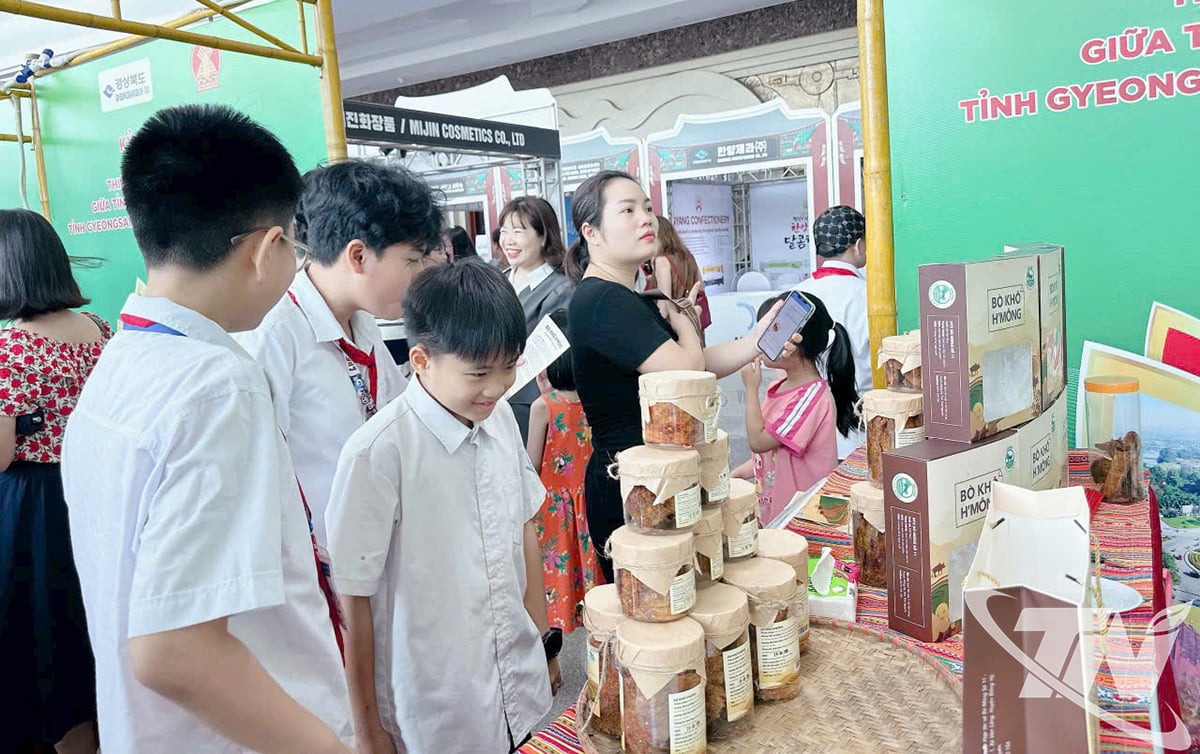 |
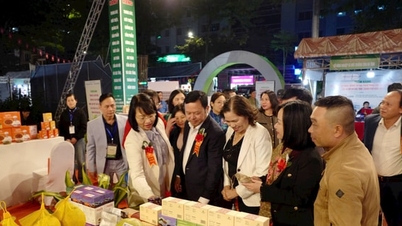
| Products from the Mong cow farming model attract the attention of students and visitors at a fair. |
Mr. Ha Quang Trong, Chairman of Van Lang Commune People's Committee, assessed: The joint farming model of Mong cow cooperative No. 11 has brought about clear results. Not only increasing income, the model also changes the way of thinking and working of the people. This is a model in poverty reduction, the commune will continue to support replication .
According to the commune leaders, Van Lang has favorable conditions for developing large livestock farming, but in the past, due to lack of capital and technology, production was ineffective. When the Cooperative took the lead, the difficulties were resolved: the Cooperative organized production, prevented epidemics, and connected to the market; people both had income and received proper technical training.
The success of the model opens up a new direction in poverty reduction in Van Lang. Many Mong households, who previously lacked jobs and had unstable incomes, now have stable jobs and the opportunity to own their own breeding cows. The connection between the cooperative and households has become a "bridge" to help people escape poverty and move towards a better life.
Source: https://baothainguyen.vn/kinh-te/202512/lien-ket-chan-nuoi-mo-huong-thoat-ngheo-fa0295c/

![[Photo] Worshiping the Tuyet Son statue - a nearly 400-year-old treasure at Keo Pagoda](/_next/image?url=https%3A%2F%2Fvphoto.vietnam.vn%2Fthumb%2F1200x675%2Fvietnam%2Fresource%2FIMAGE%2F2025%2F12%2F02%2F1764679323086_ndo_br_tempimageomw0hi-4884-jpg.webp&w=3840&q=75)
![[Photo] Parade to celebrate the 50th anniversary of Laos' National Day](/_next/image?url=https%3A%2F%2Fvphoto.vietnam.vn%2Fthumb%2F1200x675%2Fvietnam%2Fresource%2FIMAGE%2F2025%2F12%2F02%2F1764691918289_ndo_br_0-jpg.webp&w=3840&q=75)
























![[Video] Protecting World Heritage from Extreme Climate Change](https://vphoto.vietnam.vn/thumb/402x226/vietnam/resource/IMAGE/2025/12/03/1764721929017_dung00-57-35-42982still012-jpg.webp)













































Comment (0)