

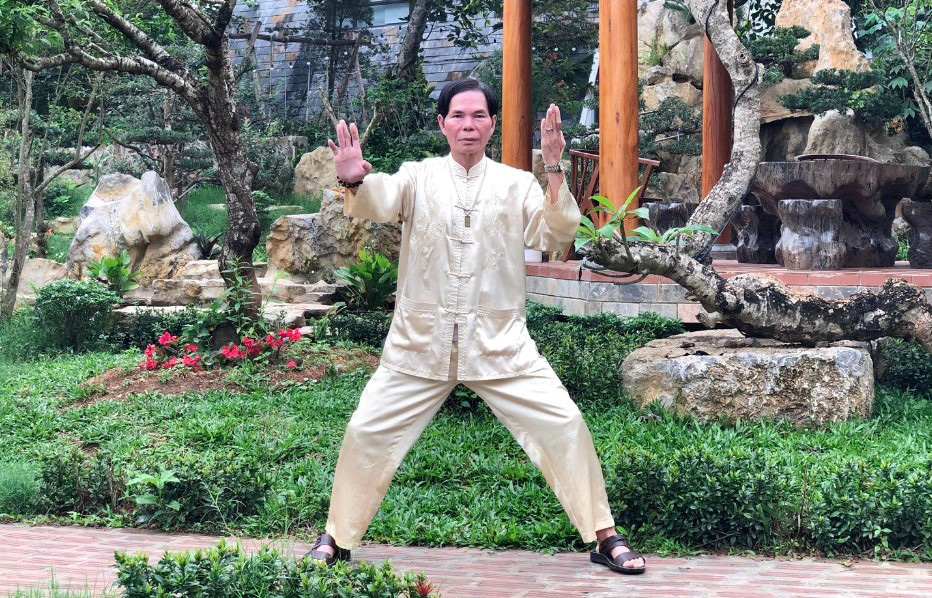
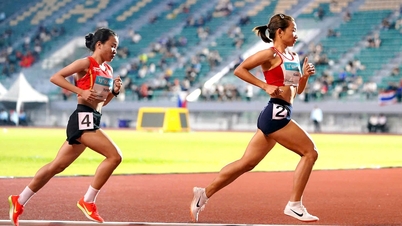
Breathing exercises for health and body detoxification - Photo: HA LINH
Breathing exercises for a healthy body.
Dr. Hoang Khanh Toan, former head of the Traditional Medicine Department at the Central Military Hospital 108, said that usually when talking about body detoxification, people think about choosing and using food, drinks, or various medicines and functional foods. Few people think that breathing exercises are also one of the useful methods in this matter.
During the process of metabolism and renewal, our bodies produce and expel a large amount of carbon dioxide, while simultaneously absorbing a significant amount of oxygen.
The more thoroughly carbon dioxide is expelled and the more efficiently oxygen is absorbed, the healthier the body will be, just as ancient health practitioners said: "Breath is like the flywheel in a machine; it transmits and controls the life force in our bodies."
But the question is, how should we breathe to achieve the highest level of body detoxification? This means we must know how to breathe, transforming the spontaneous act of breathing into a conscious, actively controlled process. This is the practice of Qigong and health cultivation aimed at detoxifying the body in Eastern medicine.
Dr. Nguyen Van Thang, head of the Thang Long Martial Arts Qigong Club, emphasized that the lungs not only function in respiration but also in fluid circulation and detoxification. Practicing Qigong not only strengthens the lungs but also improves heart health, blood circulation, and overall health, warding off many diseases.
The lungs originate from the main bronchi, which divide into right and left branches, from which numerous smaller bronchioles branch out, gradually extending to the alveoli, which resemble a honeycomb (small sacs containing air).
From there, it exits through the nose and radiates peripherally through the skin. The average lung capacity is 2.5 - 3.5 liters. The airflow through the lungs is 300 - 400 ml/second and approximately 9,000 liters of air per 24 hours.
Each person breathes at a rate of 16-18 breaths per minute, sometimes up to 18-24 breaths per minute. The lungs have many functions, but their main functions are ventilation and blood circulation; they also help circulate fluids and eliminate toxins.
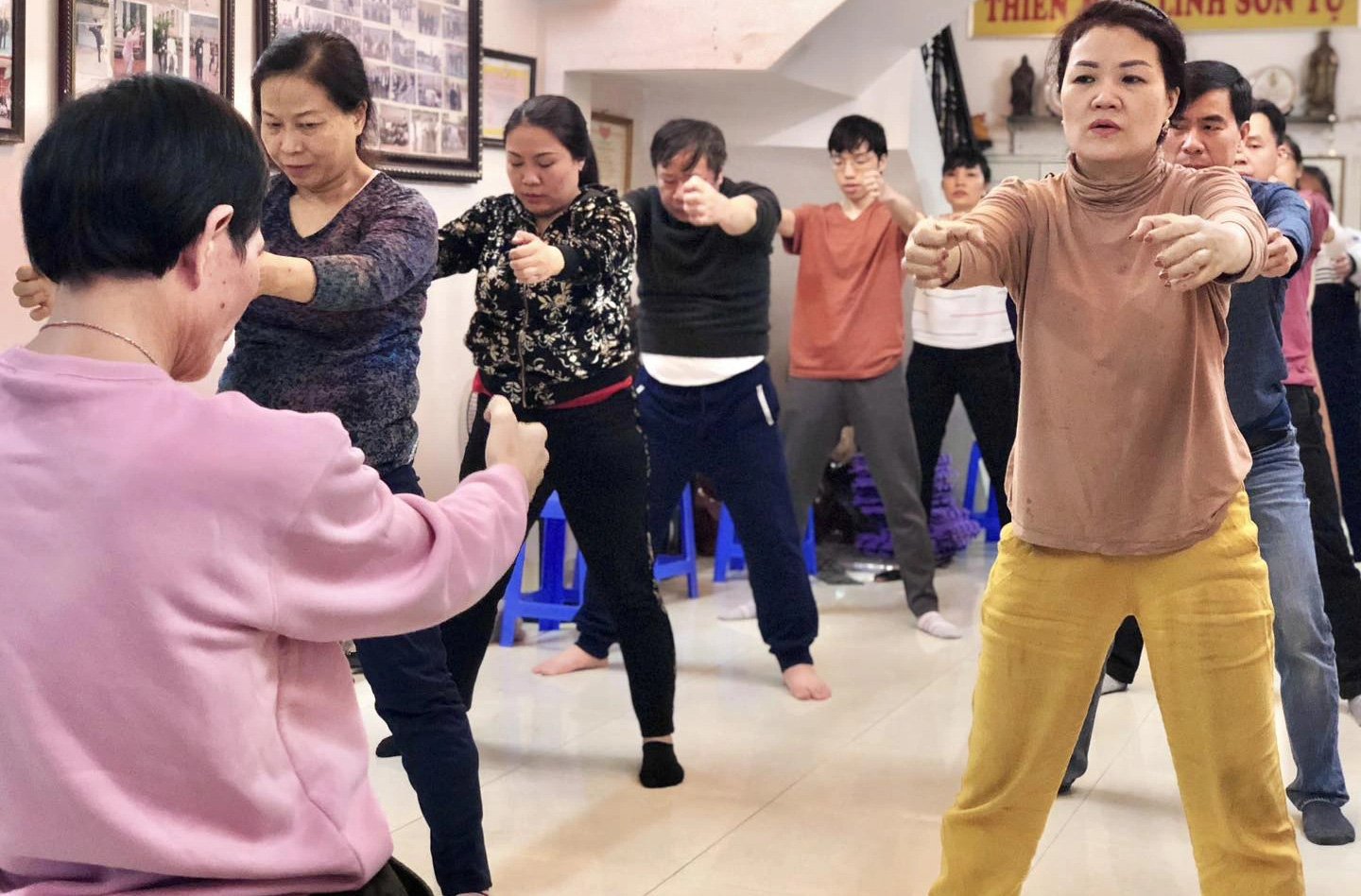
Practicing Qigong improves health - Illustration
Upper breathing, middle breathing, and lower breathing—which is more effective?
Dr. Thang explained that to maintain healthy lungs, one needs to practice breathing exercises to achieve optimal breathing. When optimal breathing is achieved, it improves blood circulation, clears meridians, balances yin and yang, harmonizes water and fire, and allows the body's biological rhythm to adapt optimally to nature. Through breathing, the body can be regulated.
Practicing continuous, regular, and gentle breathing, maintaining a calm mind, and repeating this biological state of the body will help prevent disease, restore function, improve health, and increase longevity.
Dr. Toan also shared that the foundation of all Qigong exercises is proper breathing. Proper breathing is a synthesis of three breathing techniques: upper breathing, middle breathing, and lower breathing.
- Upper breathing , also known as clavicular breathing, is a breathing technique where only the upper part of the chest and lungs are active, resulting in the lowest amount of air passing through the lungs.
- Intercostal breathing , also known as mid-breathing, occurs when the diaphragm rises during inhalation, the abdomen contracts, the chest expands, and a portion of the lungs also expand. Most of us breathe this way.
- Lower breathing , also known as diaphragmatic breathing, involves the diaphragm curving upwards during exhalation, causing the abdomen to contract, and lowering the diaphragm during inhalation, compressing the abdominal organs downwards and pushing the abdomen forward.
Upper breathing fills only the upper part of the lungs, middle breathing fills the middle and a small part of the lower lungs, and lower breathing fills the entire middle and lower parts of the lungs.
Therefore, the third breathing method is the best. However, this method does not fill both lungs completely with air. Only in a complete breathing technique, a combination of all three breathing methods mentioned above, will maximum effectiveness be achieved in clearing carbon dioxide and supplying oxygen to the body.
Breathing exercises also need to be adequate.
In proper breathing technique, upon inhalation, the diaphragm first lowers, the abdomen gradually expands forward, and air enters the lower part of the lungs. Then, the lower and middle ribs are raised horizontally so that air gradually penetrates the middle part of both lungs.
Finally, we expand the chest cavity completely, allowing air to enter the upper part of the lungs. In this final stage, we contract the abdomen to support the lungs, while simultaneously filling the upper lung lobes with air.
Seen from the side, proper breathing is a unified, slow, and undulating movement, starting from the abdomen. Once you get used to it, you can smoothly transition from one stage to the next.
When exhaling, we begin breathing slowly through the nose in the same order as when inhaling: first, we contract our abdomen, pressing the free ribs together, finally lowering our shoulders and collarbones, with air from the lower part of the lungs exiting first, followed by air from the middle and upper parts of the lungs.
Furthermore, the key to health-preserving breathing exercises in Eastern medicine is not just sufficient breathing, but rhythmic breathing, using the heartbeat as the basis for the breathing rhythm. A deep breath typically consists of two units: inhalation and exhalation.
However, a complete breathing exercise consists of four stages: inhalation, holding your breath, exhalation, and resting. There are varying opinions on the time ratio for each stage. Most believe the ratio is 1:4:2:1, which is considered relatively strenuous.
For beginners, the ratio should be 1:2:1:1. If you inhale for 6 heartbeats, hold your breath for 12 heartbeats. With consistent practice, you can increase your inhalation time to 12 heartbeats.
It can be seen that breathing exercises are also one of the ways to purify the body, specifically to purify carbon dioxide and other harmful gases produced during endogenous metabolism or that enter the body from the outside.
Moreover, this breathing technique helps the body absorb the maximum amount of essential oxygen that is always readily available around us for all the functions of the internal organs, without spending a single penny compared to buying medicine, supplements, or expensive foods to detoxify the body.
 The boy who 'forgot to breathe' and the miracle of love.
Source



























































































Comment (0)