

In recent days, the number of flu cases has increased, and many people are suffering from symptoms such as headaches, nasal congestion, and sore throats. Traditional medicine has many effective remedies to alleviate these symptoms.
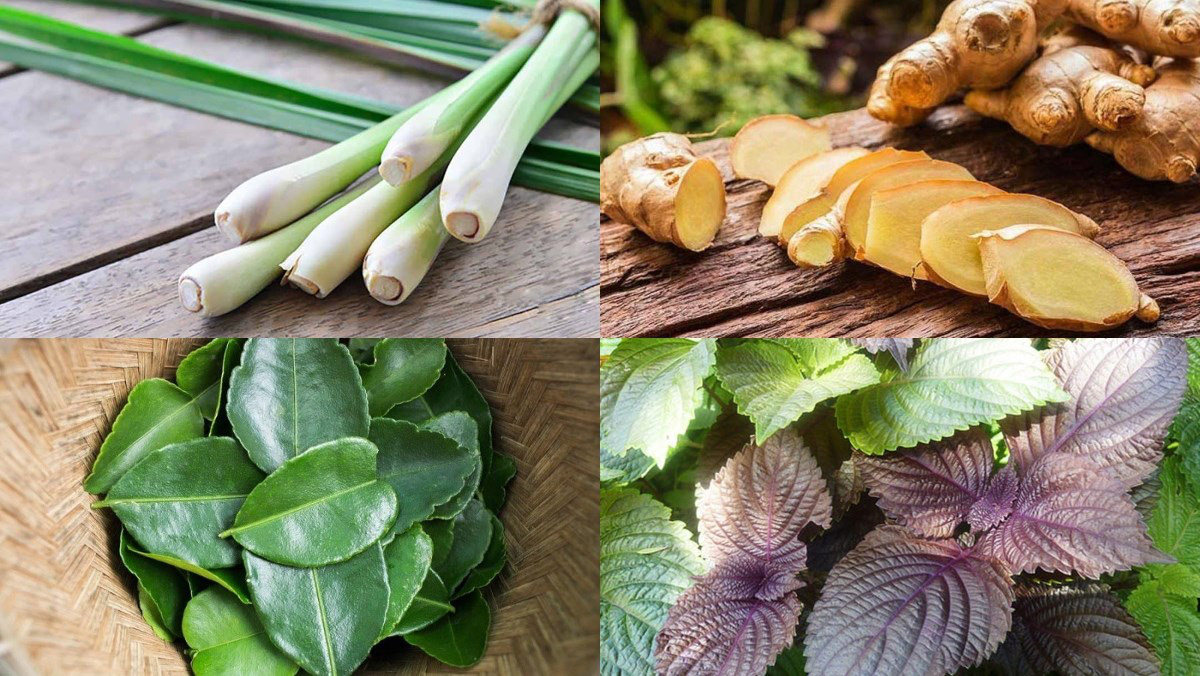
Easily available herbs can be used for steam inhalation to relieve colds - Illustration
Dr. Bui Dac Sang, a general practitioner at the Vietnam Academy of Science and Technology, advises on several herbal steaming remedies using ingredients that are readily available to everyone.
- Lemongrass, ginger
In Traditional Chinese Medicine, lemongrass has a pungent taste and warm nature, with antiseptic, expectorant, antibacterial, diuretic, and cold-treating properties. Ginger contains antioxidants and anti-inflammatory substances, which help stimulate digestion and effectively reduce aches and pains.
For the steam treatment, take a handful each of lemongrass, pomelo leaves, basil, lemon leaves, chrysanthemum, and eucalyptus. Boil them to make a decoction for drinking and steaming, then cover yourself with a blanket to induce sweating. You can add a little white salt for disinfection.
According to recommendations, full-body sauna sessions can be done 2-3 times a week, while targeted sauna sessions can be done 3-4 times a week.
- Perilla
Perilla leaves have a spicy taste and warm properties; they are classified as a diaphoretic (sweat-inducing) herb. Both the decoction and alcoholic extract of perilla leaves have the effect of dilating blood vessels in the skin, reducing fever, and relieving colds. You can use washed perilla leaves, boiled with lemongrass and salt, for steam inhalation to relieve cold symptoms.
Additionally, drinking perilla leaf tea or mixing finely chopped perilla leaves with hot porridge, and resting under a blanket to induce sweating can also reduce fatigue, cough, and fever.
- Lemon leaves, mint, oregano
You can use lemon leaves, perilla leaves, mint leaves, ginger leaves, and turmeric leaves, putting them all together in a pot to make a herbal steam bath.
Additionally, you should add fresh ginger to detoxify and clear nasal passages, or lemongrass for antiseptic purposes and to treat colds, headaches, and runny noses.
Before using a sauna, cleanse your body. Do not shower immediately after using a sauna. If using a full-body sauna, the sauna area must be draft-free.
When you're sweating profusely and your clothes are soaked, stop the steaming process, dry yourself off, change your clothes, and cover yourself with a blanket to rest. Steaming your head and face is similar, but you only need to cover your head and face with a towel. After steaming, dry your head and face thoroughly.
Each steaming session lasts approximately 20 minutes.
After the steam bath, dry yourself off, keep warm, and avoid drafts. Do not overuse it and stop if you experience shortness of breath, chest tightness, or dizziness. Elderly people, those with chronic illnesses, or those with weakened bodies should have someone sitting behind them to support their shoulders and prevent falls.
Traditional medicine practitioner Bui Dac Sang further advises against steaming when tired and against steaming for too long.
In Traditional Chinese Medicine, steam inhalation is a remedy for treating colds, headaches, nasal congestion, sore throats, and throat irritation. However, these methods only alleviate symptoms and do not cure the illness.
 Don't panic, but don't underestimate seasonal flu.
Source: https://tuoitre.vn/mach-ban-bai-thuoc-co-truyen-huu-hieu-giai-cam-cum-ngat-mui-dau-hong-20250210110444991.htm























![[Photo] Prime Minister Pham Minh Chinh holds a phone call with the CEO of Russia's Rosatom Corporation.](/_next/image?url=https%3A%2F%2Fvphoto.vietnam.vn%2Fthumb%2F1200x675%2Fvietnam%2Fresource%2FIMAGE%2F2025%2F12%2F11%2F1765464552365_dsc-5295-jpg.webp&w=3840&q=75)

















































Comment (0)