

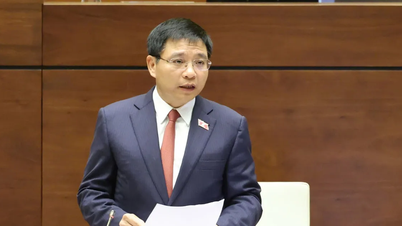
Mr. VU HONG THANH - Chairman of the National Assembly's Economic Committee:
Utilize investment resources in a focused and targeted manner.
Ho Chi Minh City is a driving force for national growth. Therefore, we have high expectations that this Resolution on piloting some specific mechanisms and policies for the development of Ho Chi Minh City will create many new impetus and resources for the city's development. During the implementation process, I expect the Government and Ho Chi Minh City to seize the opportunity and expand the scope of exploitation to effectively utilize the mechanisms and policies in the resolution.
In particular, I am interested in the model of the Ho Chi Minh City State Financial Investment Company (HFIC), which is a very unique model. Previously, there was a mechanism for Hanoi and Ho Chi Minh City to use this source of funds during the process of privatizing and divesting state-owned enterprises.
Therefore, when the new resolution is passed, the issue is how to use these resources effectively for Ho Chi Minh City. In particular, the land and assets of state-owned enterprises in Ho Chi Minh City are substantial and significant. I believe that Ho Chi Minh City needs to use these investment resources strategically and effectively to create a driving force for the city's development in the future.
Mr. TRINH XUAN AN - Member in charge of the National Assembly's Committee on National Defense and Security:
Mechanism for transparency and openness in BT contracts.
Now, the issue is that we need to implement and put the resolution into practice. Among the major policy and mechanism groups of this resolution, there are very new and groundbreaking contents. Regarding these policies, I believe there are some issues that Ho Chi Minh City must address immediately and systematically, alongside those that are being implemented step by step.
In my opinion, the most urgent issue is land policy. Ho Chi Minh City is developing ring roads and urban areas. Land in Ho Chi Minh City is not only concentrated in urban areas and districts, but also in five districts: Can Gio, Nha Be, Hoc Mon, Cu Chi, and Binh Chanh. These are enormous resources that need to be addressed. I believe that, firstly, the Transport-Oriented Development (TOD) model for urban development, and secondly, the Build-Transfer (BT) contract mechanism, will solve this problem.
Regarding investment mobilization methods, although the resolution has stipulated regulations on the BT contract mechanism, I believe that Ho Chi Minh City needs stronger BT policies. Of course, the BT contract model needs to be implemented with a transparent and open mechanism, with a monitoring and supervision system to prevent abuse, exploitation, and violations.
Only through strong and synchronized implementation will Ho Chi Minh City become a civilized, modern, dynamic, and creative city by 2030, with a high-quality workforce; a modern service and industrial city, a leading hub for the digital economy and digital society, a national center for economy, finance, trade, culture, education, science and technology, deeply integrated into the international community, and holding a prominent position in Southeast Asia.
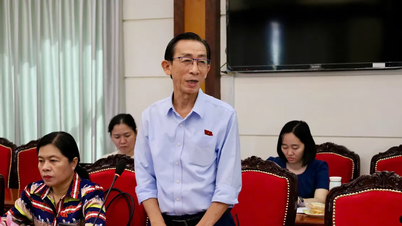
Associate Professor Dr. Tran Hoang Ngan, Former Director of the Ho Chi Minh City Institute for Development Research:
Monitoring the implementation of the resolution
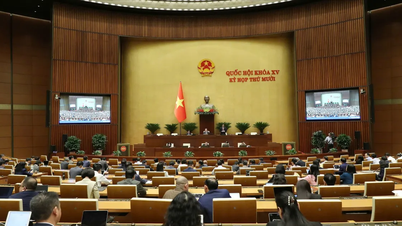
Over the past few days, the National Assembly delegates from Ho Chi Minh City have been anxiously awaiting the moment they would vote to approve the Resolution on piloting some special mechanisms and policies for the development of Ho Chi Minh City. The National Assembly passed the resolution with a very high percentage of votes in favor (over 97%). This demonstrates the collective effort and support of people nationwide for Ho Chi Minh City.
This new resolution will enable Ho Chi Minh City to contribute more to the country and improve the quality of life for its people. Furthermore, the resolution will help Ho Chi Minh City achieve its goals and plans in line with Resolution 31 of the Politburo on the direction and tasks for the development of Ho Chi Minh City until 2030, with a vision to 2045. This will enable Ho Chi Minh City to stand shoulder-to-shoulder with major cities worldwide, continue to be a leading engine in the digital economy and digital society, and become a regional and global economic, financial, and commercial center in Asia.
The National Assembly's adoption of the resolution is a crucial first step, but its implementation is even more important. Currently, the People's Council and People's Committee of Ho Chi Minh City have prepared action plans in accordance with the action program of the Ho Chi Minh City Party Committee. Immediately after this session, the Ho Chi Minh City Party Committee will organize a conference to implement and disseminate the spirit of the Resolution on piloting some specific mechanisms and policies for the development of Ho Chi Minh City.
In their respective roles, National Assembly representatives, Ho Chi Minh City People's Council members, and the Vietnam Fatherland Front of Ho Chi Minh City will carry out oversight to ensure that the resolution is implemented in accordance with the spirit of the resolution passed by the National Assembly.
Source


![[Photo] Prime Minister Pham Minh Chinh holds a phone call with the CEO of Russia's Rosatom Corporation.](/_next/image?url=https%3A%2F%2Fvphoto.vietnam.vn%2Fthumb%2F1200x675%2Fvietnam%2Fresource%2FIMAGE%2F2025%2F12%2F11%2F1765464552365_dsc-5295-jpg.webp&w=3840&q=75)


























































Comment (0)